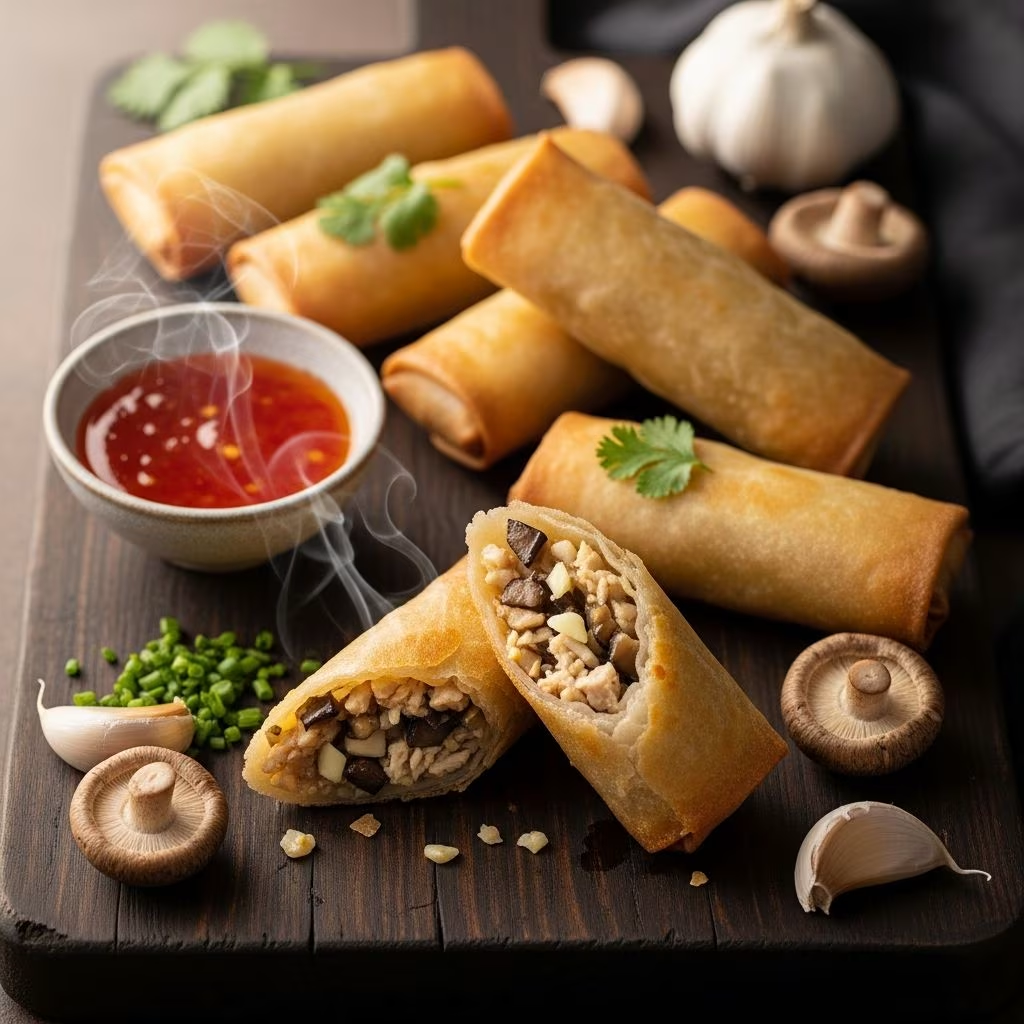
Spring rolls represent one of Asia’s most beloved appetizers, combining delicate pastry wrappers with savory fillings that deliver satisfying crunch and flavor in every bite. The chicken spring roll with mushroom and garlic variations offers a sophisticated twist on traditional recipes, introducing earthy umami notes and aromatic garlic that elevate the humble spring roll into a more refined dish. Whether you’re preparing these for a dinner party, family gathering, or simply craving an impressive homemade snack, mastering this recipe opens doors to countless variations and serving possibilities.
Understanding Spring Roll Fundamentals
Spring rolls differ significantly from summer rolls, egg rolls, and other wrapped appetizers, primarily in their preparation and texture profile. Traditional spring rolls are deep-fried until they achieve a golden-brown exterior with a satisfying crispness that contrasts beautifully with tender fillings. The wrapper selection plays a crucial role in achieving optimal results—spring roll pastry wrappers, sometimes labeled as lumpia skins or spring roll sheets, contain wheat flour and water, creating thin, delicate barriers that fry to crispiness.
The fundamental appeal of spring rolls lies in their versatility. Unlike some appetizers bound to specific traditions, spring rolls welcome numerous filling variations while maintaining their essential character. This adaptability has allowed the appetizer to spread across multiple cuisines, each culture adding distinctive ingredients and preparation methods.
Building the Perfect Filling Base
The foundation of exceptional spring rolls begins with thoughtful filling construction. The combination of chicken, mushroom, and garlic creates a flavor profile that balances protein richness, umami depth, and aromatic pungency. Unlike recipes using ground chicken or shredded poultry prepared separately, the most flavorful approach involves cooking all filling ingredients together, allowing flavors to meld and develop complexity.
Selecting Chicken for Your Filling
Chicken selection impacts both texture and flavor substantially. While chicken breast provides lean protein, thighs offer superior juiciness and more pronounced flavor development during cooking. For spring rolls specifically, consider using boneless, skinless chicken thighs cut into small pieces. This size promotes even cooking and creates a filling texture that holds together within the wrapper without becoming dense.
When preparing chicken, ensure pieces remain uniform in size to guarantee consistent cooking throughout. Uneven pieces may result in either overcooked, dry sections or undercooked portions that haven’t fully developed flavor.
Incorporating Mushrooms and Aromatics
Mushrooms contribute earthy, savory qualities that complement chicken’s milder profile. Choose mushroom varieties with meaty texture—cremini, button, or oyster mushrooms work exceptionally well. Slice mushrooms thinly to ensure they integrate seamlessly into the filling rather than creating noticeable chunks that might puncture wrappers during rolling or frying.
Garlic transforms from sharp and pungent when raw to mellow and sweet through cooking. Mincing garlic finely ensures even distribution throughout the filling, creating consistent flavor rather than occasional intense garlic pockets. The amount of garlic can be adjusted according to personal preference, though using at least two tablespoons of minced garlic establishes the signature aromatic character of this particular recipe.
Spicing and Seasoning Strategy
The spice profile distinguishes exceptional spring rolls from mediocre versions. Beyond basic salt and pepper, consider incorporating complementary seasonings that enhance rather than overpower the principal ingredients.
- Soy sauce: Provides umami depth and saltiness that ties components together
- Garlic: Offers aromatic pungency that develops sweetness through cooking
- Ginger: Contributes warm spice and subtle heat that complements chicken and mushroom
- White pepper: Delivers peppery notes with less assertiveness than black pepper
- Optional chilies: Indonesian sambal or red chili powder can introduce manageable heat
Add seasonings gradually during cooking, tasting as you progress. This approach prevents over-seasoning, which becomes difficult to correct once filling is complete. Remember that flavors intensify as filling cools and as moisture content reduces during frying.
Preparation and Cooking Technique
Pre-Cooking the Filling
The cooking process begins with heating oil in a wok or large skillet over medium-high heat. Add minced garlic first, allowing it to become fragrant—typically 30 to 60 seconds. Avoid browning garlic, as burnt garlic develops bitter flavors that permeate the entire filling.
Add chicken pieces next, stirring frequently until they change from pink to white throughout. This color change indicates that chicken proteins have begun coagulating, though meat may not be fully cooked at this stage. Once chicken appears mostly cooked, introduce mushroom pieces. Cook until mushrooms release their moisture and begin to soften, usually requiring 3 to 5 minutes.
Once all components have cooked, reduce heat to low and add soy sauce along with any additional seasonings. Stir continuously for one to two minutes, allowing flavors to distribute evenly. Remove the filling from heat and spread on a plate or shallow pan to cool completely. This cooling step is essential—warm filling will make wrappers soggy and difficult to seal properly.
Wrapper Selection and Handling
Spring roll wrappers are notoriously delicate and dry quickly when exposed to air. Keep unopened packages at room temperature, and once opened, cover unused wrappers with a damp towel to prevent desiccation. Allow wrapped rolls to rest for 10 to 15 minutes after sealing but before frying—this brief rest allows wrapper moisture to distribute evenly, reducing cracking during frying.
Rolling and Sealing Process
Proper rolling technique determines whether spring rolls maintain structural integrity during frying or burst open, leaking filling into the oil.
Step-by-Step Rolling Instructions
- Position a wrapper on your work surface with one corner pointing toward you, creating a diamond orientation
- Place approximately one tablespoon of cooled filling in the center of the wrapper
- Fold the corner closest to you over the filling, rolling once to enclose it completely
- Fold the left and right corners toward the center, creating a secure envelope around the filling
- Continue rolling toward the top corner, maintaining firm tension to eliminate air pockets
- Brush the final corner with egg wash (beaten egg mixed with water) and complete the roll, pressing gently to seal
The egg wash serves dual purposes: it acts as adhesive ensuring the final corner remains sealed during cooking, and it promotes browning during frying, creating attractive color development.
Frying for Optimal Crispness
Oil temperature significantly impacts spring roll outcomes. Oil that’s too cool produces greasy, soggy results, while excessively hot oil burns the exterior before filling cooks through. Ideal frying temperature ranges from 350°F to 375°F (175°C to 190°C).
Use a thermometer to monitor temperature accurately rather than relying on visual assessment. Heat oil gradually, allowing it to reach target temperature evenly. Fry spring rolls in batches, avoiding overcrowding which drops oil temperature and creates greasy products. Each batch typically requires 2 to 3 minutes, with rolls reaching golden-brown color and crispy texture.
Remove fried spring rolls with a slotted spoon or wire skimmer, draining them on paper towels immediately. This step removes excess oil and prevents the continued cooking that would occur if they remained in oil or sat in their own heat.
Serving and Accompaniments
Spring rolls shine when served immediately after frying, while their exterior remains at peak crispness. Traditional accompaniments include sweet chili sauce, which provides cooling sweetness and moderate heat that complements savory filling. Vietnamese dipping sauce made from fish sauce, lime juice, sugar, and water offers tangy, complex flavor. For simpler options, soy sauce, sriracha, or even plain ketchup work effectively depending on personal preference.
Arrange finished spring rolls on serving platters with dipping sauces in bowls positioned nearby. Serve within 15 minutes of frying when texture contrast between crispy exterior and tender filling remains most pronounced.
Storage and Make-Ahead Options
Assembled but unfried spring rolls freeze excellently for up to three months. Place filled, sealed rolls on a baking sheet, freeze until solid, then transfer to freezer bags. This preparation method allows you to fry spring rolls directly from frozen without thawing, though frying time may increase by one minute.
Cooked spring rolls don’t maintain their crispness well, becoming soggy within hours even when refrigerated. For best results, prepare filling in advance (refrigerate for up to two days) and roll-and-fry just before serving. If necessary, cooked rolls can be reheated in a 350°F oven for 5 to 7 minutes to restore some crispness, though fresh-fried rolls remain superior.
Customization and Variations
The basic chicken, mushroom, and garlic framework welcomes numerous additions and modifications. Finely shredded cabbage adds textural contrast and subtle sweetness. Green onions contribute mild onion flavor and slight color variation. Water chestnuts introduce crisp texture that persists through cooking and frying. Bean sprouts offer delicate crunch and nutritional value.
For spice enthusiasts, red chili powder or fresh minced chilies intensify heat levels. Ginger can be increased or decreased based on preference. Some cooks incorporate soy-based variations like oyster sauce or tamari for deeper umami character.
Troubleshooting Common Issues
| Problem | Likely Cause | Solution |
|---|---|---|
| Wrappers crack or tear during rolling | Wrappers dried out during storage or handling | Keep wrappers covered with damp towel; work quickly |
| Filling leaks during frying | Over-filled rolls or inadequate sealing | Use less filling per roll; ensure thorough egg wash application |
| Greasy, soggy exterior | Oil temperature too low or rolls overcrowded | Maintain 350-375°F; fry in smaller batches |
| Burnt exterior with cold center | Oil temperature too high | Lower temperature to 350°F; extend frying time slightly |
| Bland flavor | Insufficient seasoning or ingredients cooked separately | Cook all filling ingredients together; taste and adjust seasonings |
Frequently Asked Questions
Can I use ground chicken instead of cubed chicken?
Yes, ground chicken works well and creates a more uniform filling texture. Ground chicken thigh is preferable to ground breast as it contains more fat and develops better flavor during cooking.
Are these spring rolls suitable for air frying?
Air frying produces acceptable results with significantly less oil. Air fry at 380°F for 8 to 10 minutes, shaking the basket halfway through. Results won’t achieve the same golden crispness as deep frying but offer a lighter alternative.
Can I prepare these ahead for a party?
Prepare filling one to two days ahead and refrigerate. Assemble rolls up to one hour before serving, then fry just before guests arrive for optimal texture and temperature.
What if I don’t have spring roll wrappers?
Wonton wrappers create smaller, crispier spring rolls with similar preparation. Egg roll wrappers produce larger, thicker results with different texture characteristics.
How many spring rolls does this recipe typically yield?
A standard recipe using one pound of filling typically produces 16 to 20 spring rolls, depending on wrapper size and how generously you fill each roll.
References
- Lumpia Ayam: Indonesian Chicken Spring Rolls Recipe — Dish Full of Memories. 2024. https://dishfullofmemories.com/lumpia-ayam-chicken-spring-rolls/
- The Best Chicken Lumpia (Filipino Spring Roll) — Eat With Carmen. 2024. https://www.eatwithcarmen.com/chicken-lumpia/
- Chicken And Mushroom Spring Rolls | Ramadan Special Recipe — Farahil’s Kitchen. YouTube. 2021. https://www.youtube.com/watch?v=BCDw1yKlhVM