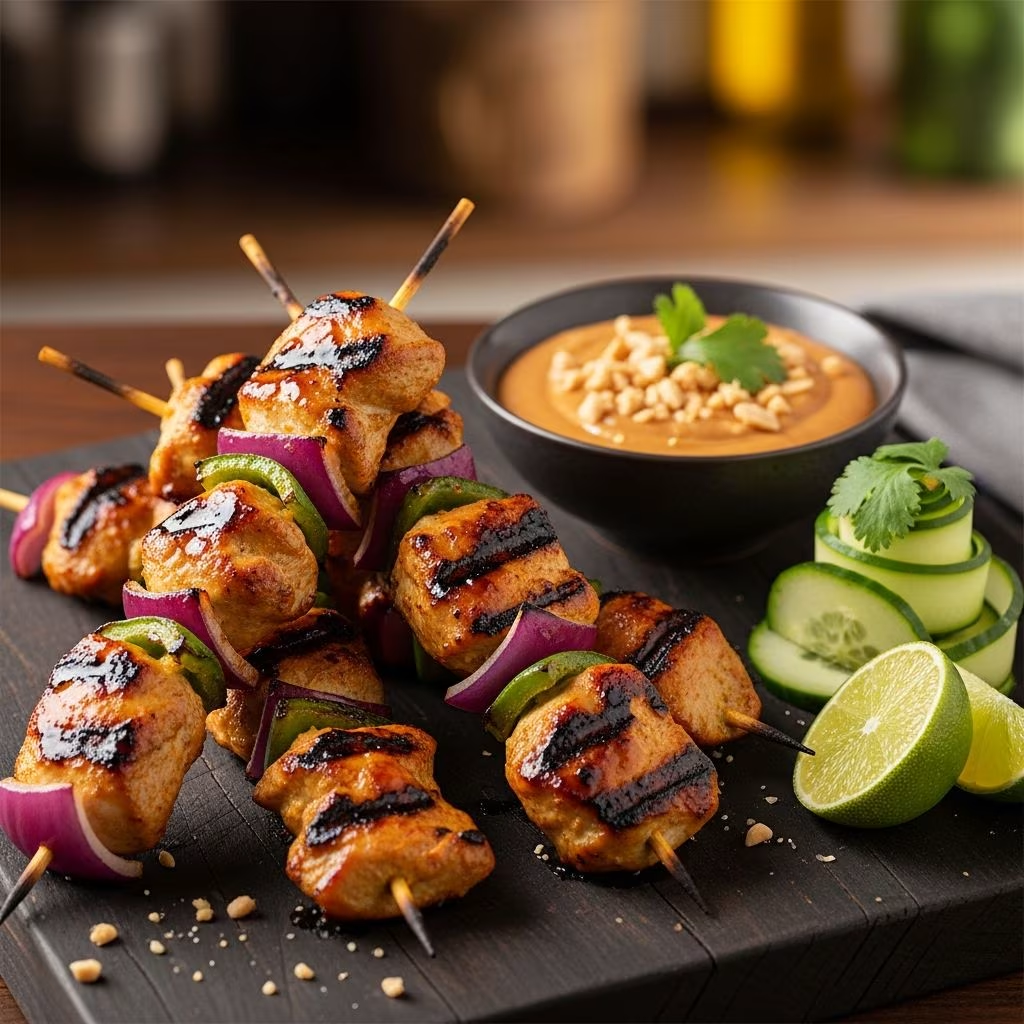
Chicken satay represents a beloved staple from Southeast Asian cuisine, featuring tender pieces of chicken marinated in aromatic spices, skewered, grilled to perfection, and paired with a luscious peanut sauce. This dish balances sweet, savory, spicy, and tangy flavors, making it versatile for appetizers, mains, or party platters. Whether you’re firing up the grill or using a stovetop, mastering chicken satay elevates your cooking game with minimal effort and maximum taste.
Understanding the Essence of Chicken Satay
Originating from Indonesia and popularized across Thailand, Malaysia, and beyond, chicken satay involves marinating meat in coconut milk and spice blends before grilling over charcoal for a smoky char. The hallmark is its juicy texture achieved through acidic and enzymatic tenderizers in the marinade, combined with high-heat cooking that locks in flavors. Unlike stir-fries, satay emphasizes simplicity: skewer, grill, dip, and enjoy.
Key to authenticity is the marinade’s complexity—lemongrass, turmeric, garlic, and chili create a golden hue and deep umami. The accompanying peanut sauce, a creamy emulsion of ground peanuts, coconut milk, and seasonings, provides contrast. Home cooks appreciate its make-ahead potential; marinate overnight for intensified taste without last-minute fuss.
Selecting the Best Chicken for Satay
Choose boneless, skinless **chicken thighs** over breasts for superior moisture retention during grilling. Thighs’ higher fat content prevents drying out, yielding succulent results even if slightly overcooked. Aim for 1.5 to 2 pounds to serve 4-6 people, cutting into 1-2 inch pieces for even cooking and easy skewering.
- Thighs: Ideal for flavor and tenderness; slice against the grain.
- Breasts: Leaner option; pound thin to avoid toughness.
- Avoid: Bone-in or frozen-thawed meat, which releases excess water.
Pro tip: Pat chicken dry before marinating to ensure spices adhere properly, promoting caramelization on the grill.
Crafting the Perfect Marinade
A great satay marinade infuses bold Southeast Asian notes. Start with coconut milk as the base for creaminess and tenderizing acids. Blend in fresh aromatics like smashed lemongrass (white parts only), garlic, shallots, and ginger for fragrance.
Spice it up with **turmeric** for color, coriander, chili powder, and curry paste for heat and earthiness. Sweeten lightly with sugar or brown sugar, and season with salt, fish sauce, or soy for umami. Lime juice adds brightness, balancing richness.
| Ingredient | Quantity (for 1.5 lbs chicken) | Role |
|---|---|---|
| Coconut milk | 1/3 cup | Tenderizes and adds creaminess |
| Lemongrass (2 stalks) | Chopped | Aromatic base |
| Turmeric powder | 2 tsp | Golden color and mild bitterness |
| Garlic & Shallots | 4 cloves + 6 small | Savory depth |
| Curry powder or paste | 1 tbsp | Complex spice blend |
| Fish sauce/Soy | 1-2 tbsp | Umami boost |
Blend until smooth, reserving 1/4 cup for peanut sauce. Toss chicken in the mix and refrigerate 30 minutes to overnight. Longer marination deepens flavor penetration.
Mastering the Peanut Dipping Sauce
No satay is complete without its signature peanut sauce—a velvety dip blending roasted peanuts or peanut butter with coconut milk, garlic, ginger, lime, and soy. This sauce doubles as a baste or simmer sauce for non-skewer versions.
Whisk peanut butter (natural, no sugar added for authenticity) with reserved marinade, lime juice/zest, brown sugar, and water to thin. Simmer gently to meld flavors, adjusting thickness with coconut milk. For heat, add chili flakes or paste. Stores in fridge up to a week; thin with water when reheating.
- Classic version: Peanut butter, coconut milk, fish/soy sauce, garlic, lime, sugar.
- Quick stovetop: Sauté aromatics, stir in peanuts and liquids.
- Variations: Add sesame oil or cilantro for twists.
Skewering and Grilling Techniques
Soak bamboo skewers in water 20-30 minutes to prevent burning. Thread 3-4 chicken pieces per skewer, leaving space for handling. Weave accordion-style for even exposure.
Preheat grill to high (450-500°F) for char marks. Oil grates to avoid sticking. Grill 2-4 minutes per side until internal temp hits 165°F, basting with oil or marinade. Indoor option: Broil or use grill pan, flipping frequently.
For smoky flavor, use charcoal; gas works too. Rest skewers 2 minutes post-grill for juice redistribution.
Alternative Cooking Methods
Not grilling? Bake chicken pieces in peanut sauce at 400°F for 25-30 minutes, stirring midway for saucy results—perfect for weeknights. Air fry at 375°F for 10-12 minutes, shaking basket halfway, for crispy edges without oil.
Oven-broil: High heat, 4-5 inches from element, 3 minutes per side. Stovetop: Medium-high in cast iron, 3-4 minutes per side. All methods yield juicy chicken when not overcooked.
Serving Suggestions and Pairings
Serve hot with peanut sauce, cucumber slices, and red onions for crunch and cooling contrast—a traditional trio. Rice or rice noodles absorb sauce; add pickled veggies for tang.
Party pleaser: Arrange on platters with extra sauce. Main dish: Pair with stir-fried veggies or mango salad. Garnish with cilantro, peanuts, and lime wedges.
Storage, Freezing, and Make-Ahead Tips
Store cooked satay in airtight container fridge up to 3 days; reheat in oven or microwave with damp paper towel. Freeze uncooked marinated chicken up to 2 months; thaw overnight before skewering.
Peanut sauce freezes well in portions. Make-ahead: Marinate chicken 1-2 days ahead; sauce up to a week.
Common Mistakes and Pro Tips
- Avoid overcrowding grill: Cook in batches for even heat.
- Don’t skip soaking skewers: Prevents flare-ups.
- Taste marinade first: Adjust salt/sweet before adding chicken.
- Use thermometer: Ensures food safety without drying.
- Experiment regionally: Thai leans curry-heavy; Malaysian turmeric-forward.
Nutrition and Customizations
Per serving (2 skewers + sauce): ~300 calories, 20g protein, 18g fat, 10g carbs. High in protein, healthy fats from peanuts/coconut.
Gluten-free: Use tamari. Dairy-free/vegan: Tofu or tempeh. Low-carb: Skip rice. Spicy level: Scale chili to taste.
Frequently Asked Questions (FAQs)
Can I use chicken breast instead of thighs?
Yes, but pound thin and avoid overcooking to prevent dryness.
How long does the marinade need to sit?
Minimum 30 minutes; ideal 6-24 hours for best flavor.
Is fish sauce necessary?
It adds authentic umami; substitute soy or coconut aminos.
Can I make this in advance for a party?
Absolutely—marinate ahead, grill fresh for best texture.
What’s the best way to get char without burning?
High heat, short cook time, and dry chicken surface.
This guide equips you to create restaurant-worthy chicken satay effortlessly. Experiment with spices to suit your palate and impress guests every time.
References
- Best Chicken Satay Recipe — Delish. 2019-10-15. https://www.delish.com/cooking/recipe-ideas/a27198099/best-chicken-satay-recipe/
- Chicken Satay (The Best Recipe!) — Rasa Malaysia. 2023-05-20. https://rasamalaysia.com/recipe-chicken-satay/
- How to Make Jet Tila’s Chicken Satay with Peanut Sauce — Food Network (YouTube). 2022-08-10. https://www.youtube.com/watch?v=ThrMvNpQBM8
- Thai Chicken Satay with Peanut Sauce — Budget Bytes. 2024-01-12. https://www.budgetbytes.com/thai-peanut-chicken/
- Chicken Satay with Peanut Sauce — The Modern Proper. 2023-11-05. https://themodernproper.com/chicken-satay-with-peanut-sauce
- Thai Chicken Satay with Peanut Sauce — RecipeTin Eats. 2024-03-18. https://www.recipetineats.com/thai-chicken-satay-peanut-sauce/