Chicken piccata represents one of the most accessible yet sophisticated dishes you can prepare in your home kitchen. This Italian-American classic combines thin, delicate chicken cutlets with a bright, tangy sauce that delivers restaurant-quality results in under thirty minutes. The beauty of this dish lies in its simplicity—just a handful of quality ingredients transformed through straightforward cooking techniques into something truly memorable.
Understanding the Origins and Evolution
Chicken piccata draws its lineage from Italian culinary traditions, particularly the technique of preparing scaloppine, which refers to thin slices of meat that are quickly sautéed or pan-fried. While the method is authentically Italian, the specific combination of ingredients and preparation style suggests an Italian-American interpretation that developed over generations of cooking in American kitchens. The foundational concept—pairing pan-fried meat with a bright lemon and butter sauce—remains deeply rooted in Italian cooking practices. However, the distinctive addition of capers as a defining component transformed the dish into something uniquely positioned between two culinary traditions.
The Essential Ingredients Explained
Creating authentic chicken piccata begins with understanding each ingredient’s role in the final dish. Rather than treating these components as mere line items on a shopping list, recognizing how they work together will improve your execution.
- Chicken: Boneless, skinless chicken breasts form the foundation of this dish. The preference for smaller breasts or cutlets ensures even cooking and tender results. You can also substitute with chicken cutlets or boneless skinless thighs as alternatives. The key is achieving uniform thickness for consistent doneness.
- Flour for dredging: A light coating of flour creates a delicate crust when pan-seared, providing textural contrast and helping develop the flavorful fond at the pan’s bottom. You typically won’t use all the flour in a recipe, as you only need enough to coat each piece lightly.
- Fats: A combination of butter and olive oil works best, with butter contributing richness while olive oil raises the smoke point. This pairing prevents the butter from burning while cooking at the necessary temperature.
- Garlic: Fresh sliced garlic adds aromatic depth to both the initial searing stage and the sauce itself. Using freshly minced or sliced garlic rather than pre-minced varieties noticeably improves flavor quality.
- Capers: These brined flower buds contribute a distinctive briny, slightly acidic pop that defines piccata. Rinsing them removes excess salt and allows their true flavor to shine without overwhelming the dish.
- Lemon: Both juice and zest contribute to the signature bright flavor profile. Fresh lemon juice is non-negotiable; bottled varieties lack the vibrant character essential to this dish.
- Wine: Dry white wine or additional chicken broth builds the sauce base, allowing flavors to meld and mellow. The wine reduces, concentrating flavors and cooking off the harsh alcohol notes.
- Chicken stock: Low-sodium chicken broth balances the lemon’s acidity while providing savory depth. The low-sodium variety gives you control over final salt levels.
Preparation Techniques for Success
The foundation of excellent chicken piccata rests on proper preparation before heat is applied. Taking time with these preliminary steps dramatically improves your results.
Preparing the Chicken
Begin by cutting your chicken breasts into uniform, thin cutlets. If using whole breasts, slice them lengthwise to create thinner pieces, then if needed, cut these pieces in half to achieve consistent thickness. Some cooks prefer the butterfly-and-cut method, which yields four cutlets from two large breasts. This uniform thickness ensures that all pieces cook at the same rate, eliminating the problem of overcooked edges paired with undercooked centers.
Season your chicken generously with salt, pepper, and a touch of garlic powder. This early seasoning allows the flavors to penetrate the meat rather than just sitting on its surface. After seasoning, coat each piece lightly but thoroughly in flour, shaking off any excess. The flour should adhere evenly but not clump.
The Searing Process
Preheat your skillet over medium-high heat before adding any protein. The pan should be hot enough that when you add the butter and oil mixture, it foams immediately. Add two tablespoons of butter along with one tablespoon of olive oil, allowing them to heat together until they shimmer and just begin to release their aromas.
Place your floured chicken pieces into the hot pan in a single layer, avoiding overcrowding. Each piece should have direct contact with the pan’s surface. Allow them to cook undisturbed for approximately three to four minutes on the first side, developing a golden-brown crust. This crust isn’t merely aesthetic—it traps juices inside while creating the flavorful fond that will anchor your sauce.
Flip each piece and cook for another three to four minutes until the second side achieves similar coloration. The chicken doesn’t need to be fully cooked through at this stage; residual heat and sauce simmering will complete the cooking process. Remove the seared chicken to a clean plate, reserving all the flavorful browned bits in the pan.
Building the Signature Piccata Sauce
The sauce transforms seared chicken into a complete dish. Understanding sauce construction helps you adjust consistency and flavor to your preferences.
Creating the Flavor Base
With the chicken removed, pour off any excess fat, leaving just enough to coat the pan’s bottom. Add minced or sliced garlic and briefly cook for about thirty seconds until fragrant. Next, pour in your dry white wine, allowing it to reduce by half as it simmers rapidly—approximately three minutes. This reduction concentrates wine flavors while cooking away the harshness.
Bringing in Brightness and Depth
Add your chicken broth to the pan, stirring to incorporate all the flavorful fond from the chicken’s searing. Then introduce fresh lemon juice and your rinsed capers. Some recipes incorporate a small amount of cream to mellow the sauce’s intensity, though this remains optional depending on your preferences. If using cream, you can reduce the broth to maintain balance.
Achieving the Perfect Consistency
The sauce should reach a glossy, slightly thickened consistency. Some recipes achieve this by whisking flour and butter together into a paste—called a beurre manié—and adding it to the sauce one small portion at a time. Roll remaining butter cubes in leftover flour, shaking off the excess, then add one at a time to the pan while whisking or stirring with a wooden spoon. This technique ensures a silky texture without lumps.
Allow the sauce to simmer until it reduces to your desired thickness. If it becomes too thick, add more broth in small increments. If it remains too thin, continue simmering to concentrate flavors and achieve the proper consistency. The final sauce should lightly coat the back of a spoon when ready.
Completing and Plating
Once your sauce reaches the correct consistency, taste and adjust seasonings. Add more lemon juice if you prefer additional brightness, more salt and pepper to suit your palate, or a pinch more capers for increased briny flavor. Gently add the seared chicken back into the pan along with fresh parsley, coating all pieces with the sauce. Cook for just two to three minutes to warm through—no longer, as extended cooking toughens the chicken.
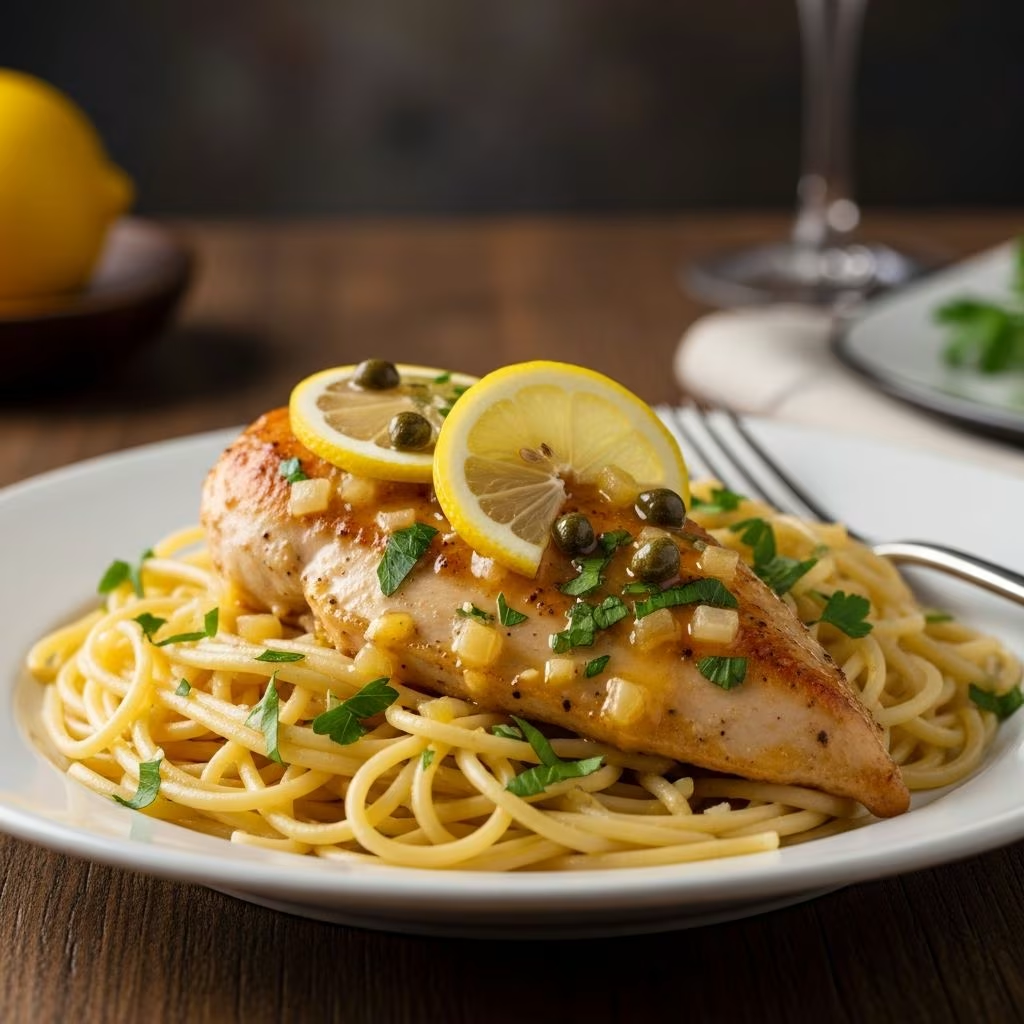
Transfer the chicken to serving plates or a platter, spooning the sauce generously over each piece. Garnish with remaining fresh parsley and lemon wedges for both visual appeal and additional seasoning options at the table.
Serving Suggestions and Pairings
Chicken piccata pairs beautifully with numerous sides that either complement or contrast its bright, lemony profile. Serve over pasta—particularly thin varieties like angel hair or linguine—which catch and hold the sauce wonderfully. Alternatively, crusty bread makes an excellent companion for soaking up the remaining sauce.
Roasted vegetables like asparagus, green beans, or zucchini provide textural variety and nutritional balance. A simple green salad with lemon vinaigrette echoes the dish’s flavor profile without overwhelming it. For wine pairings, stick with the same dry white wine used in cooking, or choose a crisp Pinot Grigio, Sauvignon Blanc, or similar light white variety.
Variations and Adaptations
While the classic preparation remains excellent, several variations allow personalization. A sheet pan version bakes chicken at 450°F with sliced lemons, vinegar, and broth, creating a hands-off approach perfect for entertaining. Cream-based versions incorporate heavy cream for a richer sauce. Some cooks add sun-dried tomatoes, artichoke hearts, or mushrooms for additional ingredients and complexity.
Troubleshooting Common Issues
| Problem | Cause | Solution |
|---|---|---|
| Tough, rubbery chicken | Overcooked or not pounded thin enough | Pound chicken to uniform 1/4-inch thickness; don’t extend cooking time beyond final warming stage |
| Sauce too acidic | Too much lemon juice or insufficient balancing ingredients | Add more broth or a splash of cream; reduce additional lemon juice in recipes |
| Sauce too thick | Over-reduced or excessive thickening agent | Thin with additional broth added gradually; simmer less before final assembly |
| Pale, unappetizing chicken | Pan not hot enough or pieces overcrowded | Ensure pan is properly preheated; cook in batches if necessary; don’t overcrowd |
| Greasy final dish | Too much oil and butter or insufficient draining | Use only the recommended fat quantities; drain excess after searing |
Frequently Asked Questions
How far in advance can I prepare chicken piccata?
Prepare the dish just before serving for optimal results. The chicken becomes rubbery when reheated, and the sauce loses its vibrant quality. However, you can prepare and refrigerate individual components—such as the rinsed capers, prepared garlic, and pounded chicken—up to one day ahead.
Can I use frozen chicken?
Thaw frozen chicken completely before cooking. Frozen chicken won’t pound properly and won’t develop the necessary crust during searing. Thoroughly pat thawed chicken dry with paper towels before proceeding.
What’s the best substitute if I don’t have capers?
Chopped green olives or cornichons provide similar briny, acidic notes. Use approximately the same quantity as called for in capers. In a pinch, additional lemon zest adds brightness, though it doesn’t replicate capers’ distinctive character.
Can I make this dish without wine?
Yes, simply increase the chicken broth to compensate for the wine’s liquid volume and acidity. The resulting sauce won’t have wine’s subtle complexity, but the dish remains delicious.
Is there a lighter version?
Reduce butter to two tablespoons total and use olive oil primarily. Skip any cream additions. The dish will be lighter while maintaining its essential character through the lemon, capers, and remaining butter.
Final Thoughts
Chicken piccata deserves its place in home cooking rotation due to its combination of simplicity, elegance, and genuinely impressive results. Master these fundamental techniques and proportions, and you’ll confidently prepare restaurant-quality meals that satisfy both casual weeknight dinners and more intentional entertaining occasions. The interplay between pan-seared chicken’s textural contrast and the bright, complex sauce creates something far more sophisticated than its ingredient list suggests. Begin with the classic preparation, then feel empowered to adapt based on personal preferences and ingredient availability.
References
- Chicken Piccata — Sip and Feast. Accessed April 2026. https://www.sipandfeast.com/chicken-piccata/
- Chicken Piccata – Spend With Pennies — Spend With Pennies. Accessed April 2026. https://www.spendwithpennies.com/chicken-piccata/
- Easy Chicken Piccata – Salt & Lavender — Salt & Lavender. Accessed April 2026. https://www.saltandlavender.com/chicken-piccata/
- Sheet Pan Chicken Piccata – The Defined Dish — The Defined Dish. Accessed April 2026. https://thedefineddish.com/the-best-sheet-pan-chicken-piccata/
- Chicken Piccata — The Modern Proper. Accessed April 2026. https://themodernproper.com/chicken-piccata
- A better Chicken Piccata – RecipeTin Eats — RecipeTin Eats. Accessed April 2026. https://www.recipetineats.com/chicken-piccata/