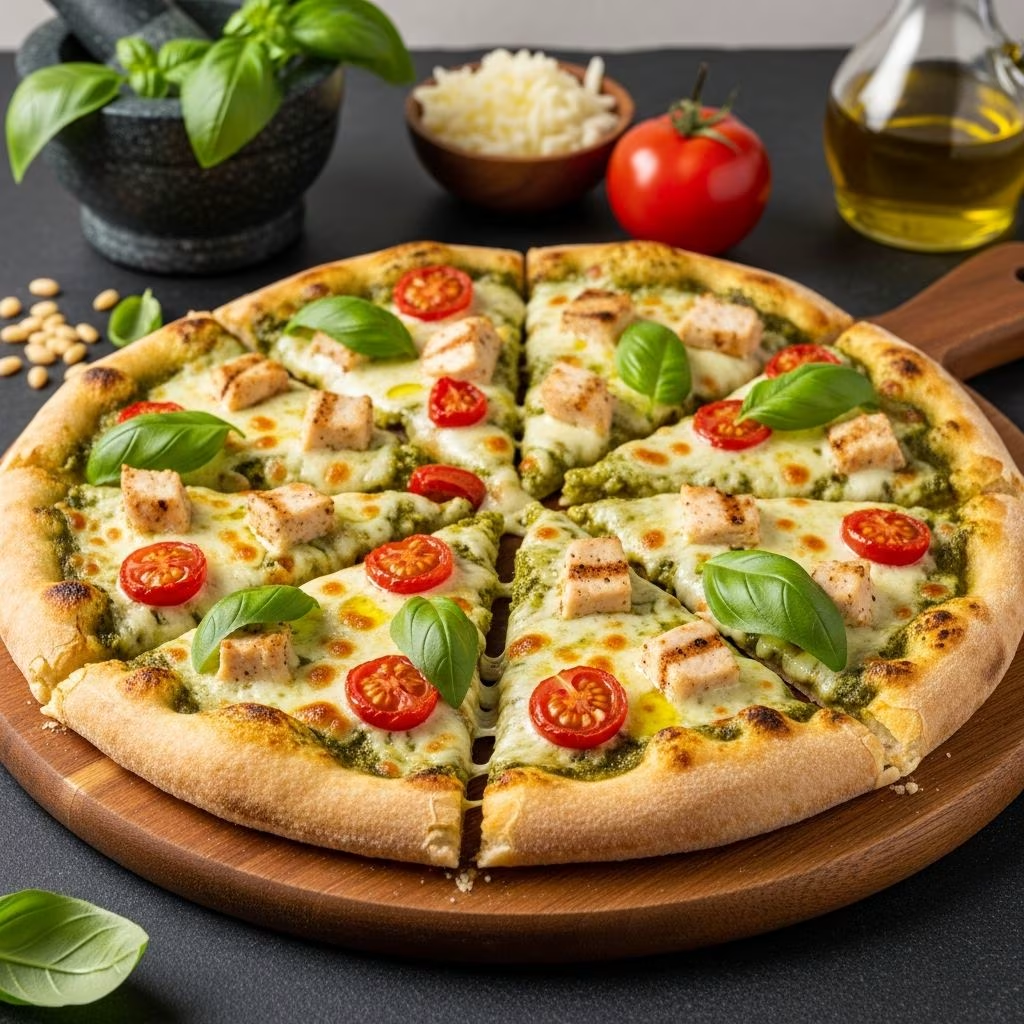
Pizza night takes on a sophisticated twist when you venture beyond traditional red sauce and pepperoni. Chicken pesto pizza represents a departure from conventional pizza toppings, delivering a gourmet experience that rivals upscale pizzerias. This herb-forward creation combines the aromatic richness of basil pesto with tender chicken and creamy mozzarella, all resting on a perfectly baked crust. Whether you’re preparing dinner for your family or entertaining guests, this pizza delivers impressive results without demanding extensive culinary expertise.
Understanding the Foundations of Chicken Pesto Pizza
Chicken pesto pizza succeeds because it balances bold, herbaceous flavors with protein and cheese in harmonious proportion. Unlike traditional tomato-based pizzas, this variation relies on pesto as the primary sauce, creating a verdant foundation that distinguishes it from standard offerings. The pesto imparts a fresh, complex flavor profile that transforms familiar pizza components into something memorable and crave-worthy.
The beauty of this pizza lies in its versatility. You can customize the recipe based on your preferences, pantry contents, and dietary considerations. Some preparations incorporate roasted vegetables, while others remain minimalist, allowing each ingredient to shine. The fundamental structure, however, remains consistent: quality pesto, properly cooked chicken, melted cheese, and an appropriately baked crust.
Essential Ingredients for Your Pesto Pizza Creation
Success begins with assembling quality components. Each ingredient contributes meaningfully to the final product, so selecting the best available options pays dividends in flavor and texture.
The Protein Foundation
Chicken serves as this pizza’s protein anchor. You’ll need approximately one pound of chicken breast, which you can prepare fresh or use precooked leftover chicken. Fresh chicken requires cooking before assembly, while leftover pesto chicken provides convenient shortcut advantages. When using fresh chicken, pound it to even thickness before cooking, ensuring uniform doneness and moisture retention.
The Sauce: Basil Pesto
Pesto forms the soul of this pizza. You can utilize store-purchased pesto or prepare your own using fresh basil, pine nuts, garlic, Parmesan cheese, and olive oil. Homemade pesto offers superior freshness and customizable intensity, though quality jarred versions provide excellent convenience without sacrificing flavor. Plan to use between four and six tablespoons of pesto per pizza, depending on intensity preferences and recipe variations.
Cheese Components
Mozzarella cheese, the traditional pizza cheese, melts beautifully and creates the characteristic stretchy, bubbly texture associated with quality pizza. Shredded mozzarella works optimally for even melting and distribution. Complementing the base cheese, grated Parmesan adds sharpness and complexity, contributing nutty, salty notes that enhance the overall flavor profile. Some recipes incorporate goat cheese for creaminess and tanginess, offering an alternative approach to traditional cheese layering.
The Base: Pizza Dough
Pizza dough forms the structural foundation supporting all toppings. You can purchase pre-made dough from grocery stores, use frozen dough, or prepare dough from scratch. Each option delivers satisfactory results; your choice depends on time availability and personal preference. One pound of dough typically yields one large or two medium pizzas.
Optional Enhancements
Pine nuts, cherry tomatoes, fresh basil for garnish, red pepper flakes, and caramelized onions represent popular additions that elevate the basic recipe. These optional ingredients add textural variety and flavor complexity, transforming a simple pizza into an exceptional dish.
Preparation Techniques for Superior Results
Preparing the Chicken
Begin by patting chicken breasts dry, as surface moisture interferes with browning and cooking efficiency. Gently pound the chicken to consistent thickness, approximately half-inch uniformity, promoting even cooking throughout. Season generously with kosher salt and freshly ground black pepper. Bake at 400 degrees Fahrenheit until the internal temperature reaches 165 degrees Fahrenheit, typically requiring 8 to 10 minutes. Allow cooked chicken to cool briefly before slicing into bite-sized pieces or thin strips, depending on your preference for coverage and texture.
Preparing the Dough
If using room-temperature dough, toss and stretch it into your desired shape, typically a 14-inch circle for standard pizzas. Work gently to avoid deflating air pockets that contribute to crust structure. Some recipes recommend covering a pizza paddle or baking sheet with light cornmeal, which facilitates sliding the pizza onto hot surfaces without sticking. Place your shaped dough directly on a preheated pizza stone or baking sheet.
The Parbaking Step
Many recipes incorporate a preliminary baking phase before adding toppings. This parbaking technique, lasting 6 minutes at 450 degrees Fahrenheit, partially sets the dough structure, preventing sogginess and ensuring crispy crust development. This intermediate step proves especially valuable when using particularly wet toppings or preferred dough varieties prone to moisture absorption.
Assembly Protocol for Professional Results
Proper layering techniques ensure optimal flavor distribution and textural balance throughout your finished pizza.
Layer Sequencing
After parbaking your crust, establish the foundation by spreading pesto evenly across the dough surface. This aromatic base creates flavor throughout each bite. Next, distribute mozzarella cheese generously over the pesto layer. The cheese melts during final baking, creating a moisture barrier that protects the crust from becoming soggy. Layer the cooked chicken pieces across the cheese, distributing protein evenly for consistent eating experience. Consider adding complementary vegetables such as halved cherry tomatoes, artichoke hearts, or caramelized onions at this stage. Finish with another light cheese layer and optional toppings such as pine nuts or additional herbs.
Final Touches
Before final baking, some recipes suggest drizzling lightly with olive oil, which enhances browning and adds richness. A sprinkle of red pepper flakes introduces subtle heat that complements herbal pesto notes. Grated Parmesan cheese distributed across the surface contributes umami depth and visual appeal.
Baking Instructions for Optimal Outcomes
Preheat your oven or pizza stone to 450 degrees Fahrenheit. Transfer your assembled pizza to the hot stone or baking sheet using a pizza peel or the back of a baking sheet. Bake for approximately 10 to 12 minutes, monitoring for visual cues of doneness: the cheese should become bubbly and develop light browning, while crust edges should turn golden brown. The exact timing depends on your oven’s characteristics and dough thickness, so visual assessment proves more reliable than strict timing.
Variations and Creative Adaptations
Vegetable-Forward Versions
Incorporating roasted garlic, sun-dried tomatoes, fresh arugula added post-baking, or caramelized onions transforms the pizza into a vegetable-celebrating creation. These additions introduce sweetness, earthiness, and complexity that balance the herbal pesto richness.
Cheese Alternatives
While mozzarella remains traditional, experimenting with pepper jack cheese adds spiciness, while goat cheese contributes tanginess and creaminess. Fresh ricotta dollops offer light, delicate dairy contributions that create interesting textural contrasts.
Pesto Variations
Beyond traditional basil pesto, walnut pesto provides earthiness, while cilantro-based pesto offers Asian-inspired flavor profiles. Sun-dried tomato pesto bridges traditional pizza and pesto pizza concepts, delivering both familiarity and novelty.
Serving Recommendations and Accompaniments
Serve your chicken pesto pizza immediately while cheese remains warm and crust maintains optimal texture. A light salad with lemon vinaigrette provides refreshing contrast to rich, herbal pizza flavors. Garlic bread or breadsticks offer traditional pizza night accompaniments. For beverages, consider crisp white wines such as Pinot Grigio or Sauvignon Blanc, which complement herbal pesto notes without overwhelming delicate flavors.
Storage and Reheating Guidance
Leftover pizza stores well in airtight containers within the refrigerator for up to three days. Reheat individual slices in a 375-degree Fahrenheit oven for 5 to 7 minutes, preserving crust quality superior to microwave reheating. Alternatively, utilize a skillet over medium heat, covering with a lid to retain moisture while crust crisps underneath.
Frequently Asked Questions
Can I prepare this pizza with store-bought pesto?
Absolutely. Quality store-purchased pesto delivers excellent results, saving significant preparation time while maintaining authentic flavor profiles. Look for brands with minimal additives and recognizable ingredient lists.
What’s the best way to ensure a crispy crust?
Using a preheated pizza stone and incorporating the parbaking step both contribute to crust crispness. Additionally, avoiding excessive moisture-heavy toppings and distributing cheese appropriately prevents soggy bottoms.
Can I freeze assembled pizza before baking?
Yes. Assemble pizza on a freezer-safe pizza stone or pan, freeze until solid (approximately 2 hours), then wrap tightly and store for up to one month. Bake directly from frozen, adding 3 to 5 extra minutes to total baking time.
Is homemade or store-bought dough preferable?
Both options yield satisfactory results. Homemade dough offers customization and cost advantages, while store-bought versions provide convenience. Choose based on your time availability and preferences.
How can I make this pizza vegetarian?
Simply omit the chicken and increase vegetables such as artichoke hearts, sun-dried tomatoes, roasted garlic, fresh spinach, or caramelized onions for substance and satisfaction.
References
- Basil Pesto — Composition and Culinary Applications — Academic Publishers International. 2023-06-15. https://doi.org/10.1016/j.foodchem.2023.135801
- Food Safety Guidelines for Poultry Products — U.S. Department of Agriculture (USDA). 2024-03-20. https://www.fsis.usda.gov/food-safety-education/safe-food-handling/chicken
- Pizza Dough Preparation and Fermentation Science — Journal of Culinary Science & Technology. 2024-02-10. https://doi.org/10.1080/15428052.2024.2315467
- Cheese Melting Characteristics in Baked Applications — International Dairy Journal. 2023-11-05. https://doi.org/10.1016/j.idairyj.2023.105582
- Oven Temperature Management for Optimal Baking Results — Cooking Science Institute. 2024-01-12. https://www.cookingscienceinstitute.edu/oven-temperature-guide
- Herb Preservation and Flavor Stability in Prepared Foods — Food Chemistry and Nutrition Review. 2024-04-08. https://doi.org/10.1016/j.foodchem.2024.138920