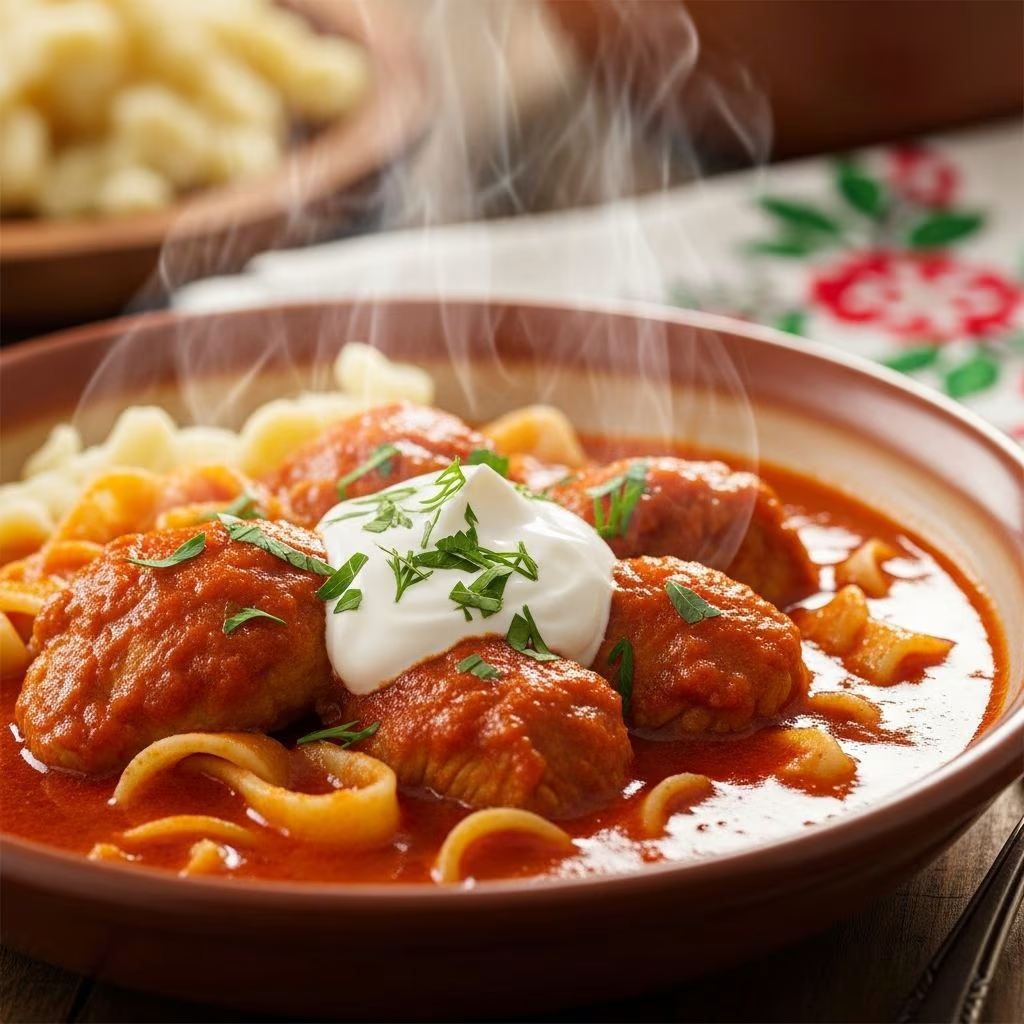
Chicken Paprikash, known as paprikás csirke in Hungarian, stands as one of the most cherished dishes from Hungary’s culinary tradition. This hearty stew features succulent chicken pieces enveloped in a luscious, paprika-infused cream sauce that delivers bold, earthy flavors with a touch of tanginess. Simple ingredients like onions, paprika, sour cream, and chicken come together to create a meal that’s both rustic and elegant, perfect for weeknight dinners or special gatherings.
The Roots and Rise of Paprikash in Hungarian Cuisine
Hungarian Chicken Paprikash traces its origins to the peasant kitchens of 18th- and 19th-century Hungary, where it emerged as a practical way to transform tougher, affordable cuts of meat into tender delights. Paprika, the star ingredient, arrived in Hungary via the Turks in the 16th century and quickly became integral to the nation’s food culture. This dish reflects the ‘working man’s food’ ethos—unpretentious, nourishing, and flavorful—using everyday staples to feed families.
Historically, paprikash was often made with rabbit or older chickens, simmered low and slow until fall-off-the-bone tender. Its popularity spread beyond Hungary, appearing in literature like Bram Stoker’s Dracula as ‘paprika hendl,’ cementing its status as a global comfort food icon. Today, it symbolizes Hungary’s paprika obsession, with the spice’s vibrant red hue and sweet-smoky profile defining the sauce’s signature appeal.
Essential Ingredients for Authentic Flavor
The beauty of Chicken Paprikash lies in its straightforward ingredient list, but quality matters immensely. Here’s what you need for a classic version serving 4-6:
- Chicken: 3-4 lbs bone-in, skin-on pieces (thighs, drumsticks, or a mix) for maximum flavor; boneless works for quicker cooking.
- Paprika: 3-4 tablespoons genuine Hungarian sweet paprika—avoid generic brands, as authentic ones offer superior sweetness and aroma.
- Onions: 2 large yellow onions, finely chopped, to form the flavor base.
- Sour cream: 1-2 cups full-fat for creaminess; heavy cream can substitute partially.
- Broth or water: 2-4 cups chicken broth for simmering.
- Garlic and tomatoes: 2 cloves garlic and 1-2 diced Roma tomatoes (optional for subtle acidity).
- Seasonings: Salt, pepper, and a touch of flour or butter for thickening.
- Accompaniments: Nokedli (Hungarian dumplings), spaetzle, egg noodles, or rice.
Pro Tip: Opt for high-quality Hungarian paprika from brands like Szeged or Prymat; it’s milder and fruitier than hot varieties, preventing bitterness.
Step-by-Step Guide to Cooking Chicken Paprikash
Preparing paprikash is a one-pot wonder that takes about 1-1.5 hours. Patience with the simmer yields the best results.
- Brown the chicken: Heat 3 tbsp oil or butter in a large Dutch oven over medium-high. Season chicken with salt and pepper, dredge lightly in flour, and sear until golden, 8-10 minutes. Remove and set aside.
- Sauté aromatics: In the same pot, add chopped onions (and garlic if using). Cook until soft and translucent, about 5-7 minutes. Stir in paprika off-heat to avoid burning—its oils release maximum flavor this way.
- Build the sauce: Add diced tomatoes, tomato paste (optional), and broth. Scrape up browned bits, return chicken, and bring to a simmer. Cover and cook low for 40-60 minutes until chicken is tender.
- Finish with cream: Temper sour cream with hot broth, then stir in to create a velvety sauce. Simmer 5 minutes more. Adjust seasoning.
- Serve: Spoon over nokedli or noodles, garnished with parsley.
This method ensures a cohesive, flavorful stew without separation in the sauce.
Perfect Pairings: Sides That Elevate Paprikash
No paprikash is complete without the right side to soak up that glorious sauce. Traditional options include:
- Nokedli or Spaetzle: Pillowy Hungarian dumplings made from flour, eggs, and milk—light yet starchy.
- Egg Noodles: Wide varieties mimic nokedli’s texture.
- Rice: Long-grain for a neutral base, as in some regional twists.
- Vegetables: Cucumber salad (uborkasaláta) with vinegar and dill for refreshing contrast; roasted potatoes or green beans.
For a modern twist, try mashed potatoes or polenta to vary the experience.
Variations and Modern Twists on the Classic
While purists stick to tradition, paprikash adapts well to contemporary kitchens. Compare core versions in this table:
| Variation | Key Differences | Best For |
|---|---|---|
| Traditional Bone-In | Bone-in chicken, water/broth, heavy simmer | Deep flavor, authenticity |
| Quick Boneless | Thighs/breasts, shorter cook time | Weeknights, kids |
| One-Skillet | Single pan, added peppers/tomatoes | Minimal cleanup |
| Hot Paprika | Hot smoked paprika for spice | Bold heat lovers |
Experiment with rabbit for historical accuracy or turkey for a lighter option. Vegan versions swap chicken for mushrooms and coconut cream.
Common Mistakes and Expert Tips for Success
Achieving restaurant-quality paprikash avoids these pitfalls:
- Burning paprika: Add it to cooled oil or off-heat; burnt paprika turns bitter.
- Curdled sauce: Always temper sour cream with warm liquid before adding.
- Watery sauce: Use broth, simmer uncovered at end, or slurry with flour.
- Wrong chicken: Bone-in yields richer broth; skinless is less flavorful.
Storage: Refrigerate up to 3 days; freezes well for 2 months. Reheat gently to preserve creaminess.
Scale up for crowds—it’s even better the next day as flavors meld.
Health Benefits and Nutritional Insights
Paprikash is nutrient-dense: Chicken provides lean protein (25g per serving), onions and peppers offer antioxidants, and paprika delivers vitamin C and beta-carotene. A balanced plate with veggies hits 500-700 calories, making it wholesome comfort food. Opt for low-fat sour cream to lighten it up.
Frequently Asked Questions (FAQs)
What makes Hungarian paprika special? It’s sweeter, smokier, and more vibrant than standard paprika, grown in Hungary’s ideal climate.
Can I make paprikash in a slow cooker? Yes—brown first, then cook on low 6-8 hours.
Is Chicken Paprikash spicy? Traditional versions use sweet paprika, so mild; add hot for heat.
What’s the best chicken cut? Thighs for juiciness; mix bone-in for authenticity.
How do I make nokedli? Mix flour, egg, milk, salt; drop batter into boiling water via colander.
Why Paprikash Endures as a Global Favorite
Chicken Paprikash captivates with its simplicity and depth, bridging generations and borders. Whether you’re a novice cook or seasoned chef, this dish promises warmth and satisfaction in every bite. Gather your ingredients and simmer up a pot—your kitchen will fill with the irresistible aroma of Hungary.
References
- Hungarian Chicken Paprikash Recipe — A Spicy Perspective. 2023. https://www.aspicyperspective.com/hungarian-chicken-paprikash-paprikas/
- Hungarian Chicken Paprikash — Chef Lindsey Farr. 2022-10-15. https://cheflindseyfarr.com/hungarian-chicken-paprikas-homemade-spaetzle/
- Authentic Chicken Paprikash — The Daring Gourmet. 2024. https://www.daringgourmet.com/chicken-paprikash-paprikas-csirke/
- Hungarian Chicken Paprikash Recipe (Paprikás Csirke) — Fare Isle. 2023. https://fareisle.com/hungarian-chicken-paprikash/
- Hungarian Chicken Paprikash — Just a Taste. 2021. https://www.justataste.com/hungarian-chicken-paprikash-recipe/