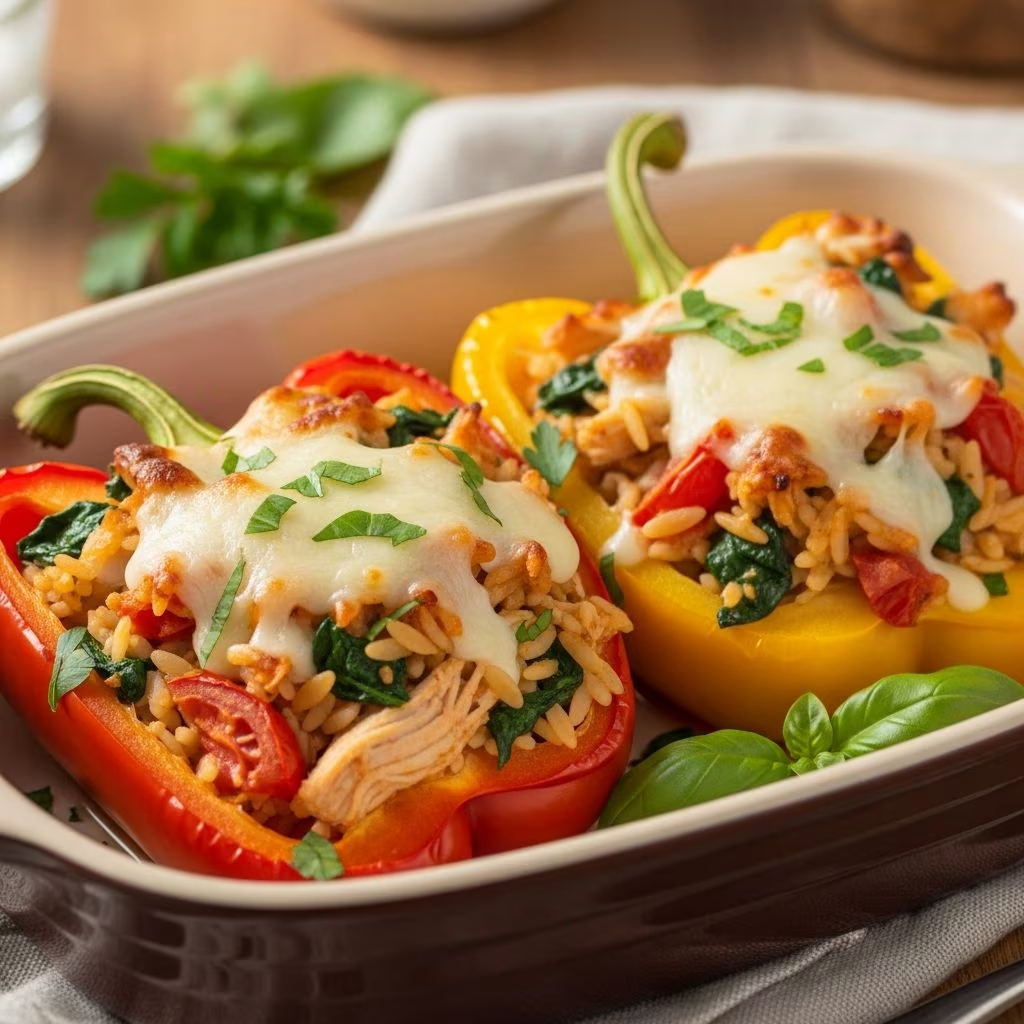
Bell peppers make an ideal canvas for creative filling combinations, transforming simple ingredients into an elegant dish suitable for both casual weeknight dinners and impressive gatherings. This particular preparation combines small, rice-shaped orzo pasta with shredded chicken, aromatic vegetables, and savory cheese to create a complete meal housed within colorful pepper halves. The beauty of this dish lies in its versatility—it accommodates various protein preparations, cheese selections, and flavor profiles while maintaining straightforward cooking techniques accessible to home cooks of all skill levels.
Understanding Your Core Ingredients
The foundation of this recipe relies on several key components that work synergistically to develop layers of flavor. Bell peppers serve as both vessel and vegetable, contributing natural sweetness and a slight earthiness to the overall composition. Their mild flavor profile allows complementary ingredients to shine without overwhelming the palate. When selecting peppers, choose specimens that feel firm and rest stably on a cutting surface, as this ensures even cooking and prevents filling from spilling during the baking process.
Orzo pasta, despite its appearance, behaves differently from traditional long-strand pasta varieties. Its small, oval shape allows it to cook quickly while absorbing surrounding liquids, creating a slightly creamy consistency that binds with other filling components naturally. This texture becomes essential when stuffing peppers, as the pasta holds together the mixture without requiring excessive binders or additives.
Chicken provides lean protein that pairs harmoniously with Mediterranean and Italian-inspired seasonings. Using pre-cooked rotisserie chicken streamlines preparation significantly, eliminating the need for a separate cooking step. Alternatively, poaching fresh chicken breasts or shredding leftover cooked chicken reduces overall prep time while maintaining consistency and quality. The protein content makes this dish particularly satisfying, creating a nutritionally balanced meal requiring only simple side accompaniments.
Essential Flavor Components and Seasonings
Aromatic vegetables form the flavor foundation upon which the entire dish builds. Yellow onions, when diced finely and cooked until translucent, provide natural sweetness and umami depth. Minced garlic contributes pungent, savory notes that permeate the entire filling when added early in the cooking process. These ingredients, sautéed briefly in olive oil before combining with chicken and orzo, establish a flavorful base that enhances every subsequent component.
Ground cumin and black pepper introduce warm spice and subtle heat without overwhelming delicate flavors. Cumin’s earthy undertones complement both the sweetness of roasted peppers and the richness of melted cheese beautifully. The careful balance of these seasonings creates complexity while remaining approachable for those sensitive to spicy ingredients. Fresh herbs like oregano or basil can intensify Mediterranean character, while thyme provides earthiness reminiscent of classic comfort food preparations.
Preparation Steps and Timing Considerations
Successful execution begins with proper ingredient preparation. Bell peppers require thorough cleaning and careful halving to create stable vessels for filling. Removing seeds and internal ribs completely prevents any bitter notes from transferring to the finished dish. Creating a level base by trimming a thin slice from the bottom of each pepper half ensures they remain upright during cooking, preventing filling displacement and uneven cooking.
The filling preparation sequence matters considerably. Beginning with aromatics in heated olive oil allows their flavors to develop fully before introducing other components. Adding chicken and cumin at this stage permits the spice to bloom throughout the oil, intensifying its contribution to the overall flavor profile. The orzo then cooks directly in chicken broth, absorbing savory liquid and developing tender texture simultaneously. This integrated approach creates cohesion that wouldn’t result from cooking components separately.
Pre-baking empty pepper halves for approximately ten minutes at 375°F partially softens their structure, reducing overall cooking time in the final stage. This intermediate step prevents peppers from remaining too firm while allowing the filling to heat through completely. However, avoiding over-softening maintains structural integrity necessary for containing filling without collapse.
Technique Breakdown for Optimal Results
| Stage | Temperature | Duration | Purpose |
|---|---|---|---|
| Pepper Pre-baking | 375°F | 10 minutes | Softens peppers partially for even cooking |
| Filling Preparation | Medium Heat | 15-18 minutes | Develops flavors and cooks orzo completely |
| Final Assembly Baking | 375°F | 10-15 minutes | Melts cheese and ensures thorough heating |
Cheese Selection and Application Methods
Cheese performs multiple functions within this dish, providing richness, facilitating binding, and creating appealing texture contrast. Parmesan cheese, when grated fresh and scattered across filled pepper halves before final baking, creates a golden crust while contributing sharp, complex flavors. Pecorino Romano offers slightly more assertiveness than standard Parmesan, with mineral notes that complement Mediterranean elements particularly well. For creamier preparations, blending ricotta into the filling itself adds luxurious mouthfeel without requiring additional liquid adjustment.
Applying cheese at different stages produces varying results. Mixing grated cheese directly into the filling distributes flavors evenly throughout, while topping peppers before baking creates concentrated richness in each bite’s top layer. Combining both methods—incorporating some cheese into the mixture while reserving additional cheese for topping—creates textural interest and ensures consistent flavor distribution.
Customization Possibilities and Flavor Variations
The base preparation welcomes numerous modifications accommodating dietary preferences and ingredient availability. Greek-inspired variations incorporate kalamata olives, crumbled feta, fresh basil, and cherry tomatoes, transforming the dish toward Mediterranean herbaceousness. Buffalo chicken devotees can replace some liquid with hot sauce, substitute standard cheese with blue cheese crumbles, and add ranch dressing to the filling, creating spicy, tangy profiles suited to those preferring bolder flavors.
Vegetable additions increase nutritional value while introducing diverse textures. Diced zucchini, grated and squeezed to remove excess moisture before mixing, adds volume without overwhelming other flavors. Sautéed mushrooms contribute earthiness, while sun-dried tomatoes introduce concentrated umami and slight acidity. Spinach, briefly wilted before incorporation, adds vibrant color and subtle mineral notes.
Protein alternatives accommodate various dietary approaches. Ground turkey substitutes for shredded chicken when creating a leaner preparation, while ground beef produces richer, more substantial results. Vegetarian versions replace chicken with additional vegetables, legumes, or plant-based proteins while maintaining recipe structure and cooking methodology.
Storage Guidelines and Make-Ahead Strategies
These stuffed peppers maintain quality when refrigerated properly, making them excellent candidates for advance preparation. Assembled peppers, whether pre-baked or fully cooked, store safely in covered containers for three to four days. Reheating occurs best in a 350°F oven for approximately fifteen minutes, allowing even warming without drying filling components. Alternatively, covering peppers loosely with foil and microwaving for three to four minutes per pepper restores heat quickly for weeknight convenience.
Freezing extends storage capacity considerably. Fully cooked peppers freeze successfully for up to three months when wrapped individually in plastic wrap, then placed in freezer bags with air removed. Thawing overnight in the refrigerator before reheating preserves texture and flavor integrity better than directly reheating from frozen state. Uncooked assembled peppers can also freeze for several weeks, though cooking them without thawing requires additional time and may produce uneven results.
Nutritional Considerations and Dietary Applications
This recipe provides balanced macronutrient distribution, combining protein from chicken and cheese with carbohydrates from orzo and vegetables, plus beneficial fats from olive oil. The inclusion of multiple vegetable components increases fiber content and micronutrient density without excessive calorie contribution. Bell peppers contribute vitamin C and antioxidants, while chicken provides lean protein supporting satiety and muscle maintenance.
Portion sizes typically run one to two pepper halves per person, depending on appetites and accompanying sides. This sizing proves flexible for various dietary approaches, whether served alone as a complete meal or paired with salads and additional vegetables for enhanced nutrition. The recipe adapts readily to lower-carbohydrate specifications by substituting cauliflower rice for orzo or reducing pasta quantities while increasing vegetable volume.
Serving Suggestions and Complementary Pairings
Simple accompaniments allow this flavorful main to remain the centerpiece without competition. Crisp green salads dressed with vinaigrette provide textural contrast and acidic balance to rich filling components. Garlic bread offers indulgence when entertaining, though its heaviness may overshadow more delicate preparations. Steamed or roasted vegetables—particularly broccoli, asparagus, or Brussels sprouts—contribute nutrition while echoing flavors present in the filling.
Wine pairings enhance dining experiences significantly. Crisp white wines like Pinot Grigio or Sauvignon Blanc complement Mediterranean variations, while fuller whites such as Chardonnay pair well with creamier preparations. Light red wines work surprisingly well, particularly with versions incorporating beef or heartier seasonings.
Troubleshooting Common Preparation Challenges
Peppers that remain too firm after cooking typically indicate insufficient pre-baking time or oven temperature being too low. Extending the pre-baking stage by five minutes and ensuring oven temperature reaches indicated levels resolves this issue. Conversely, overly soft peppers that collapse during serving suggest extended cooking times; reducing final baking duration by a few minutes prevents this problem in subsequent preparations.
Filling that seems dry or doesn’t hold together suggests inadequate orzo hydration or insufficient liquid in chicken broth. Adding extra liquid gradually during the filling preparation stage—approximately two to three tablespoons at a time—corrects this without creating soupy results. Cheese incorporation often aids binding naturally.
Unevenly cooked peppers indicate unequal sizing or placement on the baking sheet. Selecting similarly-sized peppers before beginning and arranging them on a single level of the baking sheet ensures consistent cooking. If using peppers of varying sizes, placing smaller ones toward the hotter oven sections compensates for their faster cooking times.
Frequently Asked Questions
Can this dish be prepared completely in advance? Yes, assemble peppers earlier in the day and refrigerate until ready to bake. Cooking time may extend slightly, though the convenience significantly outweighs minor additional minutes required.
What if I prefer whole peppers rather than halves? Whole peppers require increased cooking time, approximately 45-50 minutes total. Carefully remove just the top portion and seeds to create an opening for filling, then proceed with the same preparation steps.
How can I reduce sodium content in this recipe? Using low-sodium chicken broth, reducing added salt, and limiting cheese quantities decreases overall sodium without compromising flavor significantly, particularly when using flavorful aromatics and spices abundantly.
Are there suitable substitutions for orzo pasta? Small pasta shapes like ditalini or small shells produce similar results. Rice, farro, or quinoa provide completely different textures while maintaining overall structure and satisfaction levels.
Can this recipe accommodate dietary restrictions? The flexibility of this dish accommodates most dietary needs—gluten-free pasta for celiac individuals, dairy-free cheese for vegan preparations, and protein alternatives for various preferences.
References
- Stuffed Peppers with Rotisserie Chicken and Orzo — Cutco. Accessed April 2026. https://cutco.com/learn/stuffed-peppers-with-rotisserie-chicken-orzo/
- Greek Stuffed Peppers with Chicken and Orzo — Feast and Farm. Accessed April 2026. https://feastandfarm.com/greek-stuffed-peppers-with-chicken-and-orzo/
- Chicken and Orzo Stuffed Peppers — Thyme With Caroline. Accessed April 2026. https://thymewithcaroline.com/chicken-and-orzo-stuffed-peppers/
- Buffalo Chicken Stuffed Peppers with Orzo — Jawns I Cooked. Accessed April 2026. https://jawnsicooked.com/dinner/buffalo-chicken-stuffed-peppers-with-orzo/