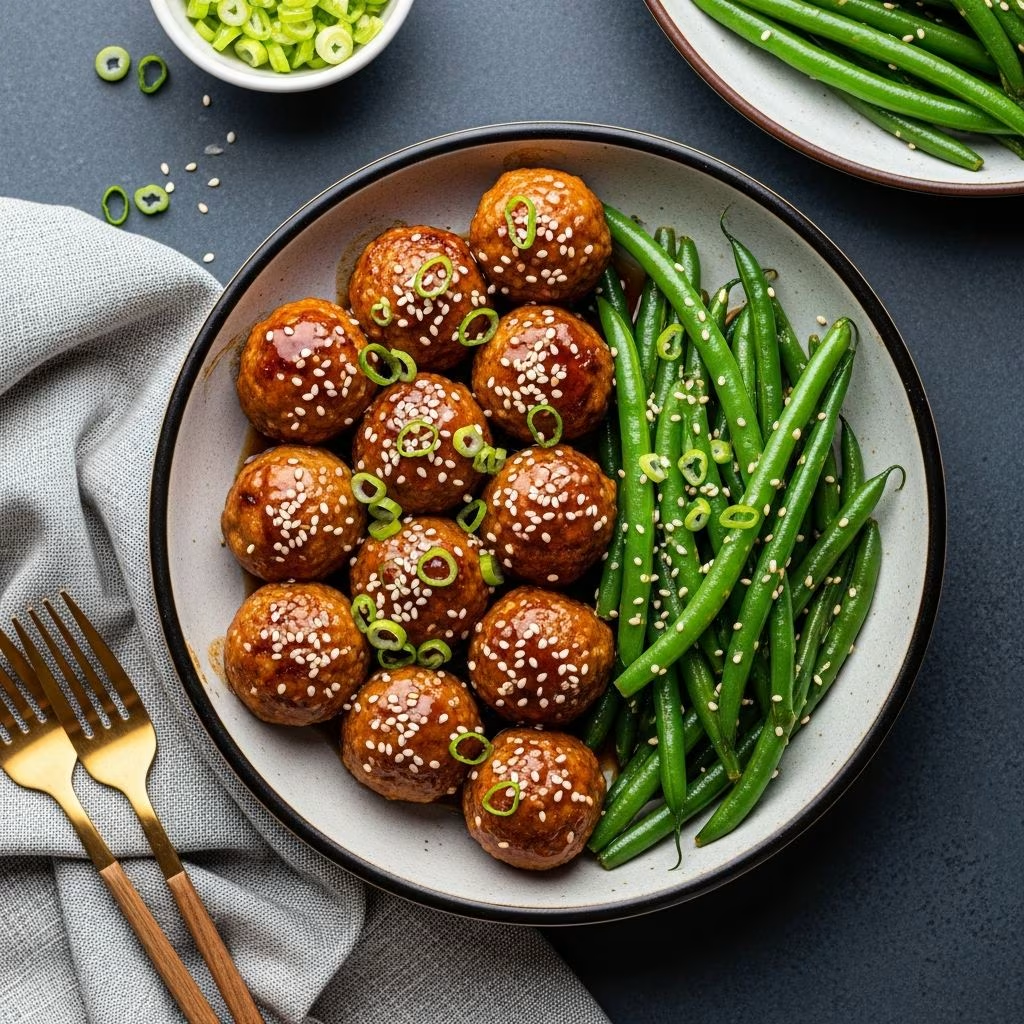
Creating a memorable dinner that combines tender poultry, vibrant vegetables, and complex flavors doesn’t require hours in the kitchen. This comprehensive guide walks you through the process of preparing succulent chicken meatballs complemented by crisp green beans finished with sesame seasoning. The dish showcases how simple ingredients transform into a sophisticated meal when proper techniques are applied. Whether you’re planning a family dinner or impressing guests, understanding the fundamentals of this recipe ensures consistent, delicious results.
Understanding the Foundation: Key Ingredients and Their Roles
Success begins with quality components. The base of your meatballs starts with one pound of ground chicken, which provides lean protein while maintaining moisture when handled correctly. Fresh scallions contribute both flavor and texture, while garlic cloves add pungent depth. Panko breadcrumbs serve as a binder that keeps the meatballs tender rather than dense, and an egg acts as the adhesive that holds everything together.
The seasoning profile relies on several key elements. Crushed red pepper flakes introduce subtle heat that builds throughout the dish. Kosher salt, measured carefully, enhances all flavors without overwhelming the delicate chicken. Rice vinegar provides the acidic backbone that balances the umami-rich components. Tahini brings nutty undertones and creaminess to the accompanying sauce, while miso paste delivers concentrated savory depth.
For the glaze, soy sauce forms the primary flavor driver, offering saltiness and umami complexity. Sugar counterbalances the salt with sweetness while helping the sauce achieve a glossy coating. Additional rice vinegar in the glaze adds brightness that prevents the final dish from feeling heavy.
Preparation Strategy: Setting Yourself Up for Success
Before cooking begins, organize your workspace and prep ingredients. Trim green beans by snapping off the stem ends or using a knife. Slice scallions into distinct sections—reserve the dark green tops for garnish, as they maintain their color and provide fresh contrast to the finished dish. The pale green and white portions get finely chopped and mixed into the meatball base.
Preheat your oven to 450 degrees Fahrenheit. This higher temperature ensures the meatballs develop light browning while the green beans roast to tenderness. Having everything prepared before mixing the meat prevents the proteins from warming up, which can affect texture.
Building the Meatball Mixture: Technique and Timing
Combine the chopped scallion whites and pale green portions with finely grated garlic, egg, panko, red pepper flakes, olive oil, and kosher salt in a large bowl. Mix these ingredients thoroughly, then let the mixture rest for five minutes. This pause allows the panko to absorb moisture and develop binding properties, resulting in meatballs that hold together without becoming rubbery.
After the resting period, add the ground chicken and mix gently using your hands. Overworking the meat develops gluten in the panko, creating dense, compact meatballs. A light touch produces meatballs with an open crumb structure that remains moist during cooking. Using oiled hands prevents sticking and makes shaping easier.
Form meatballs approximately two tablespoons in size, roughly the dimensions of a golf ball. Uniform sizing ensures even cooking—smaller portions cook through before larger ones dry out, while oversized meatballs may remain raw inside when the exterior appears done.
The Tahini Sauce: Building Complementary Flavors
While the meatballs rest, prepare the tahini-based sauce that dresses the green beans. Whisk together tahini, miso, rice vinegar, a pinch of sugar, and two tablespoons of water. The tahini creates a creamy base that coats the vegetables, while miso adds funky, fermented notes. Rice vinegar provides the acidic component that prevents the sauce from tasting one-dimensional. This mixture should be smooth and pourable, with a consistency similar to ranch dressing.
Simultaneous Roasting: Coordinating Components
Place trimmed green beans on a rimmed baking sheet, drizzle with oil, and season with salt. Toss to coat evenly, ensuring each bean has contact with the oil for proper browning. Arrange the shaped meatballs on the same baking sheet, positioning them so they don’t touch. The green beans occupy the outer edges while meatballs cluster in the center.
Roast for thirteen to seventeen minutes, turning the meatballs halfway through cooking. The green beans should become tender with light browning on the tips, while the meatballs remain pale but reach an internal temperature of 165 degrees Fahrenheit.
Creating the Soy Glaze: From Liquid to Glossy Coating
As the proteins and vegetables roast, prepare the signature glaze. In a cold small saucepan, whisk together one-third cup soy sauce, two-thirds cup rice vinegar, and five tablespoons of sugar. Starting with cold ingredients prevents the sugar from clumping and ensures smooth dissolution. Place the pan over medium-high heat and cook while whisking occasionally, about eleven to thirteen minutes. The mixture transforms from a thin liquid into a thick, syrupy reduction that coats the back of a spoon.
Watch carefully during the final minutes, as the glaze can go from perfectly thickened to scorched quickly. When ready, remove from heat and whisk in the remaining one tablespoon of rice vinegar. This final addition of vinegar adds brightness to the glaze without preventing it from setting properly.
Assembly and Finishing Touches
Transfer the roasted meatballs to a large bowl and pour the warm glaze over them. Toss gently to distribute the glaze evenly. The glaze will thicken further as it cools, so continue tossing periodically. This repeated motion builds up layers of glaze on each meatball, creating a glossy finish.
In another bowl, combine the roasted green beans with the tahini sauce and add sesame seeds according to taste preference. Toss thoroughly to coat every bean with the creamy sauce.
For serving, divide steamed rice among shallow bowls or wide plates. The rice acts as an absorbent base that catches any dripping sauce. Top each portion with glazed meatballs and sesame-dressed green beans. Spoon any remaining glaze from the bowl over the top, and garnish with the reserved dark green scallion slices.
Essential Cooking Considerations and Substitutions
| Component | Standard Ingredient | Alternative Option | Notes |
|---|---|---|---|
| Poultry Base | Ground chicken | Ground turkey | Turkey offers slightly more structure but less moisture |
| Breadcrumb Type | Panko | Regular breadcrumbs | Panko creates lighter texture; regular breadcrumbs produce denser meatballs |
| Sesame Component | Tahini paste | Sesame oil in dressing | Tahini creates creamier sauce; oil provides nuttier flavor |
| Miso Type | Standard white or red miso | Chickpea miso | Different miso varieties alter umami intensity and saltiness |
| Heat Level | Red pepper flakes | Sriracha or chili garlic sauce | Liquid chilis distribute more evenly; adjust quantities carefully |
Timing and Make-Ahead Strategies
The complete recipe requires approximately forty-five minutes from start to finish, with most time spent on cooking rather than active preparation. You can prepare individual components ahead to streamline dinner preparation. Mix the meatball base up to four hours in advance, storing it in the refrigerator. Shape meatballs an hour before roasting and refrigerate them uncovered, which allows the exterior to dry slightly and firm up.
Prepare the tahini sauce up to two days in advance. The soy glaze also stores well—make it several hours ahead and reheat gently before using. Having these elements ready means you simply need to roast the meatballs and green beans, making this an excellent option for busy weeknights.
Serving Suggestions and Flavor Pairings
This dish naturally pairs with steamed rice, which absorbs the rich glazes and provides textural contrast to the tender meatballs. Short-grain white rice or jasmine rice both work beautifully. For those avoiding rice, consider serving over cauliflower rice for fewer carbohydrates, or alongside noodles for an entirely different presentation.
Complement the main dish with additional vegetables such as steamed broccoli, sautéed mushrooms, or roasted carrots. A simple cucumber salad with rice vinegar provides cooling contrast to the umami-forward glaze. For beverages, light Asian beers, sake, or white wine with good acidity balance the dish’s richness.
Common Questions About Preparation and Cooking
Why does resting the meatball mixture matter?
The five-minute rest allows panko to hydrate and develop binding capacity. This prevents meatballs from falling apart during cooking while maintaining a tender interior structure.
Can I bake these meatballs at a lower temperature?
Yes, reduce to 400 degrees Fahrenheit and bake for eighteen to twenty minutes. Higher temperatures create slight browning; lower temperatures produce paler meatballs with identical internal doneness.
What if my glaze appears grainy?
Sugar crystallization occurs when the mixture cools too quickly or wasn’t fully dissolved initially. Reheat gently while whisking, or start fresh with cold ingredients and dissolve sugar completely before cooking.
How do I know when meatballs are fully cooked?
Use an instant-read thermometer—the internal temperature should reach 165 degrees Fahrenheit. Chicken remains pale even when cooked through, so don’t rely on color alone to judge doneness.
Can I freeze these meatballs?
Yes, freeze uncooked meatballs on a tray before transferring to freezer bags for up to three months. Bake directly from frozen, adding a few extra minutes to cooking time.
Nutritional Perspective and Dietary Considerations
This recipe provides lean protein from the ground chicken while incorporating vegetables through both the meatball mixture and the green bean component. The tahini sauce contributes healthy fats and minerals including calcium and magnesium. One serving contains approximately 300-350 calories before the rice accompaniment, making it suitable for balanced meal planning.
For gluten-free preparation, substitute tamari for soy sauce and confirm that all other ingredients meet dietary requirements. The panko can be replaced with gluten-free breadcrumbs or crushed nuts. For those with tree nut allergies, omit the tahini sauce and instead dress the green beans with a soy-vinegar mixture.
Scaling the Recipe for Different Occasions
The base recipe serves four as a main course with rice and vegetables. To serve six to eight people, increase all quantities by 50% but maintain cooking temperatures and times—simply work in batches or use a larger baking sheet with careful spacing. For appetizer portions, form smaller meatballs using one tablespoon portions instead of two tablespoons each, reducing baking time to ten to twelve minutes and creating approximately thirty pieces for serving.
This adaptability makes the recipe suitable for family dinners, entertaining guests, or preparing components for the week ahead. The individual elements reheat well, allowing you to compose fresh plates even several days later.
References
- Bon Appétit: Chicken Meatballs with Sesame Green Beans — Condé Nast. 2023. https://www.bonappetit.com/recipe/chicken-meatballs-with-sesame-green-beans
- USDA FoodData Central: Ground Chicken, Raw — U.S. Department of Agriculture. 2024. https://fdc.nal.usda.gov/
- Institute of Medicine: Dietary Reference Intakes for Energy, Carbohydrate, Fiber, Fat, Fatty Acids, Cholesterol, Protein, and Amino Acids — National Academies Press. 2005. https://doi.org/10.17226/10490