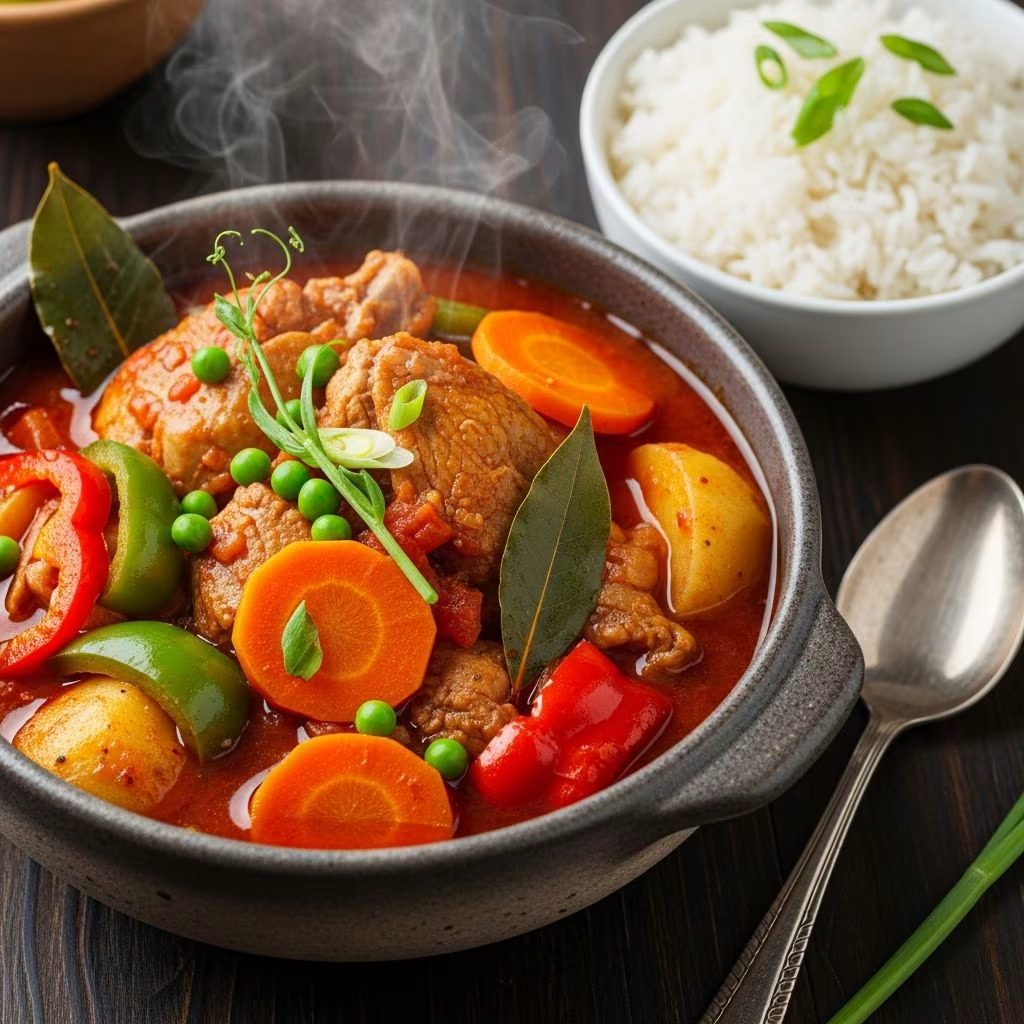
Chicken Afritada stands as a cornerstone of Filipino home cooking, offering a comforting blend of tender poultry, colorful vegetables, and a robust tomato sauce. This one-pot wonder draws from Spanish influences introduced during colonial times, yet it has evolved into a staple that captures the essence of everyday Filipino meals. Families across the archipelago prepare it for lunch or dinner, appreciating its simplicity and satisfying taste.
Origins and Cultural Significance in Filipino Kitchens
The dish’s name derives from the Spanish term ‘fritada,’ hinting at its frying origins, but in Filipino tradition, it transforms into a simmered stew. Introduced via Spanish colonization, Afritada adapted local ingredients like fish sauce and soy for umami depth, distinguishing it from similar stews like Menudo or Caldereta. It’s commonly served over rice, making it a budget-friendly protein source in households where rice is the daily staple.
In modern Philippines, Chicken Afritada appears at fiestas, everyday gatherings, and even school cafeterias. Its versatility allows home cooks to tweak it with available produce, ensuring it remains relevant across regions from Luzon to Mindanao. This adaptability underscores its role as comfort food that nourishes both body and soul.
Essential Ingredients for Authentic Flavor
Core components revolve around chicken, tomatoes, and vegetables, creating a balanced meal. Chicken thighs or legs provide richness due to their fat content, while boneless options suit quicker cooking. Tomato paste or sauce forms the base, delivering acidity and color, often enhanced by broth for depth.
Vegetables like potatoes, carrots, and bell peppers add texture and sweetness. Aromatics—garlic and onions—build the foundation, with bay leaves infusing subtle earthiness. Filipino staples such as fish sauce (patis) and soy sauce elevate savory notes, while optional sugar balances tartness.
Standard Ingredients List
| Ingredient | Quantity | Purpose |
|---|---|---|
| Chicken (thighs or mixed pieces) | 1.5-2 lbs | Main protein, tenderizes in stew |
| Tomato sauce or paste | 1.5-2 cups | Sauce base, tangy flavor |
| Potatoes | 2-4 medium, cubed | Heartiness and starch |
| Carrots | 1-2 large, sliced | Sweetness and crunch |
| Bell peppers | 1-2 (red/green) | Color and mild pepper taste |
| Garlic & Onion | 4 cloves & 1 medium | Aromatic base |
| Fish sauce & Soy sauce | 1-2 tbsp each | Umami boost |
| Bay leaves & Broth/Water | 2 leaves & 1.5-2 cups | Herbal notes and liquid |
Step-by-Step Guide to Cooking Chicken Afritada
Preparation takes about 15 minutes, with cooking around 40-50 minutes, yielding 4-6 servings. Use a Dutch oven or deep pot for even heat distribution.
- Prep the chicken: Cut into serving pieces, season with soy sauce and pepper. Marinate 15-30 minutes for flavor penetration.
- Sauté aromatics: Heat 2 tbsp oil over medium. Brown garlic, then onions until translucent, about 3 minutes.
- Brown the chicken: Add marinated pieces, cook until lightly seared, 5-7 minutes. Stir in fish sauce for 1 minute to mellow.
- Build the sauce: Mix in tomato paste/sauce, cook 2 minutes to caramelize. Pour broth/water, add bay leaves, sugar. Boil then simmer covered 20 minutes.
- Add vegetables: Incorporate potatoes and carrots first, simmer 10 minutes. Add bell peppers last 5 minutes to retain crispness.
- Finish and rest: Taste, adjust seasoning. Let sit 5 minutes off heat for flavors to meld. Serve hot.
This method ensures chicken tenderness and sauce reduction, with oil surfacing as a sign of doneness.
Variations to Suit Every Palate
While traditional recipes stick to basics, creativity abounds. For creaminess, stir in processed cheese or liver spread near the end, mimicking upscale versions. Pineapple chunks introduce tropical sweetness, balancing tomatoes—a twist seen in some regional adaptations.
Substitute pork for chicken in ‘Pork Afritada,’ or go vegetarian with tofu and mushrooms. Green peas add pops of color and nutrition in the final minutes. Spicy enthusiasts dash hot sauce or chili flakes during simmering. For gluten-free, skip soy and use tamari; ensure broth is compliant.
- Quick version: Use canned tomatoes and pre-cut veggies for 30-minute prep.
- Instant Pot adaptation: Sauté on high, pressure cook 10 minutes.
- Low-carb: Omit potatoes, double carrots or add zucchini.
Pro Tips for Restaurant-Quality Results
Achieve perfection with these insights. Brown ingredients separately to build fond—those tasty bits enhance sauce. Add veggies in stages: roots first, peppers last, preventing mushiness. If sauce thickens too much, splash water; for richer body, reduce uncovered last 10 minutes.
Fresh bell peppers yield best vibrancy; frozen work in pinches. Marinating chicken overnight intensifies taste. Leftovers improve next day—reheat gently with splash of water. Store in airtight containers up to 3 days refrigerated, or freeze 2 months.
Nutrition Profile and Health Benefits
A serving (about 1.5 cups) offers around 400-500 calories, packing protein from chicken (25-30g), fiber from veggies (5g+), and vitamins A/C from peppers/carrots. Tomatoes provide lycopene, an antioxidant linked to heart health. Fish sauce adds sodium, so moderate for low-salt diets.
Approximate Nutrition per Serving (4 servings)
| Nutrient | Amount | % Daily Value |
|---|---|---|
| Calories | 450 | 23% |
| Protein | 28g | 56% |
| Carbs | 25g | 9% |
| Fat | 22g | 28% |
| Sodium | 900mg | 39% |
| Vitamin C | 60mg | 67% |
Balanced macros make it diabetes-friendly when portioned right. Pair with brown rice for extra fiber.
Pairing Suggestions and Serving Ideas
Serve steaming over jasmine rice to soak up sauce. Complement with ensalada (cucumber-tomato salad) for freshness, or atchara (pickled papaya) for tang. Beverage-wise, iced calamansi juice cuts richness, or beer for casual meals.
For parties, scale up and garnish with green onions or fried garlic. Kids love milder versions sans peppers; adults appreciate heat spikes.
Frequently Asked Questions (FAQs)
What makes Chicken Afritada different from other stews?
It emphasizes tomato sauce and initial frying, setting it apart from cream-based or peanut-sauce dishes like Adobo.
Can I use chicken breast?
Yes, but thighs stay juicier; breasts dry out if overcooked—add later.
Is fish sauce necessary?
Essential for authentic umami; substitute Worcestershire if unavailable.
How do I know it’s done?
Chicken reaches 165°F internally, potatoes fork-tender, sauce oil-floats.
Freezer-friendly?
Absolutely—portion, thaw overnight, reheat on stovetop.
Chicken Afritada embodies Filipino hospitality—simple ingredients yielding profound comfort. Experiment confidently; each pot tells a story of adaptation and tradition.
References
- Chicken Afritada | Simple Sundays — Kitchen Confidante. 2023-05-15. https://kitchenconfidante.com/filipino-chicken-afritada-stew-recipe
- Chicken Afritada (Filipino Chicken Stew) — Food and Journeys. 2024-02-10. https://foodandjourneys.net/chicken-afritada/
- Basic Chicken Afritada Recipe — Panlasang Pinoy. 2023-11-20. https://panlasangpinoy.com/basic-chicken-afritada/
- Creamy Chicken Afritada — Kawaling Pinoy. 2024-01-05. https://www.kawalingpinoy.com/creamy-chicken-afritada/
- The best easy Chicken Afritada Recipe — Foxy Folksy. 2023-08-12. https://www.foxyfolksy.com/chicken-afritada/
- Chicken Afritada with Pineapple Recipe – Filipino Style — YouTube (Video). 2022-06-18. https://www.youtube.com/watch?v=31afwRtGT9A
- Chicken Afritada — Jo Cooks. 2023-09-30. https://www.jocooks.com/recipes/chicken-afritada/
- Filipino chicken afritada with potatoes, bell pepper, and peas — Sunbasket. 2024-03-22. https://sunbasket.com/recipe/filipino-chicken-afritada-with-potatoes-bell-pepper-and-peas