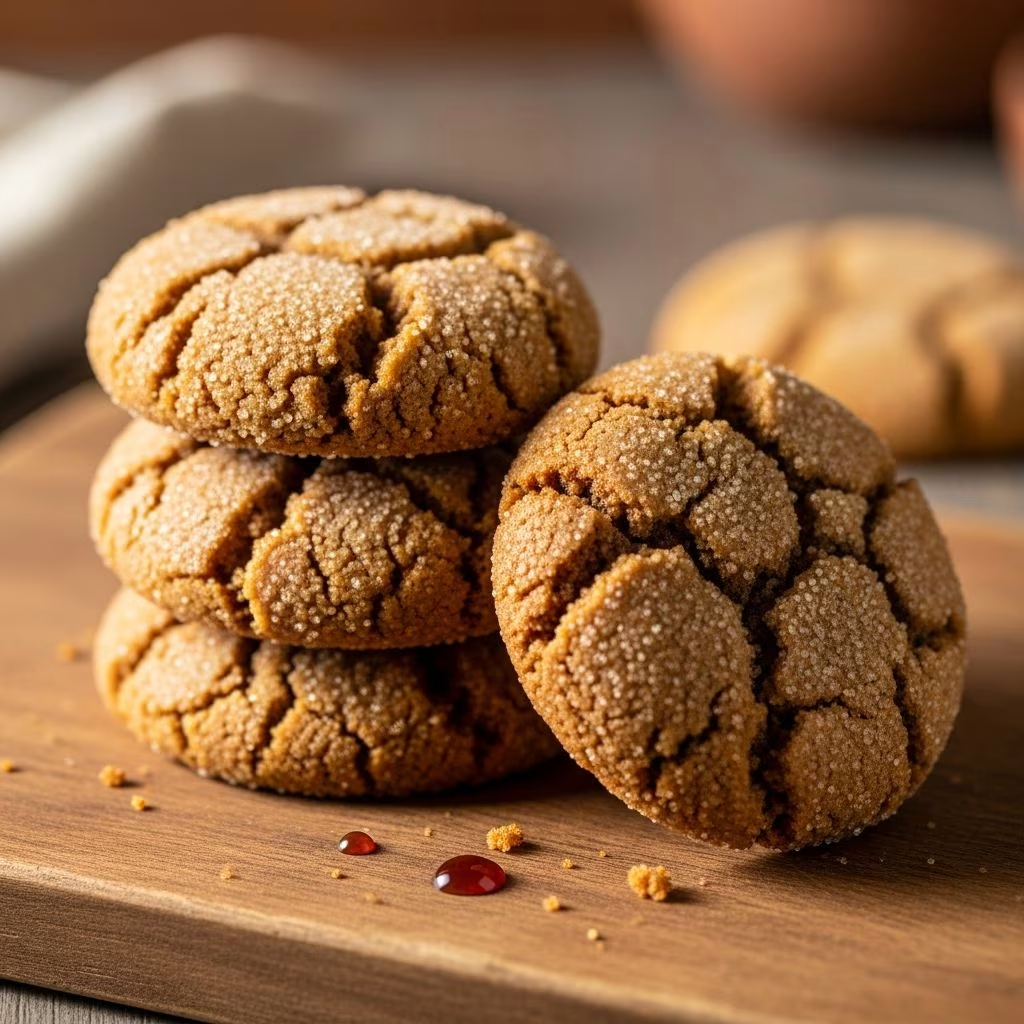
Chewy molasses cookies stand out as a beloved classic in the world of home baking, offering a perfect balance of soft centers, crisp edges, and rich, aromatic flavors. These treats derive their signature taste from unsulfured molasses, a thick syrup that imparts deep caramel notes alongside warming spices such as ginger, cinnamon, and cloves. Ideal for holiday gatherings or cozy afternoons, they evoke nostalgic memories while being simple enough for bakers of all levels to perfect.
The Allure of Molasses in Cookie Baking
Molasses plays a starring role in these cookies, providing not just sweetness but also moisture that ensures a chewy texture. Unlike refined sugars, molasses retains minerals like iron and calcium, adding a subtle nutritional boost to this indulgent snack. Opt for unsulfured varieties to avoid bitterness, as they allow the natural flavors to shine through without chemical aftertastes.
Historically, molasses cookies trace back to early American settlers who used the byproduct of sugar refining as an affordable sweetener. Today, they remain a staple in fall and winter baking, often appearing on cookie platters alongside gingerbread and sugar cookies. Their versatility makes them suitable for dunking in milk, pairing with coffee, or even sandwiching with cream cheese frosting.
Essential Ingredients for Perfect Results
Gathering the right components is key to achieving the desired chewiness and spice profile. Here’s a breakdown of what you’ll need:
- Flour: All-purpose flour forms the base, typically around 2 to 2.5 cups, spooned and leveled for accuracy to prevent dense cookies.
- Fats: Softened unsalted butter or coconut oil, about 1/2 cup, creams with sugars for lightness.
- Sugars: A mix of granulated and brown sugar (1/3 to 1 cup total) for structure and chew, plus extra granulated for rolling.
- Molasses: 1/3 to 1/2 cup unsulfured blackstrap or mild molasses for that signature depth.
- Egg: One large egg binds the dough and adds richness.
- Leaveners and Salt: Baking soda (2 teaspoons) reacts with molasses acidity for rise; salt (3/4 teaspoon) enhances flavors.
- Spices: Ground ginger (1-1.5 teaspoons), cinnamon (1-1.5 teaspoons), optional nutmeg, cardamom, or cloves for warmth.
These proportions, drawn from proven recipes, yield about 24-30 cookies depending on size. Measure precisely—baking is a science where small adjustments impact texture dramatically.
Step-by-Step Guide to Baking Success
Follow these instructions meticulously for cookies that puff, crackle, and stay soft for days.
- Preheat and Prep: Set oven to 350-375°F and line sheets with parchment to prevent sticking and ensure even browning.
- Cream Wet Ingredients: Beat softened butter (or oil) with sugars until fluffy, 2-3 minutes. Incorporate molasses, egg, and vanilla until smooth.
- Combine Dry Ingredients: Whisk flour, baking soda, salt, and spices in a separate bowl.
- Mix Dough: Gradually add dry to wet on low speed, stirring just until no flour streaks remain. Add 1 tablespoon water if dough seems dry.
- Chill: Refrigerate dough 20 minutes to 48 hours. This step intensifies flavors and prevents spreading.
- Shape and Coat: Scoop 1-2 tablespoon balls, roll in granulated sugar for sparkle and crackly tops, place 2 inches apart.
- Bake: 8-10 minutes until edges set but centers are soft. They firm up as they cool.
- Cool: Rest on sheet 5-10 minutes, then transfer to racks.
Avoid overbaking; underdone cookies achieve maximum chewiness. If tops don’t crack, gently tap the sheet post-oven.
Tips and Tricks for Superior Texture
Achieving the ideal soft-chewy balance requires attention to detail:
- Room-temperature butter creams best; melted fat leads to thin cookies.
- Chill dough to control spread—overnight chilling yields the best flavor melding.
- Use a cookie scoop for uniform size, ensuring even baking.
- For extra crackle, press dough balls lightly before baking.
- High-altitude bakers: Reduce baking soda slightly and increase flour by 1-2 tablespoons.
| Common Issue | Solution |
|---|---|
| Flat, spread-out cookies | Chill dough longer; use less butter or cooler oven. |
| Crunchy instead of chewy | Bake shorter time; store in airtight container. |
| No crackly tops | Roll generously in sugar; tap sheet after baking. |
| Too spicy | Reduce ginger/cloves by half; taste dough and adjust. |
Spice Variations to Suit Every Palate
Customize your batch with these spice blends:
- Classic Ginger Snap: Boost ginger to 2 teaspoons, add 1/2 teaspoon cloves.
- Cardamom Twist: Swap cloves for 1/4 teaspoon ground cardamom for floral notes.
- Chocolate Chip Addition: Fold in 1 cup dark chocolate chips post-mixing for decadence.
- Vegan Version: Use coconut oil, flax egg (1 tbsp flax + 3 tbsp water), and plant milk.
- Gluten-Free: Substitute 1:1 gluten-free flour blend; add 1/4 tsp xanthan gum if not included.
Experiment cautiously—spices intensify post-baking.
Storage and Freezing for Longevity
Fresh-baked cookies stay soft 3-5 days in an airtight tin at room temperature. Layer with parchment to prevent sticking. Refrigerate up to 2 weeks, though they may harden—revive by microwaving 5 seconds.
Freeze unbaked dough balls up to 3 months; roll in sugar upon thawing and bake fresh. Baked cookies freeze well in bags for 2 months, ideal for holiday prep.
Nutritional Profile and Serving Ideas
A typical cookie (1 oz) offers ~150 calories, 6g fat, 22g carbs, 1g protein. Molasses contributes iron (10% DV per tablespoon). Serve with hot cider, ice cream sandwiches, or as gift jars with custom spice labels.
Frequently Asked Questions
Can I substitute honey for molasses?
Honey alters flavor and texture; use blackstrap molasses for authenticity, or half honey-half molasses as a milder sub.
Why are my cookies tough?
Overmixing develops gluten—stir gently. Ensure proper chilling and avoid overbaking.
How do I make them vegan?
Replace butter with coconut oil, egg with flax egg. They retain chewiness beautifully.
What’s the best molasses type?
Unsulfured mild or robust for balanced sweetness; blackstrap for bolder, mineral-rich taste.
Can dough be made ahead?
Yes, up to 48 hours chilled or freeze for months. Flavor improves with time.
Scaling Up for Gifting and Events
Double the recipe seamlessly; bake in batches to maintain oven temperature. Package in tins with recipe cards for thoughtful gifts. For events, pair with savory cheese platters to balance sweetness.
These cookies not only satisfy cravings but also connect generations through shared baking rituals. With practice, you’ll master a go-to recipe that’s endlessly adaptable.
References
- Great-Grandma’s Old-Fashioned Chewy Molasses Cookie Recipe — Melissa K Norris. Accessed 2026. https://melissaknorris.com/old-fashioned-molasses-cookie-just-like-great-grandmas/
- Chewy Molasses Cookies Recipe — Love and Lemons. Accessed 2026. https://www.loveandlemons.com/molasses-cookies/
- Soft & Chewy Molasses Cookies — Preppy Kitchen. Accessed 2026. https://preppykitchen.com/molasses-cookies/
- Seriously Soft Molasses Cookies — Sally’s Baking Addiction. Accessed 2026. https://sallysbakingaddiction.com/soft-molasses-cookies/