Understanding the Components of This Dish
This sophisticated yet approachable dish combines two complementary elements that work in harmony to create a memorable dining experience. The foundation rests on the interplay between a luxurious, protein-rich sauce and vegetables prepared using high-heat cooking techniques. Each component brings distinct flavors and textures that elevate simple ingredients into something extraordinary. The beauty of this preparation lies in its simplicity—by focusing on quality ingredients and proper technique, home cooks can achieve results that rival fine dining establishments without requiring extensive culinary training.
The Role of Cashews in Southeast Asian Cuisine
Cashews have become increasingly prominent in modern Asian cooking, though they represent a relatively recent addition to traditional Southeast Asian pantries. These creamy nuts serve as an excellent substitute for coconut cream in vegan and dairy-free applications while maintaining the richness expected in contemporary Asian dishes. When blended into a smooth paste, raw cashews create a velvety base that accepts flavor infusions readily. The natural sweetness of cashews provides balance against spicy, acidic, and umami elements in the sauce. Unlike heavy cream or coconut milk, cashew cream offers a lighter texture while preserving mouthfeel and satiety.
The transformation from whole nut to silky sauce requires proper hydration and blending technique. Room-temperature water mixed with raw cashews creates the ideal consistency for whipping without breaking the mixture or producing a grainy texture. This versatile base serves as the canvas upon which other bold flavors are applied.
Sambal Oelek: The Spicy Foundation
Sambal oelek represents one of the most fundamental condiments in Indonesian cooking and increasingly appears in pantries across the globe. This chili-based paste traditionally combines red chiles, garlic, and salt to create a flavor bridge that adds heat and complexity without overwhelming other ingredients. The paste’s viscosity and concentrated flavor mean that a small quantity delivers substantial impact. When incorporated into the cashew sauce, sambal oelek introduces layers of chile heat that gradually build on the palate rather than striking immediately. The fermented qualities of traditionally prepared sambal add depth beyond simple spiciness.
Commercial sambal oelek products vary in heat level and ingredient composition, so adjusting quantities allows cooks to customize the final dish’s intensity. For those who prefer less heat, reducing sambal oelek and increasing honey creates a sweeter, milder sauce. Conversely, additional sambal transforms the dish into something considerably more daring and provocative.
Flavor Balancing with Acid and Sweetness
Professional chefs across Asian culinary traditions emphasize the importance of balancing four fundamental taste elements: spicy, sour, salty, and sweet. This particular sauce achieves this balance through several ingredients working in concert. Fresh lime juice provides the acidic component that brightens the sauce and prevents it from tasting flat or one-dimensional. The citrus notes cut through the richness of the cashew base while complementing the heat from the sambal. Honey introduces sweetness that counteracts the spice and adds subtle floral notes. Low-sodium soy sauce contributes umami—that savory fifth taste—while adding necessary saltiness that ties the entire composition together.
The interplay among these elements creates complexity that keeps the palate engaged throughout the meal. No single flavor dominates; instead, they work cooperatively to produce a rounded, complete sauce.
Preparing the Cashew Base
Begin by measuring one cup of raw cashews, ensuring they have not been roasted or salted. Blanching or soaking raw cashews before blending produces a noticeably whiter, creamier sauce compared to using dry nuts directly. Soaking for thirty minutes to two hours in room-temperature water softens the nuts and makes them easier for blenders to process into a smooth consistency. This step proves particularly important for older blenders that lack the high power of modern high-speed models.
After soaking, drain the cashews thoroughly and reserve the soaking liquid. Using fresh water rather than the soaking liquid ensures the sauce maintains a neutral flavor without any oxidized or off-tastes that develop during soaking. Add the drained cashews to your blender along with approximately one-half cup of fresh water. Begin blending at a low speed, gradually increasing to high speed. The mixture will progress from chunky to grainy to eventually becoming smooth and creamy. This transformation typically requires three to five minutes of continuous blending, depending on equipment power.
Building Layers of Flavor
Once the cashew base reaches the desired consistency, add the complementary ingredients that define the sauce. A one-inch piece of fresh ginger root introduces warmth and subtle spiciness that complements rather than competes with the sambal. Peel the ginger before adding it to the blender; the thin skin can become stringy during blending. Fresh ginger provides more vibrant flavor than ground versions, offering brightness that helps the sauce feel fresh rather than heavy.
Incorporate juice from half a lime, which should be fresh-squeezed rather than bottled for optimal flavor. The natural oils and live acids in fresh citrus create a more pronounced brightness. Two tablespoons of low-sodium soy sauce add saltiness and umami depth, though the quantity should be adjusted based on personal preference and the salt content of other ingredients. One tablespoon of honey balances the heat and saltiness, creating a harmonious whole. Finally, add one tablespoon of sambal oelek and one-half teaspoon of salt.
Rather than adding all ingredients simultaneously, many experienced cooks prefer to add them incrementally, blending between additions and tasting as they progress. This method allows for better control over the final flavor profile and reduces the risk of over-correcting if too much of one ingredient is added.
Achieving the Perfect Texture
The ideal sauce consistency falls between pourable and spreadable—thick enough to coat the broccolini evenly but thin enough to drizzle across a plate. If the sauce becomes too thick, add water one tablespoon at a time while blending until the desired consistency is achieved. Conversely, if the sauce appears too thin, add more soaked cashews or allow the mixture to rest, as some liquid separation naturally occurs. The sauce will thicken slightly as it cools, so accounting for this when hot directly from the blender prevents over-thinning.
Preparing Broccolini for Peak Flavor
Broccolini differs from standard broccoli in several important ways that affect cooking methodology. With its thinner stems and smaller florets, broccolini cooks more quickly and develops more surface area for charring. Select bunches with vibrant green color and firm stems; yellowing indicates age and reduced quality. Rinse the broccolini and pat dry thoroughly—moisture on the surface prevents proper charring and creates steam that produces rubbery rather than crispy results.
Trim the lower portions of the stems, removing approximately one-half to one inch from the base. While the entire stem is edible once cooked, this trimming removes the fibrous exterior layer in favor of more tender flesh. Toss the broccolini with high-heat oil—peanut, vegetable, or avocado oil work well—along with kosher salt and freshly ground black pepper. A light coating ensures proper browning without creating an oily final dish.
The Charring Technique
High-temperature cooking transforms broccolini from simple vegetable to something with pronounced caramelized flavors and textural contrast. Heat a large skillet or cast-iron pan over medium-high to high heat until a water droplet immediately sizzles and evaporates when it contacts the surface. Working in a single layer without overcrowding, arrange the broccolini in the hot pan. Resist the urge to move the vegetables constantly; instead, allow them to sit undisturbed for two to three minutes per side. This contact creates the browning reactions—the Maillard reaction and caramelization—that develop complex flavors and desirable color.
The goal is to achieve dark spotting and charring on the florets and stems while maintaining a tender but still slightly firm texture. Total cooking time typically ranges from six to ten minutes depending on broccolini size and heat intensity. The vegetables should remain vibrant green rather than turning dark or becoming mushy. Transferring the finished broccolini to a paper towel-lined plate allows excess oil to drain while the residual heat continues very mild cooking.
Plating and Presentation
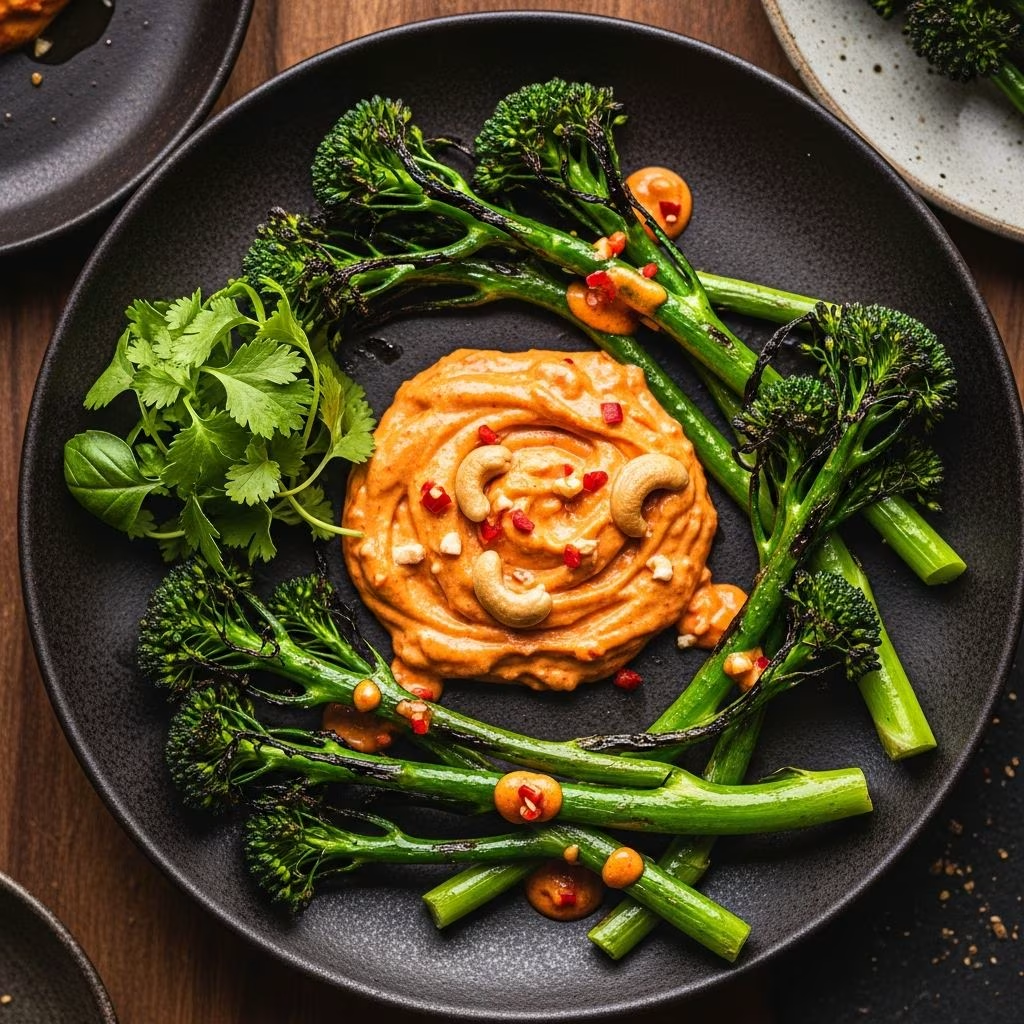
Arrange the charred broccolini on a serving plate or individual plates in a visually appealing manner. Rather than piling the vegetables haphazardly, lean them gently against each other at slight angles to create visual height and interest. Spoon or drizzle the cashew sambal sauce across the plate, underneath the broccolini or as an artistic accent around the plate. Garnish with additional elements such as sesame seeds, fresh herbs, or lime wedges to add visual appeal and flavor dimension. A light sprinkle of toasted cashews echoes the sauce’s primary ingredient while adding textural contrast.
Variations and Adaptations
This fundamental preparation accepts numerous variations that adjust the dish to different preferences or ingredient availability. Substitute regular broccoli for broccolini to create a heartier side dish, though cooking time will increase slightly. Replace soy sauce with tamari or coconut aminos for a gluten-free version. Increase or decrease spice levels by adjusting sambal oelek quantities or adding sriracha for a different flavor profile. Some cooks incorporate coconut milk into the sauce for added richness, though this changes the nutritional profile and may appeal to different dietary needs.
The cashew sauce works equally well with other vegetables such as cauliflower, green beans, or snap peas. Experimenting with different bases allows the sauce to work across multiple dishes while maintaining consistent flavor.
Storage and Make-Ahead Tips
The cashew sambal sauce maintains quality in the refrigerator for up to five days when stored in an airtight container. The sauce may thicken during storage; thinning with water while reheating gently returns it to the desired consistency. The sauce can be prepared entirely in advance and reheated when needed, making this an excellent option for meal planning. Broccolini is best enjoyed fresh, though leftover cooked broccolini can be refrigerated and consumed within two days, though the textural quality will diminish.
Nutritional Considerations
Cashews provide plant-based protein, healthy fats, and minerals including magnesium and zinc. Broccolini offers vitamin C, vitamin K, and fiber while remaining relatively low in calories. The combination creates a nutrient-dense side dish that satisfies without excessive calories. The dish suits various dietary approaches including vegan, vegetarian, paleo-friendly, and gluten-free frameworks depending on ingredient selection and preparation methods.
Frequently Asked Questions
- Can I use roasted cashews instead of raw?
- Roasted cashews produce a darker, less creamy sauce with a nuttier flavor. While acceptable, raw cashews create the superior texture and neutral base that allows other flavors to shine.
- What if I don’t have sambal oelek?
- Substitute with equal parts sriracha, fresh diced chiles, or chile flakes mixed with garlic. The flavor will differ slightly but still create a pleasant sauce.
- How can I make this sauce less spicy?
- Reduce sambal oelek to one-half tablespoon and increase honey to two tablespoons. Add more lime juice for brightness without heat.
- Can I make the sauce ahead?
- Yes, the sauce keeps refrigerated for up to five days. Reheat gently in a saucepan or microwave, thinning with water as needed.
- What serves as an ideal pairing for this dish?
- Serve alongside rice, noodles, or grain bowls. This dish works as a side to grilled proteins or as part of a vegetable-focused meal.
Mastering This Essential Sauce
The whipped cashew sambal sauce represents a modern approach to traditional Asian flavors, combining accessibility with sophisticated taste development. By understanding the role each ingredient plays and the techniques that extract maximum flavor from simple components, home cooks can reproduce this dish consistently and with confidence. The charred broccolini provides the textural and nutritional foundation, while the sauce elevates the entire composition into something worthy of special occasions or impressive entertaining. Practice and adjustment refine the balance according to personal taste preferences, ensuring this dish becomes a reliable component of any home cook’s repertoire.
References
- Cashews: Nutrition and Health Benefits — Food and Agriculture Organization (FAO) of the United Nations. 2024. https://www.fao.org
- Sambal in Southeast Asian Cuisine — UNESCO Intangible Cultural Heritage. 2023. https://ich.unesco.org
- The Maillard Reaction and Food Flavor Development — Institute of Food Technologists. 2025. https://www.ift.org