Charoset stands as a cornerstone of the Passover Seder, a sweet blend of fruits, nuts, wine, and spices that captures the duality of slavery’s hardship and freedom’s promise. This unassuming dish, placed prominently on the Seder plate, reminds participants of the mortar used by ancient Israelites in Egypt while offering a taste of hope through its rich flavors.
The Deep Symbolism Behind Charoset
At its core, charoset embodies paradox: its thick, sticky texture mimics the clay and mortar enslaved Jews labored with under Pharaoh’s rule, yet its sweetness evokes the fertile orchards of the Promised Land. According to Talmudic discussions in Tractate Pesahim, the mixture’s appearance directly recalls the building materials of bondage, grounding the Seder in vivid historical memory.
This symbolism extends further. One interpretation links charoset to the apple trees mentioned in the Song of Songs, where Jewish women reportedly gave birth in secret to protect their sons from Egyptian infanticide. The fruit represents both shelter and the sweetness of life amid oppression. Balancing the bitter herbs (maror) on the Seder plate, charoset tempers suffering with optimism, illustrating redemption’s triumph.
Historically, charoset may trace to Hellenistic influences. Ancient Greek and Roman symposia featured dips of nuts and spices, which Jews adapted into a ritual food. By Mishnaic times, it joined matzah and greens on the Passover table, evolving from appetizer to sacred symbol.
Historical Roots and Evolution
References to charoset appear in the Mishnah, an early rabbinic text, listing it among Seder essentials. Babylonian Talmud sages debated its purpose: some saw it as a reminder of slavery’s mortar, others as a nod to protective orchards. This tension reflects Passover’s themes of memory and liberation.
Over centuries, charoset mirrored the Jewish Diaspora. Medieval scholars like Maimonides described versions with dates and figs, while Italian Jews incorporated chestnuts and oranges. From ancient Palestine’s simple fruits to modern global twists, it has always used local ingredients, turning a basic outline—fruits, nuts, wine, spices—into cultural tapestries.
In the Palestinian Talmud, an intriguing note suggests charoset once symbolized blood, later adjusted to avoid distress. This evolution underscores Judaism’s emphasis on compassionate ritual.
Classic Charoset Recipe for Beginners
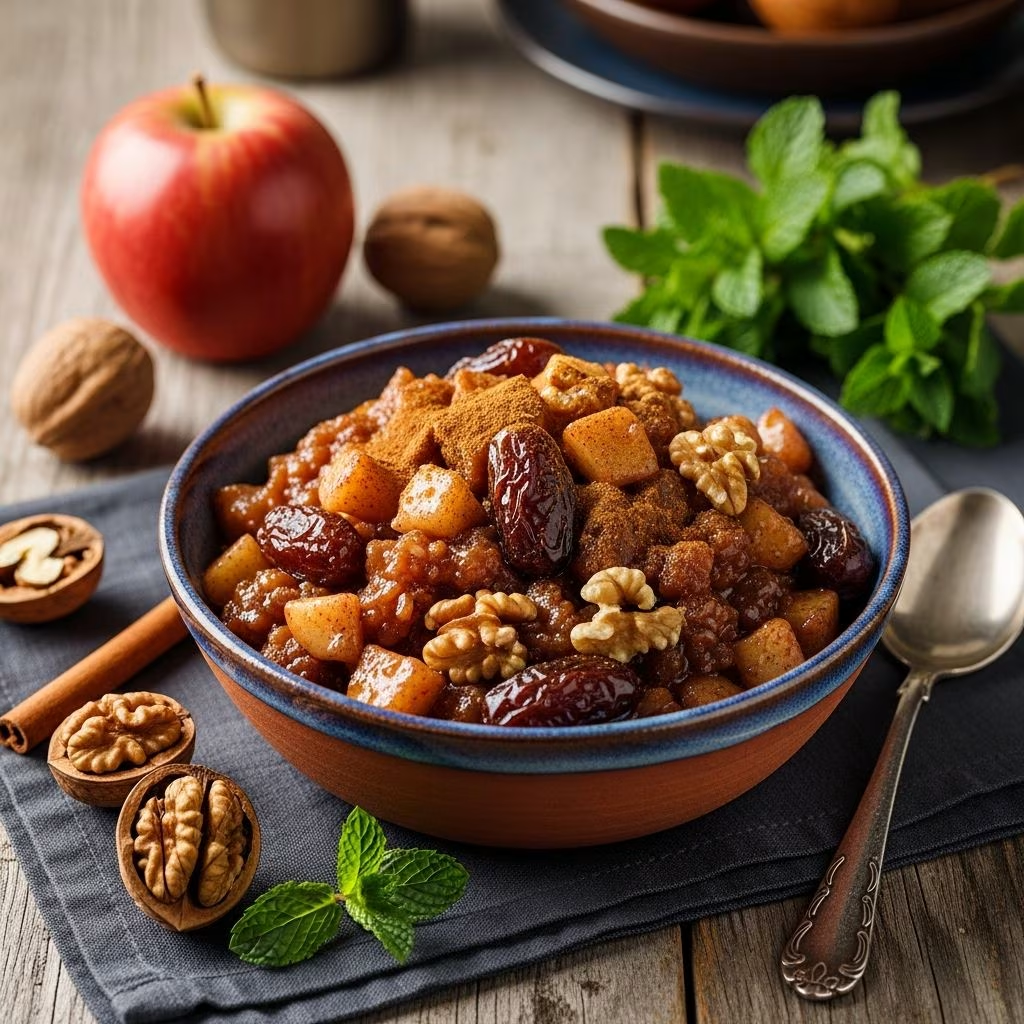
Start with a traditional Ashkenazi version, evoking Eastern European roots with apples and walnuts. This yields about 4 cups, perfect for a family Seder.
- Ingredients:
- 2 large sweet apples (e.g., Fuji or Gala), peeled, cored, and finely chopped
- 1 cup chopped walnuts
- 1/2 cup sweet red wine (Manischewitz or Concord grape)
- 1 tsp ground cinnamon
- Pinch of ground ginger (optional)
- 1-2 tbsp honey or sugar, to taste
- Combine apples and walnuts in a bowl. Stir in cinnamon and ginger.
- Pour in wine gradually, mixing until sticky but not soupy. Add honey for sweetness.
- Cover and chill for 1-2 hours to meld flavors. Adjust consistency with more wine or nuts.
Serve on matzah with maror, or as a sandwich filling during the meal. For texture variety, pulse half the mixture in a food processor.
Global Variations: Charoset from Around the World
Charoset’s adaptability showcases Jewish ingenuity. Each community crafts it from available produce, preserving tradition while embracing locality.
| Region | Key Ingredients | Unique Twist |
|---|---|---|
| Sephardic (Middle Eastern) | Dates, figs, almonds, pistachios, rosewater | Paste-like consistency, often cooked into a jam |
| Mexican | Dates, walnuts, matzah, cinnamon, red wine | Shredded matzah adds crunch; stewed dates for depth |
| Italian | Chestnuts, oranges, pine nuts, candied fruit | Citrus brightness and creamy chestnuts |
| Venetian | Apples, pears, raisins, amarena cherries | Chocolate hints in some family recipes |
| Indian | Coconut, raisins, cardamom, tamarind | Spicy-sweet profile with tropical notes |
Mexican Charoset: Simmer 1 cup chopped dates in 1 cup water until soft. Mix with 1 cup walnuts, 1.5 cups shredded matzah, 1 cup red wine, and 1 tsp cinnamon. A Diaspora delight blending Old World and New.
Sephardic Date Haroset: Blend 2 cups pitted dates, 1 cup almonds, 1/2 cup pistachios, and 1/4 cup orange juice. Add cinnamon, nutmeg, and a splash of wine. Refrigerate overnight for intensified flavors.
These recipes highlight how Jews in exile transformed scarcity into abundance, using bananas in Cuba, mangoes in Yemen, or even silan (date syrup) in Israel.
Ingredient Substitutions and Dietary Tips
Adapt charoset for modern needs. For nut allergies, use seeds like sunflower or pumpkin. Vegan? Skip honey for maple syrup. Gluten-free is inherent, but check matzah in recipes.
- Fruit swaps: Pears for apples in off-season; dried apricots for freshness.
- Wine alternatives: Grape juice for kids or non-drinkers; pomegranate juice for tartness.
- Spice upgrades: Nutmeg, cloves, or cardamom for warmth.
Pro tip: Finely chop by hand for authenticity, or use a processor for speed. Aim for mortar-like stickiness—adjust liquids accordingly.
Perfecting Texture and Flavor Balance
The ideal charoset is coarse yet cohesive, sweet without cloying, and spiced subtly. Over-chopping yields paste; under-mixing stays dry. Taste as you go: wine cuts richness, cinnamon warms, fruits provide body.
Chill for at least an hour—flavors deepen. On Seder night, let it sit out 15 minutes before serving for optimal spreadability on matzah.
Incorporating Charoset into Your Seder
Beyond the plate, charoset stars in Hillel’s sandwich: matzah layered with bitter herbs and charoset, eaten during the Maggid step. It softens maror’s bite, symbolizing hope amid tears.
During the Afikoman hunt or casual munching, spread it thick. Leftovers? Dollop on yogurt, pancakes, or cheese boards for post-Passover treats.
Health Benefits and Nutritional Notes
Charoset packs antioxidants from fruits and nuts: apples’ pectin aids digestion, walnuts offer omega-3s, wine’s resveratrol supports heart health. Moderate portions fit holiday indulgence, with fiber promoting satiety.
Common Mistakes to Avoid
- Using tart apples—opt for sweet varieties.
- Too much wine—leads to sogginess.
- Skipping the chill—flavors need time to marry.
- Ignoring regional roots—experiment, but honor tradition.
FAQs
What does charoset represent on the Seder plate?
It symbolizes the mortar of slavery and the hope of freedom, balancing bitter and sweet elements of the Exodus story.
Can charoset be made ahead?
Yes, up to 3 days in advance. Store covered in the fridge; stir before serving.
Is there a kosher-for-Passover wine requirement?
Use any sweet kosher wine or juice; traditionalists prefer red Concord varieties.
How spicy should charoset be?
Mildly aromatic—cinnamon dominates, with optional ginger or cloves for nuance.
Vegetarian or vegan?
Fully plant-based by nature; honey can be swapped for agave.
Preserving Tradition in Modern Kitchens
In today’s globalized world, charoset bridges generations. Teach kids to chop fruits, sharing Diaspora stories. Whether Ashkenazi classic or Peruvian quinoa twist, it fosters connection. As Jews scatter and regather, this dish endures—a sticky testament to resilience, flavor, and faith.
References
- Charoset Across Cultures — Hillel International. Accessed 2026. https://www.hillel.org/charoset-across-cultures/
- Charoset — Wikipedia. Accessed 2026. https://en.wikipedia.org/wiki/Charoset
- The Story of Charoset: The History of the Jewish Diaspora through Food — Breaking Matzo. Accessed 2026. https://breakingmatzo.com/philosophy/the-story-of-charoset-the-history-of-the-jewish-diaspora-through-food/
- The Origins of Charoset — Reform Judaism. Accessed 2026. https://reformjudaism.org/jewish-holidays/passover/origins-charoset
- Haroset: Meaning, History, Recipes, and More — Eat Schmutz. Accessed 2026. https://eatschmutz.com/blogs/recipes/haroset-101