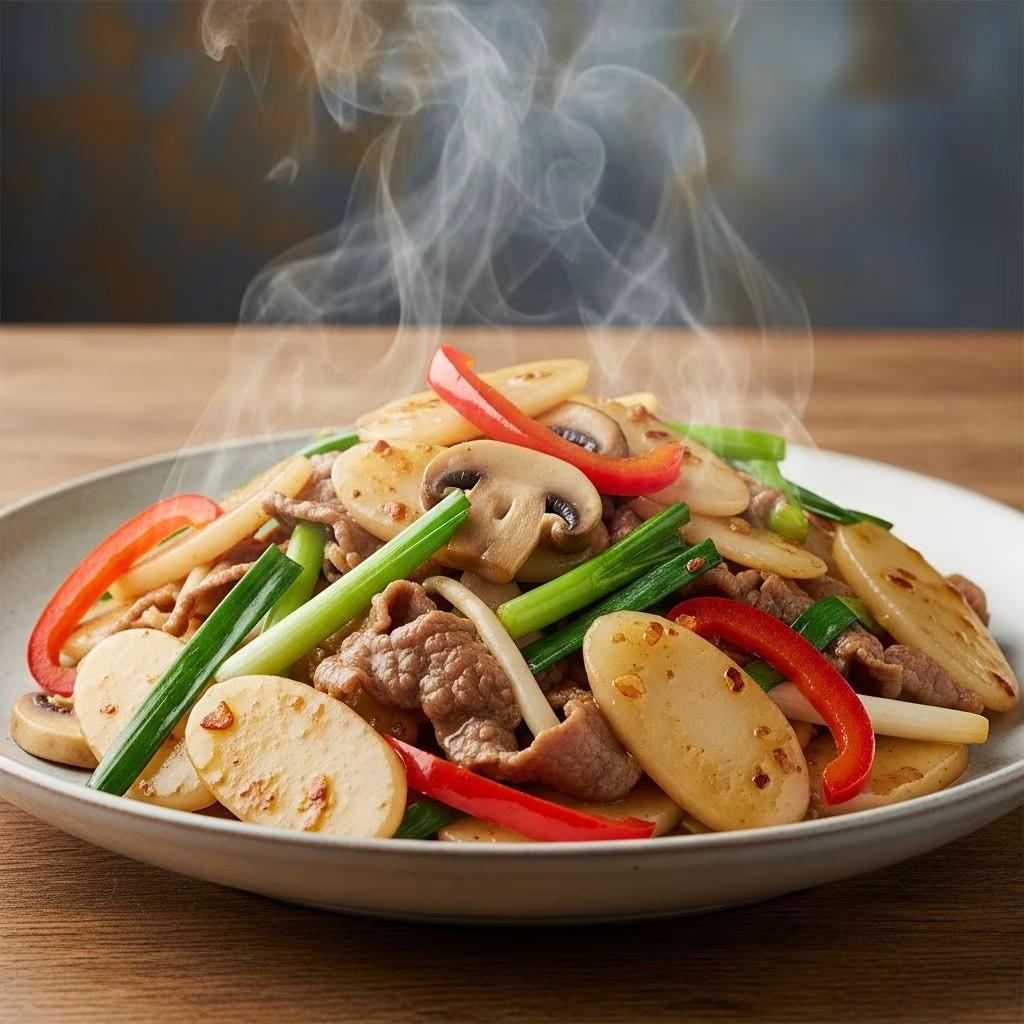
Chao Nian Gao, or stir-fried rice cakes, stands as a cornerstone of Chinese comfort food, celebrated for its unique chewy texture and bold flavors. These oval-shaped rice cakes, made from glutinous rice, absorb sauces beautifully while maintaining a satisfying bounce. Originating from Shanghai, this dish has become a staple during Chinese New Year, symbolizing prosperity and good fortune due to the homophone of “nian gao” meaning “higher year” or rising fortunes.
The Allure of Chewy Rice Cakes
Rice cakes, known as nian gao in their raw form, transform dramatically when stir-fried. Fresh ones are soft and pliable, but dried versions require soaking to revive their elasticity. The key to perfection lies in their preparation: a quick steam or boil softens them without turning mushy, allowing them to soak up the savory elements of the dish.
Commonly paired with proteins like pork, chicken, or shrimp, and vegetables such as bok choy or napa cabbage, Chao Nian Gao offers endless customization. Shiitake mushrooms add an earthy depth, while aromatics like garlic, ginger, and scallions provide a fragrant base.
Essential Ingredients for Authentic Flavor
Building a flavorful Chao Nian Gao starts with quality staples. Here’s a breakdown of core components:
- Rice Cakes: 1 lb (450g) fresh or rehydrated oval rice cakes, sliced if thick.
- Protein: 8-12 oz pork shoulder, chicken breast, or steak, thinly sliced.
- Vegetables: 4 cups bok choy, napa cabbage, or shiitake mushrooms, chopped.
- Aromatics: 2-4 garlic cloves, minced; 1-inch ginger, julienned; 2 scallions, sliced.
- Sauces: Light soy sauce (1-2 tbsp), dark soy sauce (1 tsp for color), Shaoxing wine (1 tbsp), oyster sauce (optional, 1 tbsp).
- Seasonings: Sesame oil (1 tsp), white pepper, salt to taste, cornstarch for marinating protein.
Neutral oils like vegetable or canola are ideal for high-heat wok cooking to prevent burning.
Step-by-Step Guide to Cooking Chao Nian Gao
Preparation is key for this quick dish, ready in under 30 minutes. Follow these steps for restaurant-quality results.
1. Marinate the Protein
Slice your chosen meat thinly against the grain. In a bowl, combine 8 oz pork or chicken with 1 tsp cornstarch, 1/2 tbsp Shaoxing wine, 1/2 tbsp light soy sauce, and a pinch of white pepper. Mix well and let sit for 15 minutes. This velveting technique ensures tender, juicy bites.
2. Prep the Rice Cakes and Veggies
If using dried rice cakes, soak in warm water for 15-30 minutes or overnight in the fridge until pliable. Rinse fresh cakes under cold water. Chop bok choy into bite-sized pieces, slice mushrooms thinly, and mince aromatics. Have sauce ready: mix 1 tbsp light soy, 1 tsp dark soy, 1 tbsp Shaoxing wine, and 1/4 cup water or stock.
3. High-Heat Stir-Fry
Heat 2 tbsp oil in a wok over medium-high heat until shimmering. Add aromatics—garlic, ginger, and scallions—stir-frying for 30 seconds until fragrant. Add marinated protein, spreading it out to sear both sides until just cooked, about 2 minutes.
Incorporate vegetables like bok choy and mushrooms, tossing for 1 minute. Pour in Shaoxing wine to deglaze, then layer rice cakes on top. Add sauce and 1/4-1/2 cup water, cover, and steam for 1-2 minutes until cakes soften.
Uncover, drizzle sesame oil, and stir vigorously to coat everything evenly. Taste and adjust with salt or chili oil for heat. Serve immediately for peak chewiness.
Variations to Suit Every Palate
Chao Nian Gao’s versatility shines in its adaptations. Here’s a comparison table of popular twists:
| Variation | Key Additions/Substitutions | Prep Time | Flavor Profile |
|---|---|---|---|
| Vegetarian | Tofu or extra mushrooms; vegetable broth | 20 min | Umami-rich, light |
| Spicy Sichuan | Dried chilies, Sichuan peppercorn, chili oil | 25 min | Numbling heat |
| Seafood | Shrimp instead of meat; add last | 22 min | Fresh, briny |
| Din Tai Fung Style | Napa cabbage, minimal mushrooms, finer chop | 30 min | Savory-sweet |
For a braised version, simmer longer with more liquid for softer cakes. Experiment with carrots or onions for crunch.
Pro Tips for Wok Mastery
- Rehydrate Properly: Over-soaked cakes become gummy; under-soaked stay hard. Test by bending—they should flex without cracking.
- High Heat is Essential: A smoking wok (wok hei) imparts smoky flavor. Use a carbon steel wok for best results.
- Layering Technique: Place rice cakes atop veggies to steam without sticking.
- Balance Wetness: Adjust water based on stove power—gas stoves need less.
- Freshness Matters: Consume within a day; reheat in a hot wok with a splash of water.
Nutritional Breakdown and Health Twists
A standard serving (about 1.5 cups) provides around 400-500 calories, rich in carbs from rice cakes, moderate protein from meat, and fiber from veggies. Opt for low-sodium soy and lean proteins to lighten it up. Vegetarians can boost nutrition with added greens.
Glutinous rice offers sustained energy, making it ideal post-workout or during festive feasts.
Cultural Significance and Serving Ideas
Beyond taste, Chao Nian Gao embodies tradition. During Lunar New Year, its rising shape symbolizes progress. Serve family-style with steamed rice, dumplings, or hot pot. Pair with jasmine tea or chilled beer for contrast.
For parties, make ahead and re-stir-fry. It’s also freezer-friendly: blanch cakes, portion, and thaw before use.
Frequently Asked Questions (FAQs)
What if my rice cakes are too hard?
Steam them covered with a bit of water for 2-3 extra minutes, or soak longer next time.
Can I use regular rice instead?
No—glutinous rice is essential for chewiness. Find it in Asian markets as “nian gao” or “oval rice cakes.”
Is oyster sauce necessary?
It’s optional but enhances umami. Substitute with hoisin or extra soy.
How do I store leftovers?
Refrigerate in an airtight container up to 2 days. Reheat in a wok, not microwave, to preserve texture.
Gluten-free version?
Use tamari instead of soy sauce and ensure rice cakes are pure rice (most are).
Conclusion: Elevate Your Stir-Fry Game
Chao Nian Gao masterfully balances chew, savoriness, and simplicity. With practice, it becomes a go-to for busy nights or celebrations. Gather ingredients, fire up the wok, and savor this timeless dish.
References
- Chao Nian Gao (Stir-Fried Rice Cakes) | Recipe – Nom Life — Life of Noms. Accessed 2026. https://www.lifeofnoms.com/blog/niangao
- Homemade Stir Fried Rice Cakes (Chao Nian Gao 炒年糕) — Little Fat Boy. Accessed 2026. https://littlefatboy.com/recipes/homemade-stir-fried-rice-cakes-chao-nian-gao
- Stir-Fried Shanghai Rice Cakes (Chao Nian Go) 炒年糕 — Winnie’s Balance. Accessed 2026. https://winniesbalance.com/stir-fried-shanghai-rice-cakes-chao-nian-go-%E7%82%92%E5%B9%B4%E7%B3%95/
- Stir-fried Rice Cakes (Nian Gao – 炒年糕) — The Woks of Life. Accessed 2026. https://thewoksoflife.com/stir-fried-sticky-rice-cakes-nian-gao/
- Stir-Fried Rice Cakes (Chao Nian Gao/炒年糕) — Red House Spice. Accessed 2026. https://redhousespice.com/stir-fried-rice-cakes/
- Stir Fried Shanghai Rice Cakes – Chao Nian Gao — Drive Me Hungry. Accessed 2026. https://drivemehungry.com/stir-fried-shanghai-rice-cakes-chao-nian-gao/
- Shanghai Rice Cakes 炒年糕 (Nian Gao) 10 minute Stir-Fry! — YouTube (Angel Wong’s Kitchen). Accessed 2026. https://www.youtube.com/watch?v=xvsCpvku5a8