Casseroles represent one of the most versatile and enduring cooking methods in culinary history. These one-dish meals combine proteins, vegetables, starches, and binding ingredients into a single vessel, creating complete meals that feed families and communities. From rustic European origins to contemporary American kitchens, casseroles have evolved into a beloved staple that transcends cultural boundaries and demonstrates the universal appeal of warm, satisfying comfort food.
The Origins and Evolution of Casserole Cooking
The term “casserole” derives from the French word for the cooking vessel itself—a deep, wide dish typically made of ceramic, glass, or cast iron. Historically, casserole cooking emerged as a practical solution for preparing large quantities of food efficiently. During medieval times, European cooks developed layered dishes that combined available ingredients to create economical, nourishing meals. The method allowed for the use of tougher cuts of meat and surplus vegetables, transforming humble ingredients into tender, flavorful dishes through slow, moist cooking.
As culinary practices spread across continents and centuries, casseroles adapted to local ingredients and cultural preferences. Each region developed its own signature variations, reflecting local agriculture, available proteins, and traditional flavor profiles. This adaptability has ensured casseroles remain relevant across generations and geographic locations.
Understanding the Core Elements of Casserole Construction
Successful casseroles depend on a balanced combination of key components that work together to create texture, flavor, and satisfaction:
- Protein Base: This foundational component provides nutritional value and substance. Options include chicken, beef, pork, seafood, legumes, or vegetarian alternatives. The protein can be raw, partially cooked, or fully prepared before assembly.
- Vegetable Component: Fresh, frozen, or canned vegetables add nutrients, moisture, and visual appeal. Common choices include onions, celery, bell peppers, mushrooms, green beans, corn, carrots, and broccoli.
- Starch Element: Pasta, rice, potatoes, or bread components provide substance and texture. These absorb flavors from surrounding ingredients and create a hearty foundation.
- Binding Agent: Cream sauces, soups, cheese, or egg-based mixtures hold ingredients together while adding richness. These components prevent the final dish from becoming dry.
- Topping Layer: Breadcrumbs, cheese, or crushed crackers create textural contrast and appeal.
Regional Casserole Traditions Around the World
Different cultures have developed distinctive casserole approaches reflecting their culinary heritage and available resources:
European Heritage Casseroles
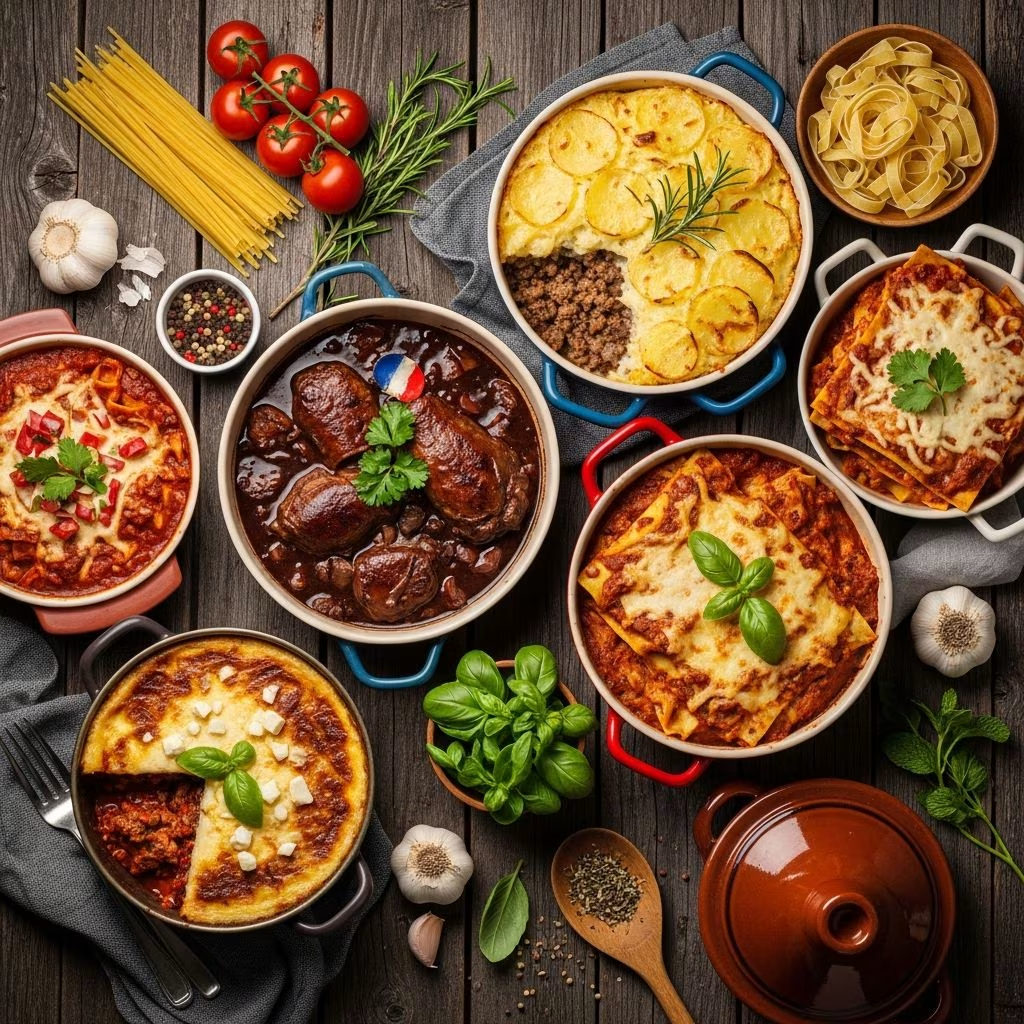
French cuisine pioneered many classic casserole techniques, including coq au vin and beef bourguignon, which involve braising proteins with wine, aromatics, and vegetables. German casseroles emphasize hearty potato-based dishes combined with sauerkraut and pork. Italian lasagna and pasta bakes represent Mediterranean approaches to layered casseroles, incorporating tomato sauces, cheeses, and herbs. Spanish cazuelas combine seafood or legumes with rice and saffron, reflecting the region’s coastal and agricultural traditions.
American Comfort Food Evolution
American casseroles emerged from combining European techniques with available New World ingredients. During the mid-twentieth century, convenience foods revolutionized casserole preparation, with condensed soups, canned vegetables, and pre-packaged ingredients becoming standard components. This accessibility democratized casserole cooking, making it a cornerstone of American home cooking. Tuna noodle casserole, green bean casserole, and funeral casseroles became cultural touchstones, appearing at family gatherings, potlucks, and community events.
Asian Casserole Approaches
Asian cuisines incorporate casserole principles through clay pot cooking, where ingredients simmer together in traditional vessels. Chinese clay pot dishes combine rice, proteins, and vegetables with aromatic broths. Japanese donburi bowls layer proteins over rice with vegetables and flavorful glazes. Korean bibimbap presents components separately before mixing, while maintaining the one-bowl concept.
Nutritional Benefits and Dietary Flexibility
Casseroles offer significant nutritional advantages when prepared thoughtfully. One-dish meals naturally encourage balanced nutrition by combining proteins, vegetables, and grains in single servings. Slow cooking methods enhance nutrient availability and allow flavors to develop deeply. Casseroles accommodate diverse dietary preferences, from vegetarian options using legumes and vegetables to gluten-free preparations using appropriate starches.
The cooking method itself preserves nutrients better than some alternatives. Vegetables retain water-soluble vitamins when cooked with liquids that remain in the dish, and extended gentle cooking times prevent nutrient breakdown from high-heat methods.
Modern Preparation Methods and Tips
Contemporary casserole preparation balances convenience with quality. Fresh ingredients can be combined with smart shortcuts—pre-cut vegetables, rotisserie chicken, or quality frozen components—to reduce preparation time without sacrificing nutrition or flavor. Advance preparation enhances casseroles; dishes can be assembled the night before and refrigerated, allowing flavors to meld and simplifying day-of cooking.
Key preparation guidelines include:
- Ensure proteins are cut into uniform pieces for even cooking
- Partially cook raw vegetables to achieve proper tenderness
- Use adequate liquid to prevent drying, typically maintaining a ratio where liquid covers ingredients by one-quarter inch
- Cover dishes during initial cooking to retain moisture, then uncover if topping should brown
- Allow resting time after cooking for flavors to settle and structure to firm
- Verify internal temperatures reach safe levels, particularly for poultry and seafood
Seasonal Variations and Ingredient Selection
Casserole recipes naturally align with seasonal availability, allowing cooks to adapt dishes throughout the year. Spring casseroles incorporate fresh asparagus, peas, and tender vegetables. Summer versions feature tomatoes, zucchini, and light cream sauces or oil-based preparations. Autumn casseroles embrace root vegetables, squashes, and richer bindings. Winter preparations emphasize stored vegetables, heartier proteins, and warming spices.
This seasonal flexibility encourages using peak-season produce, which offers superior flavor and nutritional value while supporting sustainable eating practices. Farmers market shopping for casserole ingredients connects cooks to local food systems and seasonal rhythms.
Casserole Entertaining and Serving Strategies
Casseroles excel at feeding groups, making them ideal for entertaining. A single large dish can serve 8-12 people, simplifying menu planning for potlucks, family gatherings, and community events. Casseroles transport well, maintain quality when held at serving temperature, and often improve as flavors develop.
Effective entertaining with casseroles includes:
- Selecting make-ahead recipes that allow stress-free hosting
- Choosing visually appealing dishes that look appetizing in the serving vessel
- Pairing casseroles with simple complementary sides like green salads or fresh bread
- Using slow cookers to maintain serving temperature during extended events
- Preparing multiple casseroles offering variety in proteins, vegetables, and flavor profiles
Storage and Food Safety Considerations
Proper storage extends casserole enjoyment and maintains food safety. Cooled casseroles can be refrigerated for 3-4 days in airtight containers. Frozen casseroles maintain quality for 2-3 months when properly wrapped to prevent freezer burn. Thawing in the refrigerator overnight before reheating ensures even temperature distribution and food safety compliance.
Reheating should bring casseroles to 165°F internally, either through oven warming at 350°F for 30-40 minutes or microwave heating with regular stirring. Adding liquid during reheating prevents drying. Portion freezing in individual containers increases convenience for quick meals.
Frequently Asked Questions
Can casseroles be made vegetarian?
Absolutely. Vegetarian casseroles substitute plant-based proteins like legumes, tofu, tempeh, or nuts for meat while maintaining the same layering and binding principles. Vegetable-focused casseroles featuring mushrooms, eggplant, or chickpeas provide substantial, satisfying meals.
What is the best cooking temperature for casseroles?
Most casseroles cook best at 350°F to 375°F, allowing gentle, even heating throughout the dish. Longer cooking times at lower temperatures prevent edges from drying while centers remain undercooked. Covered cooking retains moisture during the primary cooking phase.
Can frozen casseroles be cooked without thawing?
Yes, though cooking time increases significantly, typically by 50-75 percent. Covering the dish for extended cooking prevents drying. Adding extra liquid compensates for evaporation during the extended cooking period.
How can I adapt casserole recipes to dietary restrictions?
Most casseroles adapt easily to accommodate allergies and dietary preferences. Substitute proteins, use gluten-free pasta or grains, replace dairy with plant-based alternatives, and modify vegetables based on restrictions or preferences. Core techniques remain consistent regardless of specific ingredient modifications.
What makes a casserole different from a baked pasta dish?
While casseroles and baked pasta dishes share similarities, casseroles encompass broader category of one-dish meals using varied starches and ingredients. Baked pasta specifically emphasizes pasta as the primary starch, typically with tomato or cream sauces and cheese. Casseroles might feature rice, potatoes, bread, or other starches.
Celebrating Casserole Culture in Contemporary Cooking
Despite evolving culinary trends emphasizing fresh, minimalist preparations, casseroles remain culturally significant comfort foods. They represent efficiency, inclusivity, and home cooking values that transcend fashion. Modern casserole enthusiasm encompasses both nostalgic recreation of classic dishes and innovative reinterpretations using contemporary ingredients and techniques.
Social media platforms have sparked casserole appreciation among younger cooks exploring their cultural heritage and discovering efficient entertaining methods. Food bloggers and contemporary chefs validate casserole cooking as legitimate culinary practice worthy of creative exploration and ingredient-focused innovation.
Conclusion
Casserole cooking embodies practical wisdom accumulated across cultures and centuries. These versatile one-dish meals accommodate diverse ingredients, dietary needs, and entertaining scenarios while delivering satisfying, flavorful results. Whether following traditional recipes or creating innovative variations, casserole preparation connects cooks to culinary traditions while nourishing families and communities. The enduring popularity of casseroles reflects their fundamental appeal: wholesome food prepared with care, presented generously, and shared widely.
References
- Baldwin Publishing Calendar of National Food Days 2025 — Baldwin Publishing. 2025. https://www.baldwinpublishing.com/blog-calendar-of-national-food-days-2025/
- 2026 Food Holidays: The Most Comprehensive 365-Day List — Julee Ho Food Marketing Blog. 2026. https://juleeho.com/food-marketing-blog/food-holidays-the-most-comprehensive-365-day-list
- World Baking Calendar Overview — American Baking Institute. 2026. https://www.homebaking.org/world-calendaroverview/