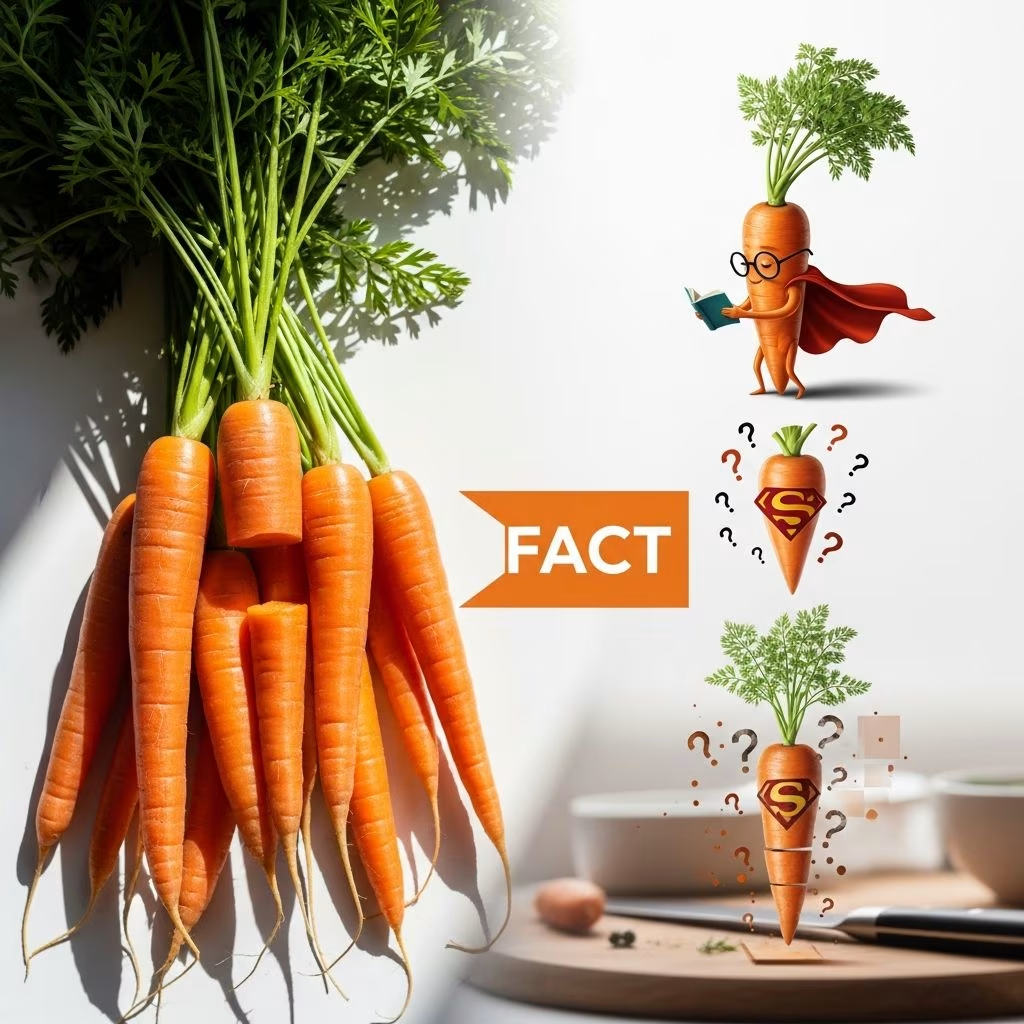
Carrots have long held a special place in popular culture as a superfood capable of granting superhuman abilities—particularly the ability to see in the dark. Yet this widespread belief masks a more complex and fascinating reality about what carrots can and cannot do for human health. Understanding the true nutritional profile of carrots requires separating decades-old propaganda from evidence-based science, while also recognizing the genuine nutritional contributions these orange vegetables make to a balanced diet.
The Historical Origins of the Carrot Myth
The notion that carrots dramatically improve nighttime vision emerged from one of the most ingenious propaganda campaigns of the twentieth century. During World War II, the British Royal Air Force achieved unprecedented success in nocturnal aerial combat, particularly under the command of fighter ace John Cunningham, who earned the nickname “Cat’s Eyes” after becoming the first British pilot to shoot down an enemy aircraft at night using newly developed radar technology. Rather than revealing this technological advantage to the enemy, the British government orchestrated a public relations campaign claiming that RAF pilots’ exceptional nighttime performance resulted from consuming large quantities of carrots.
This strategic deception proved remarkably effective in embedding itself into public consciousness. The narrative suggested that enhanced carrot consumption provided pilots with superior visual capabilities, a claim repeated consistently through British newspapers and official communications. While historians debate whether German military strategists genuinely believed this assertion, anecdotal accounts suggest some merit to the ruse, as accounts describe German aviation commands allegedly implementing carrot-based feeding programs for their own pilots. The brilliance of this propaganda lay not in fooling enemy intelligence services, but rather in its longevity—the myth persisted long after the war’s conclusion, fundamentally altering public perception of carrots for generations to come.
Understanding the Vitamin A Connection
The carrot-vision myth, though exaggerated, does rest upon a foundation of genuine nutritional science. Carrots contain substantial quantities of beta-carotene, a pigment responsible for their characteristic orange hue. The human body converts beta-carotene into vitamin A, an essential micronutrient involved in numerous physiological processes. This conversion mechanism represents the legitimate basis underlying the carrot-vision connection, though the popular interpretation dramatically overstates the practical implications.
Vitamin A plays a demonstrable role in supporting ocular health and maintaining normal vision under standard lighting conditions. However, a critical distinction exists between preventing vitamin A deficiency-related vision problems and enhancing visual acuity beyond normal ranges. As optometry professionals have clarified, vitamin A supplementation or increased dietary intake can reverse vision loss caused by established deficiency states, but it will not strengthen eyesight in individuals maintaining adequate nutrient levels. For individuals living in developed nations with sufficient access to diverse foods, the likelihood of vitamin A deficiency remains minimal, rendering the supposed vision-enhancement properties of carrots largely irrelevant.
Populations most vulnerable to vitamin A insufficiency include young children and pregnant women residing in lower-income regions where nutrient-dense food options remain scarce. In these contexts, dietary interventions including carrot consumption address a genuine public health concern. The confusion arises when this targeted nutritional application becomes generalized into a universal claim about carrots’ purported superpowers.
The Evolution of Carrot Varieties and Colors
Contemporary consumers encountering carrots in grocery stores typically encounter orange specimens, creating an impression that this color represents the vegetable’s natural state throughout history. In reality, orange carrots represent a relatively recent development in agricultural history. Archaeological and historical records indicate that humans began cultivating carrots approximately five thousand years ago, yet these early varieties displayed diverse coloration including white, black, purple, red, and yellow hues. The complete absence of orange carrots from ancient agricultural practices underscores how profoundly selective breeding has modified this crop.
The transformation toward orange carrots occurred primarily during the seventeenth century, particularly in the Netherlands, where cultivators deliberately bred specimens with intensified orange pigmentation as a tribute to the ruling House of Orange. This selective breeding program succeeded beyond its originators’ expectations, eventually establishing orange as the dominant commercial carrot color throughout much of the world. The concentration of beta-carotene correlates directly with the intensity of orange coloration, meaning that deeper orange specimens generally contain higher micronutrient levels than their paler counterparts.
Today’s agricultural markets continue producing carrots in multiple color varieties, though orange remains predominant. Purple, red, and yellow carrots persist in specialty markets and among enthusiast gardeners, offering diverse phytonutrient profiles distinct from their orange relatives. These color variations reflect the vegetable’s botanical diversity and suggest that consumers’ willingness to explore non-traditional varieties could expand their nutritional intake through varied antioxidant compounds.
Cardiovascular and Metabolic Benefits
Beyond the contested vision claims, scientific investigation has identified credible evidence supporting carrots’ contribution to cardiovascular health. Research has documented associations between carrot consumption and reduced blood pressure, lower cholesterol levels, and decreased cardiovascular disease risk. The compound coumarin, present in carrots, has demonstrated capacity to reduce hypertension and decrease stroke and heart attack risk. These findings suggest that incorporating carrots into dietary patterns addressing metabolic health represents a evidence-based nutritional strategy rather than folklore.
The cardiovascular benefits associated with carrot consumption likely result from multiple nutritional factors working synergistically. The fiber content promotes healthy cholesterol profiles, while antioxidants address oxidative stress implicated in atherosclerotic disease development. Women specifically may experience measurable risk reduction for cardiac events through regular carrot consumption, according to epidemiological investigations.
For individuals managing weight, carrots present a particularly favorable nutritional profile. The combination of low caloric density, high nutrient concentration, and substantial fiber content makes carrots an effective satiety-promoting food suitable for weight management strategies. This genuine benefit contrasts sharply with the unsupported vision-enhancement claims, representing an area where popular enthusiasm for carrots aligns with scientific evidence.
The Baby Carrot Phenomenon and Processing Questions
Many consumers harbor concerns about baby carrots, particularly regarding their origin and processing methods. Contrary to implications suggested by their name, baby carrots do not represent immature vegetables harvested at an early growth stage. Instead, they consist of regular carrots that farmers have mechanically processed—either because they exhibit irregular shapes making them unmarketable as whole vegetables, or because they represent younger specimens that farmers have deliberately cut into smaller dimensions. This processing innovation emerged as a market response to consumer preferences for convenient, pre-portioned vegetable snacks.
A persistent claim suggests that baby carrots undergo treatment with chlorine solutions, raising food safety concerns among conscious consumers. According to official statements from major baby carrot producers, the vegetables do indeed encounter water containing chlorine during processing, but at concentrations that remain well within Environmental Protection Agency safety limits and comparable to chlorine levels found in municipal drinking water supplies. The whitish coating that sometimes develops on stored baby carrots results from moisture loss during storage rather than chlorine accumulation on the vegetable surface, contrary to popular misconceptions.
Consumers concerned about processing methods might consider purchasing whole carrots and processing them at home, though the nutritional difference between whole and pre-cut specimens remains negligible. The fundamental consideration should prioritize vegetable consumption regardless of processing format, as the health benefits of carrot consumption far outweigh any theoretical concerns about preparation methods.
Surprising Carrot Facts and Peculiarities
Beyond nutritional considerations, carrots exhibit several noteworthy characteristics that illuminate broader agricultural and biological principles. Approximately 87 percent of a carrot’s composition consists of water, a factor contributing to their low caloric density and high satiety value. The average person consumes approximately 10,866 carrots throughout their lifetime, a staggering figure that underscores carrots’ prevalence in contemporary food systems.
The myth that rabbits naturally prefer carrots represents another carrot-related misconception worthy of correction. Wild rabbits do not typically consume root vegetables or fruits, instead foraging for grasses, clover, and leafy vegetation. The association between rabbits and carrots emerged through cultural representations and cartoon imagery rather than reflecting genuine animal dietary preferences.
Deformed carrots displaying unusual shapes occasionally appear in grocery stores or farmers’ markets. These distinctive forms result from carrots encountering stones or soil insects during growth, which obstruct normal developmental patterns and produce the characteristic forked or multi-limbed appearance. Such carrots remain perfectly edible and nutritious, though their unusual morphology sometimes relegates them to baby carrot processing rather than retail sale as whole vegetables.
Carotenemia: When Carrot Consumption Becomes Excessive
The human body’s capacity to convert beta-carotene into vitamin A operates within physiological limits, creating theoretical possibilities for overconsumption. Consuming excessive quantities of carrots can result in a condition called carotenemia, characterized by yellowish skin pigmentation most noticeably appearing on the palms and soles of the feet. This condition, while cosmetically concerning to affected individuals, represents a benign phenomenon that typically resolves following reduction in carrot intake. Contrary to popular misunderstandings, carotenemia does not produce orange skin but rather a distinctive yellow discoloration.
The regulatory mechanisms governing vitamin A metabolism generally prevent toxicity even when individuals consume large carrot quantities, as the body moderates conversion efficiency based on existing nutrient status. However, individuals taking vitamin A supplements alongside substantially elevated carrot consumption face greater potential for exceeding safe nutrient intake levels. As with most dietary considerations, moderation represents the appropriate approach, recognizing that excessive consumption of any single food item, however nutritious, can produce unwanted effects.
Natural Sweetness and Flavor Development
Carrots contain naturally occurring sugars at approximately 4.7 grams per 100-gram serving, contributing to their characteristic sweetness. This natural sugar content intensifies through cooking, as heat breaks down cell walls and concentrates sugars, making cooked carrots taste noticeably sweeter than raw specimens. This flavor development through cooking suggests that preparation method influences not only texture but also the subjective gustatory experience of consuming carrots.
Practical Considerations for Carrot Selection and Storage
Selecting carrots with deeper orange coloration provides greater assurance of higher beta-carotene concentration. A single square meter of United States carrot production yields sufficient vitamin A to satisfy one adult’s annual requirements, illustrating the remarkable nutrient density of this crop. When stored properly in cool conditions, carrots maintain their nutritional properties for extended periods, making them a reliable source of micronutrients available throughout the year.
Conclusion
Carrots represent a genuinely valuable nutritional resource whose reputation has been simultaneously enhanced and distorted by historical circumstance and cultural mythology. The vision-enhancement claims, while rooted in legitimate nutritional science regarding vitamin A’s role in ocular health, dramatically overstate practical benefits for individuals maintaining adequate nutrient intake. Simultaneously, genuine evidence supports carrot consumption for cardiovascular health, weight management, and provision of essential micronutrients. Understanding these nuances allows consumers to make informed dietary decisions based on evidence rather than propaganda, appreciating carrots for their authentic nutritional contributions rather than imagined superpowers. By separating historical mythology from contemporary scientific understanding, individuals can incorporate carrots into balanced dietary patterns confident in their genuine health-promoting properties.
References
- Carrots Can’t Help You See in the Dark. Here’s How a World War II Propaganda Campaign Popularized the Myth — Smithsonian Magazine. 2013. https://www.smithsonianmag.com/history/carrots-cant-help-you-see-in-the-dark-heres-how-world-war-ii-propaganda-campaign-popularized-the-myth-28812484/
- 24 Carrot Facts That Will Funk You Up — Hurom Singapore. https://huromsingapore.com/blogs/juicing-tips/24-carrot-facts-that-will-funk-you-up
- The Truth About Baby Carrots and Their Origins — 100 Days of Real Food. https://www.100daysofrealfood.com/the-truth-about-baby-carrots/
- 10 Fun Facts About Carrots — One Hundred Dollars a Month. https://www.onehundreddollarsamonth.com/10-fun-facts-about-carrots/
- Carrot Facts & Uncovering Two Common Myths — AMAC. https://amac.us/blog/lifestyle-and-entertainment/carrot-facts-uncovering-two-common-myths
- What You Need to Know About Carrots — Migros. https://www.migros.ch/en/content/migmag-carrot-myths