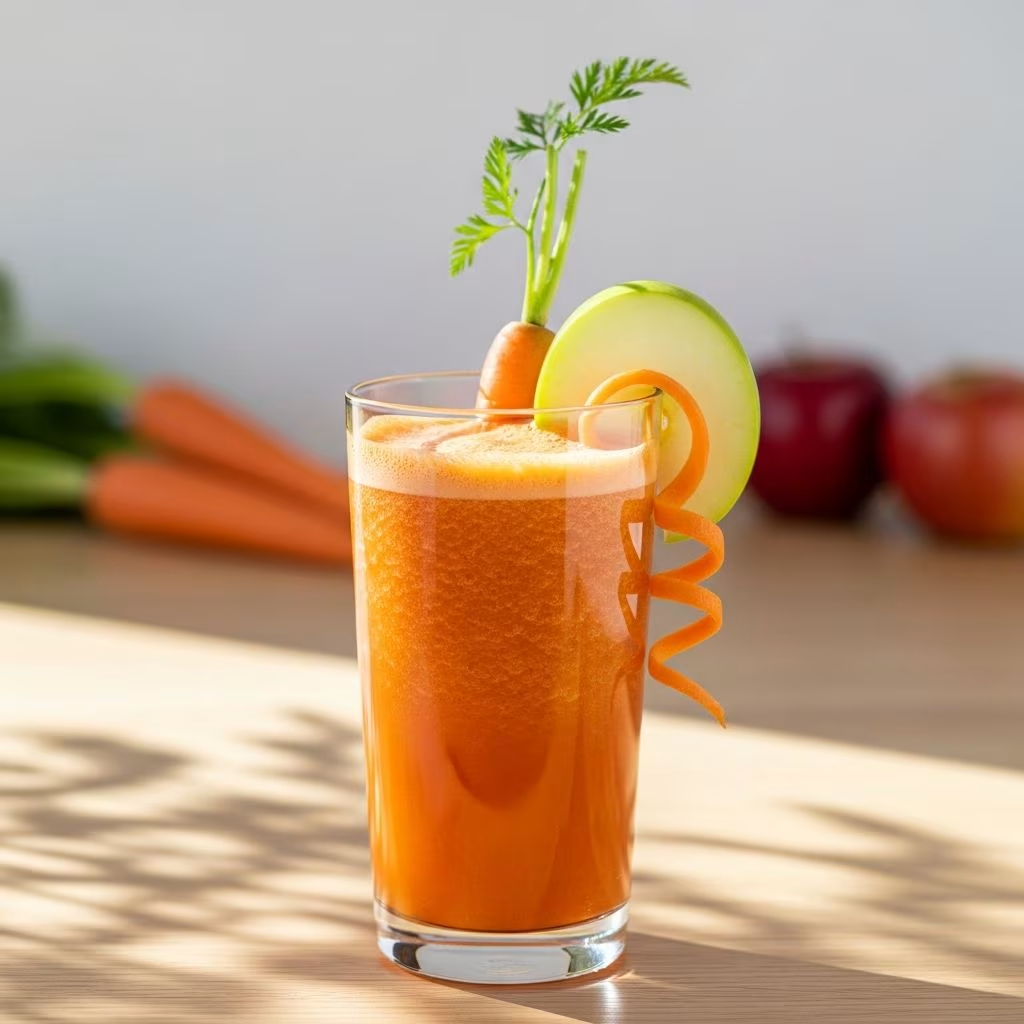
Carrot apple juice stands out as a simple yet powerful beverage that combines the earthy sweetness of carrots with the crisp tang of apples. This drink delivers a burst of natural flavors while supplying essential nutrients to support daily health. Whether prepared with a juicer for smooth results or a blender for accessibility, it offers versatility for home kitchens.
Why This Juice Powers Your Day
The appeal of carrot apple juice lies in its nutrient profile. Carrots provide beta-carotene, which the body converts to vitamin A, essential for vision and immune function. Apples contribute vitamin C and antioxidants, aiding digestion and skin health. Together, they create a low-calorie option rich in hydration and fiber remnants if blended.
Regular consumption may enhance energy levels without caffeine crashes. Its natural sugars offer sustained fuel, making it ideal for breakfast or mid-afternoon refreshment. Families appreciate its mild taste, appealing even to children who might otherwise avoid vegetables.
Selecting the Best Produce
Quality ingredients elevate the juice’s taste and nutrition. Opt for firm, brightly colored carrots without soft spots; organic varieties minimize pesticide exposure. For apples, choose ripe ones like Fuji for sweetness or Granny Smith for tartness, ensuring a balanced flavor.
- Carrots: Medium-sized, fresh-picked for peak juiciness.
- Apples: Varieties such as Honeycrisp or Gala for optimal sweetness.
- Add-ins: Fresh ginger or lemon for zing and extra antioxidants.
Wash produce thoroughly under running water. Peel carrots if not organic to remove potential residues, but keep apple skins for added fiber and nutrients.
Classic Juicer Method
A masticating juicer extracts maximum liquid while preserving enzymes. This slow process yields vibrant, pulp-free juice.
- Wash and core 6-8 apples, leaving skins on.
- Peel and chop 4-6 carrots into manageable pieces.
- Alternate feeding apples and carrots into the juicer.
- Stir the extracted juice and serve chilled.
This yields about 4 cups from the listed amounts, perfect for 2-4 servings.
Blender Technique for No-Juicer Homes
No juicer? A high-speed blender and strainer work wonders. This method retains some fiber for a thicker texture.
| Ingredient | Quantity | Prep Notes |
|---|---|---|
| Large carrots | 2 | Chop into chunks |
| Large apple | 1 | Core and quarter |
| Lemon | 1 | Juice fresh |
| Ginger | 1-inch piece | Peeled |
| Water | ½ cup | Cold for blending |
- Blend all on high for 30 seconds until smooth.
- Strain through a fine mesh or nut milk bag, pressing to extract liquid.
- Yield: 10-12 oz of refreshing juice.
This approach suits beginners and cleans up easily.
Flavor Variations to Try
Customize for taste or health goals:
- Ginger Kick: Add 1-inch ginger for digestion aid and spice.
- Citrus Twist: Include orange or lemon for vitamin C boost.
- Tropical Note: Blend in pineapple slice for enzymes and sweetness.
- Green Boost: Add celery for hydration and minerals.
Experiment ratios: more apples for sweetness, more carrots for earthiness.
Nutrition Breakdown
One serving (8 oz) typically offers:
- Calories: 120-150
- Vitamin A: Over 200% DV from beta-carotene
- Vitamin C: 20-30% DV
- Potassium: Supports heart health
- Antioxidants: Combat oxidative stress
Juicing concentrates nutrients but removes most fiber; blending preserves it for gut health.
Storage and Freshness Tips
Fresh juice tastes best immediately. Refrigerate in airtight glass containers for up to 72 hours. Freeze in ice cube trays for up to 6 months; thaw as needed. Avoid metal containers to prevent oxidation.
Signs of spoilage: off odors, separation, or mold. Always shake before drinking.
Health Advantages Explored
Beyond vitamins, this juice supports eye health via lutein in carrots and aids detoxification with apple pectin. Ginger variations reduce inflammation, beneficial for joints. Studies link beta-carotene to lower chronic disease risk, though whole foods provide fuller benefits.
Hydration from juice counts toward daily intake, especially with electrolytes from produce.
Common Mistakes and Fixes
Issue: Bitter taste – Solution: Use sweeter apples, avoid overripe carrots.
Issue: Foamy juice – Solution: Let settle or skim top layer.
Issue: Low yield – Solution: Chop smaller, alternate ingredients.
Pairing Ideas
Serve with oatmeal for breakfast, salads for lunch, or as a post-workout recovery drink. Kids enjoy it diluted with water or coconut water.
Equipment Essentials
- Masticating juicer for pros.
- High-speed blender like Vitamix.
- Fine mesh strainer or nut bag.
- Glass jars for storage.
Frequently Asked Questions
Can I make this juice ahead?
Yes, store refrigerated up to 3 days; freeze for longer.
Is peeling necessary?
Peel carrots for cleanliness; keep apple skins.
Suitable for diabetics?
Moderate portions due to natural sugars; consult a doctor.
Blender vs. juicer?
Blender keeps fiber; juicer is smoother.
Add protein?
Blend with yogurt post-straining for a smoothie.
Scaling for Crowds
Double ingredients for family batches. A standard juicer handles 15 apples and 8 carrots for 4-6 cups.
In summary, carrot apple juice transforms everyday produce into a wellness elixir. Its ease and adaptability make it a staple for health-conscious routines.
References
- Apple Carrot Juice — Know Your Produce. Accessed 2026. https://www.knowyourproduce.com/apple-carrot-juice/
- Carrot Apple Ginger Juice Made Without a Juicer — Baked Greens. Accessed 2026. https://www.bakedgreens.com/carrot-apple-ginger-juice-made-without-a-juicer/
- Carrot, Orange, and Apple Juice — Vitamix. Accessed 2026. https://www.vitamix.com/us/en_us/recipes/carrot-orange-and-apple-juice