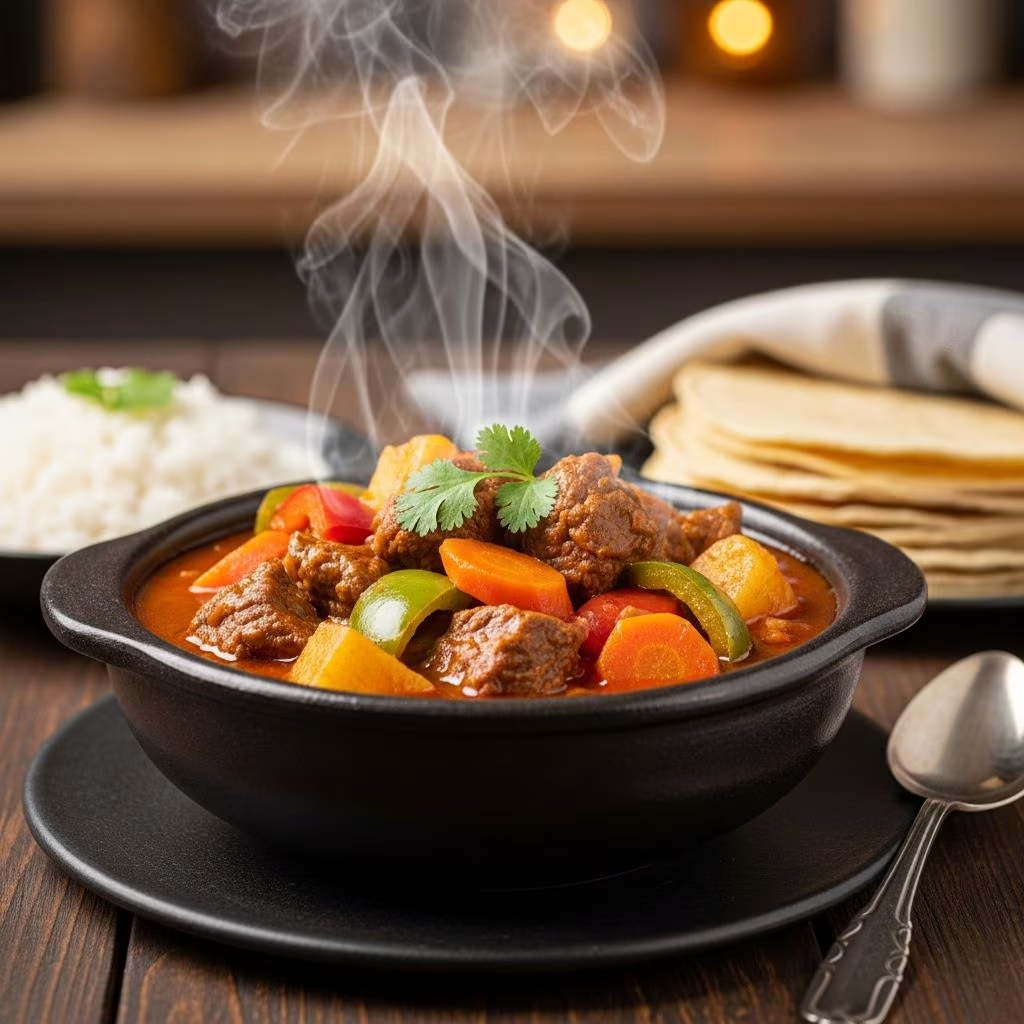
Carne guisada stands as a cornerstone of Latin American home cooking, delivering a comforting blend of tender beef chunks enveloped in a deeply flavored gravy. This stew, cherished across regions like Puerto Rico, Mexico, and South Texas, transforms simple ingredients into a meal that warms the soul. Whether you’re craving a classic version or exploring plant-based adaptations, mastering this dish opens doors to endless culinary creativity.
Origins and Cultural Significance
Rooted in Spanish and indigenous influences, carne guisada—meaning ‘stewed meat’—evolved in the Caribbean and border regions of Latin America. In Puerto Rico, it’s a staple comfort food simmered with sofrito, a aromatic base of onions, peppers, garlic, and herbs. Mexican variations from South Texas emphasize chuck roast in a spiced broth, evoking family gatherings and childhood memories. This versatility reflects the dish’s adaptability, making it a bridge between cultures while honoring local traditions.
Essential Ingredients for Authentic Flavor
The magic of carne guisada lies in its straightforward yet potent ingredients. Start with high-quality beef cuts like chuck roast or stew meat, which break down beautifully during slow cooking. Aromatics such as onions, garlic, bell peppers, and tomatoes form the flavorful foundation. Spices like cumin, oregano, adobo, and sazon elevate the profile, while tomato paste or sauce adds depth and acidity. Olives, potatoes, and carrots provide texture and heartiness, and a splash of broth or beer ensures a silky gravy.
- Protein Base: 2-3 lbs chuck roast or stew beef, cubed for even cooking.
- Aromatics: Onions, garlic, green bell peppers, tomatoes, and sofrito for Puerto Rican authenticity.
- Seasonings: Cumin, chili powder, adobo, sazon with annatto, oregano, salt, and pepper.
- Liquids: Beef broth, light beer, red wine, or water to build the gravy.
- Add-Ins: Potatoes, carrots, pimento-stuffed olives, bay leaves for complexity.
For vegan twists, substitute mushrooms for beef, using soy sauce to mimic umami and hearty veggies like potatoes and carrots.
Step-by-Step Cooking Guide
Patience is key to tender carne guisada. The process involves searing, building a roux-like base, and low-and-slow simmering. Here’s a foolproof method yielding fork-tender results in about 2-3 hours on the stovetop.
- Prep the Meat: Cube 2.5 lbs chuck roast into 1-inch pieces. Season generously with adobo, salt, and pepper.
- Sear for Depth: Heat 2 tbsp oil in a Dutch oven over medium-high. Brown meat in batches, 4-5 minutes per side, to develop fond. Remove and set aside.
- Sauté Aromatics: In the same pot, add onions, garlic, and bell peppers. Cook until softened, 5 minutes. Stir in sofrito, tomato paste, and spices; cook 2 minutes to bloom flavors.
- Build the Gravy: Sprinkle 2-3 tbsp flour, stir 1 minute. Gradually add 4 cups beef broth, wine, and tomato sauce, scraping browned bits. Return meat to pot with bay leaves, olives, carrots, and potatoes.
- Simmer Low and Slow: Bring to a boil, then reduce to simmer. Cover and cook 2 hours, stirring occasionally. Add water if thickening too much. Meat is done when it shreds easily.
- Finish and Rest: Stir in vinegar for brightness. Rest 10 minutes off heat for flavors to meld.
Pressure cooker adaptation: Sauté as above, then cook on high pressure for 35-45 minutes with natural release.
Regional Variations Across Latin America
| Region | Key Ingredients | Unique Twist |
|---|---|---|
| Puerto Rican | Sofrito, sazon, olives, potatoes, red wine | Rich gravy with Caribbean sofrito base for bold savoriness. |
| Mexican/Tex-Mex | Chuck roast, chili powder, cumin, jalapeños | Spicier profile with flour-thickened gravy and fresh chilis. |
| South Texas | Chuck roast, bell peppers, tomato sauce, serranos | Childhood favorite with tender beef in simple, hearty broth. |
| Vegan Adaptation | Mushrooms, soy sauce, sofrito, carrots, potatoes | Plant-based umami using seared mushrooms and sazon. |
These differences highlight how carne guisada adapts to local pantries, from beer-infused lightness to olive-studded richness.
Pro Tips for Perfect Results
- Choose the Right Cut: Chuck or round roast excels due to marbling that tenderizes over time.
- Don’t Skip Searing: Browning creates flavor compounds essential for depth.
- Flour or No Flour? Use for thicker gravy; skip for lighter versions.
- Adjust Heat: Simmer gently to avoid tough meat—aim for 190-200°F.
- Storage: Refrigerate up to 4 days or freeze 3 months; flavors improve overnight.
Common pitfalls include overcrowding the pot during searing or rushing the simmer, both leading to chewy beef.
Health and Nutrition Insights
A 1-cup serving of traditional carne guisada offers about 234 calories, 34g protein, 12g carbs, and 5g fat, making it nutrient-dense with iron from beef and vitamins from veggies. Opt for leaner cuts and less oil for lighter versions. Vegan options boost fiber via mushrooms and root vegetables.
Creative Serving Suggestions
Serve carne guisada over white rice to soak up the gravy, or with tostones and avocado for a Puerto Rican feast. Tacos filled with stewed beef and pickled onions offer a handheld twist. Pair with a crisp lager or Malbec to cut richness. Leftovers shine in empanadas or breakfast hash with eggs.
Frequently Asked Questions (FAQs)
What is the best cut of meat for carne guisada?
Chuck roast or stew beef is ideal as it becomes tender after long cooking without drying out.
Can I make carne guisada in a slow cooker?
Yes—sear first, then cook on low 6-8 hours for melt-in-your-mouth results.
Is carne guisada spicy?
It varies; Tex-Mex versions add heat with jalapeños, while Puerto Rican is milder.
How do I thicken the gravy?
Use flour roux during cooking or simmer uncovered at the end.
What’s a good vegan substitute?
Mushrooms with soy sauce replicate beefy texture and savoriness.
Meal Prep and Freezing Guide
Carne guisada is freezer-friendly. Portion into airtight containers, cool completely, and freeze up to 3 months. Thaw overnight in fridge and reheat on stovetop with a splash of broth. Ideal for weekly meal prep—multiply recipe by 2 for batch cooking.
References
- Carne Guisada {Easy Authentic Recipe} — The Big Man’s World. 2023. https://thebigmansworld.com/carne-guisada/
- Vegan Carne Guisada (Meatless “Beef” Stew) — Plant Based and Broke. 2023. https://plantbasedandbroke.com/carne-guisada-sin-carne-vegan-beef-stew/
- Carne Guisada (Puerto Rican Beef Stew) — Delish D’Lites. 2023. https://www.delishdlites.com/type/latin-recipes/carne-guisada-puerto-rican-beef-stew/
- Carne Guisada (Latin Beef Stew) — Skinnytaste. 2023. https://www.skinnytaste.com/carne-guisada-latin-beef-stew/
- How to Make a CLASSIC CARNE GUISADA — YouTube (Rosie Cooks). 2023. https://www.youtube.com/watch?v=nd6-CPTxUvY
- Best Carne Guisada Step by Step // Tex-Mex Beef Stew — YouTube (Rachel’s Step by Step). 2025-01-20. https://www.youtube.com/watch?v=vfx9gMVaYPU