When the temperature rises and you need a dessert that won’t heat up your kitchen, Carlota de Limón emerges as the perfect solution. This traditional Mexican treat combines simplicity with sophistication, delivering a refreshing, tangy-sweet experience that transports you straight to a Mexican summer celebration. Whether you’re planning a family gathering, preparing for a holiday feast, or simply craving something cool and indulgent, this no-bake cake delivers impressive results with minimal effort.
Understanding Carlota de Limón: Origins and Definition
Carlota de Limón represents more than just a dessert; it’s a cultural staple that appears at Mexican tables during celebrations and warm months. The name itself carries interesting etymology—”Carlota” references Charlotte Cake, a classic European dessert, while “de Limón” simply means “lime.” This fusion reflects Mexico’s culinary history, where international techniques blend seamlessly with local ingredients and preferences.
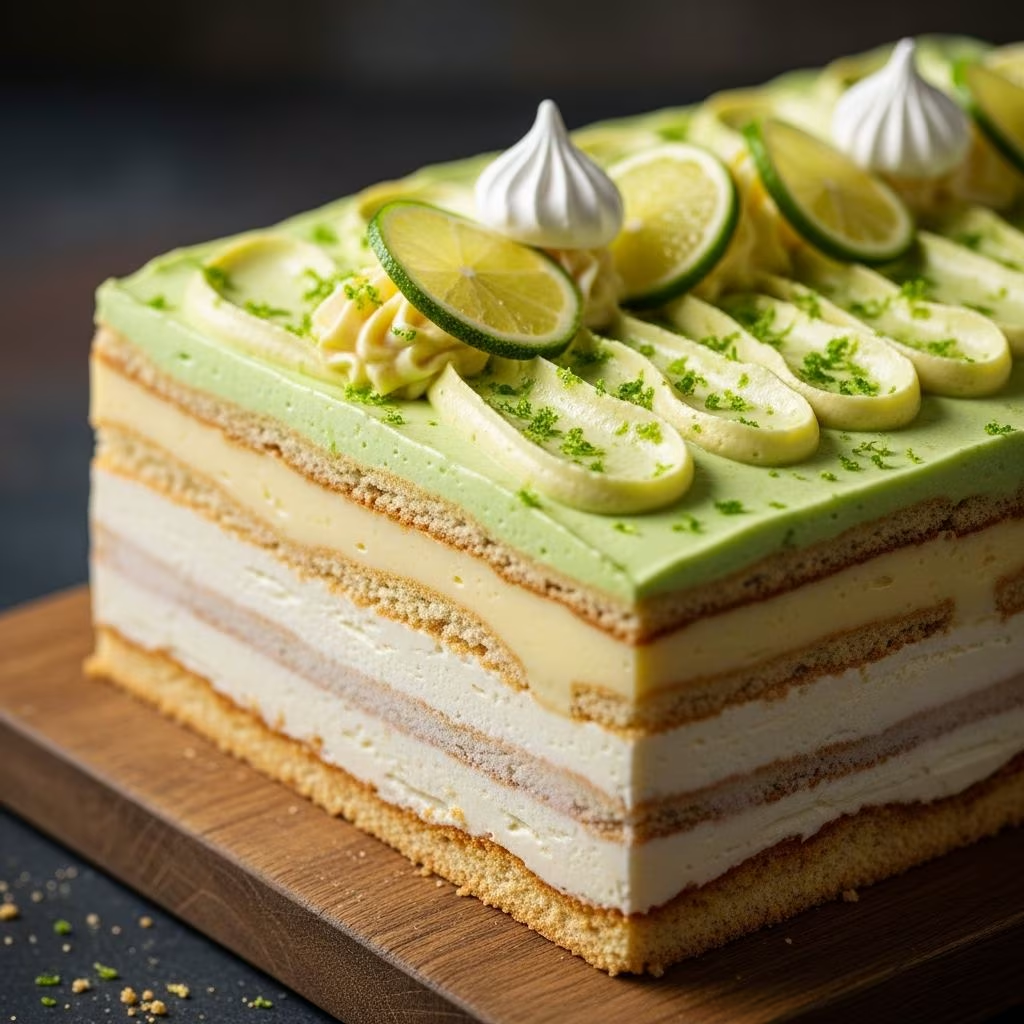
At its core, Carlota de Limón functions as a lime-flavored icebox cake, a category of desserts that rely on refrigeration rather than baking to achieve their final texture. The result is a dessert with a pudding-like consistency, where layers of cookies soften gradually from absorbing the creamy lime filling, creating a harmonious blend of textures that improves as it sits.
The beauty of this dessert lies in its accessibility. Unlike traditional cakes requiring oven time, specialized equipment, or baking expertise, Carlota de Limón welcomes even novice home cooks. The ingredient list remains short, the preparation straightforward, and the rewards substantial.
Essential Ingredients for Success
Creating an authentic Carlota de Limón requires understanding each component’s role in the final product. While recipes vary slightly among families and regions, the core ingredients remain consistent.
The Lime Component
Fresh lime juice forms the flavor foundation of this dessert. Authentic recipes call for Mexican limes (also called key limes), which offer superior flavor compared to standard Persian limes commonly found in American supermarkets. Mexican limes are smaller, rounder, and more aromatic, with a sweeter, more complex tartness. If Mexican limes prove unavailable, key limes serve as an acceptable substitute. Each lime yields roughly one tablespoon of juice, meaning you’ll need approximately six to eight limes to produce the three-quarter cup typically required. Freshly squeezed juice is non-negotiable—bottled lime juice lacks the vibrancy and depth necessary for this recipe.
Dairy Components
The cream base combines three dairy elements working in concert to create the distinctive texture:
- Sweetened condensed milk contributes richness and sweetness while helping set the dessert’s structure
- Evaporated milk adds creaminess and body without excessive sweetness
- Cream cheese (when included in some variations) intensifies richness and provides a subtle tang that complements the lime
These three ingredients, when blended together, transform from separate components into a unified, pudding-like consistency with remarkable stability.
Cookie Selection
Galletas María (Maria cookies) represent the traditional choice and remain the preferred option. These Mexican digestive biscuits have a mild flavor and sturdy texture that holds up well when layered with the lime cream. Their subtle sweetness doesn’t compete with the lime’s tartness. However, recipes demonstrate flexibility—vanilla wafers, graham crackers, digestive biscuits, or Nilla wafers all work acceptably, though they may subtly alter the final flavor profile.
Optional Flavor Enhancers
While traditional recipes may omit vanilla extract, many contemporary versions include half to one and a half teaspoons, adding depth and balancing the lime’s intensity. Lime zest sprinkled across the top provides visual appeal and intensified lime flavor, while fresh lime slices can serve as elegant garnish.
Step-by-Step Assembly Process
Creating the Lime Cream Mixture
Begin by gathering your liquid ingredients: three-quarter cup fresh lime juice, one 12-ounce can of evaporated milk, one 14-ounce can of sweetened condensed milk, and optionally four ounces of room-temperature cream cheese and half to one teaspoon vanilla extract. Add all components to a blender and process until the mixture achieves a smooth, pudding-like consistency. This typically requires one to two minutes of blending. The mixture should appear uniform without visible streaks or separation. If using a hand mixer and bowl instead of a blender, whisk vigorously until cream cheese fully incorporates and no lumps remain. Set this mixture aside once complete.
Layering Technique
Choose an 8×8-inch square baking dish or similar-sized container as your base. Glass baking dishes work particularly well as they allow you to see the layers and facilitate even distribution. Begin by pouring a thin layer—roughly one-quarter inch—of the lime cream mixture across the dish bottom. This base layer prevents the bottom cookies from sticking to the pan.
Next, arrange a single layer of Maria cookies across this cream base. They should fit snugly without overlapping excessively. Spread another thin layer of the lime cream over these cookies, using the back of a spoon or offset spatula to distribute evenly. Continue alternating cookie and cream layers until you’ve used approximately four cookie layers with cream interspersed between them. The final layer should consist entirely of the remaining lime cream, creating a smooth top surface.
Preparation for Refrigeration
Once assembled, gently tap the baking dish against your counter several times. This motion dislodges air bubbles trapped throughout the layers, allowing the cream to flow into gaps and create a more cohesive final product. Cover the dish carefully with plastic wrap, ensuring it doesn’t rest directly against the cream surface—this prevents unwanted texture changes or sticking. Gently lower the plastic wrap until it hovers just above the filling.
Refrigeration and Storage Considerations
The critical final step requires patience. Refrigerate your Carlota de Limón for a minimum of five hours, though overnight refrigeration (eight to twelve hours) yields optimal results. During this time, the cookies gradually absorb moisture from the lime cream, transforming from their original crisp texture into something cake-like. Simultaneously, the entire dessert sets into a unified, sliceable form.
This dessert keeps well in the refrigerator for up to four days when properly covered. Always serve directly from the refrigerator to maintain the cool, creamy texture that defines the experience. Carlota de Limón doesn’t freeze well, as the texture becomes icy and unpleasant when thawed.
Serving Suggestions and Variations
Classic Presentation
Using a sharp knife dipped in hot water (wiping between cuts) slice the Carlota de Limón into nine equal squares for a standard 8×8-inch pan. Arrange each square on a chilled plate and serve immediately. The contrast between the cool, creamy interior and the room-temperature plate enhances the eating experience.
Topping and Garnishing Options
While the dessert stands complete on its own, several garnish options elevate presentation:
- A generous sprinkle of vibrant lime zest across the surface adds visual interest and intensified citrus flavor
- Thin lime slices arranged artfully on top create an elegant, restaurant-quality appearance
- A dollop of whipped cream or Mexican crema adds richness and visual appeal
- A light dusting of graham cracker crumbs or crushed Maria cookies provides textural contrast
Flavor Modifications
While the classic version remains unbeatable, home cooks can experiment with complementary additions. A pinch of cinnamon or cardamom adds warmth without overwhelming the lime. Some families incorporate a tablespoon of tequila or rum for adult variations. Others reduce the sweetness by cutting condensed milk quantities slightly, though this requires careful adjustment to maintain proper texture.
Troubleshooting Common Issues
| Problem | Cause | Solution |
|---|---|---|
| Too soft or runny after refrigeration | Insufficient evaporated or condensed milk | Ensure you’re using full-fat versions and measuring accurately. Next time, add an extra tablespoon of evaporated milk |
| Cookies remain crunchy rather than softening | Insufficient refrigeration time | Allow longer chilling—overnight is ideal. Thinner cookies may need additional cream layer |
| Separation or grainy texture | Over-blending or dairy components not fully combined | Blend only until smooth; don’t overwork. Ensure cream cheese is room temperature before blending |
| Too sweet | Excess condensed milk | Reduce condensed milk by two to four ounces in future batches; balance with additional lime juice if needed |
Frequently Asked Questions
Can I make Carlota de Limón ahead of time?
Yes, this dessert actually improves when made one to two days in advance. The flavors meld and develop further during extended refrigeration, making it ideal for party preparation.
What size baking dish works best?
An 8×8-inch square dish creates optimal thickness and layer visibility. Larger dishes will result in thinner cakes with fewer layers, while smaller dishes create taller, denser cakes.
Can I use bottled lime juice?
While possible, bottled juice lacks the brightness and complexity of fresh-squeezed lime. If necessary, bottled juice works in emergencies, though the flavor difference is noticeable.
How long does Carlota de Limón keep?
Properly covered and refrigerated, it maintains quality for three to four days. It doesn’t freeze well due to texture degradation, so plan accordingly.
Can I transport this dessert?
Yes, covered tightly and kept in a cooler, it travels well for up to an hour. Keep it cool and don’t leave it at room temperature for extended periods.
The Cultural Significance of This Dessert
Carlota de Limón occupies a special place in Mexican culinary tradition, particularly in warm regions where refrigerated desserts provide welcome respite from heat. The recipe represents resourcefulness—using shelf-stable pantry ingredients to create impressive results without specialized equipment or baking knowledge. It appears at family celebrations, holiday tables, and casual gatherings, uniting generations through a simple, beloved dessert that requires minimal fuss yet delivers maximum satisfaction.
This dessert bridges the gap between accessibility and sophistication, allowing anyone to create restaurant-quality treats at home. The minimal ingredient list and straightforward preparation democratize dessert-making, proving that impressive results don’t require complicated techniques or rare ingredients.
Conclusion
Carlota de Limón stands as the quintessential no-bake summer dessert—refreshing, simple, and undeniably delicious. Whether you’re new to this Mexican classic or returning to a family favorite, this recipe delivers consistent, impressive results. The combination of tart lime, sweet cream, and softened cookies creates a dessert that satisfies on multiple levels. From preparation through serving, Carlota de Limón demonstrates that the best dishes often emerge from simplicity, quality ingredients, and patience. Your next gathering deserves this cool, elegant treat.
References
- Carlota de Limon (Mexican Lime IceBox Cake) — The Tiny Fairy. https://thetinyfairy.com/carlota-de-limon-mexican-lime-icebox-cake/
- Carlota de Limón – Isabel Eats — Isabel Eats. https://www.isabeleats.com/carlota-de-limon/
- Carlota De Limón (Mexican Lime Icebox Cake) — Mexican Made Meatless. https://mexicanmademeatless.com/carlota-de-limon-mexican-lime-icebox-cake/
- Carlota de Limon (Lime Icebox Cake) — La Saucy Kitchen. https://lasaucykitchen.com/carlota-de-limon-lime-icebox-cake/
- Carlota de Limon {Lime Icebox Cake} — Belly Full. https://bellyfull.net/carlota-de-limon/