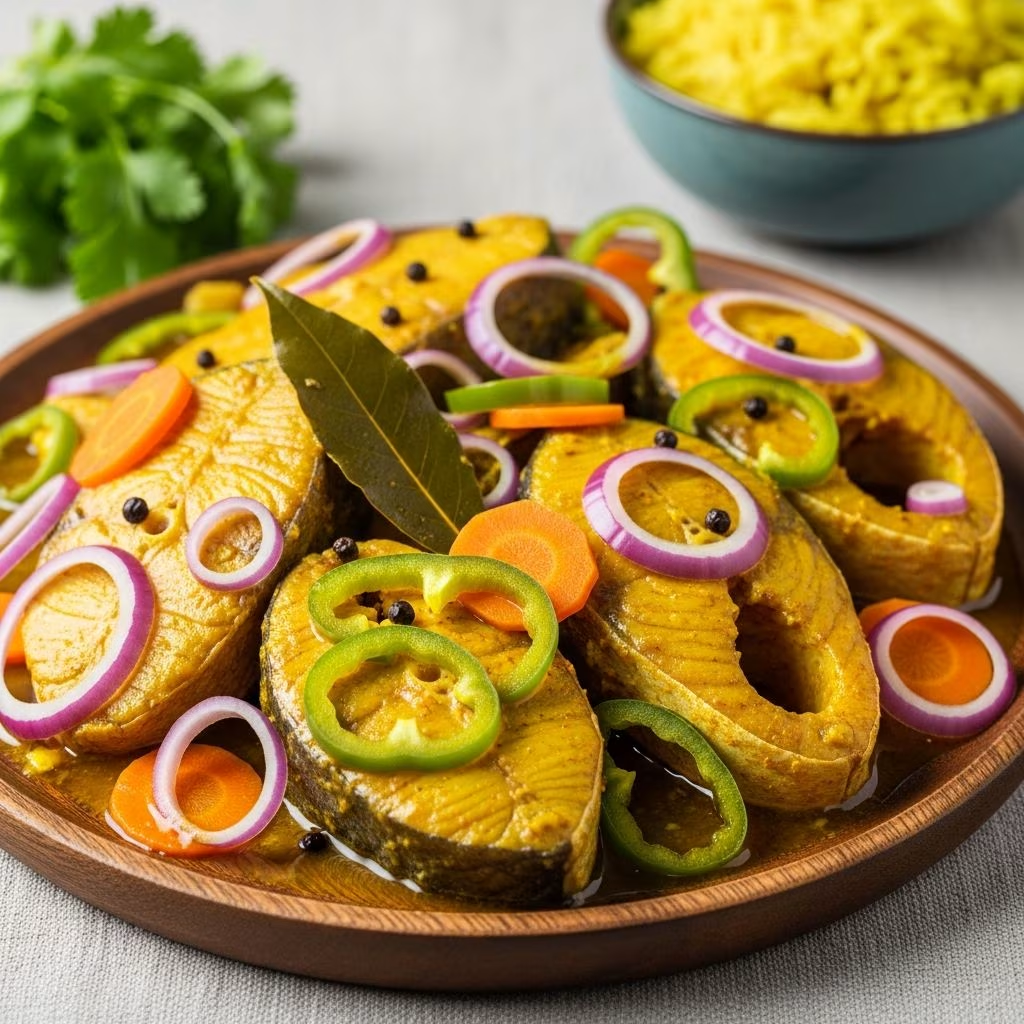
Cape Malay pickled fish stands as a cornerstone of South African culinary tradition, particularly in the Western Cape. This dish features firm white fish fillets that are lightly fried and then steeped in a fragrant, tangy marinade made from vinegar, onions, sugar, and a medley of warming spices. Known locally as ingelegde vis, it has deep roots in the Cape Malay community, whose cooking reflects influences from Indonesian, Indian, and local African flavors brought by enslaved people and traders centuries ago. Today, it graces tables across diverse households, especially during religious holidays like Good Friday and Easter, where it’s often paired with hot cross buns or fresh bread.
The Cultural Legacy Behind the Dish
The origins of Cape Malay pickled fish trace back to the 17th and 18th centuries when Malay slaves from Southeast Asia arrived in the Cape Colony under Dutch rule. These communities preserved fish through pickling—a practical method in a region without reliable refrigeration—to create a dish that could last days or weeks. Over time, it evolved into a festive staple, symbolizing resilience and flavor innovation. Unlike simple preservation techniques elsewhere, this version incorporates bold spices like turmeric, coriander, fennel, and allspice, giving it a distinctive golden hue and aromatic profile that sets it apart from European pickled herrings or Jewish gefilte fish.
Its popularity extends beyond the Cape Malay community. Christian families enjoy it during Lent, while Jewish South Africans adapt it for Passover, appreciating the vinegar-based preservation that aligns with dietary customs. The dish’s versatility has made it a bridge between cultures, enjoyed at family gatherings, markets, and even high-end restaurants in Cape Town.
Choosing the Right Fish and Key Ingredients
Success with Cape Malay pickled fish hinges on selecting firm-fleshed white fish that holds up to frying and marinating. Ideal choices include hake, cod, yellowtail, kingklip, or halibut—species common in South African waters. Avoid delicate fish like sole, which may disintegrate. Fillets should be skinned or skin-on, cut into 2-3 inch portions for even cooking.
The marinade is the heart of the dish, balancing sweet, sour, and savory notes. Core components include:
- Vinegar: White grape, apple cider, or red wine vinegar provides acidity without overpowering; avoid harsh spirit vinegar.
- Onions: Thickly sliced for crunch—blanch or simmer briefly to retain texture.
- Sugar: Balances tanginess; adjust from 1/2 to 1.5 cups based on preference.
- Spices: Turmeric for color, curry powder or homemade masala for depth, plus whole spices like bay leaves, peppercorns, cloves, coriander, fennel, and allspice. Dry-roast whole spices to amplify aromas.
- Add-ins: Apricot jam, peach chutney, or lemon rind for subtle fruitiness.
For frying, use neutral oils like sunflower, canola, or vegetable oil. Season the fish simply with salt, pepper, and fish masala—a blend of turmeric, coriander, cumin, and chili.
Step-by-Step Recipe for Authentic Cape Malay Pickled Fish
This recipe yields 6-8 servings and requires 30-45 minutes active prep, plus 24-48 hours marinating. Plan ahead for the best flavor infusion.
Fish Preparation and Frying
- Pat 1.5-2 kg (3-4 lbs) fish fillets dry. Cut into 2-3 inch squares or portions. Season both sides with 1-2 tsp salt, black pepper, and 2-3 tbsp fish masala or curry powder.
- Heat 1-2 inches of oil in a deep frying pan or skillet over medium-high heat (around 350°F/175°C).
- Dredge fish lightly in seasoned flour (mixed with extra masala), dip in beaten egg if desired for crispiness, then fry in batches 3-5 minutes per side until golden and cooked through (internal temp 145°F/63°C). Drain on paper towels and cool slightly.
Marinade Creation
- While fish fries, prepare onions: Slice 3-4 large onions into rings. Optionally, blanch in boiling salted water for 1 minute, drain, and rinse to reduce sharpness while keeping crunch.
- In a saucepan, combine 2 cups vinegar, 1-1.5 cups water, 1-1.5 cups sugar, 1 tsp salt, 1-2 tsp turmeric, 1-2 tbsp curry powder or masala, 2 bay leaves, 1 tbsp each dry-roasted coriander and fennel seeds, 6-8 peppercorns, cloves, and allspice berries. Add 2 tbsp jam or chutney and lemon rind.
- Bring to a boil, then simmer 10-15 minutes until onions soften slightly and flavors meld. Thicken optionally with 1 tsp cornstarch slurry for sauce-like consistency.
Assembly and Marinating
- In a deep glass or ceramic dish (avoid metal), layer half the fried fish, topped with half the onions and any frying oil/juices for flavor.
- Repeat layers. Pour hot marinade over everything, ensuring fish is submerged. Cool to room temperature, then cover and refrigerate 24-48 hours. Flavors peak after 2 days.
Pro Tip: Turn the dish daily during marinating to evenly distribute the brine.
Variations and Modern Twists
While traditional recipes stay true to basics, home cooks experiment freely. Here’s a comparison of common adaptations:
| Variation | Description | Best For |
|---|---|---|
| Spice Level Boost | Add fresh chili or extra masala to frying batter and marinade. | Heat lovers |
| Sweet Enhancement | Incorporate golden raisins, sultanas, or extra chutney. | Families with kids |
| Thick Sauce | Use more jam and cornstarch for a curry-like gravy. | Serving with rice |
| Vegetarian Swap | Fry firm tofu or eggplant slices instead of fish. | Plant-based diets |
| Quick Version | Poach fish briefly instead of frying; marinate only 6 hours. | Weeknight meals |
Some recipes fry onions first for mellowness, while purists insist on raw or blanched for bite. Homemade masala—roasting and grinding coriander, cumin, fennel, turmeric, and chili—elevates authenticity.
Perfect Pairings and Serving Suggestions
Serve chilled or at room temperature straight from the fridge—no reheating needed, as it improves with age up to a week. Classic accompaniments include:
- Buttered hot cross buns or crusty baguette to mop up the sauce.
- Peach or apricot chutney on the side.
- Fresh salads like potato or beetroot for contrast.
- Rice, couscous, or flatbreads for heartier meals.
For drinks, pair with crisp Sauvignon Blanc, rooibos iced tea, or ginger beer to complement the spices.
Storage, Safety, and Troubleshooting
Stored in its marinade in the fridge, pickled fish lasts 1-2 weeks. The vinegar’s acidity preserves it safely. Freezing is possible for up to 3 months, though texture may soften.
Common issues:
- Too sour? Add more sugar next time or balance with chutney.
- Fish falling apart? Use firmer cuts and don’t overfry.
- Marinade too thin? Simmer longer or add slurry.
- Not spicy enough? Dry-roast whole spices fresh.
Frequently Asked Questions (FAQs)
Can I make Cape Malay pickled fish ahead of time?
Yes, it’s designed for it—marinate 1-3 days for optimal taste.
Is it safe to eat if the fish was previously frozen?
Absolutely, as long as it’s thawed properly and cooked through before pickling.
What’s the difference between Cape Malay and standard pickled fish?
Cape Malay uses curry spices and sweetness, unlike plainer versions.
Gluten-free?
Skip flour dredging or use rice flour.
How much does it cost to make?
Around $15-25 USD for 6-8 servings, depending on fish prices.
References
References
- Cape Malay Pickled Fish Recipe — The Kitchen Sink Blog. 2023-05-15. https://thekitchensinkblog.com/cape-malay-pickled-fish/
- Cape Malay Pickled Fish (Ingelegde Vis) — Tantalise My Taste Buds. 2022-12-10. https://www.tantalisemytastebuds.com/cape-malay-pickled-fish/
- Cape Malay Style Pickled Fish — Rhodes Food Group (official company recipe). 2024-03-28. https://rhodesquality.com/recipes/cape-malay-style-pickled-fish/
- Cape Malay Pickled Fish — The Muddled Pantry. 2016-03-20. https://themuddledpantry.com/2016/03/20/cape-malay-pickled-fish/
- Cape Malay-style Pickled Fish Video Recipe — Wolkberg Artisans (YouTube, official channel). 2023-11-12. https://www.youtube.com/watch?v=zAm4v5w2bFs