Understanding This Unique Melon-Based Dessert
Cantaloupe Crunch represents an unconventional approach to fruit-based baking that celebrates the natural sweetness of fresh melons. Unlike traditional fruit crisps or cobblers that rely on apples, berries, or stone fruits, this dessert places cantaloupe in the starring role, creating a dish that surprises and delights with its subtle flavor profile and tender texture. The combination of juicy melon pieces, aromatic spices, and a buttery cake mix topping creates layers of flavor and texture that distinguish this recipe from mainstream fruit desserts.
The appeal of Cantaloupe Crunch extends beyond its novelty factor. The fruit’s natural sugars caramelize during baking, intensifying its subtle sweetness, while citrus and warm spices complement rather than overpower the delicate melon flavor. This dessert proves that melons can transcend their typical role as breakfast fruits or summer snacks, functioning beautifully as the foundation for sophisticated baked creations.
Essential Components and Their Roles
The Cantaloupe Foundation
Selecting quality cantaloupe is fundamental to success. The fruit should feel heavy for its size, indicating juice content, and display a uniform beige-tan netting pattern across its exterior. The stem end should yield slightly to gentle pressure, suggesting ripeness without mushiness. Three cups of diced cantaloupe provides the ideal volume for a standard 9-inch square baking dish, offering sufficient moisture to create a cohesive filling while maintaining structural integrity during baking.
When preparing the cantaloupe, cut the melon in half, scoop out seeds, and remove the rind completely. Dice the flesh into uniform pieces approximately three-quarter inch in size. This consistency ensures even cooking and creates pleasant texture variation in the finished dish. Avoid over-processing or creating too-fine a texture, as this can result in excessive moisture and prevent proper baking.
Acidic Components and Flavor Balance
Lemon juice serves multiple purposes in this recipe. One-third cup of fresh-squeezed lemon juice brightens the melon’s inherent sweetness, providing acidic contrast that prevents the dessert from tasting cloying. The acid also helps preserve the cantaloupe’s vibrant color during baking and contributes to the filling’s structural stability. Freshly squeezed juice offers superior flavor compared to bottled alternatives, which may contain preservatives that alter the dessert’s taste profile.
Sweetening Elements
One-half cup of white granulated sugar enhances the cantaloupe’s natural sweetness without introducing competing flavors. This amount balances the lemon juice’s acidity and creates sufficient sweetness for a dessert context without producing an overly saccharine result. The sugar dissolves into the melon’s juice during baking, creating a light syrup that permeates the filling.
Spice Integration
Ground cinnamon and nutmeg function as crucial flavor enhancers in Cantaloupe Crunch. One-half teaspoon of cinnamon provides warmth and depth, while one-quarter teaspoon of nutmeg adds subtle earthiness and complexity. These traditional autumn spices create an unexpected but harmonious partnership with summer melon, creating a dessert that bridges seasonal preferences. Half a teaspoon of vanilla extract reinforces these warm notes and adds subtle floral undertones.
The Binding Element
One tablespoon of all-purpose flour serves a critical structural function, absorbing excess moisture from the cantaloupe and preventing the filling from becoming too liquid during baking. This modest amount prevents the melon from creating a soupy consistency while maintaining the fruit’s juiciness and tender texture. The flour remains largely undetectable in the finished dessert, functioning invisibly as a culinary tool.
The Topping Components
An 18.25-ounce package of white cake mix provides the characteristic crunch that defines this dessert. Rather than mixing the cake batter according to package directions, this recipe uses the dry mix as a topping, creating a streusel-like texture that contrasts beautifully with the tender, moist filling beneath. The cake mix’s combination of flour, sugar, and leavening agents produces a golden-brown crust with pleasant textural complexity.
Three tablespoons of melted butter—two tablespoons incorporated into the filling and one-half cup drizzled over the cake mix topping—ensure proper moisture distribution and browning. The first two tablespoons coat the melon mixture and prevent sticking to the baking dish. The remaining butter, distributed evenly over the dry cake mix, facilitates proper cooking and creates the signature crunch through moisture interaction and browning.
Preparation Process and Technique
Pre-Baking Assembly
Begin by preheating your oven to 350 degrees Fahrenheit, allowing the heating element to reach optimal temperature before the filled baking dish enters the chamber. A properly preheated oven ensures even baking and prevents the filling from cooking at a different rate than the topping.
In a medium-sized mixing bowl, combine the diced cantaloupe, lemon juice, white sugar, flour, two tablespoons of melted butter, cinnamon, nutmeg, and vanilla extract. Mix these ingredients thoroughly until the melon pieces are evenly coated with the liquid and spice mixture. The fruit should glisten uniformly, indicating adequate distribution of all flavoring components. This step is crucial for achieving consistent flavor throughout the finished dessert.
Transfer the prepared melon mixture to a 9-inch square baking dish, spreading it into an even layer that fills the bottom of the dish completely. Pour any accumulated liquid from the mixing bowl over the melon, ensuring all liquid components transfer to the baking dish.
Topping and Final Preparation
Distribute the dry white cake mix evenly across the melon layer. Rather than packing it down firmly, allow it to rest loosely across the filling surface. This approach permits steam to circulate during baking, promoting even cooking and preventing a dense, heavy texture in the finished product.
Drizzle the remaining one-half cup of melted butter evenly over the cake mix topping. Use a spoon or measuring cup to distribute the butter across the entire surface, paying special attention to the edges and corners. This ensures uniform browning and prevents dry spots in the finished dessert.
Baking and Doneness Indicators
Place the prepared baking dish in the center of the preheated 350-degree Fahrenheit oven. Bake for approximately 45 minutes, or until the top achieves a golden-brown color. The exact baking time may vary depending on oven calibration and the moisture content of your specific cantaloupe, so visual assessment proves more reliable than strict time adherence.
The properly baked Cantaloupe Crunch will exhibit a deep golden-brown top with slightly darker edges. The filling beneath should be bubbling gently around the topping’s edges, indicating that the liquid components have heated sufficiently. A toothpick inserted into the cake mix topping should withdraw with minimal crumb adherence, similar to a properly baked cake.
Serving Recommendations and Storage
Optimal Serving Temperature
Allow the baked Cantaloupe Crunch to cool for 10 to 15 minutes after removal from the oven. This resting period permits the filling to firm slightly while maintaining pleasant warmth. Serving the dessert while still warm allows diners to experience the contrast between the warm, tender filling and the crispy topping.
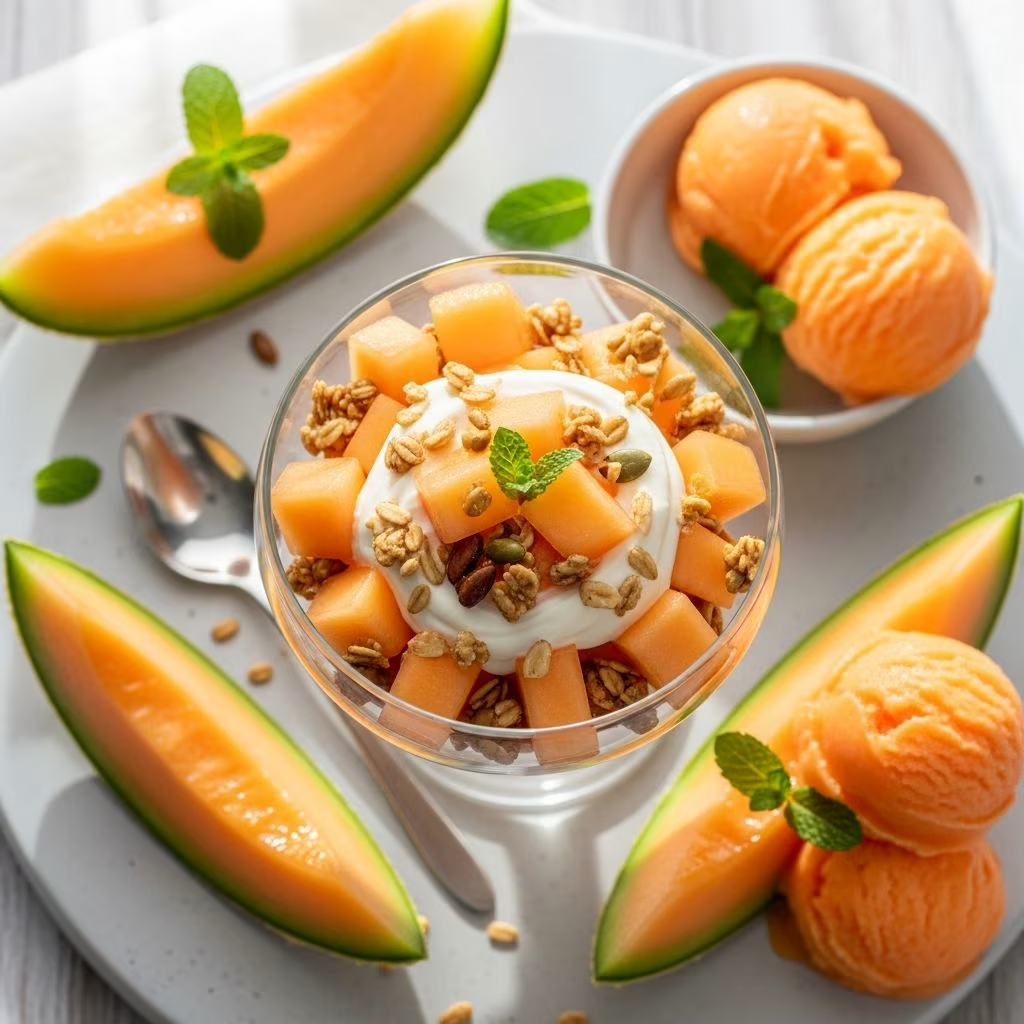
Traditional serving accompaniments include vanilla ice cream, whipped cream, or Greek yogurt. These dairy components provide cooling contrast and creaminess that complements the melon’s subtle sweetness and the spiced filling’s warmth. A light dusting of cinnamon over the cream topping reinforces the dessert’s warm spice profile.
Storage Practices
Cover leftover Cantaloupe Crunch with plastic wrap or transfer to an airtight container. Refrigerate for up to three days. The dessert can be reheated in a 300-degree Fahrenheit oven for 10 to 12 minutes, restoring pleasant warmth without compromising texture. Cold servings offer a refreshing alternative during warm weather, though the filling will firm considerably as it cools.
Creative Variations and Adaptations
Alternative Melons
While cantaloupe provides the signature flavor, honeydew or other orange-fleshed melons can substitute successfully. Honeydew creates a more delicate flavor, while watermelon produces a lighter, more refreshing result. Experiment with melon combinations for unique flavor profiles.
Spice Modifications
Cardamom, ginger, or allspice can supplement or replace traditional cinnamon and nutmeg for alternative warm spice combinations. These variations appeal to adventurous palates seeking different aromatic experiences while maintaining the fundamental cantaloupe-based formula.
Topping Alternatives
Yellow or vanilla cake mixes create subtle variations compared to white cake mix. Alternatively, a homemade streusel topping featuring oats, flour, brown sugar, and butter provides a sophisticated alternative to boxed cake mix.
Why Cantaloupe Crunch Deserves Your Attention
Cantaloupe Crunch occupies a unique niche in the dessert landscape. It challenges conventional expectations about which fruits belong in baked applications, offering adventurous home cooks an opportunity to expand their culinary repertoire. The combination of familiar spices with an unconventional melon base creates a memorable eating experience that lingers in diners’ memories.
Beyond novelty, this dessert delivers genuine eating pleasure. The contrast between tender, juicy filling and crispy topping, enhanced by warm spices and bright citrus notes, creates complex sensory satisfaction. Whether served as a casual weeknight treat or impressive dinner party finale, Cantaloupe Crunch demonstrates that exceptional desserts need not follow traditional formulas.
References
- Cantaloupe Crunch Recipe — Farm and Dairy. 2024. https://www.farmanddairy.com/recipes/cantaloupe-crunch
- 6 Amazing Cantaloupe Recipes for a Sweet Summer — Wholefully. 2024. https://wholefully.com/cantaloupe-recipes/
- 40+ Best Cantaloupe Recipes — The Healthy Epicurean. 2024. https://thehealthyepicurean.com/40-best-cantaloupe-recipes/