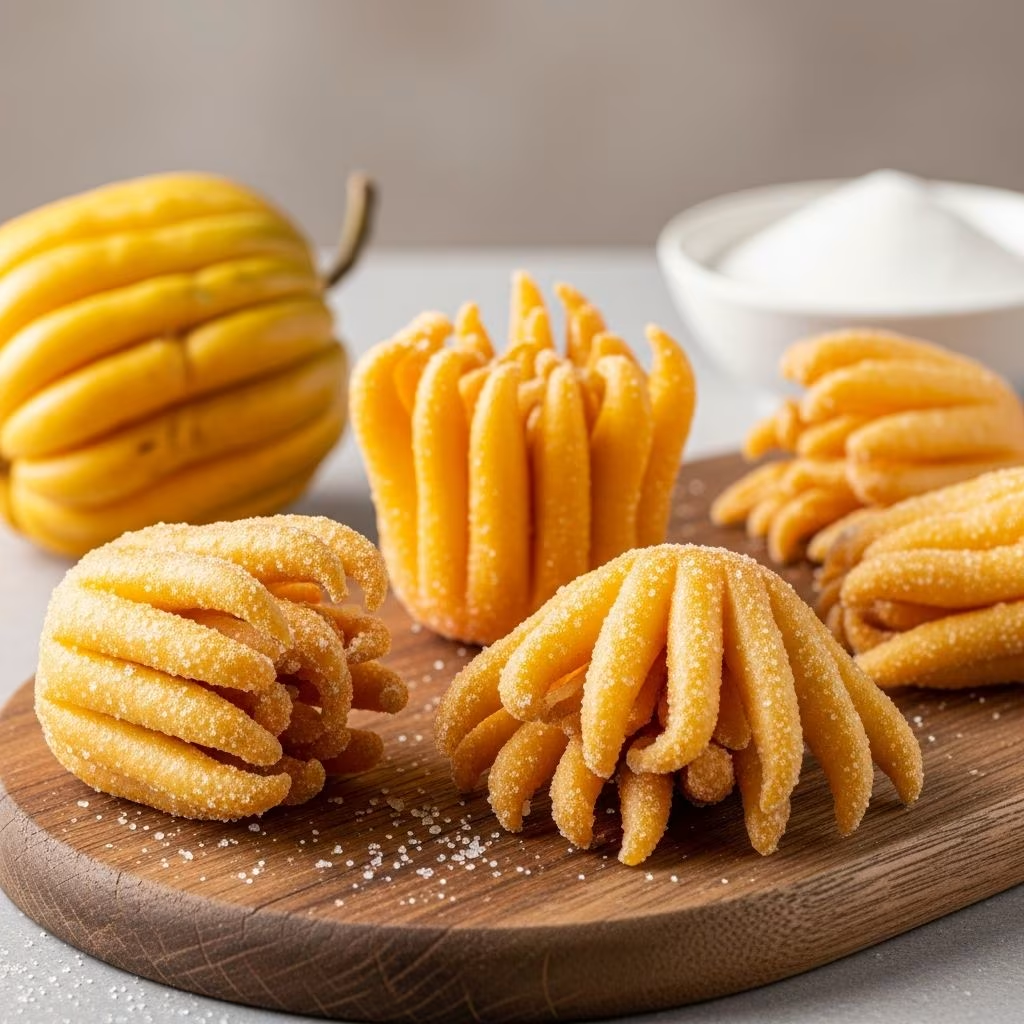
Exotic and visually striking, Buddha’s hand citron offers a floral citrus aroma perfect for candying. This guide provides a straightforward method to create glossy, sugar-coated candies while producing bonus simple syrup and infused tea.
Discovering the Unique Buddha’s Hand Citron
Buddha’s hand, or fingered citron, is a citrus variety distinguished by its lemon-like shape resembling praying hands. Lacking juicy pulp, it excels in aromatic peels ideal for preserves and confections. Grown primarily in California and Mediterranean regions, its essential oils deliver bergamot-like notes, making it a favorite for gourmet applications.
Farmers prize this fruit for its ornamental appeal and culinary versatility. Unlike common lemons or oranges, its solid interior ensures maximum peel yield without waste. Harvested in fall and winter, fresh specimens emit a potent fragrance that intensifies during processing.
Essential Ingredients and Tools
Gather these basics for success:
- 3-5 medium Buddha’s hand citrons (about 2-3 pounds total)
- 4-6 cups granulated sugar (organic cane preferred for flavor)
- 5-6 cups water
- Optional: fresh ginger slices, lavender sprigs, or rosemary for infusion
Tools include a sharp knife, large pot, candy thermometer, strainer, wire racks, and parchment-lined baking sheets. A dehydrator speeds drying if available.
Step-by-Step Candying Process
Preparation and Initial Blanching
Wash citrons thoroughly. Slice into 1/3 to 1/2-inch thick pieces, revealing intricate flower patterns in cross-sections. Dice irregular ‘fingers’ into uniform cubes for even cooking.
Place slices in a pot, cover with cold water, and bring to a boil. Simmer 25-40 minutes until translucent and slightly tender, reducing inherent bitterness. Drain and rinse under cool water.
Cooking in Sugar Syrup
Return blanched citron to the pot. Add equal parts sugar and water (e.g., 4 cups each for 3 citrons). For enhanced flavor, include ginger or herbs. Heat to a simmer, stirring until sugar dissolves.
Maintain gentle bubble for 45-60 minutes, monitoring with a candy thermometer to reach 230°F (110°C), the thread stage. The syrup thickens as citron turns glossy and infused. Remove from heat and cool completely, allowing flavors to meld.
Draining, Drying, and Coating
Strain citron, reserving syrup for other uses. Spread pieces on wire racks over parchment to catch drips. Air-dry 24-48 hours until tacky, not sticky. A fan or low dehydrator (150°F for 6-12 hours) accelerates this.
Toss dried pieces in granulated or superfine sugar for a sparkling coat. Return to racks for another 1-2 days. Repeat coating if needed for full crystallization.
Bonus Products from Your Batch
This process yields three treasures:
- Candied Citrus: Store airtight for months; chop into cookies, cakes, or fruitcakes.
- Citron Syrup: Refrigerate up to a month. Drizzle over pancakes, cocktails, or yogurt. Its Earl Grey-like essence shines in tea.
- Infused Tea: For sun tea option, soak initial slices in jars under sunlight before blanching. Strain and chill for a floral citrus brew.
Flavor Variations and Enhancements
Customize with add-ins during syrup stage:
| Variation | Add-Ins | Pairing Ideas |
|---|---|---|
| Spicy | 1-inch ginger slices, cinnamon stick | Gingerbread, mulled wine |
| Herbal | 2 lavender sprigs, rosemary | Shortbread, lemonade |
| Chocolate-Dipped | Melted dark chocolate post-drying | Trail mix, gift boxes |
| Citrus Medley | Lemon/orange peels | Panettone, sorbet |
These tweaks elevate the basic recipe without complexity.
Storage, Shelf Life, and Troubleshooting
Store candies in airtight containers in a cool, dry place for 6-12 months. Syrup lasts 1 month refrigerated or longer canned. Signs of spoilage include mold or off odors.
Common issues:
- Too Sticky: Extend drying; recoat in sugar.
- Bitter Taste: Blanch longer or multiple times.
- Soft Texture: Cook syrup to exact temperature.
Creative Uses in Baking and Cocktails
Incorporate candied Buddha’s hand into:
- Breads: Stud panettone or stollen for authentic fruitcake vibe.
- Desserts: Mince into thumbprint cookies or ice cream toppings.
- Beverages: Mudlle syrup into gin fizz or hot toddies.
- Snacks: Pair with nuts and cheese for charcuterie.
Its subtle lemon-floral profile complements chocolate, nuts, and spices seamlessly.
Nutritional Profile and Dietary Notes
Per ounce of candied citron: approximately 120 calories, mostly from sugar, with trace vitamin C from peel. Naturally gluten-free and vegan. Portion moderately due to sweetness.
Frequently Asked Questions
Where to buy Buddha’s hand citron?
Specialty grocers, farmers’ markets, or Asian markets in fall/winter. Online from citrus farms.
Can I use other citrons?
Yes, but Buddha’s hand’s lack of pulp and strong aroma make it superior for candying.
Is a candy thermometer necessary?
Highly recommended for precision, though syrup’s spoon-coating test works.
How to gift these candies?
Package in tins with parchment dividers; include syrup in decorative jars.
Substitute for Buddha’s hand?
Lemon or grapefruit peel approximates, but lacks unique fragrance.
References
References
- Candied Buddha’s Hand Citron — Oliver’s Markets. 2021-11-08. https://www.oliversmarket.com/recipe/candied-buddhas-hand-citron/
- Candied Buddha’s Hand Citron — Instructables. N/A. https://www.instructables.com/Candied-Buddhas-Hand-Citron/
- Buddha’s hand citron candy (the original!) — Tyrant Farms. N/A. https://www.tyrantfarms.com/buddhas-hand-citron-make-tea-candy-and-simple-syrup-from-the-same-recipe/
- Buddha’s Hand Candy — Jun & Tonic. N/A. https://junandtonic.com/blog/buddhas-hand-candy
- How to Candy Citrus for an Edible Gift — Food Wishes (YouTube). 2014. https://www.youtube.com/watch?v=eYWVj27ABDg