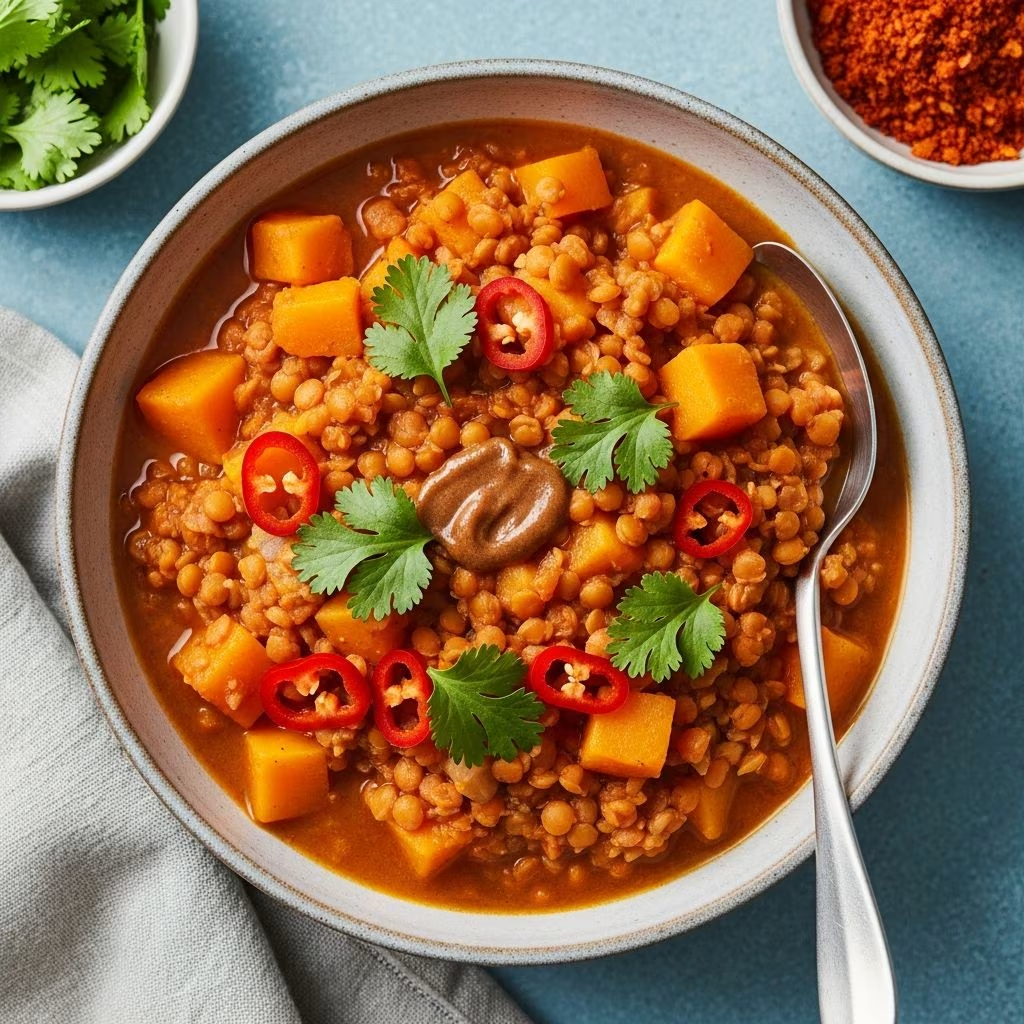
Experience the perfect balance of sweet, earthy butternut squash and creamy red lentils elevated by the sharp tang of tamarind in this comforting stew. Rooted in Indian culinary traditions, this dish offers warmth, nutrition, and bold spices that make it a standout weeknight meal. Simple to prepare yet rich in taste, it’s vegan, gluten-free, and loaded with vitamins from squash and plant-based protein from lentils.
Why This Stew Captivates Home Cooks
Red lentils break down into a velvety base, while butternut squash adds natural sweetness that contrasts beautifully with tamarind’s sour punch. Common spices like turmeric, cumin, and ginger build layers of aroma, creating a dish that’s both satisfying and healthful. It’s versatile—serve it as a soup, over rice, or with flatbreads—and stores well for busy days.
- Nutrient-dense: Squash provides vitamin A and fiber; lentils offer iron and folate.
- Quick prep: One pot, under 45 minutes.
- Customizable: Adjust heat or add greens for variety.
Core Ingredients and Their Roles
Gathering the right components ensures authentic flavor. Focus on fresh produce and pantry staples for best results.
| Ingredient | Quantity | Role |
|---|---|---|
| Red lentils | 1.5 cups | Thickens into creamy texture; high protein. |
| Butternut squash | 3 cups, cubed | Sweetness and bulk; rich in antioxidants. |
| Tamarind paste | 2 tbsp | Tangy brightness; balances richness. |
| Onion, garlic, ginger | 1 each | Aromatic base for depth. |
| Turmeric, cumin, coriander | 1 tsp each | Earthy warmth and color. |
| Coconut milk | 1 cup | Creaminess without dairy. |
| Vegetable broth | 4 cups | Liquid base for simmering. |
Tamarind, derived from the fruit of the Tamarindus indica tree, imparts a unique sourness that’s essential here. If unavailable, substitute with lemon juice, but the paste offers superior complexity.
Step-by-Step Cooking Guide
Follow these instructions for foolproof results. Prep time: 15 minutes. Cook time: 30 minutes. Serves 4-6.
Sauté the base: Heat 2 tbsp oil in a large pot over medium heat. Add diced onion, minced garlic (4 cloves), and grated ginger (2 tbsp). Cook 5 minutes until golden.
Bloom spices: Stir in 1 tsp each turmeric, cumin, coriander, and optional chili powder. Toast 1 minute to release oils.
Add squash and lentils: Toss in cubed butternut squash and rinsed red lentils. Coat with spices for 2 minutes.
Simmer: Pour in broth, tamarind paste, and salt. Bring to boil, then reduce to simmer. Cover and cook 20-25 minutes until squash is tender and lentils mushy.
Finish with creaminess: Stir in coconut milk. Simmer 5 more minutes. Adjust seasoning; garnish with cilantro and lime.
For a tadka (tempered spice finish), heat 1 tbsp oil with cumin seeds, dried chilies, and garlic slivers, then pour over the stew just before serving.
Nutritional Breakdown Per Serving
This stew is a powerhouse for plant-based eaters. Approximate values based on 6 servings:
| Nutrient | Amount | % Daily Value |
|---|---|---|
| Calories | 320 | 16% |
| Protein | 14g | 28% |
| Fiber | 12g | 43% |
| Vitamin A | 10,000 IU | 200% |
| Iron | 4mg | 22% |
Data synthesized from USDA nutrient databases for key ingredients. Pairs well with brown rice for complete amino acids.
Variations for Every Palate
- Spicy version: Add fresh jalapeños or cayenne.
- Green boost: Wilt in spinach or kale at the end.
- Pressure cooker: Cook on high for 8 minutes with natural release.
- Low-carb: Serve with cauliflower rice.
- Thai twist: Swap tamarind for lime and add curry paste.
These adaptations keep the dish exciting without straying from its core appeal.
Pairing Suggestions and Serving Ideas
Elevate your meal with thoughtful sides. Naan or roti scoops up the stew perfectly. For a full spread:
- Fresh cucumber raita to cool spices.
- Steamed basmati rice or quinoa.
- Pickled onions for crunch.
- Yogurt or vegan alternative on the side.
Drink pairings: Ginger chai, mango lassi, or a crisp white wine like Sauvignon Blanc.
Storage, Freezing, and Meal Prep Tips
This stew shines in make-ahead scenarios. Refrigerate up to 5 days in airtight containers. Freeze portions for 3 months—thaw overnight and reheat with a splash of water. Avoid repeated freezing to preserve texture.
- Reheating: Stovetop on low or microwave with stir.
- Batch cooking: Double recipe for weekly lunches.
- Portion control: Ladle into mason jars for grab-and-go.
Health Benefits of Key Components
Butternut squash supports eye health with beta-carotene. Red lentils aid digestion and blood sugar control. Tamarind provides antioxidants and aids iron absorption, per studies from nutritional research bodies.
In Ayurvedic traditions, warming spices like ginger counter seasonal chills, making this ideal for fall and winter.
Frequently Asked Questions
Can I use green or brown lentils instead?
Red lentils are best for creaminess as they cook down quickly. Green/brown hold shape better for chunkier texture; increase cook time by 10 minutes.
Is tamarind paste the same as concentrate?
Paste is thicker and less sweet; dilute concentrate if using. Start with 1 tbsp and taste.
How do I make it dairy-free?
It already is—coconut milk replaces cream. Use oil instead of ghee.
What’s the best way to peel butternut squash?
Microwave whole squash 2-3 minutes to soften skin, then use a sturdy peeler. Cut in half lengthwise first.
Can this be made in an Instant Pot?
Yes: Sauté mode for base, then pressure cook 8 minutes on high, quick release.
Expert Tips for Perfection
Rinse lentils until water runs clear to remove starch. Use homemade broth for deeper flavor. Taste tamarind level midway—it’s potent. For silkier results, blend partially with an immersion blender.
Experiment with add-ins like roasted tomatoes or paneer for non-vegan twists.
References
- Nutrient Data for Lentils — USDA FoodData Central. 2023-05-15. https://fdc.nal.usda.gov/fdc-app.html#/food-details/172421/nutrients
- Butternut Squash Nutritional Profile — Harvard T.H. Chan School of Public Health. 2024-02-10. https://www.hsph.harvard.edu/nutritionsource/food-features/squash/
- Tamarind Health Benefits — National Institutes of Health (PubMed). 2022-11-20. https://pubmed.ncbi.nlm.nih.gov/17259238/
- Red Lentil Dal Variations — BBC Good Food. 2025-01-08. https://www.bbcgoodfood.com/recipes/red-lentil-dal
- Ayurvedic Warming Foods — National Center for Complementary and Integrative Health. 2023-09-12. https://www.nccih.nih.gov/health/ayurvedic-medicine-in-depth