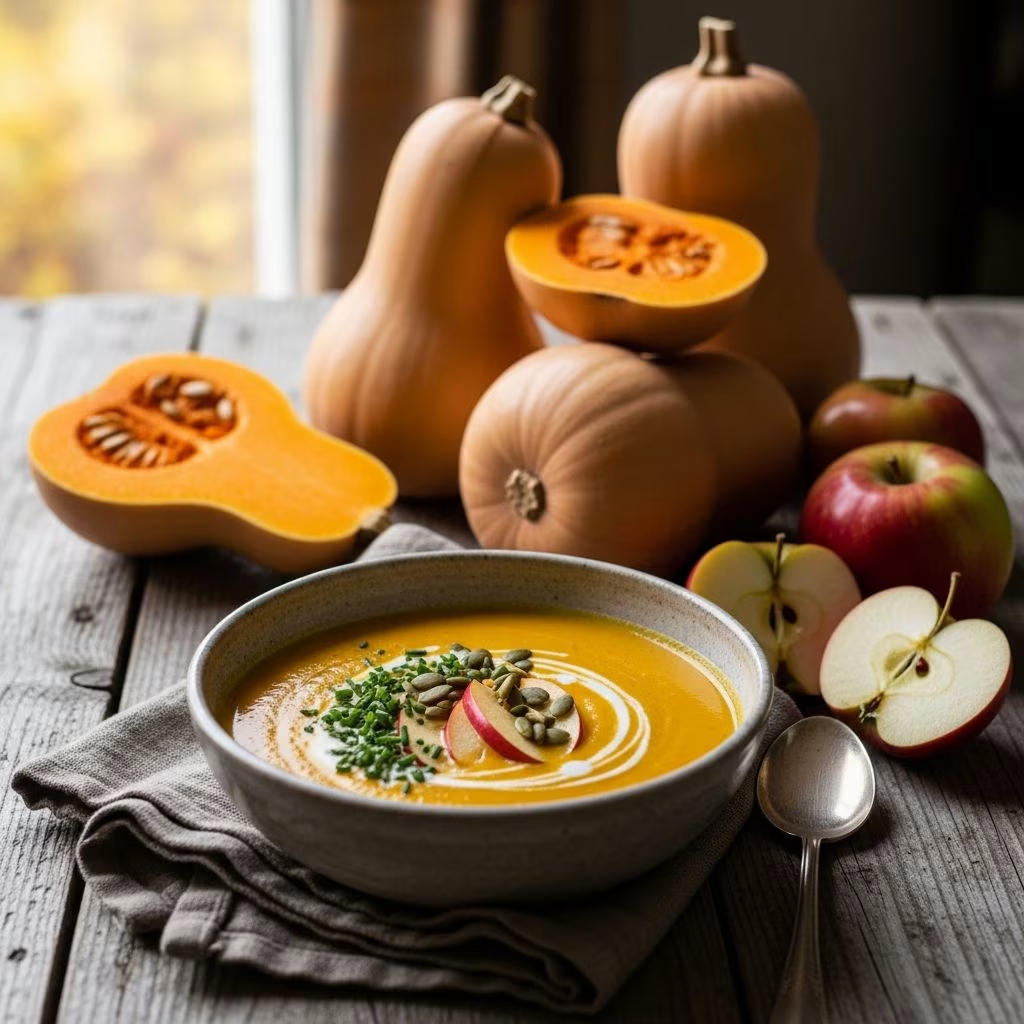
When the seasons shift and cooler weather arrives, nothing satisfies quite like a warm, velvety bowl of soup. This particular recipe combines two signature autumn ingredients—butternut squash and apples—into a harmonious dish that celebrates the harvest season. The natural sweetness of both components creates a balanced flavor profile that feels both comforting and refined, making it suitable for casual family dinners or more formal entertaining occasions.
Understanding the Core Ingredients
The foundation of this soup relies on three primary components that work together to create its distinctive character. Butternut squash provides a creamy, naturally sweet base that becomes silky when pureed, while apples add brightness and subtle tartness that prevents the dish from becoming overly rich. Fresh herbs and complementary spices tie these elements together, creating depth and complexity in each spoonful.
Selecting Your Butternut Squash
Choosing the right squash is crucial for optimal results. Look for specimens that feel heavy for their size, indicating they contain less water and more flesh. The skin should be tan or beige without soft spots or blemishes. A medium-sized squash, roughly 16 ounces, provides the ideal proportion for this recipe. Avoid squashes that feel light or have wrinkled skin, as these indicate age and potential quality decline. Fresh, firm specimens will yield smoother, more flavorful results when pureed.
Apple Varieties That Work Best
Not all apples perform equally in soup preparation. Certain varieties maintain structural integrity during cooking while others become mealy or lose their flavor profile. Braeburn apples offer a balanced combination of sweetness and acidity that resists mushiness. Gala apples provide natural sweetness with subtle floral notes. Honeycrisp varieties deliver crisp texture and juicy sweetness that carries through the cooking process. For additional complexity, consider blending two varieties—pairing a sweeter apple with a slightly tart one creates nuanced flavor development.
Essential Kitchen Equipment and Preparation Techniques
Proper equipment and preparation methodologies significantly impact the final product. Understanding which tools work best and how to use them safely ensures both excellent results and kitchen safety.
Choosing Your Blending Method
Three primary options exist for achieving the signature smooth consistency. A traditional blender works effectively for large batches but requires careful handling due to steam expansion from hot liquids. When using a blender, allow the soup to cool slightly, fill the pitcher only halfway, and secure the lid firmly while draping a kitchen towel over the top for safety protection. Start on the lowest setting and gradually increase speed to prevent splattering.
A food processor offers an alternative that handles heat similarly to a blender. Immersion blenders provide the most hands-on control and eliminate transfer steps, making them ideal for smaller batches or when you prefer direct blending within the pot. This method produces consistently smooth results with minimal fuss.
Initial Squash Preparation
Begin by carefully cutting the squash in half lengthwise using a sharp chef’s knife. Scoop out seeds and fibrous strands with a sturdy spoon or melon baller. Cut the flesh into manageable cubes approximately one inch across. This size promotes even cooking and easier handling during the initial sautéing phase. Some cooks prefer roasting the squash first, which concentrates flavors and creates caramelized edges that enhance the final soup’s depth.
Building Layers of Flavor Through Technique
Professional soup-making relies on technique as much as ingredients. Understanding how to build flavor systematically transforms ordinary components into an extraordinary dish.
The Sautéing Foundation
Begin by heating olive oil in a Dutch oven or heavy-bottomed pot over medium heat until the surface shimmers. Add your prepared butternut squash cubes and sauté for approximately ten minutes, stirring frequently to promote even browning and cooking. If the edges begin darkening too quickly, reduce heat to prevent burning. This initial cooking phase begins breaking down the squash’s cell structure while developing subtle caramelized flavors.
Once the squash shows golden-brown coloring, introduce sliced leeks and minced garlic. These aromatic vegetables build a savory foundation that balances the soup’s inherent sweetness. Sauté this combination for one minute to release essential oils and soften the aromatics slightly. The brief cooking prevents these delicate ingredients from becoming mushy.
Incorporating Fresh Fruit
Add your apple cubes to the pot and continue cooking for two to three minutes. This intermediate cooking phase allows apples to begin softening while still maintaining some structural integrity. The combination of squash, leeks, garlic, and apples creates an aromatic base that signals the soup’s coming character.
Liquid Addition and Gentle Simmering
Pour in your chosen broth—chicken broth offers richness while vegetable broth provides a lighter foundation—along with water to reach desired consistency. Add a bay leaf for subtle herbal undertones. Bring the mixture to a gentle simmer over medium-low heat and maintain this pace until all vegetables are extremely tender, typically seven to ten minutes. Avoid vigorous boiling, which can break down vegetables unevenly and create a less refined texture.
Finishing Touches and Customization Options
After cooking, the transformation from simple vegetables to sophisticated soup occurs through careful finishing. Remove the bay leaf before pureeing. Transfer the hot mixture to your chosen blending vessel and puree until completely smooth. Some prefer a slightly rustic texture with tiny vegetable flecks, while others desire completely silky consistency—adjust pureeing duration to your preference.
Seasoning and Flavor Enhancement
Return the pureed soup to the pot and incorporate maple syrup, which adds subtle sweetness and slight caramel notes. Fresh sage—either minced or infused—contributes an earthy, slightly peppery quality that elevates the overall profile. Some variations include cinnamon for warm spice notes, nutmeg for subtle sweetness enhancement, or ginger for brightness and subtle heat.
Add heavy cream or half-and-half to create luxurious mouthfeel without overwhelming the palate. Stir until fully incorporated, then taste critically. Adjust salt and pepper according to your preference, remembering that broth already contains sodium. A light hand with seasoning initially, with adjustments afterward, prevents over-salting.
Presentation and Garnishing
Serve immediately in warmed bowls for optimal experience. Traditional garnishes include a drizzle of sour cream, a dollop of whipped cream, or additional fresh sage leaves arranged artfully. A light sprinkle of crispy sage chips or toasted nuts adds textural contrast. Some presentations include a swirl of herb-infused oil or a grind of fresh black pepper for visual and gustatory appeal.
Ingredient Variations and Dietary Adaptations
| Dietary Need | Ingredient Substitution | Impact on Flavor |
|---|---|---|
| Dairy-Free | Coconut milk or cashew cream | Adds subtle tropical notes or creamy richness |
| Lower Calorie | Omit cream or use Greek yogurt | Maintains creaminess with lighter profile |
| Vegan | Vegetable broth and plant-based cream | Creates lighter, more vegetable-forward flavor |
| Gluten-Free | Verify all broths are certified gluten-free | No flavor impact with proper verification |
Storage and Make-Ahead Strategies
This soup maintains quality refrigerated for up to four days in airtight containers. The flavor actually deepens as components integrate during storage. For longer preservation, freeze portions in individual containers for up to three months. Thaw overnight in the refrigerator before reheating gently over low heat, stirring occasionally and adding broth if the consistency becomes too thick.
Prepare the soup through the pureeing stage one day ahead, then add cream and seasonings just before serving for maximum freshness. This advance preparation reduces last-minute work during entertaining while maintaining optimal flavor and texture.
Serving Suggestions and Pairing Ideas
This soup pairs beautifully with crusty bread for dipping or as an accompaniment to light protein dishes. Serve as a first course for fall dinner parties or as a complete light meal with fresh salad and artisan bread. The soup’s versatility suits casual family gatherings or sophisticated entertaining.
For beverages, crisp white wines with slight sweetness complement the soup’s flavor profile. Sparkling cider or apple-based beverages echo the fruit notes present in the dish. For non-alcoholic options, herbal teas featuring apple or cinnamon themes enhance the overall experience.
Frequently Asked Questions
- Can I make this soup without cream?
- Yes, the soup tastes excellent without cream. The natural starch from vegetables creates inherent creaminess. For additional richness without dairy, use coconut milk or cashew cream.
- What if my soup is too thick?
- Add additional broth or water in small increments while stirring, allowing each addition to incorporate before assessing consistency. The soup will thicken further during cooling, so avoid over-thinning.
- Can I use frozen butternut squash?
- Frozen squash works adequately as a time-saving option. Quality varies between brands, and some produce slightly watery results. Drain thoroughly before using and reduce added liquid proportionally.
- How far in advance can I prepare ingredients?
- Prepare vegetables up to 24 hours ahead, storing in separate airtight containers in the refrigerator. Cut apple pieces benefit from light lemon juice to prevent browning.
- Is this soup suitable for freezing?
- Yes, freeze after pureeing but before adding cream for best results. Thaw overnight and reheat gently, then add cream just before serving.
Nutritional Considerations
Butternut squash provides significant vitamin A content, supporting eye health and immune function. Apples contribute dietary fiber and antioxidants. The combination creates a nutrient-dense dish that delivers satisfaction with relatively modest calorie content, particularly if prepared with reduced cream or alternative plant-based options.
Conclusion
This butternut squash and apple soup represents the essence of seasonal cooking—taking simple, wholesome ingredients at their peak and transforming them into something refined and memorable. The technique remains straightforward enough for weeknight preparation while sophisticated enough for special occasions. By understanding ingredient selection, proper technique, and thoughtful finishing touches, you can create a soup that becomes a signature dish in your repertoire.
References
- Butternut Squash and Apple Soup Recipe — Simple Bites. Accessed April 2026. https://simplebites.net/butternut-squash-and-apple-soup-recipe/
- Slow Cooker Butternut Squash Apple Soup Recipe — Big Y World Class Market. https://www.bigy.com/rs/recipes/slow-cooker-butternut-squash-and-apple-soup/15683
- U.S. Department of Agriculture FoodData Central: Butternut Squash, Raw — USDA. https://fdc.nal.usda.gov/
- Apples and Health: A Review — PubMed Central, National Institute of Health. https://www.ncbi.nlm.nih.gov/pmc/