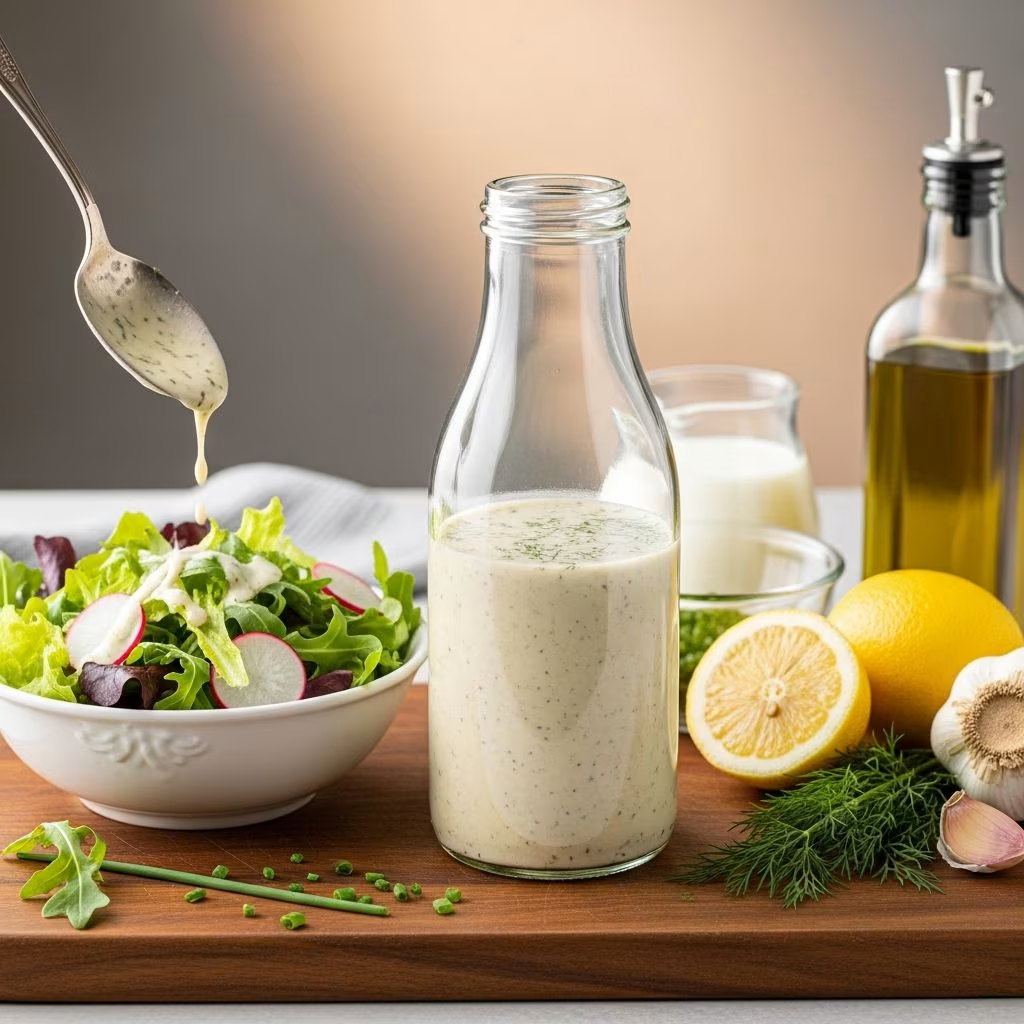
Homemade salad dressings elevate any meal from ordinary to memorable. Among the most versatile options available, buttermilk vinaigrette stands out as a solution that balances creaminess with tanginess, offering a lighter alternative to traditional oil-heavy dressings while maintaining rich flavor complexity. Unlike store-bought varieties, crafting your own dressing takes just minutes and uses pantry staples most home cooks already possess.
Understanding the Fundamentals of Buttermilk-Based Dressings
Buttermilk serves as the foundation for this dressing category, providing both texture and flavor complexity. The ingredient’s natural tang comes from lactic acid, which creates brightness without requiring excessive vinegar. This characteristic makes buttermilk vinaigrette adaptable to numerous culinary applications beyond simple green salads.
The dressing achieves its signature consistency through a balanced combination of liquid components and emulsifiers. When properly mixed, buttermilk creates a creamy suspension that coats vegetables uniformly while remaining lighter than mayonnaise-heavy alternatives. The emulsification process requires proper whisking technique to ensure all components bond seamlessly.
Essential Components and Ingredient Selection
Creating an excellent buttermilk vinaigrette requires understanding how each ingredient contributes to the final product. The basic formula combines several key elements that work in concert:
- Buttermilk – The primary liquid base, contributing tang and creaminess without excessive fat
- Acidic Components – Vinegar (white wine, rice wine, or balsamic) and citrus juice provide brightness and balance
- Fats – Extra virgin olive oil or mayonnaise create richness and mouthfeel
- Seasonings – Salt, pepper, and mustard powder enhance natural flavors
- Aromatics – Garlic, shallots, and fresh herbs layer complexity
- Optional Additions – Honey adds subtle sweetness; yogurt increases creaminess
Quality ingredient selection significantly impacts the final result. Full-fat buttermilk produces superior texture compared to lower-fat versions, while extra virgin olive oil contributes nuanced flavor that standard oils cannot match. Fresh herbs, when available, transform an adequate dressing into an exceptional one.
Step-by-Step Preparation Techniques
The preparation method determines whether your dressing achieves proper emulsification and flavor development. Begin by combining all ingredients in a mixing bowl, adding them in a specific sequence for optimal results.
Start with the acidic components—vinegar and lemon juice—as these establish the flavor foundation. Whisk in mustard powder and any finely minced aromatics, allowing these elements to bloom together for several seconds. This preliminary mixing ensures flavors distribute evenly throughout the dressing.
Gradually introduce the buttermilk while whisking continuously, creating a smooth base before adding oil. Stream the olive oil slowly while maintaining steady whisking motion, which prevents separation and ensures proper emulsification. Complete the process by incorporating fresh herbs and adjusting salt and pepper to taste.
For those preferring an even quicker method, combine all ingredients in a jar with a tight-fitting lid and shake vigorously for thirty to forty-five seconds. This technique works equally well for simple variations, though blending techniques produce smoother results when incorporating fresh herbs.
Flavor Variation Strategies
The versatility of buttermilk vinaigrette lies in its adaptability to various herb and spice combinations. Starting with a neutral base recipe allows creative exploration without compromising structural integrity.
| Variation Name | Key Ingredients | Best Used On |
|---|---|---|
| Herbaceous Green Goddess | Basil, chives, tarragon, anchovies | Mixed greens, grilled vegetables, fish |
| Ranch-Inspired | Dill, parsley, chives, onion powder | Salads, crudités, wedge lettuce |
| Lemon and Herb | Fresh lemon juice, chives, tarragon, shallot | Delicate greens, fresh herbs, seafood |
| Classic Southern Style | Dill or parsley, garlic, black pepper | Traditional salads, vegetables |
| Mediterranean Inspired | White wine vinegar, garlic, fresh tarragon | Tomato salads, grilled meats |
The green goddess variation represents a particularly popular adaptation, incorporating abundance of fresh herbs to create a vibrant, healthy dressing that maintains buttermilk’s creamy texture. This version works beautifully on grilled salmon, roasted tomatoes, and even as a sandwich spread.
For those preferring creamier results, substituting one tablespoon of yogurt with an equal amount of mayonnaise increases richness. This modification appeals to those who enjoy heavier dressings without abandoning buttermilk’s characteristic tanginess.
Storage and Shelf Life Considerations
Properly stored buttermilk vinaigrette maintains quality for approximately one week when refrigerated in an airtight container. Glass jars with tight-sealing lids prove most effective for preservation, as they prevent oxidation and protect against flavor absorption from surrounding foods.
Layered separation may occur after several days, which is completely normal. Simply shake or stir the dressing before each use to recombine ingredients. The emulsification may not be quite as silky as the initial preparation, but flavor remains intact and quality acceptable for culinary purposes.
Preparing larger batches on the weekend provides convenient ready-made dressing throughout the week, reducing meal preparation time during busy weekdays. However, fresh herb additions should be incorporated only when preparing to use the dressing, as extended storage causes herbs to darken and develop off-flavors.
Complementary Dishes and Serving Applications
While traditional salads represent the most common application, buttermilk vinaigrette extends far beyond this single purpose. Its balanced acidity and creamy texture enhance numerous preparations:
- Drizzled over grilled or smoked salmon, adding brightness without overwhelming delicate fish
- Tossed with cherry tomato salads, where the dressing complements natural fruit acidity
- Used as a sandwich spread, replacing traditional mayonnaise with more complex flavor
- Served as a vegetable dip, encouraging consumption of raw produce
- Paired with grilled meats and vegetables, cutting through richness with refreshing tanginess
- Spooned over composed salads with grains, legumes, and proteins
The dressing’s versatility stems from its ability to enhance rather than dominate, making it suitable for both simple preparations and elaborate plated presentations.
Customization Guidelines for Personal Preference
Creating a dressing that precisely matches individual taste preferences requires understanding how to adjust individual components. Those desiring increased tang should enhance vinegar content gradually, adding one teaspoon at a time while tasting after each addition. Conversely, reducing vinegar creates a creamier dressing with more subtle acidity.
Texture preferences also vary considerably among home cooks. Thinner consistency develops through increased buttermilk proportion, while additional mayonnaise creates heavier, more luxurious mouthfeel. The beauty of homemade dressing lies in this personalization opportunity—commercial products cannot offer such flexibility.
Herb selections should reflect personal preferences and available ingredients. Parsley, dill, tarragon, basil, and chives all contribute distinct flavor profiles, and combinations can be adjusted seasonally based on what grows most vibrantly in local gardens or farmers’ markets.
Troubleshooting Common Preparation Issues
Occasionally, buttermilk vinaigrette fails to achieve the desired consistency or flavor balance. Understanding potential problems and their solutions ensures successful results:
- Separated or Broken Emulsion – Occurs when oil is added too quickly; whisk broken dressing with an additional egg yolk or spoonful of mustard to re-emulsify
- Overly Thick Consistency – Thin by whisking in additional buttermilk one teaspoon at a time
- Excessively Thin Texture – Whisk in mayonnaise gradually or prepare as blended version with fresh herbs for natural body
- Flat or Dull Flavor – Adjust acid content, increase salt cautiously, or incorporate fresh herbs for brightness
- Harsh Garlic Flavor – This indicates garlic was added raw; prepare future batches using minced garlic rather than raw cloves
Frequently Asked Questions About Buttermilk Vinaigrette
Can buttermilk vinaigrette be made ahead for meal preparation? Yes, prepare the dressing up to five days in advance and store in glass jars. Add fresh herbs only immediately before serving to prevent discoloration.
Is this dressing suitable for those with dairy allergies? Traditional buttermilk vinaigrette contains dairy products. Seek alternative recipes using plant-based milk options and vegan mayonnaise as substitutes.
How does this dressing compare nutritionally to oil-based vinaigrettes? Buttermilk vinaigrette typically contains less fat than traditional vinaigrettes due to buttermilk’s lower fat content, making it an appropriate choice for those monitoring caloric or fat intake.
Can buttermilk vinaigrette be frozen for extended storage? Freezing is not recommended, as the emulsion breaks during thawing, resulting in separated, unusable dressing.
What vinegar type works best in this dressing? White wine vinegar offers neutral flavor allowing other ingredients to shine, while rice wine vinegar provides subtle sweetness. Experiment to determine personal preference.
Conclusion: Elevating Everyday Meals Through Homemade Dressing
Buttermilk vinaigrette represents an accessible entry point into homemade dressing preparation, requiring minimal ingredients, equipment, and culinary skill. Its balance of creaminess and tang, combined with infinite customization possibilities, makes it an invaluable addition to the home cook’s repertoire. Whether dressed simply with fresh greens or incorporated into elaborate composed salads, this versatile condiment transforms ordinary dishes into memorable dining experiences. The five-minute preparation time and week-long refrigerated shelf life make buttermilk vinaigrette a practical choice for busy households seeking to elevate daily meals without sacrificing convenience.
References
- Delicate Buttermilk Vinaigrette — Dairy Farmers of Canada. 2024. https://dairyfarmersofcanada.ca/en/canadian-goodness/recipes/delicate-buttermilk-vinaigrette
- All-Purpose Buttermilk Vinaigrette — Our State Magazine. 2009. https://www.ourstate.com/buttermilk-dressing/
- Green Goddess Buttermilk Vinaigrette — Thirsty Radish. 2024. https://thirstyradish.com/green-goddess-dressing-buttermilk-vinaigrette/
- Tomato Salad Recipe with Buttermilk Vinaigrette — Today’s Creative Life. 2024. https://todayscreativelife.com/tomato-salad-recipe-creation/
- Simple Buttermilk Dressing from Scratch — Home Cooks Guide. 2024. https://homecooksguide.com/simple-buttermilk-dressing-from-scratch/
- An Old Fashioned Southern Buttermilk Salad Dressing Recipe — My Kitchen Little. 2024. https://mykitchenlittle.com/2024/02/26/southern-buttermilk-salad-dressing/
- Buttermilk Dressing (Creamy + Tangy!) — The Endless Meal. 2024. https://www.theendlessmeal.com/creamy-lemon-buttermilk-dressing/