Buttercream frosting stands as one of the most versatile and beloved toppings in the world of baking. Its creamy texture, customizable flavors, and pipeable consistency make it a staple for cakes, cupcakes, and countless desserts. Whether you’re decorating a birthday cake or adding finesse to cookies, mastering buttercream opens endless creative possibilities. This guide dives deep into everything you need to know to produce professional-quality frosting every time.
Understanding Buttercream Basics
At its core, buttercream is an emulsion of fat, sugar, and liquid, whipped into a light, spreadable form. Traditional versions rely on butter as the primary fat, hence the name. The balance of these elements determines texture, stability, and taste. High-quality ingredients are non-negotiable—fresh unsalted butter provides superior flavor and control over saltiness, while powdered sugar ensures smoothness without graininess.
Buttercream’s appeal lies in its adaptability. It can be soft for filling layers, firm for sculpting designs, or flavored to complement any dessert. Unlike royal icing or fondant, it delivers rich taste without overpowering sweetness when made correctly.
Essential Ingredients for Success
Building a reliable buttercream starts with premium components:
- Unsalted Butter: Room-temperature butter (65-68°F) creams best, incorporating air for fluffiness. Avoid melted or cold butter, which leads to dense results.
- Powdered Sugar (Confectioners’ Sugar): Sifted to remove lumps, it sweetens and thickens. Cornstarch in some brands aids stability.
- Heavy Cream or Milk: Adds moisture and lightness. Cream yields richer frosting; milk keeps it lighter.
- Vanilla Extract: Pure extract enhances depth. Use clear for white frosting if coloring.
- Salt: A pinch balances sweetness.
Optional add-ins like meringue powder or gelatin boost structure for warm-weather baking or intricate piping.
Classic American Buttercream Recipe
This straightforward recipe yields about 4 cups, enough for a two-layer 8-inch cake. It’s quick, forgiving, and endlessly adaptable.
| Ingredient | Quantity |
|---|---|
| Unsalted butter, softened | 2 cups (4 sticks) |
| Powdered sugar, sifted | 4-5 cups |
| Heavy cream | 1/4 cup |
| Vanilla extract | 2 tsp |
| Salt | 1/4 tsp |
- Beat butter on medium speed until creamy, about 2 minutes.
- Gradually add powdered sugar, 1 cup at a time, mixing on low then high.
- Incorporate vanilla, salt, and cream; whip on high for 3-5 minutes until light and fluffy.
- Adjust consistency with more sugar or cream as needed.
Tips: Use a paddle attachment initially for smooth incorporation, then switch to whisk for aeration. Taste and tweak sweetness.
Advanced Swiss Meringue Buttercream
For silkier results, Swiss meringue buttercream (SMBC) uses egg whites for a less sweet, glossier finish. Ideal for wedding cakes.
| Ingredient | Quantity |
|---|---|
| Egg whites | 5 large |
| Granulated sugar | 1 1/2 cups |
| Unsalted butter, softened | 2 cups |
| Vanilla extract | 1 tsp |
- Combine egg whites and sugar over simmering water, whisking until 160°F.
- Whip to stiff peaks, then add butter gradually while mixing.
- Beat until smooth; it may look curdled but will come together.
SMBC holds up in heat better than American styles and pipes beautifully.
Achieving Perfect Texture and Stability
Temperature control is key. Butter too soft becomes greasy; too firm won’t blend. Ideal room temp is cool to touch. For stability:
- Shortening (20-30% substitution) adds firmness without altering taste much.
- Gelatin or meringue powder for humidity resistance.
- Chill briefly if too soft, but avoid over-refrigerating to prevent cracking.
In hot climates, use high-ratio shortening or stabilize with a cooked flour roux (crusts less, smoother mouthfeel).
Flavor Infusions and Color Techniques
Elevate basic buttercream with these ideas:
- Chocolate: Melt 8 oz semisweet chocolate, cool, and blend in.
- Fruit: Puree berries, strain, reduce for intensity; add gel food coloring.
- Coffee: Dissolve espresso powder in cream.
- Nutty: Toast and grind nuts, fold in finely.
For coloring, gel pastes yield vibrant hues without thinning. Add gradually while mixing. Divide frosting for ombre effects or multiple shades.
Mastering Piping and Decorating Techniques
Buttercream shines in decoration. Use these tips:
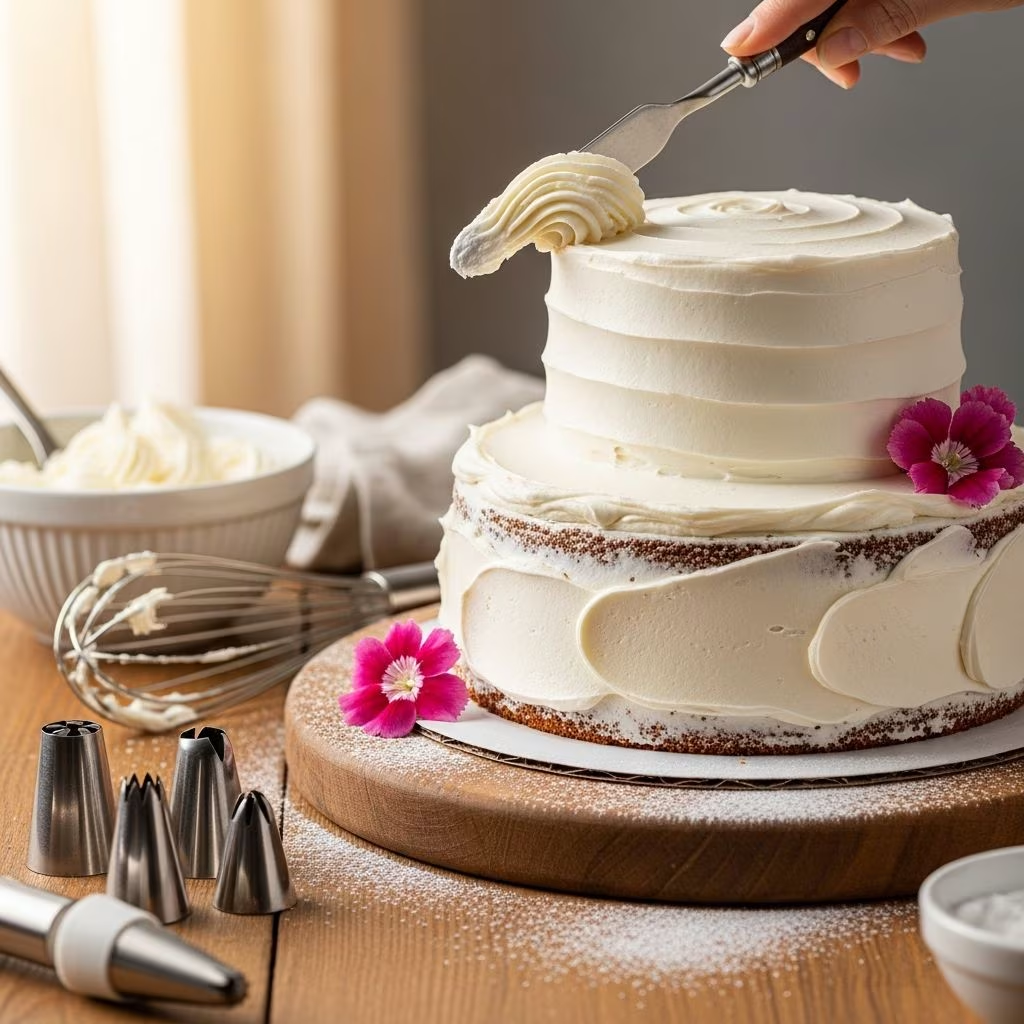
- Crumb Coat: Thin layer to seal crumbs; chill 15 minutes before final coat.
- Piping Tips: Star tip (e.g., Ateco 844) for rosettes; round for borders.
- Texturing: Offset spatula for smooth sides; cake scraper for sharp edges.
Practice on parchment: swirls, shells, ruffles. Fill piping bags 2/3 full, twist top, control flow with thumb.
Storage, Freezing, and Make-Ahead Strategies
Buttercream stores well: room temp (2 days), fridge (1 week in airtight container), freezer (3 months). Thaw overnight in fridge, re-whip to revive fluffiness. Label bags with date and flavor.
For events, frost cakes ahead, freeze uncovered overnight for ‘flash freezing’ crumbs, then wrap tightly.
Troubleshooting Common Issues
| Problem | Solution |
|---|---|
| Grainy texture | Sift sugar; mix longer on low speed. |
| Split/separated | Warm gently over ice bath while whipping; add more sugar. |
| Too sweet | Balance with salt, cream cheese (10%), or unsweetened cocoa. |
| Wilting in heat | Incorporate shortening or stabilizer; chill tools. |
| Bleeding color | Use gel colors; let frosting sit 10 minutes post-coloring. |
Creative Variations for Every Occasion
Champagne Buttercream: Reduce 1/2 cup champagne, add to base.
Salted Caramel: Swirl in 1/2 cup caramel sauce.
Lemon: Zest and 2 tbsp juice for tang.
Matcha: 2 tbsp sifted powder for earthy green.
Experiment safely—taste as you go, maintain ratios for consistency.
Healthier Twists and Dietary Adaptations
For lighter options, substitute half the butter with Greek yogurt or avocado (masks with chocolate). Vegan: Earth Balance buttery sticks, coconut cream, almond milk. Keto: Erythritol or allulose for sugar swap (blend finely to avoid grit).
Frequently Asked Questions
What makes buttercream crust?
Exposure to air causes a thin skin, aided by shortening or powdered milk. Perfect for stacking without denting.
Can I make buttercream ahead?
Yes, up to a week in fridge or months frozen. Re-whip vigorously.
Why is my buttercream greasy?
Butter too warm or overbeaten. Cool slightly and remix.
How to fix runny buttercream?
Add powdered sugar 1/2 cup at a time; chill 10 minutes.
Best butter for frosting?
High-fat (82%) unsalted like European-style for superior creaminess.
References
- The Science of Good Cooking — America’s Test Kitchen. 2021-10-05. https://www.americastestkitchen.com/science
- Baking Science & Technology — E.J. Pyler (via Kansas State University Grain Science). 2018-04-15. https://www.grains.k-state.edu
- Understanding Emulsions in Food Science — Institute of Food Technologists. 2024-02-12. https://www.ift.org/news-and-publications
- Professional Baking — Wayne Gisslen (Wiley). 2022-08-20. https://www.wiley.com/en-us