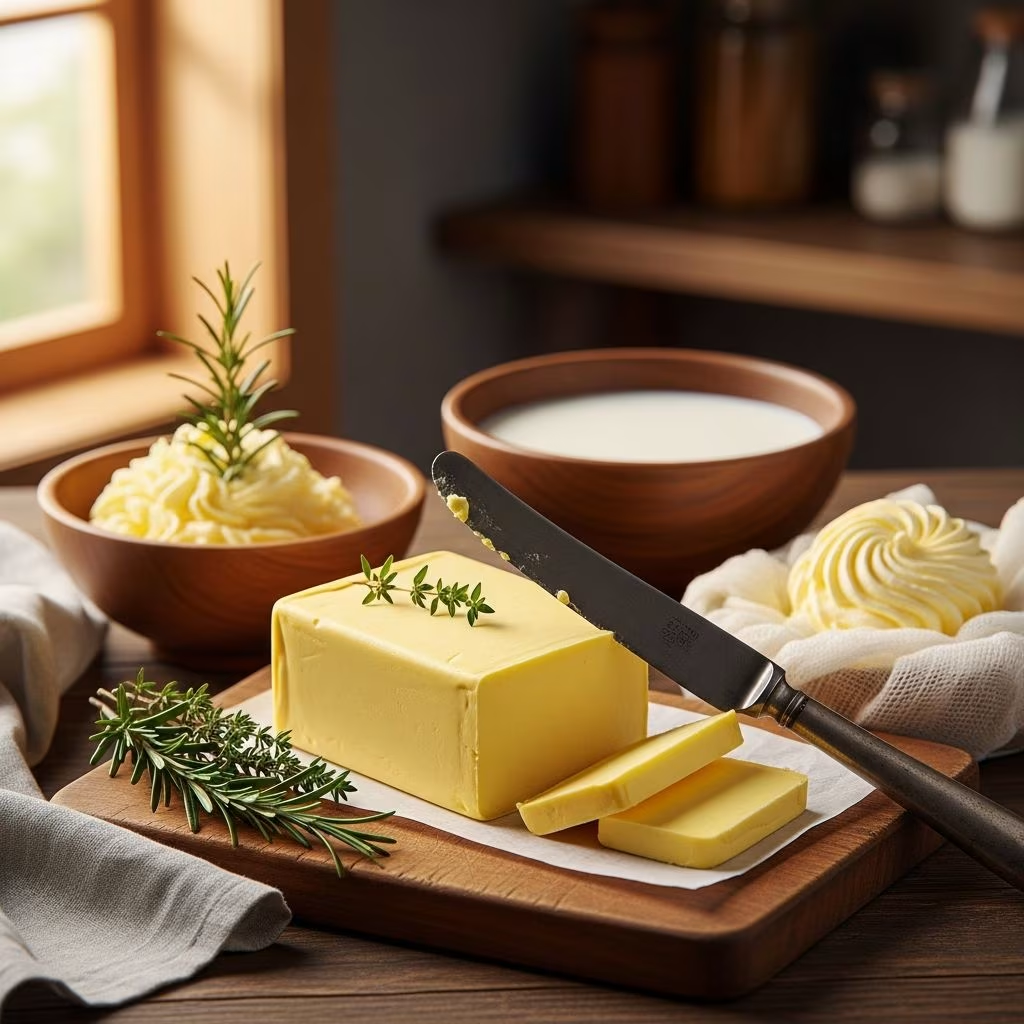
Butter stands as one of the most beloved and versatile ingredients in kitchens worldwide, bridging ancient traditions with modern culinary innovation. Derived primarily from cow’s milk, this golden staple offers a creamy texture, rich flavor, and functional properties that make it indispensable in cooking, baking, and even as a simple spread.
The Ancient Roots and Global Journey of Butter
Butter’s story begins thousands of years ago, with evidence tracing its origins to ancient Africa around 8000 B.C. Nomadic herders discovered that milk carried in bags on animal backs naturally separated into fat and liquid due to motion and warmth, yielding a tasty semi-solid product. Initially made from sheep, goat, yak, or buffalo milk rather than cow’s, butter quickly became a valued commodity across cultures.
In ancient Rome, it served medicinal purposes, applied to joints or consumed for coughs. Indian traditions revered ghee, a clarified form of butter, offered to deities for over 3,000 years. By 1607, European colonists introduced butter-making to America via dairy cows in Jamestown. Today, it remains a global powerhouse, with about one-third of the world’s milk production dedicated to its creation, requiring roughly 20 liters of whole milk for one kilogram.
How Butter Transforms Milk into Culinary Gold
At its core, butter is a simple emulsion born from milk or cream. The process starts with separating cream—the high-fat layer—from whole milk, historically done by letting it rise in shallow pans but now achieved through modern centrifugation. This cream, typically pasteurized, undergoes churning, a mechanical agitation that disrupts fat globules.
During churning, fat globules clump together in a phase inversion: from an oil-in-water emulsion (cream) to a water-in-oil one (butter), releasing buttermilk as a byproduct. The resulting granules are washed, salted if desired, and worked into a smooth mass. Legally, true butter must contain at least 80% milk fat by weight, as defined by U.S. standards since 1923, with the rest being water, salt, and milk solids.
Commercial production often uses continuous churners for efficiency, while artisanal methods emphasize batch processes for superior flavor. The density hovers around 911 g/L, firm when chilled but spreadable at room temperature and melting between 32-35°C.
Decoding Butter’s Composition and Nutrition
Butter’s allure lies in its straightforward makeup: approximately 80-82% fat (mostly triglycerides from glycerol and fatty acids), 16-17.5% water, 1-1.5% salt in salted varieties, and trace milk solids including vitamins and minerals. This high-fat content delivers about 715 calories per 100 grams, making it energy-dense yet low in protein.
It boasts substantial vitamin A for vision and immunity, plus smaller amounts of vitamins D, E, calcium, and phosphorus. The iconic yellow hue comes from natural beta-carotene in cow feed, sometimes enhanced with annatto or vegetable colorings. Despite its richness, butter contains negligible lactose (0.003g per teaspoon), tolerable for many lactose-sensitive individuals.
| Nutrient (per 100g) | Amount | % Daily Value* |
|---|---|---|
| Fat | 81g | 104% |
| Calories | 717 kcal | 36% |
| Vitamin A | 684μg | 76% |
| Vitamin D | 1.5μg | 8% |
| Calcium | 24mg | 2% |
| *Based on 2,000 calorie diet. Source: USDA data via Britannica | ||
Exploring the World of Butter Varieties
- Salted vs. Unsalted: Salted butter includes about 1.5% salt for flavor and preservation; unsalted, or ‘sweet’ butter, offers purity for baking where salt control matters.
- Sweet Cream vs. Cultured: Sweet cream uses fresh pasteurized cream; cultured butter ferments cream with lactic bacteria for tangy depth, evoking European styles.
- Whipped and Light: Whipped incorporates air for fluffiness and easier spreading; light versions cut fat to 40% with added water or gums.
- Global Twists: Ghee (clarified, shelf-stable Indian butter), smen (fermented Moroccan), or yak butter from Himalayas highlight regional adaptations.
Color varies from pale white to deep gold based on animal diet and genetics, with U.S. producers sometimes adding undisclosed natural colorants like annatto.
Mastering Butter Storage and Selection
Choose high-quality butter by checking fat content (aim for 82%+), creamy texture, and fresh aroma. Organic or grass-fed options yield richer flavors from beta-carotene-rich diets.
Store wrapped tightly in the fridge’s coldest part for up to three months; freeze for a year. At room temperature, it softens ideally for spreading but avoid prolonged exposure to prevent rancidity. Salted varieties last slightly longer due to natural preservation.
Butter’s Indispensable Role in the Kitchen
Butter excels as a spread, melting into toast or enhancing vegetables. In cooking, it browns beautifully for sauces like beurre blanc or fries proteins without sticking. Baking relies on it for tenderness: fat coats flour proteins, trapping steam for flaky pastries and tender cakes.
Its milk solids enable Maillard browning for nutty flavors in cookies or roux bases. Compared to oils, butter adds unparalleled taste, complementing sweets better than neutral fats.
Health Perspectives and Moderation Tips
While saturated fat-dominant, recent views emphasize whole-food contexts over isolation. Grass-fed butter offers omega-3s and CLA (conjugated linoleic acid) for potential anti-inflammatory benefits. Use in moderation within balanced diets, pairing with fibers and veggies.
Creative Recipes to Showcase Butter’s Magic
Garlic Herb Compound Butter
Mix softened unsalted butter with minced garlic, fresh herbs (thyme, parsley), lemon zest, and sea salt. Roll into logs, chill, and slice atop grilled steaks or corn.
Classic Butter Cake
Cream 1 cup butter with sugar, add eggs, flour, and vanilla. Bake at 350°F for 30 minutes—moist, golden perfection.
Brown Butter Sage Pasta
Melt butter until golden and nutty, toss with pasta, fried sage leaves, and Parmesan for an elegant weeknight dish.
Frequently Asked Questions (FAQs)
What is the difference between sweet cream and cultured butter?
Sweet cream butter uses fresh cream for mild flavor; cultured ferments for tangy complexity.
Can butter be made from non-cow milk?
Yes, sheep, goat, buffalo, or yak milk works, though cow’s dominates commercially.
Is butter lactose-free?
Nearly so, with minimal lactose, safe for most sensitive eaters.
How long does butter last in the freezer?
Up to 12 months if well-wrapped.
Why is some butter more yellow?
Dietary beta-carotene in grass-fed cows; colorants may enhance.
References
- Butter | Definition, Butter Making, & Nutritional Content — Britannica. 2023-10-15. https://www.britannica.com/topic/butter
- Butter — Wikipedia. 2026-04-01. https://en.wikipedia.org/wiki/Butter
- Butter – Glossary — BBC Good Food. 2024-05-20. https://www.bbcgoodfood.com/glossary/butter-glossary
- Butter basics: What is butter, how it’s made and more — Anchor Butter. 2023-11-10. https://www.anchorbutter.co.uk/butter-blogs/butter-basics/
- Types of Butter, How Butter is Made & Nutrition Facts — New England Dairy. 2025-02-14. https://www.newenglanddairy.com/butter/
- Butter Science 101 — Center for Dairy Research, University of Wisconsin. 2024-08-22. https://cdr.wisc.edu/butter-science-101