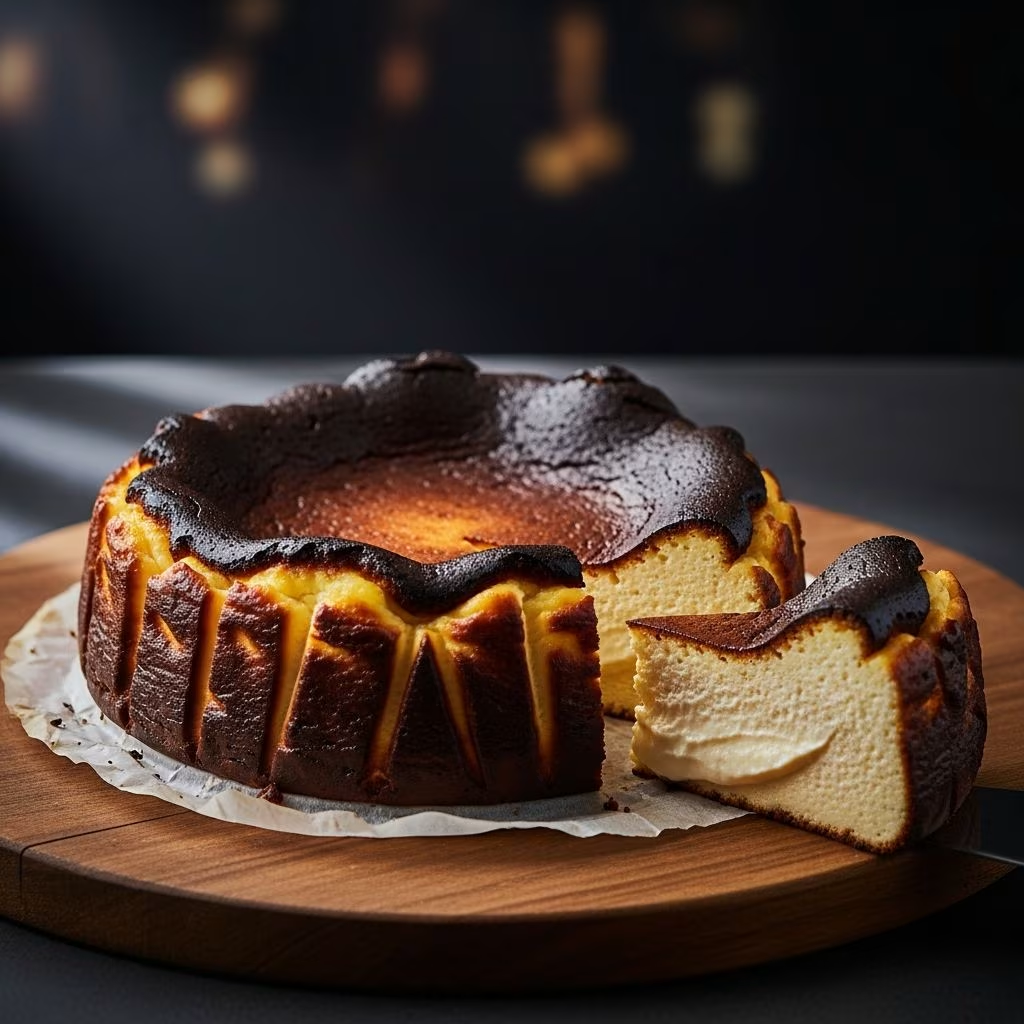
The burnt Basque cheesecake stands out as a bold departure from classic desserts, boasting a dramatically scorched exterior that hides a luxuriously creamy interior. Originating from Spain’s Basque region, this treat captivates with its simplicity and striking appearance, requiring no crust or water bath for perfection.
Origins in San Sebastián’s Culinary Scene
This iconic dessert traces its roots to La Viña, a beloved café in San Sebastián, where chef Santiago Rivera pioneered it in 1998. Seeking to innovate amid a cheesecake craze, Rivera crafted a version baked at high heat to achieve intentional charring, mimicking crème brûlée’s allure while ensuring a light, custardy texture. The result exploded in popularity, spreading globally as home bakers embraced its forgiving nature.
Unlike dense New York-style cheesecakes, the Basque variant draws from flan-like qualities due to generous heavy cream, creating an airy mousse consistency. Its rustic, wrinkled surface celebrates imperfection, making it ideal for novices.
Core Ingredients for Authentic Flavor
Minimalist ingredients define this dessert, emphasizing quality over complexity. Full-fat brick-style cream cheese forms the base, delivering richness without fillers. Granulated sugar provides balanced sweetness, while a pinch of salt enhances depth.
- Cream cheese: 2-3 pounds (900g-1.4kg), room temperature for smoothness.
- Sugar: 1-2 cups (200-400g), adjustable for taste.
- Eggs: 4-7 large, for structure and lift.
- Heavy cream: 1.5-2 cups (360-480ml), key to custardy lightness.
- Flour or cornstarch: 2 Tbsp (16-45g), stabilizes without denseness.
- Vanilla and salt: For aromatic enhancement.
Variations include mascarpone substitutions or reduced sugar for less sweetness. Philadelphia brand is favored for consistency.
Step-by-Step Preparation Mastery
Preparation demands precision to avoid lumps, yet remains accessible. Start with room-temperature ingredients to ensure emulsion.
- Preheat oven: 425°F (220°C), middle rack. Line a 8-10 inch springform pan with overhanging parchment, crumpled for grip.
- Mix base: Beat cream cheese until silky, 2-3 minutes. Add sugar briefly on low.
- Incorporate eggs: One at a time, scraping bowl to prevent bubbles.
- Blend cream slurry: Whisk flour into 1/4 cup cream for paste, then add remainder and vanilla. Pour slowly into batter on low speed.
- Pour and bake: Fill pan, bake 45-60 minutes until deeply browned and puffed. Center jiggles firmly.
- Cool gradually: Room temperature then refrigerate 4-8 hours for settling.
High heat causes dramatic rise and fall, forming signature cracks. No overmixing—stop once incorporated to minimize air.
Baking Science: Why It Works Flawlessly
The magic lies in high-temperature baking, scorching sugars for caramel notes while eggs and cream yield tenderness. Flour or cornstarch prevents weeping, and parchment insulation promotes even char. Unlike traditional methods, no bain-marie needed; the batter’s fluidity self-regulates.
Temperature variations: Fan ovens at 200°C (390°F). Smaller pans yield taller cakes, extending bake time. Visual cues—mahogany top, slight wobble—trump timers.
| Pan Size | Bake Time | Height |
|---|---|---|
| 8-inch (20cm) | 50-60 min | Tall |
| 9-inch (23cm) | 45-55 min | Medium |
| 10-inch (25cm) | 40-50 min | Shorter |
Post-bake deflation is intentional, concentrating flavors.
Flavor Profiles and Exciting Twists
Classic offers vanilla-kissed caramel, but infusions elevate it. Lemon zest brightens; matcha or chocolate swirls add intrigue. For crunch, some add cookie crusts.
- Fruit pairings: Berries or passionfruit curd contrast creaminess.
- Spiced versions: Cinnamon or espresso powder.
- Gluten-free: Cornstarch swap works seamlessly.
Serve chilled or room temp; it slices cleanly after full set.
Common Pitfalls and Pro Tips
Raw centers? Extend bake by 5-10 minutes. Cracks are features, not flaws. Overbeating introduces bubbles, marring the top—mix minimally.
- Scrape bowl religiously for uniformity.
- Use full-fat dairy only.
- Parchment overhang aids unmolding.
- Refrigerate overnight for best texture.
Storage: Airtight up to 5 days; freezes well sliced.
Global Appeal and Modern Adaptations
From Tokyo cafés to U.S. bakeries, its Instagram-worthy look fuels trends. Home versions democratize the La Viña experience, proving elite desserts needn’t be fussy. Chefs experiment with yuzu or miso for fusion twists.
Frequently Asked Questions
What makes Basque cheesecake ‘burnt’?
The high-heat bake caramelizes the top, creating bittersweet crust without true burning.
Do I need a springform pan?
Yes, for easy release; line generously with parchment.
Can I make it smaller?
Halve ingredients for 6-inch pan, adjust time upward.
Is it eggy?
No, cream cheese dominates; eggs provide lift.
How to fix underbaked center?
Bake longer until jiggly but not liquid.
Nutritional Snapshot
Per slice (1/10th of 9-inch): ~400 calories, high fat/protein. Indulgent yet portion-controlled.
References
- Basque Cheesecake (with crust!) — The Little Epicurean. 2023-05-15. https://www.thelittleepicurean.com/basque-cheesecake/
- Basque Cheesecake Recipe — Preppy Kitchen. 2024-02-10. https://preppykitchen.com/basque-cheesecake/
- Easy Basque Cheesecake — Smitten Kitchen. 2024-06-01. https://smittenkitchen.com/2024/06/easy-basque-cheesecake/
- Basque Cheesecake — RecipeTin Eats. 2023-11-20. https://www.recipetineats.com/basque-cheesecake/
- Burnt Basque Cheesecake Recipe — Spanish Sabores. 2024-01-05. https://spanishsabores.com/burnt-basque-cheesecake-recipe/
- The Best Basque Cheesecake Recipe — Jaja Bakes (YouTube). 2023-08-12. https://www.youtube.com/watch?v=4J58_t22PJo
- How to Make Basque Cheesecake the Right Way — YouTube. 2024-03-18. https://www.youtube.com/watch?v=hH4FeIkjH1o