Understanding the Origins and Cultural Significance
Budae-jjigae, commonly known as Army Base Stew, represents a fascinating culinary intersection between Korean and American food traditions. This distinctive dish emerged during the post-war period following the Korean War (1950-1953), when American military forces maintained a significant presence in South Korea, particularly near the city of Uijeongbu north of Seoul. The stew’s creation tells a story of cultural adaptation and creative resourcefulness, as Korean cooks incorporated unfamiliar American military provisions into their own cooking traditions.
The American military base originally provided soldiers with standard provisions including canned beans, processed meats like Spam and ham, and various sausages—ingredients completely foreign to the traditional Korean palate at that time. Rather than viewing these items as foreign curiosities, enterprising Korean cooks recognized their potential and began experimenting with them. By combining American processed meats with traditional Korean ingredients such as kimchi, garlic, and hot pepper paste, they created an entirely new category of Korean comfort food. This stew demonstrates how culinary traditions evolve through cultural exchange, creating something uniquely appealing to both communities.
Defining the Flavor Profile and Characteristics
Budae-jjigae is fundamentally a spicy, savory Korean-American fusion stew characterized by its complex and umami-rich broth. The dish achieves its signature taste through the careful layering of multiple flavor components working in harmony. The spiciness comes primarily from Korean hot pepper paste (gochujang) and Korean hot pepper flakes (gochugaru), which provide both heat and depth. The umami quality develops from a carefully prepared stock foundation combined with fermented kimchi and traditionally used dried seafood ingredients.
What distinguishes this stew from other Korean soups is its intentional contrast of flavors and textures. The briny, tangy notes from aged kimchi clash deliberately with the salty, savory quality of Spam and sausages, while the broth ties everything together with its rich, layered taste. The stew is meant to be enjoyed communally, with diners cooking additional ingredients directly in the pot at the table, which is a common Korean dining tradition called a jjigae experience.
Essential Components and Stock Preparation
Creating the Foundation Broth
The quality of budae-jjigae begins with a properly prepared stock that will anchor all other flavors. The traditional approach involves combining water with dried shiitake mushrooms, dried anchovies with heads and guts removed, and dried kelp (kombu). These three ingredients create what is often called a dashi-style broth in Korean cooking, providing an essential umami base.
To prepare this stock, combine approximately eight cups of water with two dried shiitake mushrooms, eight large cleaned dried anchovies, and one sheet of dried kelp (approximately five by six inches). Bring this mixture to a boil over medium-high heat, then maintain the boil for about twenty-five minutes to allow the flavors to fully infuse into the water. After this initial cooking period, add your choice of protein—typically pork belly or pork shoulder cut into bite-sized pieces—and continue cooking for an additional ten minutes. Once complete, remove all solids including the anchovies, kelp, and mushroom pieces. Slice the cooked mushrooms into bite-sized pieces and reserve them for later use. Strain the mixture to separate the clear stock from any remaining solids, which should yield approximately six cups of flavorful liquid. Season this stock with kosher salt to taste.
Preparing the Seasoning Paste
Before assembly, prepare a seasoning paste that will distribute flavor throughout the stew. Mince six garlic cloves finely and combine them with one tablespoon of hot pepper paste, two tablespoons of Korean hot pepper flakes, one teaspoon of soy sauce, one teaspoon of sugar, and two tablespoons of water. Mix these ingredients thoroughly until they form a cohesive paste. This mixture should be added to the center of your assembled stew pot and allowed to dissolve gradually as the broth heats, releasing its flavors throughout the cooking process.
Key Ingredients and Their Roles
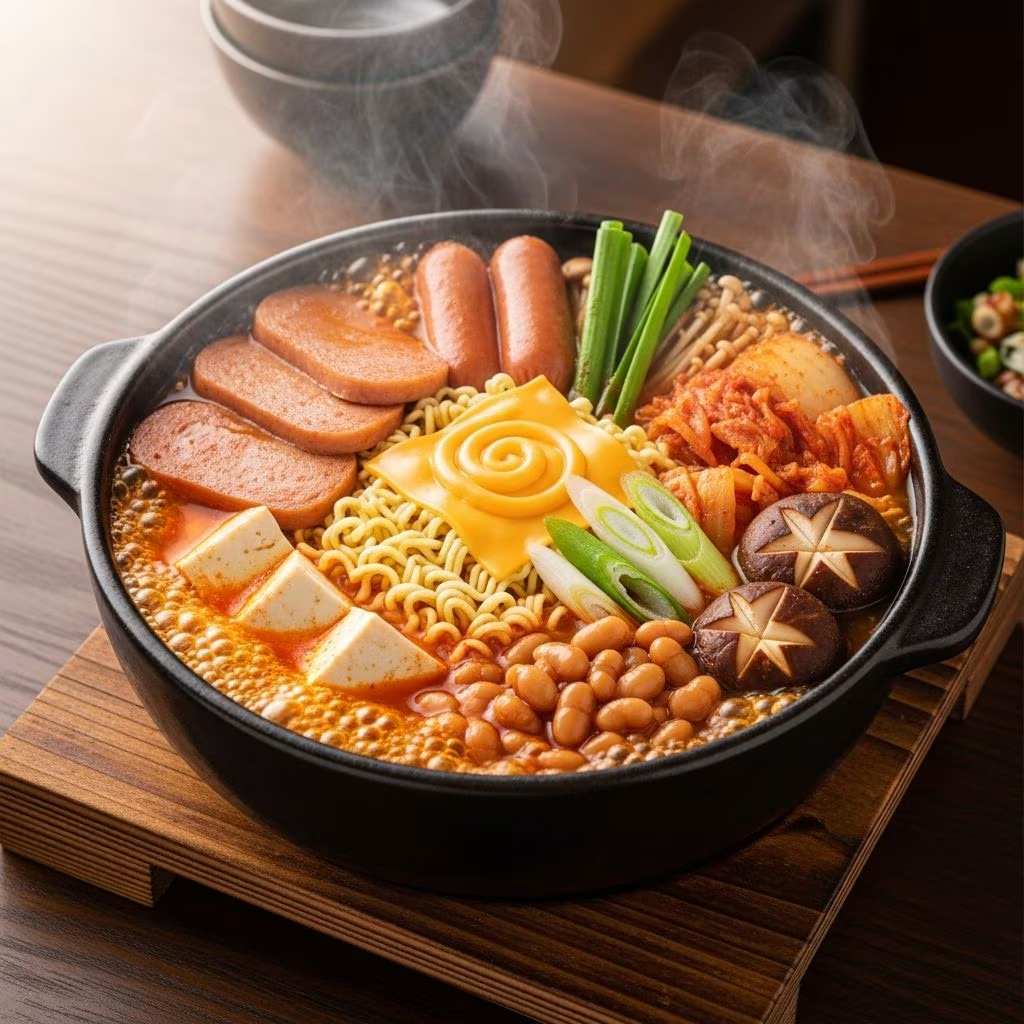
Understanding the function of each ingredient helps cooks adapt recipes to their preferences while maintaining the essential character of the dish. The processed meats form the backbone of authenticity—Spam sliced thinly and Polish sausages sliced into rounds provide the characteristic salty, meaty quality that defines the stew. These processed meats, once considered exotic in Korea, are now iconic components.
Fresh and fermented vegetables add essential complexity. Approximately one cup of cabbage cut into bite-sized pieces provides textural contrast and slight sweetness. Fermented kimchi, using about one-half cup of chopped overripe kimchi, contributes tanginess, funk, and additional spiciness. Green onions cut into one-inch pieces add freshness when added near the end of cooking. Sliced onion provides sweetness that balances the heat.
Protein components beyond the processed meats include tofu, traditionally sliced approximately one-half inch thick, which absorbs the flavorful broth. Optional additions like rice cakes soaked in cold water beforehand, instant ramen noodles, and even a single slice of American cheese create textural variety and nostalgic Americana elements.
Mushrooms of various types—dried shiitake, king oyster, and enoki—contribute earthiness and meaty texture. Sweet potato starch noodles soaked for thirty minutes before cooking add chewiness distinct from the ramen noodles. Radish sprouts or spinach provide freshness and a slight peppery note.
Assembly and Cooking Methodology
Arranging Ingredients in the Cooking Vessel
The presentation and layering of ingredients directly affects both the visual appeal and flavor distribution of your finished stew. Use a shallow pot measuring between ten and twelve inches in diameter—ideally a traditional Korean stone pot (dolsot) or a wide braising pan that allows for even heat distribution.
Begin by creating the foundation layer using sturdy vegetables that can withstand longer cooking: arrange cabbage, sliced onion, cut green onion, reserved cooked pork, and sliced mushrooms across the bottom of your pot. Over this base layer, add your prepared seasoning paste, distributing it evenly. Add the Spam slices, sausage rounds, rice cakes, tofu slices, and any baked beans you’re including. Distribute the sweet potato starch noodles and instant ramen noodles across the surface. Finally, top everything with your radish sprouts or chosen leafy vegetable. Pour approximately three cups of your prepared stock around the sides and into the pot, avoiding directly pouring over the top layer to maintain its presentation.
Cooking Process and Temperature Control
Cover your pot with a lid and bring the contents to a boil over medium-high heat. This initial covered phase typically requires about eight minutes. Once the broth begins boiling vigorously, add any remaining ingredients like the cheese slices and continue cooking uncovered. If using a traditional portable table burner for communal dining, reduce the heat to low at this point so diners can continue cooking at the table while enjoying the meal. The ramen noodles typically require two to three additional minutes to reach proper tenderness. The entire process from cold pot to ready-to-eat dish takes approximately thirty minutes when following traditional timing.
Ingredient Variations and Substitutions
| Original Ingredient | Alternative Options | Why It Works |
|---|---|---|
| Spam | Ham, bacon, hot dogs | Provides similar salty, processed meat flavor |
| Polish sausage | Vienna sausages, cocktail frankfurters | Maintains meaty texture and familiar taste |
| King oyster mushrooms | Button mushrooms, portobello | Adds earthiness and absorbs broth flavors |
| Sweet potato noodles | Regular wheat noodles, glass noodles | Creates chewy texture component |
| Radish sprouts | Spinach, watercress, arugula | Provides fresh, slightly peppery finish |
| Chicken stock | Beef stock, vegetable stock | Adjusts overall umami and depth of flavor |
Nutritional Considerations and Dietary Adaptations
Budae-jjigae is, by nature, a hearty and calorie-dense dish due to its processed meat content and rich broth. A typical serving contains significant amounts of sodium from the processed meats and fermented kimchi, making it less suitable for those requiring sodium restriction. The dish also contains gluten in most soy sauces and instant ramen noodles, though gluten-free alternatives are readily available.
For vegetarian or vegan adaptations, substitute Spam and sausages with plant-based meat alternatives or increase the proportion of tofu and vegetables. Replace the traditional stock with vegetable broth enhanced with additional mushrooms and kombu for depth. The gochujang and gochugaru seasonings remain appropriate for plant-based versions. The stew’s essential character—its spiciness, complexity, and communal cooking experience—can be maintained while accommodating dietary restrictions.
Serving Traditions and Dining Customs
In Korea, budae-jjigae is primarily served as a communal dish, with diners gathering around a table fitted with a portable burner. A single large pot of stew sits at the center, and diners cook additional ingredients and retrieve portions directly from the shared vessel. This style of eating encourages conversation and connection among diners. Traditionally, the stew is served alongside steamed rice, allowing diners to create rice bowls topped with broth and stew components.
The dish pairs well with various Korean side dishes (banchan), particularly those offering cooling or fermented qualities to balance the stew’s intense spiciness. Pickled radish, seasoned seaweed, and additional kimchi are common accompaniments. Beer and soju, Korean alcoholic beverages, are frequently consumed alongside budae-jjigae, as the cool drinks provide contrast to the hot, spicy soup.
Common Preparation Mistakes and Solutions
Overcooking noodles represents one of the most frequent errors when preparing budae-jjigae. Instant ramen noodles and sweet potato starch noodles require only a few minutes of cooking in the hot broth. Adding them too early results in mushy, unpalatable texture. Conversely, undercooking the stock’s foundational ingredients diminishes the umami depth that makes the dish distinctive.
Another common issue involves overwhelming the dish with excessive gochugaru (pepper flakes). While spiciness defines the stew, beginners often add more pepper flakes than necessary, creating a numbing heat that masks the subtle umami flavors. Begin conservatively and adjust upward if desired. Similarly, adding all the stock at the beginning rather than reserving some for table-side cooking dilutes the intensity and removes the participatory element central to the dining experience.
Frequently Asked Questions
Can I prepare budae-jjigae in advance?
The broth and marinade components can be prepared a day ahead, significantly reducing cooking time when you’re ready to serve. However, assemble the final dish close to serving time to maintain ingredient texture and prevent the noodles from absorbing excessive broth. Do not cook the ramen noodles until immediately before serving.
Is aged kimchi necessary, or can I use fresh kimchi?
Aged or overripe kimchi provides superior flavor—it contributes more funk and complexity than fresh kimchi. If only fresh kimchi is available, increase the quantity slightly and add a tablespoon of kimchi juice to compensate for the lack of developed flavor. The tanginess and fermented characteristics define the stew’s essential taste.
What makes this stew authentically Korean despite its American ingredients?
The Korean cooking techniques, spice profile, broth preparation method, and communal dining tradition make this dish authentically Korean. The American ingredients are incorporated through Korean culinary logic, flavoring, and presentation—the dish represents Korean food adaptation rather than American cuisine.
How many people does a typical pot serve?
A standard pot containing six cups of stock comfortably serves four people when enjoyed communally with rice and side dishes. Portions can stretch to serve five to six people if additional vegetables or proteins are added to increase volume.
Can I use store-bought stock instead of making it from scratch?
Yes, though homemade stock provides superior flavor depth. If using commercial stock, select higher-quality versions with minimal additives. Enhanced stocks incorporating dried mushrooms and seafood flavors most closely approximate traditional homemade preparations.
Regional Variations and Modern Interpretations
While budae-jjigae originated in Uijeongbu, regional variations have developed across South Korea. Some versions incorporate additional local ingredients or emphasize different meat types. Modern restaurant interpretations sometimes add premium proteins like beef brisket or seafood, elevating the dish beyond its humble military-base origins. Contemporary versions may feature cheese more prominently or include gourmet sausages alongside traditional Spam.
Despite these variations, the core identity remains consistent: a spicy, umami-rich stew combining American processed meats with Korean flavoring and cooking techniques. This flexibility and adaptability mirror the dish’s original creation—innovative cooks working with available ingredients to produce something greater than the sum of its parts.
References
- Budae-jjigae (Army Base Stew) Recipe — Maangchi. Accessed April 2026. https://www.maangchi.com/recipe/budae-jjigae
- Budae Jjigae (Army Stew) — My Korean Kitchen. Accessed April 2026. https://mykoreankitchen.com/army-stew-budae-jjigae/
- Army Base Stew (부대찌개, Budae-Jjigae) — Ahjumma Recipes. Accessed April 2026. https://www.ahjummarecipes.com/single-post/2016-1-15-army-base-stew-%EB%B6%80%EB%8C%80%EC%B0%8C%EA%B0%9C-budaejjigae
- How to Make Budae-jjigae, or Korean Army Stew — YouTube. Accessed April 2026. https://www.youtube.com/watch?v=Pqx8jGOyJV8