The yule log cake, known as Bûche de Noël, transforms a simple rolled sponge into a stunning holiday showpiece that evokes the warmth of winter festivities. This dessert combines light cake layers, creamy fillings, and textured frostings to mimic a real log, making it a must-have for Christmas tables worldwide.
Origins and Cultural Significance
Rooted in ancient European traditions, the yule log cake draws from pre-Christian rituals where massive logs were burned during the winter solstice to symbolize the return of light and ward off darkness. Nordic festivals honored Thor by igniting these logs, a practice that Vikings spread across Europe, blending with Celtic customs of enduring flames through the longest nights. The leftover wood from one year’s log kindled the next, representing continuity and renewal.
By the 19th century, French pastry chefs reimagined this fiery tradition as an edible delight. The earliest documented recipe appeared in 1895 by Pierre Lacan in Le Mémorial Historique et Géographique de la Pâtisserie, featuring a Genoise sponge rolled with buttercream and coated in ganache textured like bark. Today, Francophone regions cherish it most, but its appeal spans globally, especially in Christmas-celebrating cultures with modern twists like eggnog or gingerbread flavors.
Essential Ingredients for Success
Creating a flawless yule log starts with high-quality components. Focus on room-temperature eggs for optimal volume in the sponge, unsweetened cocoa for deep chocolate notes, and fresh dairy for the filling.
- Flour and Cocoa: All-purpose flour (about ¾ cup) paired with ¼ cup cocoa powder provides structure without heaviness. Opt for premium brands like Ghirardelli for richer taste.
- Eggs: Six large eggs, separated, whipped into a light batter. Yolks add moisture; whites create lift.
- Sugar and Fats: Granulated sugar (¾ cup) sweetens subtly, while melted butter (¼ cup) ensures tenderness.
- Filling Options: Mascarpone or cream cheese base, enhanced with vanilla or liqueurs like Frangelico or Baileys for sophistication.
- Frosting: Chocolate ganache or buttercream, using heavy cream and dark chocolate for glossy bark effect.
Garnishes elevate the realism: powdered sugar for snow, cranberries for berries, rosemary for foliage, or crushed pistachios for moss.
Step-by-Step Baking Instructions
Baking a yule log demands precision, but following these steps yields a crack-free roll every time.
- Preheat and Prep: Heat oven to 350°F (175°C). Line a 15×10-inch jelly roll pan with parchment, grease lightly.
- Mix Dry Ingredients: Sift flour, cocoa, baking powder, and salt together.
- Whip Eggs: Beat egg yolks with half the sugar until pale; in another bowl, whip whites to stiff peaks with remaining sugar.
- Fold Batter: Gently combine yolk mixture with whites, then fold in dry ingredients and vanilla. Add cooled melted butter last to avoid deflating.
- Bake: Spread evenly in pan; bake 12-15 minutes until springy.
- Roll Immediately: Dust a clean towel with powdered sugar or cocoa. Invert warm cake onto it, peel parchment, and roll tightly from short end. Cool completely.
Unroll the cooled cake, spread filling evenly (leaving a ½-inch border), reroll without towel, and chill.
Assembly and Decoration Techniques
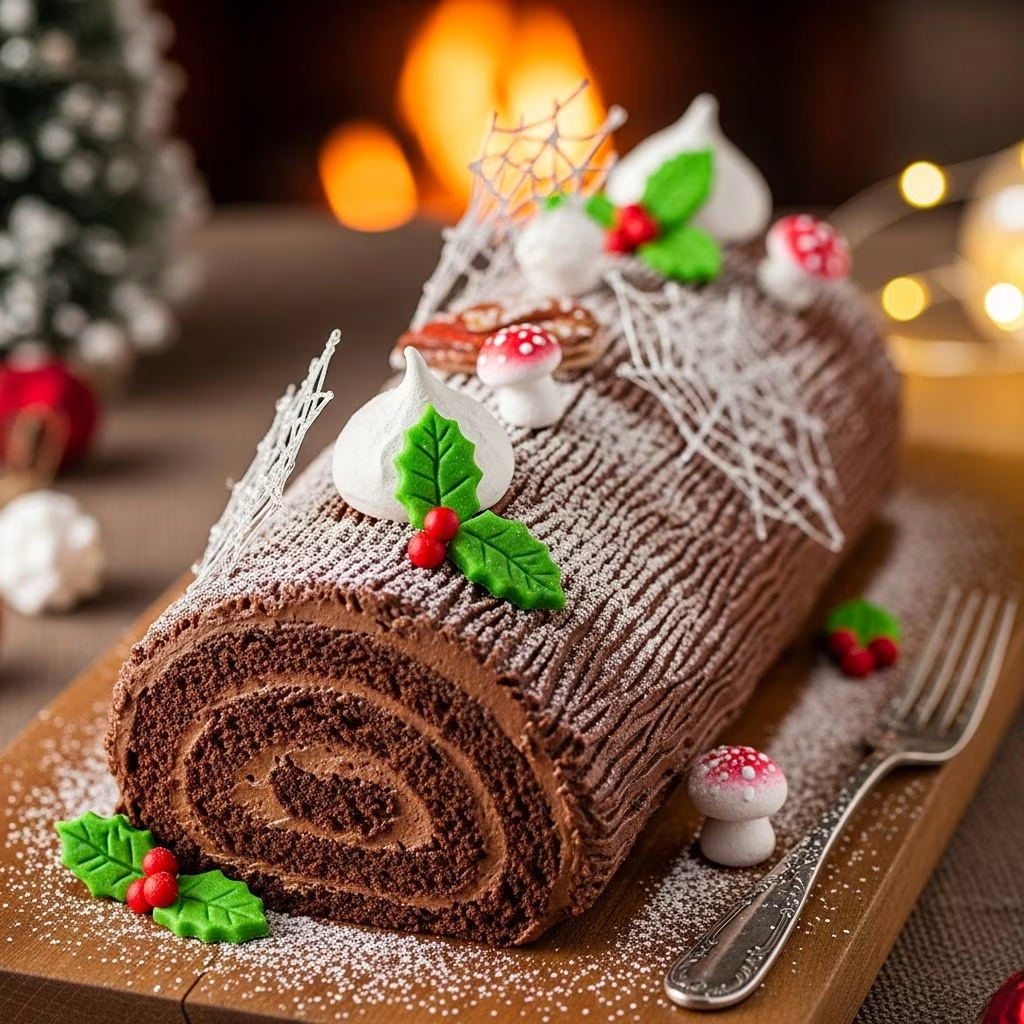
Assembly turns the roll into a log illusion. Trim a 3-inch diagonal slice from one end; attach it to the side of the main roll with frosting for a natural branch look.
Cover entirely with ganache (melt 8 oz chocolate with 1 cup cream), leaving ends exposed. Use a fork to drag lengthwise, creating bark texture. For realism:
- Dust with confectioners’ sugar for fresh snow.
- Add sugared cranberries or meringue mushrooms.
- Place rosemary sprigs or holly for woodland vibes.
Chill until set, then serve sliced to reveal the swirled interior.
Pro Tips to Avoid Common Pitfalls
Many bakers struggle with cracks or sticking—here’s how to prevent them.
| Issue | Solution |
|---|---|
| Cracked Cake | Roll while warm to set the shape; use a towel dusted with cocoa to prevent sticking. |
| Dense Sponge | Fold gently; ensure eggs are room temperature for maximum rise. |
| Soggy Filling | Chill rolled cake 30 minutes before filling; avoid overfilling edges. |
| Uneven Bark | Apply ganache in thin layers; chill between coats for control. |
Practice the roll on a plain sponge first if new to this technique.
Flavor Variations for Every Taste
While classic chocolate reigns, innovate with these ideas:
- Pumpkin Spice: Swap cocoa for pumpkin puree and spices; cream cheese filling.
- Vanilla with Berries: White sponge, whipped cream, and fresh raspberry layers.
- Chestnut Mont Blanc: Chestnut puree filling under meringue topping.
- Mocha Twist: Add espresso to ganache; coffee liqueur in mascarpone.
- Gingerbread Log: Ginger-infused cake with eggnog buttercream.
These keep the log shape while suiting dietary prefs—use gluten-free flour or vegan ganache alternatives.
Storage and Make-Ahead Strategies
Bake the sponge up to 2 days ahead, wrapped tightly. Assemble fully 1 day prior; store covered in fridge. Freezes well up to 1 month—thaw overnight. Serve at room temp for best texture.
Pairing Suggestions
Complement with mulled wine, hot cocoa, or coffee. Its richness balances tart cranberries or fresh fruits on the plate.
Frequently Asked Questions
What if my cake cracks?
Minor cracks hide under frosting. Patch with extra batter or embrace rustic charm.
Can I make it without eggs?
Yes, aquafaba replaces whites in vegan versions for similar lift.
How far ahead can I prepare?
Full cake: 1-2 days in fridge; sponge alone: 2 days or freeze.
What’s the best filling substitute?
Chocolate buttercream or whipped cream if mascarpone unavailable.
Why roll warm?
It “trains” the cake to hold shape, minimizing cracks upon reroll.
Why the Yule Log Endures
Beyond aesthetics, the Bûche de Noël bridges history and indulgence, turning pagan fires into sweet memories. Whether for family dinners or elegant parties, it captivates with texture contrasts: airy cake, silky filling, crunchy bark.
Experiment confidently—these techniques ensure bakery-quality results at home. Gather ingredients, preheat your oven, and craft a tradition that lights up the season.
References
- Bûche de Noël (Yule Log Cake) — If You Give a Blonde a Kitchen. Accessed 2026. https://www.ifyougiveablondeakitchen.com/yule-log-cake/
- Yule Log Cake — Atlas Obscura. Accessed 2026. https://www.atlasobscura.com/foods/yule-log-cake
- Yule Log Cake (Bûche de Noël) — Wilton. Accessed 2026. https://wilton.com/yule-log-cake-buche-de-noel/wlblogrecip-21830/