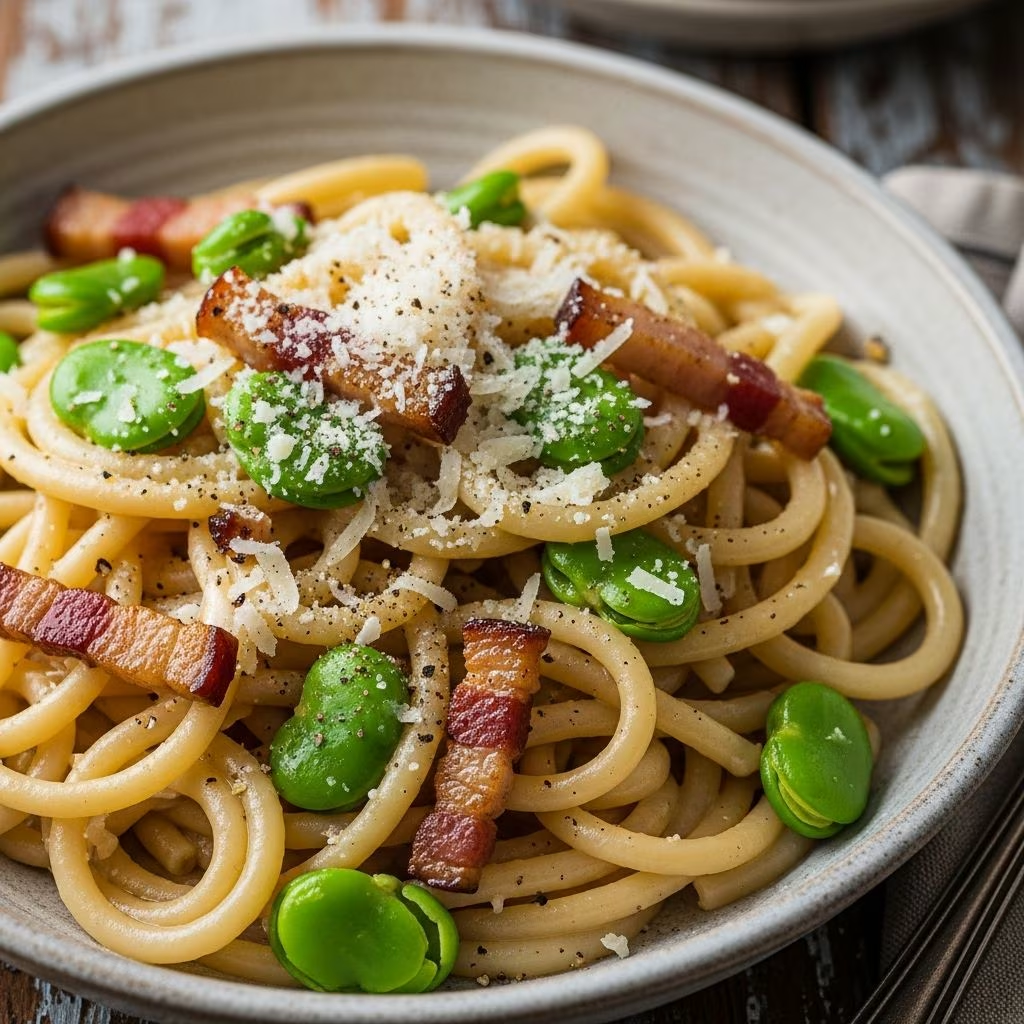
This iconic Roman pasta dish combines the richness of guanciale and sharp Pecorino Romano with the tender, nutty flavor of fresh fava beans, creating a harmonious balance of tradition and seasonality. Bucatini alla gricia stands as one of Rome’s foundational pasta recipes, often called the “mother sauce” for classics like carbonara and amatriciana.
The Roots of Pasta alla Gricia in Roman Cuisine
Pasta alla gricia traces its origins to the shepherds of the Apennine region near Rome, who relied on simple pantry staples: dried pasta, guanciale for fat and flavor, Pecorino Romano cheese, and black pepper. Known as one of the “four pasta of Rome” alongside carbonara, cacio e pepe, and amatriciana, gricia embodies minimalist perfection.
Historically, the dish predates tomatoes in Italian cooking, making it a pure expression of pre-Columbian flavors. Shepherds carried these ingredients on long treks, mixing them with pasta water to form a creamy emulsion without eggs or cream. Today, it remains a staple in Roman trattorias, prized for its glossy sauce achieved through starch, fat, and cheese.
In spring, Italian cooks often incorporate fava beans, a seasonal favorite that adds vibrant green color and subtle sweetness. This variation honors the dish’s rustic roots while celebrating fresh produce.
Key Ingredients and Their Roles
Selecting high-quality components is crucial for authentic flavor. Here’s a breakdown:
- Guanciale: Salt-cured pork jowl, preferred over pancetta for its higher fat content that renders into a silky sauce. About 4-8 oz per pound of pasta.
- Pecorino Romano DOP: Sharp sheep’s milk cheese, finely grated for easy melting. Use 1 cup per pound of pasta.
- Black Pepper: Freshly cracked or ground coarsely for pungent heat. Toast peppercorns lightly for deeper aroma.
- Fava Beans: Fresh, shelled, and peeled (1-2 cups). Their creamy texture and mild bitterness complement the pork. Frozen work in a pinch but lack vibrancy.
- Bucatini or Short Pasta: Thick, hollow strands hold sauce well; alternatives like rigatoni or mezze maniche suit the coating.
Avoid substitutions like bacon, which is smoked and alters the profile. Quality pasta water—starchy from boiling—binds everything.
Step-by-Step Preparation Guide
Prep time: 20 minutes. Cook time: 20 minutes. Serves 4.
- Prepare Fava Beans: Shell beans from pods (about 1¾ lb pods yield 1¾ cups). Blanch in boiling salted water 1-5 minutes until tender. Shock in ice water, then peel off tough outer skins to reveal bright green interiors.
- Cook Guanciale: Cut into lardons or thin strips. Render slowly in a wide skillet over medium-low heat until fat melts and edges crisp, about 8-10 minutes. No added oil needed.
- Toast Pepper: Add 1 Tbsp peppercorns to the pan, grinding or crushing directly for freshness. Stir 1 minute to release oils.
- Sauté Beans: Add peeled favas to guanciale fat. Cook gently 2-3 minutes until heated and slightly blistered. For creaminess, smash half the beans.
- Boil Pasta: Cook 1 lb bucatini in heavily salted water to al dente (1-2 minutes shy of package). Reserve 1-1½ cups pasta water.
- Emulsify Sauce: Off heat, add drained pasta to skillet with beans and guanciale. Sprinkle grated Pecorino, tossing vigorously. Drizzle in pasta water gradually until a creamy sauce forms—no clumps.
- Serve: Divide into bowls, topping with extra cheese and pepper. Eat immediately for best texture.
Tips for Perfect Emulsion and Flavor
- Use a microplane for cheese to prevent graininess.
- Remove pan from heat before adding cheese to avoid seizing.
- High-sided skillet allows pasta to move freely for even coating.
- Taste pasta water like seawater for proper seasoning.
- For onion lovers, a small amount adds subtle sweetness, though purists skip it.
Common Mistakes to Avoid
| Mistake | Why It Happens | Fix |
|---|---|---|
| Grainy sauce | Low-quality cheese or overheat | Fine grate DOP Pecorino; add off heat |
| Soggy beans | Overcooking | Blanch briefly, peel promptly |
| Dry pasta | Insufficient pasta water | Reserve more; add splash by splash |
| Bitter favas | Unpeeled skins | Double-pod after blanching |
Nutritional Profile and Pairings
Per serving (¼ recipe): ~600 calories, 25g protein, 70g carbs, 28g fat. Favas provide fiber, folate, and iron; guanciale adds protein but watch sodium.
Pair with a crisp Lazio white like Frascati or light Chianti. Spring salads or grilled artichokes complement the earthiness.
Seasonal Variations and Adaptations
Classic Gricia: Omit beans for purist version.
Summer Twist: Swap favas for peas or zucchini.
Vegetarian: Use olive oil or smoked eggplant instead of guanciale, though flavor shifts.
Gluten-Free: Chickpea pasta holds up well.
In Sicily, similar dishes use onions and stock for broader sauce.
Frequently Asked Questions (FAQs)
What if I can’t find guanciale?
Pancetta is the closest sub; avoid bacon. Order online from Italian delis.
Are frozen fava beans okay?
Yes, thaw and peel if needed; blanch briefly. Fresh peak in spring.
Why bucatini specifically?
Its tube shape traps sauce; tonnarelli or perciatelli work too.
How do I store leftovers?
Refrigerate up to 2 days; reheat gently with pasta water. Best fresh.
Can I make it vegan?
Use nutritional yeast, plant-based “guanciale,” and aquafaba for emulsion.
Why This Dish Captures Spring’s Essence
Bucatini alla gricia with fava beans bridges Roman tradition and seasonal bounty. The beans’ freshness cuts through pork’s richness, while the sauce’s simplicity highlights each ingredient. Ideal for weeknights or dinner parties, it’s approachable yet impressive.
Experiment responsibly—start classic, then personalize. Buon appetito!
References
- Pasta alla Gricia with Fava Beans — Our Italian Table. Accessed 2026. https://ouritaliantable.com/pasta-alla-gricia-with-fava-beans/
- Pasta alla gricia with fava beans — Eatalianwithroberto. 2023-10-01. https://www.eatalianwithroberto.com/pasta-alla-gricia-with-fava-beans/
- Pasta With Fava Beans & Guanciale — Italian Food Forever. 2019-07-01. https://italianfoodforever.com/2019/07/pasta-with-fava-beans-guanciale/
- Bucatini Alla Griccia With Fava Beans — Umami.recipes. Accessed 2026. https://www.umami.recipes/recipe/2np0XapD0DnYAScMZr0F
- Sicilian Pasta with Fava Beans Recipe — 2 Dads with Baggage. Accessed 2026. https://2dadswithbaggage.com/sicilian-pasta-with-fava-beans-recipe/