Meatloaf has long been a staple of comfort food cuisine, offering both simplicity and satisfaction in a single dish. Among the many variations of this classic preparation, the brown sugar meatloaf stands out for its distinctive balance of sweet and savory flavors. The addition of brown sugar creates a caramelized exterior that complements the seasoned meat mixture, resulting in a dish that appeals to both traditional palates and those seeking something more adventurous.
This comprehensive guide explores the art of preparing brown sugar meatloaf, including ingredient selection, preparation techniques, and methods for achieving optimal texture and flavor. Whether you’re a novice cook or an experienced home chef, understanding the fundamentals of this recipe will help you create a memorable meal that satisfies the entire family.
Understanding the Foundation: Core Ingredients
The success of a brown sugar meatloaf depends heavily on selecting quality ingredients and understanding their individual roles in the final product. Each component contributes specific properties that work together to create the desired texture, flavor profile, and structural integrity.
The Meat Base
Ground beef serves as the primary protein foundation for this dish. Most recipes call for approximately 1.5 pounds of ground beef. The fat content of the meat plays a crucial role in determining the final texture and moisture level. Ground beef with a fat ratio between 80/20 and 90/10 provides an ideal balance, offering enough fat for moisture retention without becoming greasy. Higher-fat ground beef, such as 70/30 blends, can result in an overly rich final product, while leaner options may produce a drier meatloaf.
Some variations incorporate a meat mixture combining beef, veal, and pork in equal parts, which can add complexity and depth to the flavor. This approach distributes the richness across multiple protein sources, creating a more nuanced taste profile than beef alone.
Binding and Moisture Components
Bread crumbs or crushed crackers act as binders, helping the meat mixture hold together during cooking while also contributing to the overall texture. Using approximately 3/4 cup of bread crumbs or crushed crackers absorbs moisture and prevents the finished meatloaf from becoming too dense or compact. Some cooks prefer crushed saltine crackers for their neutral flavor and reliable binding properties.
Milk serves a dual purpose in the mixture, softening the bread crumbs while adding moisture to the meat. Typically, 3/4 cup of milk is combined with the dry ingredients and meat, creating a cohesive mixture that bakes evenly. Eggs bind the ingredients together and contribute to the structural stability of the finished loaf. Two large eggs are standard in most recipes, providing sufficient binding without creating an egg-forward flavor.
Seasoning Profile
Salt and black pepper form the foundation of the seasoning blend, with 1.5 teaspoons of salt and 1/4 teaspoon of ground black pepper being typical amounts. These basic seasonings can be adjusted according to personal preference and the saltiness of other ingredients.
Ground ginger adds subtle warmth and complexity to the meat mixture. This spice complements the sweetness of the brown sugar glaze while providing a gentle, sophisticated flavor that elevates the dish beyond standard meatloaf preparations. Additionally, finely chopped onion contributes natural sweetness and umami depth to the mixture. Using either fresh chopped onion or dried minced onion allows flexibility based on ingredient availability and personal preference.
Some recipes incorporate Worcestershire sauce into the meat mixture or glaze, adding tangy depth and richness to the overall flavor profile.
The Signature Glaze: Sweet and Savory Balance
The defining characteristic of brown sugar meatloaf is the caramelized brown sugar and ketchup glaze that forms during baking. This glaze creates both visual appeal and distinctive flavor that sets this recipe apart from traditional meatloaf preparations.
Creating the Glaze Foundation
The basic glaze combines 1/2 cup of packed brown sugar with 1/2 cup of ketchup. These two ingredients create a sweet and tangy coating that caramelizes during the baking process. The brown sugar can be either dark or light brown sugar, with dark brown sugar providing a deeper molasses flavor. The ketchup contributes acidity that balances the sweetness while adding depth through its tomato base.
Many cooks add Worcestershire sauce to the glaze mixture, introducing a savory complexity that prevents the dish from becoming overly sweet. This addition creates a more sophisticated flavor profile that appeals to a wider range of palates. Some variations include additional ingredients such as Dijon mustard or hot sauce, offering opportunities for personalization based on individual taste preferences.
Application Technique
Traditional preparation involves pressing the brown sugar into the bottom of a greased loaf pan, then spreading the ketchup mixture over the sugar layer. This layering method ensures that the glaze forms a cohesive coating that caramelizes and adheres to the meat during baking. The meat mixture is then shaped and placed directly on top of the glaze layer.
As the meatloaf bakes, the glaze mixture rises around the meat, creating a glossy, caramelized exterior. The natural juices from the meat mingle with the glaze ingredients, intensifying the flavors and creating a rich pan sauce that can be served alongside the finished dish.
Preparation and Baking Instructions
Essential Preparation Steps
Begin by preheating the oven to 350°F, as this temperature allows for even cooking and proper browning of the glaze. Most recipes recommend using a 9×5-inch loaf pan or similar sized baking vessel, which helps the meatloaf cook evenly and maintain its shape.
Lightly grease the loaf pan or line it with parchment paper to facilitate easy removal of the finished meatloaf. After greasing, press the brown sugar firmly into the bottom of the pan, creating a compact layer that will hold the ketchup mixture. This pressing action is important, as loosely distributed brown sugar may not caramelize properly.
Spread the ketchup evenly over the brown sugar, working to distribute it across the entire surface. This even distribution ensures uniform flavor and glaze formation across all portions of the meatloaf.
Mixing the Meat Mixture
In a separate large mixing bowl, combine all remaining ingredients: ground beef, eggs, milk, salt, pepper, onion, ground ginger, and bread crumbs. Mix these components thoroughly, using either clean hands or a wooden spoon to combine them evenly. Some experienced cooks recommend kneading the mixture for an additional minute after combining all ingredients. This kneading action activates the meat proteins, creating a more cohesive structure that holds together better during cooking and prevents the meatloaf from becoming crumbly or falling apart when served.
Avoid overmixing the meat mixture, as excessive handling can result in a dense, compact texture. The goal is to combine ingredients until just unified, not to develop the gluten structure as one would with bread dough.
Shaping and Baking
Form the meat mixture into a loaf shape and carefully place it on top of the ketchup and brown sugar layer. Press it down gently to ensure good contact with the glaze layer. Place the pan in the preheated 350°F oven and bake for approximately one hour or until the internal temperature reaches 160°F and the juices run clear.
During the baking process, the glaze will caramelize and create a glossy coating. The meatloaf will begin to release its juices, which will combine with the glaze mixture to form a rich sauce in the bottom of the pan.
The Art of Presentation and Serving
Inverting the Meatloaf
One of the most impressive aspects of this meatloaf preparation is the dramatic inversion that transforms its appearance. After the meatloaf finishes baking, remove it from the oven and allow it to rest for several minutes. This resting period allows the juices to redistribute throughout the meat, resulting in improved tenderness and juiciness when sliced.
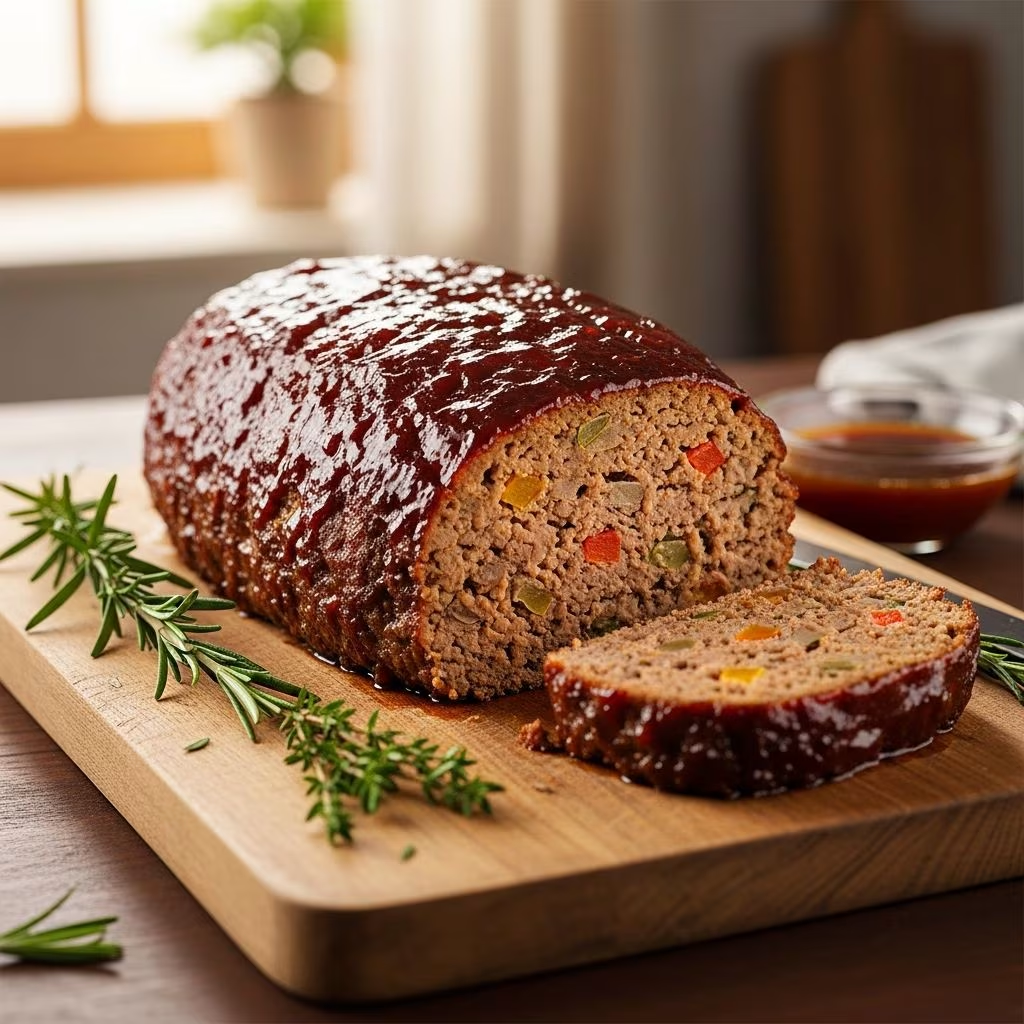
Carefully invert the meatloaf onto a serving platter, using a spatula to guide it as it releases from the loaf pan. Exercise caution during this process, as the glaze will be extremely hot and can cause burns if mishandled. The inversion reveals the caramelized brown sugar glaze on the exterior of the meatloaf, creating an attractive presentation with a glistening, golden-brown surface.
Slicing and Serving
Slice the inverted meatloaf into approximately 1-inch thick slices. The glaze coating will help hold the slices together and add visual appeal to the plated dish. Serve the meatloaf with the pan juices spooned over individual slices, enhancing each portion with additional flavor.
This meatloaf pairs well with traditional side dishes such as mashed potatoes, roasted vegetables, or a simple green salad. The sweet and savory glaze complements both creamy and acidic side dishes, making it versatile enough for various meal combinations.
Ingredient Variations and Substitutions
Meat Alternatives
While traditional recipes use ground beef exclusively, incorporating ground veal or ground pork creates a more complex flavor profile. Ground veal offers a milder taste that allows other seasonings to shine, while ground pork adds richness and subtle sweetness. Using a combination of these meats in equal proportions creates a balanced blend that many professional cooks prefer for its versatility.
Glaze Modifications
Variations in the glaze can significantly alter the final flavor. Some recipes reduce the brown sugar quantity and add honey for additional sweetness and complexity. Others incorporate Dijon mustard for a subtle sharpness that balances the sweetness. Experimenting with different ratios of brown sugar to ketchup allows cooks to adjust the sweetness level according to personal preference.
Bread Component Options
While bread crumbs are the most common choice, crushed crackers, panko breadcrumbs, or even oats can serve as binding agents. Each option contributes slightly different textural qualities to the finished meatloaf. Crushed saltine crackers provide a neutral flavor and reliable binding, while panko breadcrumbs create a slightly lighter texture due to their larger particle size.
Troubleshooting Common Issues
Achieving Proper Moisture
A dry meatloaf often results from using lean ground beef or overmixing the meat mixture. Selecting meat with an 80/20 fat ratio and limiting mixing to just until ingredients are combined helps prevent this issue. Additionally, ensuring adequate milk in the bread crumb mixture maintains moisture throughout the cooking process.
Preventing Glaze Separation
If the glaze separates from the meat during baking, ensure the brown sugar is firmly pressed into the loaf pan bottom and the ketchup is spread evenly before placing the meat mixture on top. Proper layering creates better adhesion and prevents separation.
Ensuring Complete Cooking
Using a meat thermometer inserted into the center of the meatloaf ensures it reaches 160°F internally, indicating complete cooking. Without this verification, meatloaf may appear done on the exterior while remaining undercooked in the center.
Frequently Asked Questions
Can I prepare this meatloaf ahead of time?
Yes, you can assemble the meatloaf mixture the day before baking. Store it covered in the refrigerator and bake as directed. The assembled loaf in the pan can also be refrigerated overnight before baking, though you may need to add a few minutes to the cooking time.
How should I store leftovers?
Store cooled meatloaf in an airtight container in the refrigerator for up to three days. Reheat slices in the oven at 350°F until warmed through, or microwave individual portions for quick meals.
Can I freeze brown sugar meatloaf?
Yes, both the prepared raw mixture and baked meatloaf freeze well. Freeze for up to three months. Thaw overnight in the refrigerator before baking raw meatloaf, or reheating baked meatloaf.
What oven temperature works best?
Most recipes recommend 350°F for consistent cooking and proper glaze caramelization. Some variations use 375°F, which reduces cooking time slightly but may result in faster glaze browning.
How do I know when the meatloaf is done?
The meatloaf is done when a meat thermometer inserted in the center reads 160°F or when the juices run clear when pierced with a fork.
Conclusion
Brown sugar meatloaf represents a delicious evolution of classic comfort food, combining traditional meatloaf preparation with the sophisticated addition of a caramelized sweet and savory glaze. By understanding each ingredient’s role, mastering the preparation techniques, and learning to troubleshoot common challenges, home cooks can consistently produce a meatloaf that impresses family and guests alike.
The versatility of this recipe allows for numerous variations and adjustments based on personal preference and ingredient availability, making it an excellent foundation for culinary experimentation. Whether serving it for a casual weeknight dinner or a special occasion, brown sugar meatloaf offers both visual appeal and memorable flavor that justifies its place in the modern home cook’s repertoire.
References
- Brown Sugar Meatloaf — Norine’s Nest. https://www.norinesnest.com/brown-sugar-meatloaf/
- Brown Sugar Meatloaf — Framed Cooks. https://www.framedcooks.com/brown-sugar-meatloaf/
- Brown Sugar Glazed Meatloaf Recipe — Chef Lindsey Farr. https://cheflindseyfarr.com/brown-sugar-meatloaf/
- Brown Sugar Meatloaf — Dash of Sanity. https://dashofsanity.com/brown-sugar-meatloaf/
- BROWN SUGAR MEATLOAF — The Southern Lady Cooks. https://thesouthernladycooks.com/brown-sugar-meatloaf/