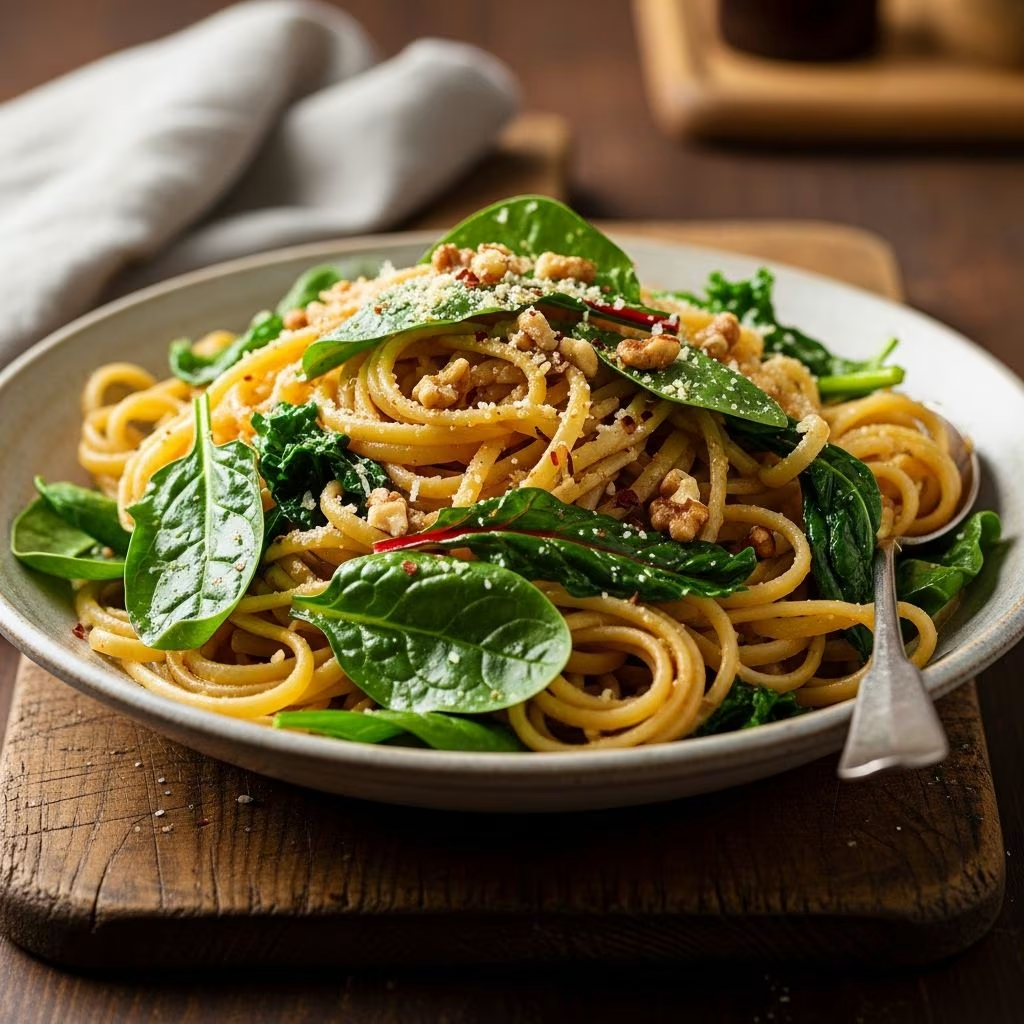
Creating a memorable pasta dish doesn’t always require complex techniques or exotic ingredients. Sometimes the most satisfying meals come from understanding how to layer simple flavors and textures into something truly exceptional. This particular preparation brings together the earthiness of leafy greens, the toasty warmth of roasted nuts, and the rich complexity of browned butter to create a dish that feels both comforting and refined.
Why This Pasta Stands Out
The beauty of this vegetarian pasta lies in its elegant simplicity. Unlike dishes that rely on heavy cream sauces or complex reductions, this preparation celebrates ingredient quality and careful technique. The combination of crispy toasted hazelnuts with wilted greens creates textural contrast, while the browned butter provides the richness that traditionally comes from meat-based sauces. The result is a dish that satisfies without feeling heavy, making it appropriate for both casual weeknight meals and more formal dining occasions.
What makes this preparation particularly appealing is its adaptability. The core technique remains consistent, but you have considerable flexibility in selecting your specific ingredients. Whether you choose to work with Swiss chard, kale, spinach, or other hearty greens, the fundamental approach stays the same. Similarly, hazelnuts can be substituted with walnuts, almonds, or pecans based on your preferences or what’s available in your kitchen.
Essential Ingredients and Preparation
The Foundation: Selecting Your Pasta
The pasta shape you choose plays a significant role in how the finished dish comes together. Bow tie pasta (farfalle) works wonderfully because its curved surfaces catch and hold the butter and nutty pieces effectively. However, orecchiette, penne, or other medium-sized shapes also perform well. The key consideration is selecting a pasta that can adequately coat with the sauce rather than something too thin or delicate that might become overwhelming.
Preparing the Nuts
Toasting nuts properly transforms their flavor profile dramatically. Begin with raw or blanched hazelnuts placed in a dry skillet over medium heat. The process typically requires eight to ten minutes of gentle toasting, stirring frequently to ensure even browning and prevent burning. You’ll know the nuts are ready when they develop a light golden color and emit a distinctly nutty aroma. Allow them to cool slightly before chopping roughly—this texture variation provides pleasant bite throughout the finished dish.
Handling the Greens
Swiss chard deserves special attention during preparation. The stems and leaves require different cooking times, which is why separating them initially makes sense. Cut the stems into fine pieces, removing the thickest central rib if desired. Slice the leafy portions into thinner ribbons. This separation allows you to cook the denser stems first, ensuring they reach tenderness before adding the more delicate leaves.
Step-by-Step Preparation Method
Creating the Brown Butter Base
The brown butter sauce represents the heart of this dish and deserves careful attention. In a large skillet, melt unsalted butter over medium-low heat. As the butter begins to foam, add minced garlic cloves and stir constantly with a wooden spoon. This continuous motion prevents the garlic from burning while allowing it to infuse the butter with its flavor. After approximately five minutes, the butter will begin turning a golden-brown color while developing that characteristic nutty aroma. At this point, add salt, freshly ground black pepper, and crushed red pepper flakes for a subtle heat layer.
Once these seasonings are incorporated, remove the skillet from direct heat and allow the mixture to infuse for an additional five minutes. This resting period allows the flavors to meld and the residual heat to fully develop the butter’s complex taste notes without risking any further browning.
Cooking the Pasta
Bring a large pot of salted water to a rolling boil before adding your pasta. Cook according to package directions until achieving al dente texture—that perfect point where the pasta still maintains a slight firmness when bitten. This step matters because the pasta will continue cooking slightly when combined with the warm butter and greens. Before draining, reserve approximately 120 milliliters of the starchy cooking water. This liquid serves as a crucial binding agent, helping the sauce cling to each pasta piece while providing silkiness without additional cream.
Bringing Everything Together
Drain the hot pasta into your bowl containing the brown butter mixture and toss thoroughly. The residual heat will help the pasta absorb the butter evenly. If the mixture seems dry, add a bit of the reserved cooking liquid gradually. Return to your skillet without washing it—that accumulated flavorful residue will add depth to the greens.
Cooking the Greens
Set the same skillet over medium-high heat. Add the chard stems first and cook for about five minutes until they begin softening. Then add the leafy portions and continue cooking, stirring occasionally, until the greens wilt and turn a bright emerald green. This process typically requires three to five minutes additional cooking time. If the pan becomes too dry, add a small amount of butter or oil to prevent sticking.
Final Assembly
Add the cooked greens and chopped hazelnuts to your pasta mixture and toss thoroughly to distribute evenly. Top with shaved Parmesan cheese and, if desired, a splash of balsamic vinegar for subtle acidity that brightens the entire dish. Taste carefully and adjust seasonings with additional salt and pepper as needed. The dish can be served warm immediately or at room temperature, making it versatile for various dining scenarios.
Ingredient Variations and Customizations
| Component | Primary Option | Suggested Alternatives |
|---|---|---|
| Greens | Swiss Chard | Kale, spinach, collard greens |
| Nuts | Hazelnuts | Walnuts, almonds, pecans, pine nuts |
| Vinegar | Balsamic | Red wine vinegar, lemon juice, white wine vinegar |
| Pasta Shape | Farfalle | Orecchiette, penne, fusilli |
| Cheese | Parmesan | Pecorino Romano, Grana Padano |
Nutritional Considerations
This dish offers genuine nutritional benefits beyond its appealing flavor profile. Swiss chard and similar leafy greens provide substantial quantities of vitamins K, A, and C, alongside important minerals like iron and magnesium. The toasted hazelnuts contribute healthy monounsaturated fats, fiber, and vitamin E. While the brown butter adds richness, the quantity used per serving remains moderate, and the overall dish maintains better nutritional balance than many traditional cream-based pasta preparations.
For those monitoring caloric intake, this dish can be adapted by reducing the butter slightly or using a combination of butter and good quality olive oil. The fundamental flavors remain largely unchanged while reducing overall caloric density.
Cooking Tips for Success
- Watch the brown butter carefully—it transitions quickly from perfectly browned to burnt. Remove from heat slightly before it reaches your ideal color, as carryover cooking will continue darkening it slightly.
- Reserve adequate pasta water before draining. The starch it contains creates a silky sauce without requiring cream.
- Don’t overcook the greens—they should remain vibrant green rather than becoming dark or mushy.
- Toast nuts in a completely dry pan without oil for maximum flavor development.
- Taste and adjust seasonings just before serving, as Parmesan already contains significant salt.
- If preparing ahead, store components separately and assemble just before serving for best texture.
Serving Suggestions
This pasta works beautifully as a standalone main course, particularly when preceded by a light salad or followed by fresh fruit. The simplicity of the preparation means it pairs well with various wines—consider a crisp white wine with mineral notes or a light-bodied red with good acidity. The dish also adapts well to entertaining, as it can be prepared in advance and reheated gently, or served at room temperature for a different presentation style.
Storage and Make-Ahead Options
This particular dish is best enjoyed fresh, but leftovers keep well refrigerated for up to three days. Store the components separately if possible—keeping the pasta separate from the greens helps maintain textural quality. When reheating, add a splash of water or pasta water to restore creaminess, then warm gently over medium-low heat rather than using high heat that might cause the butter to separate.
Frequently Asked Questions
Can I make this dish vegan?
Yes, by substituting the butter with a high-quality plant-based butter and replacing Parmesan with nutritional yeast or a quality vegan cheese alternative. Brown the plant-based butter using the same technique, watching carefully as browning times may vary slightly.
How do I prevent the brown butter from burning?
Monitor the heat carefully, keeping it at medium-low rather than high. The process should take about five minutes. Remove from heat slightly before reaching your desired color, as residual heat will continue cooking it slightly.
What if I don’t have hazelnuts?
Any nut works wonderfully—walnuts and almonds are particularly good substitutes. Even pine nuts provide an elegant result, though at higher cost.
Can this be made without garlic?
Absolutely. Simply omit the garlic and proceed with browning the butter. The dish will have a different flavor profile but remains delicious.
How much does this recipe serve?
The ingredient quantities typically serve four as a main course or six as part of a multi-course meal.
Is this suitable for meal preparation?
While best enjoyed fresh, you can prepare components ahead. Cook and cool the pasta and greens separately, toast the nuts, and prepare the brown butter just before serving. Combine within an hour for best results.
Conclusion
This preparation demonstrates how thoughtful ingredient selection and careful technique can elevate simple components into something memorable. The interplay between the rich brown butter, vibrant leafy greens, and crunchy nuts creates a dish that satisfies on multiple levels. Whether you’re preparing a simple family dinner or entertaining guests, this pasta offers sophistication and comfort in equal measure. The adaptability of the recipe means you can adjust ingredients based on seasonal availability and personal preference while maintaining the essence of what makes this dish special.
References
- Swiss Chard Pasta With Toasted Hazelnuts and Parmesan — Patient.info. Accessed April 2026. https://patient.info/recipes/vegetarian-recipes/swiss-chard-pasta-with-toasted-hazelnuts-and-parmesan
- Pasta with Swiss Chard and Parmesan Cheese — The FruitGuys. Accessed April 2026. https://fruitguys.com/blog/pasta-with-swiss-chard-and-parmesan-cheese/
- Swiss Chard and Parmesan Pasta — For the Love of Gourmet. Accessed April 2026. https://fortheloveofgourmet.com/swiss-chard-and-parmesan-past/
- Pasta with Swiss Chard, Brown Butter, & Walnuts — Alexandra’s Kitchen. Accessed April 2026. https://alexandracooks.com/2015/04/01/orecchiette-with-swish-chard-brown-butter-walnuts/
- Pasta with chard, hazelnuts and garlic — The Irish Times. Accessed April 2026. https://www.irishtimes.com/life-and-style/food-and-drink/recipes/pasta-with-chard-hazelnuts-and-garlic-1.4399157