Discovering the Art of Vegetable-Forward Baking
The intersection of home cooking and culinary creativity often yields unexpected delights. Among these innovations stands a remarkable savory bread that reimagines how we incorporate vegetables into baked goods. This particular creation brings together the earthiness of cruciferous vegetables with the richness of dairy and the warmth of carefully selected spices. What makes this dish exceptional isn’t simply its flavor profile, but rather how it challenges conventional notions of what bread can be—moving beyond the purely carbohydrate-focused framework to create something nutritionally interesting and visually captivating.
Understanding the Key Components
Every successful recipe rests upon understanding its foundational ingredients and how they work together. This savory loaf brings together multiple elements that serve distinct purposes in the final product.
The Vegetable Base
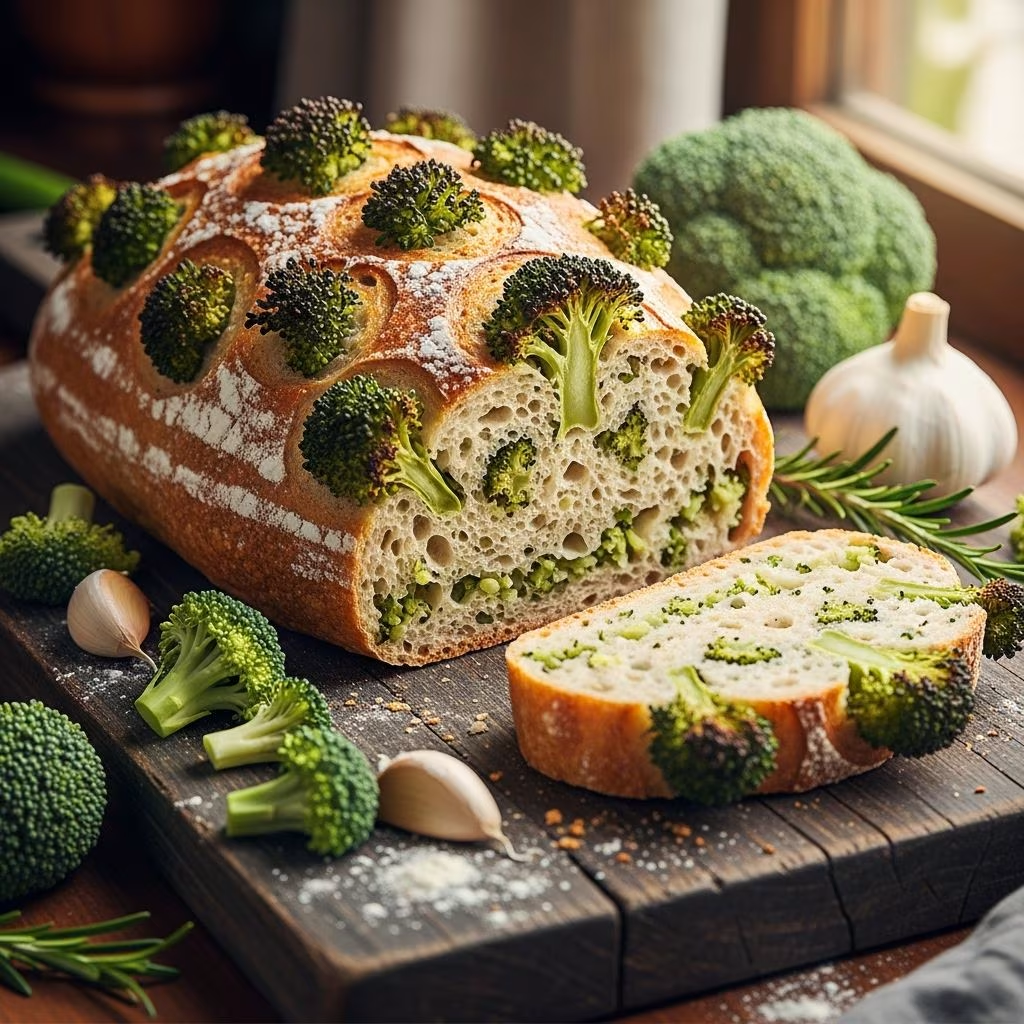
Fresh broccoli forms the architectural and nutritional cornerstone of this dish. Rather than being finely minced or pureed, the broccoli maintains its structural integrity—cut into elongated florets that will eventually stand upright in the finished loaf like miniature trees in a whimsical forest. This unconventional use of the vegetable requires brief blanching to soften it slightly while preserving its vibrant green color and slight crunch. The florets positioned vertically across the loaf’s surface create visual interest that transforms a simple bread into a presentation piece.
The Binding Structure
A well-balanced wet ingredient mixture creates the necessary structure for holding the broccoli upright. Egg provides protein and binding power, while olive oil contributes fat that ensures moisture retention throughout baking. Sour cream adds tanginess and contributes to the dense, moist crumb structure characteristic of this style of savory bread. These components work synergistically to create a batter substantial enough to support the weight of broccoli florets without becoming dense or heavy.
Flavor Development Through Seasoning
The spice profile distinguishes this loaf from standard vegetable breads. A combination of chili powder introduces mild heat and depth, while turmeric contributes both color and earthy complexity. Salt binds and amplifies all other flavors. Additionally, maple syrup provides subtle sweetness that balances the inherent bitterness of broccoli and the sharpness of aged cheddar cheese, creating a more nuanced flavor experience.
Cheese and Complementary Ingredients
Sharp cheddar cheese forms the flavor foundation, its aged complexity preventing the loaf from tasting one-dimensional. Olives add briny, savory notes that echo traditional Mediterranean flavors, while fresh scallions provide mild onion notes and textural interest. Together, these additions create a sophisticated flavor profile that appeals to adult palates while remaining accessible to most diners.
Ingredient Breakdown and Proportions
| Ingredient | Quantity | Primary Function |
|---|---|---|
| Broccoli florets | 1 small head, cut lengthwise | Structure and visual presentation |
| Egg | 1 large | Binding and structure |
| Olive oil | 1/3 cup | Moisture and richness |
| Sour cream | 3/4 cup | Moisture and tang |
| Maple syrup | 1 tablespoon | Sweetness and balance |
| All-purpose flour | 1.5 cups | Structure and texture |
| Baking powder | 1 teaspoon | Lift and rise |
| Baking soda | 1/2 teaspoon | Chemical leavening |
| Spice blend | 1/2 teaspoon each | Flavor and color |
| Sharp cheddar | 1.5 cups shredded | Flavor and richness |
| Olives | 1/3 cup chopped | Briny, savory notes |
| Scallions | 2, chopped | Fresh onion flavor |
Step-by-Step Preparation Process
Preparation Phase
Begin by positioning your oven rack and preheating to 350 degrees Fahrenheit. Line an 8 by 4 inch loaf pan with parchment paper, ensuring it extends above the edges for easy removal later. This protective layer prevents sticking and makes cleanup significantly easier. Have all ingredients measured and prepared before beginning, a practice known as mise en place that streamlines the actual cooking process.
Vegetable Preparation
Bring a small pot of water to a rolling boil. Cut your broccoli head into long florets, maintaining as much stem as possible—these stems provide the handle for positioning the florets upright. Submerge the florets for exactly two minutes. This brief blanching softens them enough to cook through without becoming mushy, while the short duration preserves their bright green color and slight firmness. Immediately transfer the blanched broccoli to an ice bath or run under cold running water to arrest the cooking process. Spread the cooled florets on paper towels to dry thoroughly, as excess moisture will interfere with the final texture.
Wet Ingredient Combination
In a large mixing bowl, lightly beat the egg with a fork to break the yolk and distribute it throughout. Gradually whisk in the olive oil, sour cream, and maple syrup until the mixture reaches a smooth, uniform consistency. This wet base becomes the foundation for all dry ingredients and ensures even distribution of moisture throughout the final loaf.
Dry Ingredient Integration
Sift together the flour, baking powder, baking soda, chili powder, turmeric, and salt directly into the wet mixture. The sifting process incorporates air and prevents lumps that would compromise the texture. Mix gently with a spatula or wooden spoon until the ingredients just combine into a thick batter. Overmixing at this stage develops excessive gluten, resulting in a tough, dense final product, so restraint is essential.
Building Flavor Layers
Fold in the shredded sharp cheddar cheese, chopped olives, and scallions with a gentle hand. Folding rather than stirring prevents deflating the batter while ensuring even distribution. The cheese will slightly soften from the warmth of the batter, creating pockets of flavor throughout. Transfer this finished dough into the prepared loaf pan and press it down firmly to eliminate air gaps and create a level surface.
The Architectural Flourish
This step transforms the loaf from simple bread into an artistic creation. Take your prepared broccoli florets and press them into the dough surface with the tips pointing upward. Position them so approximately half of each floret remains visible above the dough level. Space them evenly across the surface, creating a pattern reminiscent of a miniature forest. This isn’t merely decorative—the broccoli florets will continue cooking in the oven, and their positioning ensures they cook through while maintaining their distinctive appearance.
Baking and Cooling
Transfer the pan to your preheated oven and bake for 50 minutes to one hour. The loaf is done when a toothpick inserted into the center emerges clean with no wet batter clinging to it. The broccoli tips should show slight browning but remain mostly green. Remove from the oven and allow the loaf to rest in its pan for 10 minutes, during which time carryover cooking continues and the structure sets. Transfer to a wire rack and cool for an additional 10 to 15 minutes before slicing. This cooling period is crucial for allowing the interior to firm up sufficiently for clean slicing.
Nutritional Considerations and Health Benefits
Beyond its appealing appearance, this loaf offers genuine nutritional value. Broccoli contributes cruciferous compounds believed to support cellular health, dietary fiber for digestive function, and various vitamins and minerals. The eggs and cheese provide complete proteins with essential amino acids, while olive oil supplies heart-healthy monounsaturated fats. The spices, particularly turmeric, contain bioactive compounds that have been studied for potential anti-inflammatory properties. When compared to refined-grain bread products, this creation delivers substantially more nutritional density while maintaining palatability for broader audiences.
Serving Suggestions and Meal Planning
The versatility of this loaf extends to its role in various meal contexts. Served warm with simple butter, it makes an impressive side dish for dinner. Sliced and toasted, it transitions into a substantial sandwich bread. Cold leftovers work wonderfully in packed lunches, particularly when paired with complementary ingredients like roasted vegetables or hummus. The visual presentation makes it suitable for entertaining, where its unusual nature frequently generates conversation and admiration among guests.
Storage and Make-Ahead Strategies
Properly stored leftovers maintain quality for several days. Cool the loaf completely, then transfer it to an airtight container and refrigerate for up to five days. The dense structure of this bread actually improves slightly as flavors meld during storage. For extended preservation, wrap slices individually and freeze for up to three months. Thaw at room temperature or reheat gently in a toaster oven to restore moisture and optimal texture. The recipe also adapts well to partial preparation—you can complete all mixing steps in advance and add the broccoli florets just before baking.
Common Questions About This Recipe
Can I substitute different vegetables for broccoli?
While broccoli’s structural integrity and mild flavor make it ideal, other cruciferous vegetables like cauliflower work similarly. Longer-cooking vegetables like carrots require lengthier blanching times to achieve appropriate tenderness. The key is maintaining florets that stand upright and can remain partially visible during baking.
What if I’m allergic to dairy?
Dairy-free alternatives exist for both the sour cream and cheese components. Cashew-based sour cream and nutritional yeast provide similar functionality, though the flavor profile shifts measurably. Expect to adjust salt levels slightly when substituting these ingredients.
How does this loaf compare to traditional bread in terms of shelf life?
The higher moisture content from broccoli and sour cream means this loaf should be consumed more quickly than standard bread. Three to four days at room temperature represents a reasonable timeframe before quality noticeably declines. Refrigeration extends this to five days, with freezing preserving quality for considerably longer periods.
Can I halve this recipe?
Yes, all ingredients scale proportionally. A half batch fits well in a smaller loaf pan, though you may need to adjust baking time slightly—check for doneness around 35 to 40 minutes rather than the full 50 to 60 minute timeframe.
Exploring Flavor Variations and Adaptations
While the classic version provides excellent results, creative cooks can explore numerous variations. Substituting sharp white cheddar for standard yellow cheddar creates subtle flavor shifts. Adding sundried tomatoes or sun-dried tomato paste introduces Mediterranean complexity. Fresh herbs like dill or thyme layer additional aromatic notes. Reducing or eliminating olives accommodates those who prefer less briny flavors. Each modification maintains the fundamental structure while creating distinct versions suited to different preferences.
This innovative approach to savory baking demonstrates how thoughtful ingredient selection and creative presentation can elevate a simple concept into something memorable. Whether prepared for weeknight dinner or special occasions, this broccoli forest loaf satisfies both aesthetic and gustatory desires, proving that nutritious food need not sacrifice visual appeal or sophisticated flavor development.
References
- Tenderheart: Vegan Recipes from a Plant-Based Lifestyle — Hetty McKinnon. Penguin Random House. 2015. ISBN: 978-0143128151
- Nutritional Compounds in Brassica Vegetables and Health Benefits — National Institutes of Health. National Center for Biotechnology Information. 2023. https://www.ncbi.nlm.nih.gov/
- Culinary Uses of Turmeric and Its Potential Health Applications — U.S. Department of Agriculture Agricultural Research Service. 2024. https://www.ars.usda.gov/