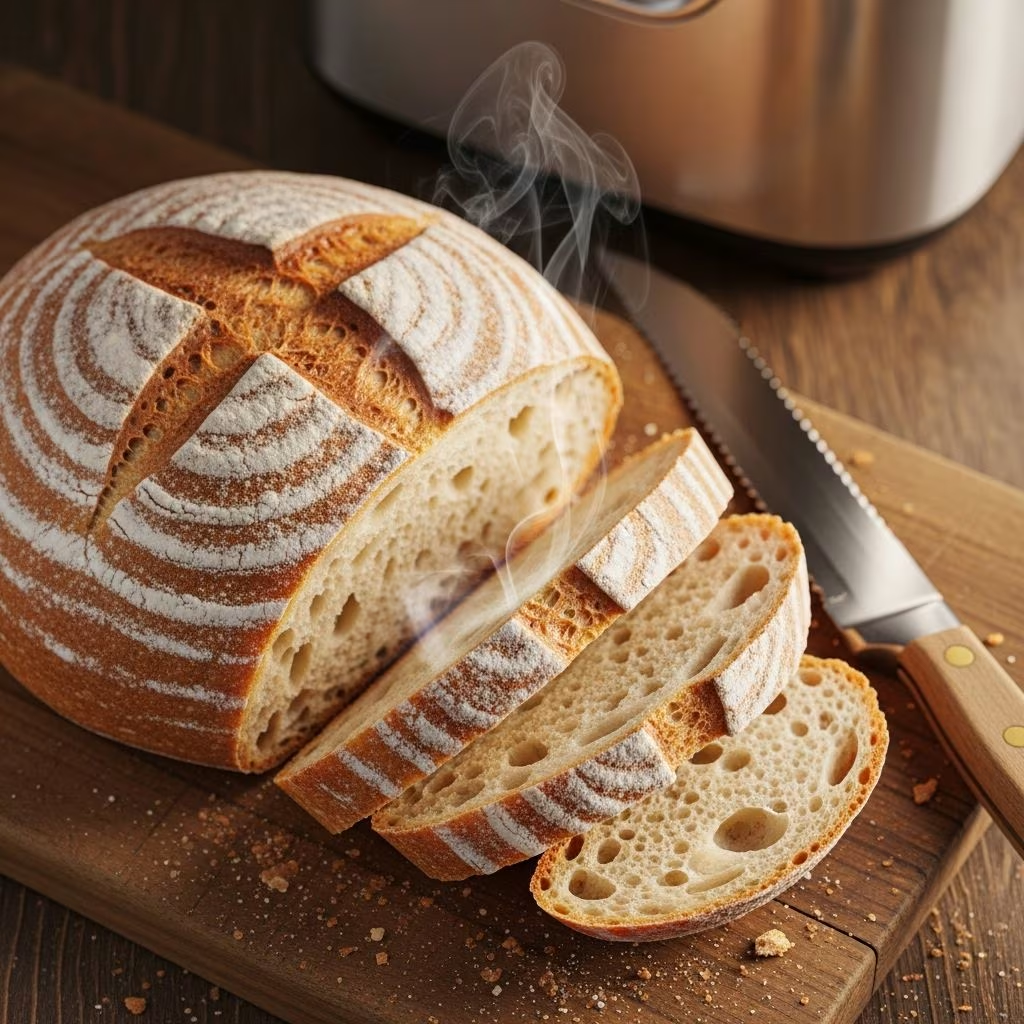
Creating **Italian bread** at home doesn’t require advanced baking skills or a professional oven. With a bread machine, you can produce loaves boasting a crisp exterior and soft, airy interior reminiscent of traditional Italian bakeries. This guide dives deep into recipes, techniques, and pro tips to elevate your baking game.
Why Choose a Bread Machine for Italian Bread?
Bread machines simplify the process by handling kneading, rising, and baking automatically. They ensure consistent results, saving hours compared to manual methods. Ideal for busy home cooks, these appliances yield authentic flavors using basic pantry staples like flour, water, yeast, and olive oil.
Key advantages include precise temperature control for optimal yeast activation and customizable cycles for different loaf sizes. Whether aiming for a everyday sandwich bread or a rustic table loaf, the machine delivers reliability.
Essential Ingredients for Success
High-quality ingredients form the foundation of great Italian bread. Start with bread flour for its higher protein content, which develops gluten for chewy texture. All-purpose flour works but may yield a softer crumb.
- Water: Use cold or room-temperature for crusty loaves; warm (around 110°F) activates yeast faster for softer results.
- Yeast: Active dry yeast is standard; instant yeast can be substituted at equal measure.
- Salt: Enhances flavor and strengthens dough structure.
- Sugar or Brown Sugar: Feeds yeast and tenderizes crumb.
- Olive Oil: Adds richness and helps achieve a golden crust.
- Optional Add-Ins: Italian herbs, garlic powder, or parmesan for flavored variations.
Measure precisely using a kitchen scale for flour to avoid dense loaves. Freshness matters—stale yeast leads to flat bread.
Basic Bread Machine Italian Bread Recipe
This straightforward recipe produces a 1.5-2 lb loaf with classic Italian characteristics: chewy crust and open crumb.
Ingredients (for 2 lb Loaf)
| Ingredient | Amount |
|---|---|
| Cold Water | ¾ cup + 2 tbsp |
| Bread Flour | 3 cups |
| Sugar | 1 tbsp |
| Salt | 1 tsp |
| Olive Oil | 1 tbsp |
| Active Dry Yeast | 1¼ tsp |
Step-by-Step Instructions
- Add liquids first: water and oil to the bread pan.
- Layer dry ingredients: flour, sugar, salt. Create a small well in the flour for yeast—avoid direct contact with liquids.
- Select ‘Basic’ or ‘Italian Bread’ cycle if available. Choose medium crust and loaf size.
- Press start. Monitor initial kneading (5-10 minutes) to ensure dough forms a smooth ball. Adjust flour/water by 1 tsp if too sticky or dry.
- Allow full cycle (3-4 hours). Remove promptly upon completion for crisp crust.
Cool on a wire rack 1 hour before slicing to prevent gumminess.
Advanced Technique: Artisan-Style Loaves
For bakery-like results, use the dough cycle and finish in the oven. This method yields elongated loaves with slashes and superior crust.
Dough Ingredients (Makes 2 Loaves)
| Ingredient | Amount |
|---|---|
| Warm Water | 1½ cups |
| Brown Sugar | 1 tbsp |
| Olive Oil | 2 tsp |
| Salt | 2 tsp |
| All-Purpose Flour | 4 cups |
| Active Dry Yeast | 2¼ tsp |
Instructions
- Load ingredients per machine order. Run ‘Dough’ cycle (90 minutes).
- Deflate dough on floured surface; divide in half.
- Roll each into 12×8-inch rectangle. Tightly roll into cylinders, pinching seams.
- Place seam-side down on parchment-lined sheet. Cover; rise 40-60 minutes until doubled.
- Preheat oven to 375°F. Slash tops lengthwise (¼-inch deep). Brush with egg wash (1 egg + 1 tbsp water) for shine.
- Bake 35-40 minutes until deep golden (internal temp 200°F).
This hybrid approach maximizes oven spring for irregular air pockets.
Flavor Variations to Elevate Your Loaf
Customize with these ideas:
- Herb-Infused: Add 2 tbsp Italian seasoning to basic recipe. Pairs with pasta.
- Garlic Parmesan: Mix 2 tsp garlic powder and ¼ cup grated parmesan into flour.
- Olive Bread: Fold in ½ cup chopped black olives post-knead (pause machine).
- Whole Wheat Twist: Replace 1 cup flour with whole wheat for nutty flavor.
Experiment sparingly to maintain dough balance.
Troubleshooting Common Issues
Problems arise from ingredient ratios or machine quirks. Here’s how to fix:
| Issue | Cause | Solution |
|---|---|---|
| Dense Loaf | Old yeast, too much flour | Test yeast in warm water; measure flour by weight |
| Flat Top | Insufficient rise | Check expiration dates; ensure warm environment |
| Pale Crust | Light setting or humidity | Choose dark crust; tent with foil if over-browning |
| Sticky Dough | Excess moisture | Add 1 tsp flour; reduce water next time |
Always peek during knead phase—adjust immediately.
Perfecting Crust and Texture
Achieve crusty Italian bread by using cold water and removing loaf immediately. For extra crispness, place in a turned-off oven with a pan of water for steam during bake. Cool uncovered to preserve crunch.
Texture improves with high-hydration doughs (65%+ water to flour ratio), but bread machines handle up to 70% well.
Storage and Freezing Tips
Store sliced loaves in paper bags for 2-3 days to maintain crust. Freeze unsliced in plastic wrap + foil up to 3 months. Thaw at room temp, refresh in 350°F oven 10 minutes.
For make-ahead, shape and freeze pre-rise loaves; thaw overnight before proofing.
Serving Suggestions and Pairings
Italian bread shines with olive oil dips, antipasti, or as panini base. Slice thick for bruschetta: toast, rub with garlic, top with tomatoes and basil.
- Pair with soups, pasta, or charcuterie.
- Make garlic bread: butter, garlic, herbs; bake 400°F 10 minutes.
- Use for French toast or bread pudding.
Understanding Bread Machine Cycles
Familiarize with phases: preheat (rare), knead (20 min), first rise (45 min), second knead/punch-down, second rise (25 min), bake (60 min). ‘Basic’ suits most; ‘French/Italian’ adds steam simulation.
For smaller machines, halve recipes; larger ones scale up 25%.
Health and Nutrition Insights
A 1-oz slice offers ~80 calories, 3g protein, 15g carbs. Opt for whole grains to boost fiber. Low-sodium versions reduce salt to ½ tsp.
Frequently Asked Questions
Can I use regular flour?
Yes, but bread flour yields better structure. All-purpose results in softer bread.
What if my machine lacks an Italian cycle?
Use ‘Basic White’ or ‘French Bread’—results are comparable.
How do I know if yeast is active?
Bloom in warm water + sugar; bubbles in 10 minutes confirm viability.
Can I make this gluten-free?
Adapt with gluten-free flour blend + xanthan gum, but texture differs.
Why cold water?
Prevents premature yeast activation, promoting even rise and crust.
Scaling Recipes for Different Loaf Sizes
| Loaf Size | Water | Flour | Other Ingredients |
|---|---|---|---|
| 1 lb | ½ cup | 2 cups | Halve all |
| 1.5 lb | ¾ cup | 3 cups | Standard |
| 2 lb | 1 cup | 4 cups | Increase proportionally |
Adjust yeast slightly up for larger loaves.
References
- USDA Complete Guide to Home Canning and Preserving — United States Department of Agriculture. 2023-01-15. https://nchfp.uga.edu/publications/publications_usda.html
- Bread Science: Understanding Gluten and Hydration Ratios — King Arthur Baking Company. 2024-05-20. https://www.kingarthurbaking.com/learn/guides/bread-hydration
- Yeast Activity and Temperature Control — Lesaffre Yeast Corporation. 2022-11-10. https://lesaffreyeast.com/yeast-temperature-guide/
- Flour Protein Content and Bread Structure — Wheat Foods Council. 2023-08-05. https://wheatfoods.org/resources/flour-types/
- Home Bread Baking Safety Guidelines — FDA Center for Food Safety. 2024-02-14. https://www.fda.gov/food/buy-store-serve-safe-food/home-baked-bread-safety