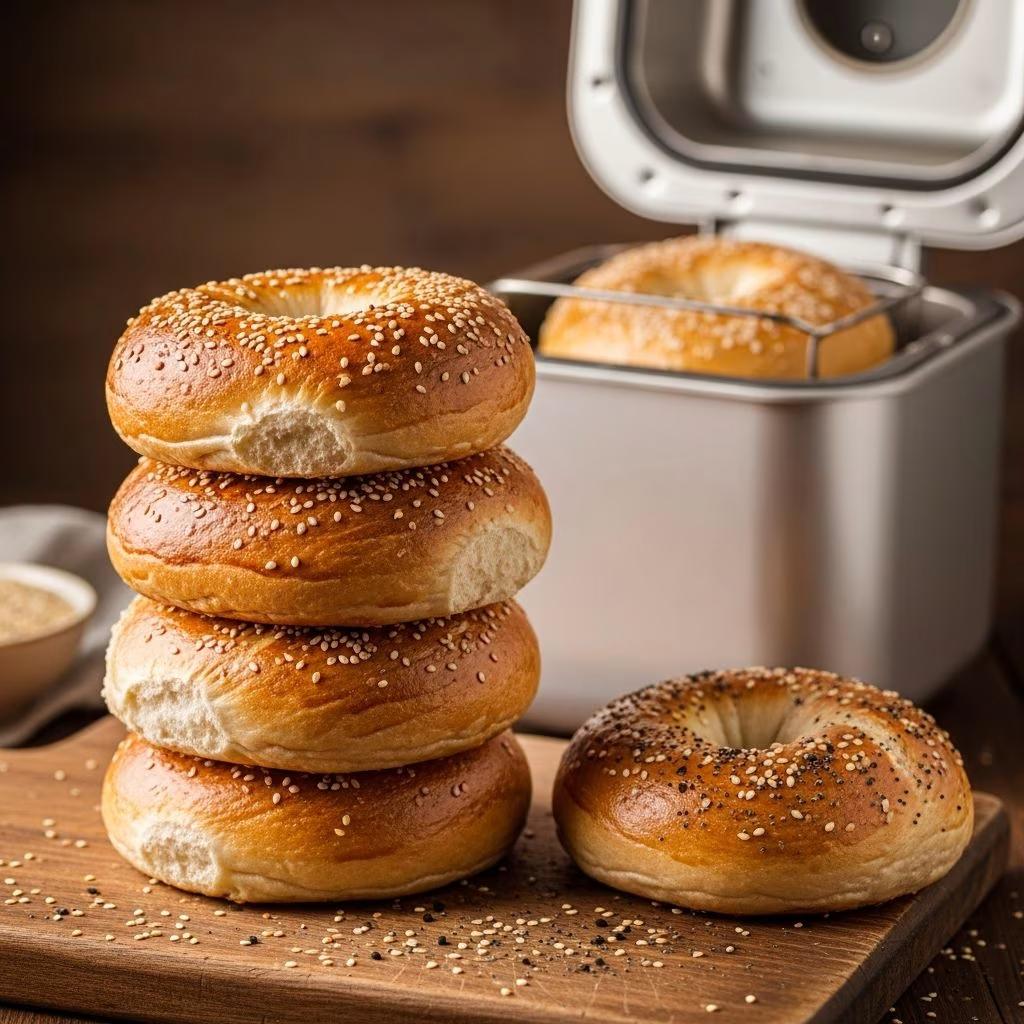
Bagels represent a beloved staple in baking, known for their distinctive chewy texture and versatile appeal. Using a bread machine simplifies the process, handling the kneading and initial rising for consistent outcomes. This comprehensive guide explores everything from ingredient choices to advanced techniques, empowering you to create bakery-quality bagels in your kitchen.
Why Choose a Bread Machine for Bagel Making?
Bread machines excel at dough preparation by automating mixing and kneading, which are labor-intensive steps in traditional bagel recipes. The machine ensures even gluten development, crucial for the bagel’s signature chewiness. Home bakers appreciate the hands-off approach, allowing focus on shaping, boiling, and baking—key steps that define authentic bagels.
Compared to hand-kneading, this method reduces effort while yielding professional results. Machines vary, but most have a ‘dough’ cycle lasting 1-2 hours, perfect for bagel dough that needs moderate rising before boiling.
Essential Ingredients for Success
Selecting high-quality ingredients is foundational. Bread flour provides the high protein content (12-14%) needed for structure and chew. Instant yeast activates quickly, while liquids like water or milk contribute to tenderness.
- Bread flour: 3-4 cups for gluten strength.
- Yeast: 2-2.25 tsp instant for reliable rise.
- Liquids: Warm water (1/2-1 cup) or milk for hydration.
- Sweetener: Sugar or malt syrup (1-1.5 tsp) to feed yeast and promote browning.
- Salt: 1 tsp for flavor balance.
- Fats: Butter or egg for richness (optional).
Variations include barley malt syrup for authentic New York-style flavor, enhancing crust color during boiling and baking.
Step-by-Step Dough Preparation
Begin by adding ingredients to the bread machine pan in this order: liquids first, then dry ingredients, yeast last. This prevents premature yeast activation.
- Select the ‘dough’ cycle and start the machine.
- Monitor for 5-10 minutes to ensure proper dough ball formation—smooth and elastic, not sticky.
- Upon cycle completion (1-1.5 hours), remove dough to a lightly floured surface.
- Punch down gently and rest 10 minutes for easier handling.
Temperature control matters: use liquids at 100-110°F (38-43°C) for optimal yeast activity without killing it.
Mastering the Shaping Technique
Divide dough into 8-12 equal portions (about 80-100g each for standard size). Roll each into a tight ball by cupping your hand and rotating on the counter.
To form the ring:
- Flour your finger and poke a hole in the center.
- Gently stretch the hole to 1-2 inches wide using both index fingers, rotating the dough.
- Aim for even thickness; thinner centers expand during boiling.
Place shaped bagels on a parchment-lined sheet, cover with a damp towel, and rest 20-30 minutes. They should puff slightly but not double.
The Crucial Boiling Process
Boiling sets bagels apart, gelatinizing starches on the surface for shine and chew. Fill a wide pot with 3-4 quarts water, add 1-2 tbsp sugar or malt syrup, and bring to a rolling boil.
Boil 1 minute per side (2 minutes total):
- Lower 2-4 bagels at a time using a slotted spoon.
- Flip carefully; overcrowding causes sticking.
- Remove to a wire rack or towel to drain.
This step prevents oven rising, creating dense crumb. For extra chew, extend to 90 seconds per side.
Baking to Golden Perfection
Preheat oven to 400-425°F (204-218°C). Line sheets with parchment or silicone mats.
Prepare egg wash: 1 egg + 1 tbsp water, whisked. Brush boiled bagels, then apply toppings while wet for adhesion.
Bake 20-30 minutes until deep golden. Rotate sheets midway for even browning. Cool on racks to maintain crunch.
Topping Ideas for Every Taste
Customize with these popular options:
| Topping | Description | Application Tip |
|---|---|---|
| Everything Bagel | Sesame, poppy, onion, garlic, salt mix | Sprinkle generously post-wash |
| Sesame or Poppy | Classic seeds for nutty crunch | Press lightly into wet surface |
| Cinnamon Sugar | Sweet twist for breakfast | Mix 1/4 cup sugar + 1 tsp cinnamon |
| Jalapeño Cheddar | Knead shredded cheese and diced peppers into dough balls before shaping | Bake for melty interior |
| Plain | Versatile base | Skip toppings for sandwiches |
Recipe Troubleshooting Guide
Encounter issues? Here’s how to fix them:
- Dough too sticky: Add flour 1 tbsp at a time during mixing.
- Bagels flatten: Boil longer or ensure tight shaping.
- Pale crust: Increase oven temp or add malt syrup to boil.
- Dense texture: Check yeast freshness; test in warm water first.
- Holes close: Stretch wider initially; they shrink slightly.
Storage and Freezing Tips
Fresh bagels store in airtight containers for 2 days or freeze sliced for 3 months. Thaw, toast, or steam for revival. Avoid refrigerating, as it dries them out.
Nutritional Snapshot
Per bagel (plain, ~80g): ~146 calories, 28g carbs, 5g protein, 1g fat. Varies with toppings; cheese adds richness.
Advanced Variations
Experiment with whole wheat flour (50% substitution), sourdough discard for tang, or overnight cold proof for flavor depth. For New York-style, use high-gluten flour and malt.
Frequently Asked Questions
Can I use all-purpose flour?
Yes, but bread flour yields better chew. All-purpose works in a pinch.
Why boil bagels?
Boiling creates a barrier for controlled rising and glossy crust.
How many bagels does this make?
8-12, depending on size.
Vegetarian/vegan options?
Omit egg wash; use plant milk and aquafaba.
Bread machine not rising dough?
Check for warm environment; verify yeast viability.
References
- The BEST Bagel Bread Machine recipe — Our Little Blue Homestead. 2023. https://ourlittlebluehomestead.com/bagel-bread-machine-recipe/
- Bread Machine Bagels — Art and the Kitchen. 2023. https://www.artandthekitchen.com/bread-machine-bagels/
- Bread Machine Bagels: Foolproof Recipe for New York — YouTube (Little Hill Homestead). 2023. https://www.youtube.com/watch?v=k5YA0onornw
- Bread Machine New York Bagels — Red Star Yeast. 2023. https://redstaryeast.com/recipes/bread-machine-new-york-bagels/