Understanding the Heritage Behind Bravas
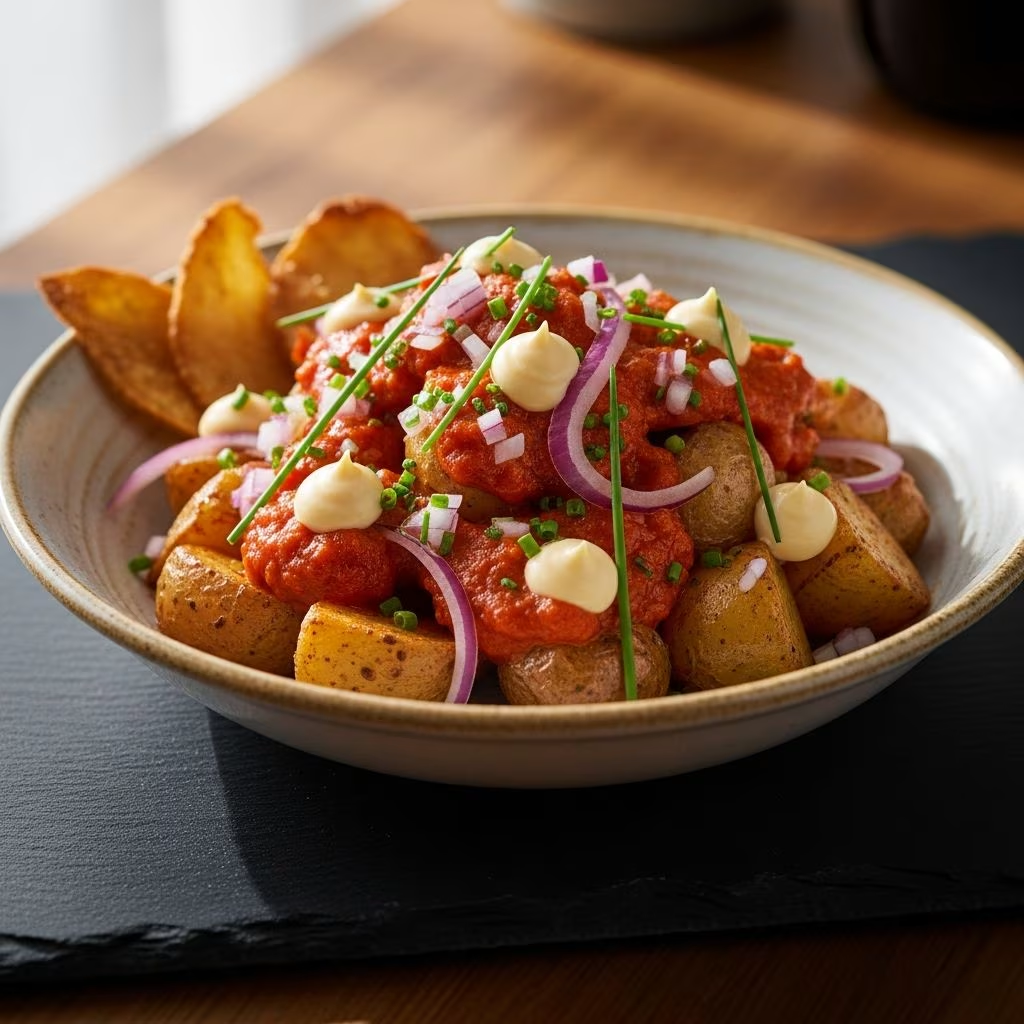
The story of patatas bravas stretches back centuries into Spanish culinary history. This iconic tapas dish, believed to have originated as early as 1542, emerged following the arrival of tomatoes from South America to Spain by conquistadors. What began as a simple combination of fried potatoes and a bold sauce evolved into one of Spain’s most beloved and widely recognized appetizers. Today, the traditional preparation features crispy-on-the-outside, fluffy-centered potatoes crowned with vibrant salsa bravas and a generous dollop of tangy garlic aioli.
The evolution from traditional patatas bravas to bravas potato salad represents a natural culinary progression. Contemporary home cooks and chefs have reimagined this classic by incorporating elements of both the original tapas and modern salad preparation methods. The result is a dish that captures the essence of Spanish flavors while offering a lighter, more vegetable-forward presentation suitable for varied occasions.
What Sets Bravas Potato Salad Apart
Bravas potato salad occupies a unique position within the potato salad spectrum. Unlike traditional mayonnaise-heavy versions, this adaptation strikes a careful balance between richness and brightness. The dish draws heat and complexity from the characteristic salsa bravas while maintaining a certain sophistication through the inclusion of garlic aioli, creating a profile that is simultaneously lighter than classic patatas bravas yet more adventurous than conventional potato salads.
The distinguishing characteristics of bravas potato salad emerge from three core elements: the potato foundation, the vibrant sauce, and thoughtful additions that enhance both texture and flavor. Understanding each component allows home cooks to create versions that reflect personal preferences while honoring the dish’s Spanish roots.
Selecting and Preparing the Perfect Potato Base
The foundation of any excellent potato salad rests entirely upon potato selection and preparation. Traditional Spanish patatas bravas recipes frequently employ Agria potatoes when frying, as their structural integrity and texture profile prove ideal for achieving that signature crispness. For those without access to Agria varieties, Yukon gold potatoes offer a reliable substitute that performs admirably under high-heat cooking methods.
However, when transitioning from deep-fried preparations to salad applications, the requirements shift considerably. Salad-bound potatoes must retain their shape throughout mixing and storage, preventing the dish from becoming a mushy disappointment. New potatoes, red-skinned varieties, and fingerling potatoes excel in these conditions, maintaining firm texture even when tossed with dressings and allowed to marinate.
Cooking Method Flexibility
Contemporary bravas potato salad preparation offers multiple pathways to delicious results. The cooking method fundamentally depends on personal preference and available equipment:
- Boiling — The traditional approach for salad applications, yielding tender interiors while maintaining structural integrity
- Deep frying — The authentic patatas bravas method, creating exceptional exterior crispness paired with creamy centers
- Roasting — A modern alternative that develops complex flavors through caramelization while reducing oil content
- Air frying — A contemporary technique delivering crispness comparable to traditional deep-frying with minimal oil
- Baking — A straightforward option for home cooks seeking simplicity and consistent results
Each method produces distinct textural outcomes. Boiled potatoes provide a soft, absorbent base ideally suited to marinating in dressings. Fried or air-fried preparations contribute satisfying crunch that contrasts beautifully with creamy elements. Roasted potatoes develop caramelized exteriors and concentrated flavors that add depth to the finished dish.
Crafting the Essential Bravas Sauce
The salsa bravas represents the soul of this dish, and mastering its preparation elevates the entire creation. This sauce achieves its characteristic brightness and heat through a carefully balanced combination of tomato, spice, and acid. Traditional preparations utilize canned tomatoes as the base, intensified through the addition of sherry vinegar, which provides a sophisticated tanginess that distinguishes bravas from standard tomato sauces.
Building layers of flavor in bravas sauce involves strategic ingredient selection. A small quantity of sugar balances the natural acidity while rounding out sharper notes. Spanish smoked paprika contributes warmth and a subtle earthiness that ties the sauce to its geographic origins. For those preferring more assertive heat, cayenne pepper or chili powder can be incorporated to customize the spice level according to individual tolerance.
Sauce Variation Framework
The beauty of bravas sauce lies in its adaptability. Numerous regional and contemporary variations exist, offering flexibility to match diverse taste preferences. Some preparations emphasize tomato purity, while others incorporate garlic, onion, or even roasted peppers. The foundational structure remains consistent—tomato base, vinegar for acidity, paprika for warmth, and heat elements—but personal adjustments allow cooks to create versions that resonate with their palate.
The Creamy Component: Garlic Aioli
Traditional patatas bravas invariably feature garlic aioli as a crucial accompaniment, and this element translates beautifully into salad applications. The aioli provides a counterpoint to the bright acidity and heat of the bravas sauce, offering luxurious creaminess without overwhelming the dish with heavy mayonnaise. The fatty tang created by properly balanced aioli enhances rather than masks the salad’s other components.
Authentic aioli is created through the traditional process of whisking egg yolks with minced garlic before slowly incorporating oil while maintaining constant agitation. This emulsification technique requires patience and attention, as the gradual oil addition ensures a stable, creamy consistency. The garlic is typically first whisked with paprika before oil integration, infusing the aioli with color and depth.
Building Texture Through Thoughtful Additions
While boiled potatoes provide a soft foundation, incorporating elements that introduce varied textures elevates the salad experience significantly. Traditional potato salads often include vegetables such as celery, which contributes satisfying crunch and fresh flavor. This approach translates effectively into bravas potato salad preparations.
Additional textural components expand the dish’s complexity and visual appeal:
- Sliced almonds scattered across the surface provide delicate crunch and subtle nuttiness
- Fresh red onion offers both textural contrast and a crisp, peppery bite
- Fried artichokes contribute deep, earthy umami notes that complement the bravas sauce
- Crispy shallots add sophisticated flavor layering and appealing presentation
- Arugula introduces peppery freshness and visual interest
These additions should be considered not merely as decoration but as intentional flavor and texture contributions that enhance the overall eating experience. The selection process allows creative expression while maintaining balance within the finished dish.
Optional Protein Considerations
While bravas potato salad functions excellently as a vegetarian offering, various proteins can be incorporated based on dietary preferences and occasion. Spanish chorizo represents the traditional accompaniment, offering smoky, spiced richness that harmonizes beautifully with the bravas sauce. Blue cheese variations, such as smoked varieties, add pungent sophistication that appeals to adventurous palates. These additions transform the salad into a more substantial main course while remaining faithful to Spanish culinary traditions.
Assembly and Serving Strategies
The method of combining components significantly influences the final dish’s character. Some preparations involve thoroughly mixing the potatoes with bravas sauce and aioli before plating, creating a cohesive presentation where every bite delivers consistent flavor. Alternative approaches plate components separately, allowing diners to adjust sauce-to-potato ratios according to preference. This latter method proves particularly effective for serving groups with varying heat tolerance.
Temperature considerations affect flavor perception and enjoyment. Serving the salad while potatoes retain residual warmth allows the bravas sauce and aioli to coat the surface effectively, with the potatoes absorbing surrounding flavors. Alternatively, chilled preparations offer refreshing appeal during warm seasons, though this approach requires adequate marinating time to ensure flavor penetration.
Frequently Asked Questions
Can I prepare bravas potato salad in advance?
Yes, bravas potato salad benefits from advance preparation. The potatoes absorb surrounding flavors over time, actually improving in taste after several hours of resting. Prepare the potatoes and sauce separately, combining them several hours before serving for optimal flavor development. Store refrigerated in an airtight container for up to three days.
What is the difference between salsa bravas and regular tomato sauce?
Salsa bravas distinguishes itself through the specific combination of sherry vinegar for distinctive tanginess, smoked paprika for warmth, and calculated heat from chili peppers or cayenne. These elements create a complex flavor profile notably different from standard tomato sauces, which typically prioritize milder seasoning profiles.
Is it possible to make bravas potato salad vegetarian?
Absolutely. The core components—potatoes, bravas sauce, and aioli—are naturally vegetarian. Omit chorizo and other meat garnishes to create a satisfying vegetarian version that remains flavorful and substantial.
How can I adjust the spice level?
Heat intensity in bravas potato salad can be modulated through cayenne pepper additions to the bravas sauce or by reducing paprika quantities if desired. Alternatively, offer additional aioli on the side to temper heat for heat-sensitive diners.
Modern Interpretations and Creative Possibilities
Contemporary cooking celebrates the freedom to reinterpret classical dishes while respecting their foundational principles. Bravas potato salad invites such creative expression. Some variations incorporate Mediterranean elements such as feta cheese, roasted peppers, and fresh herbs. Others draw from international cuisines, adapting the bravas sauce to pair with unexpected components. The essential characteristics—the potatoes, the distinctive bravas sauce, and the supporting elements—remain constant, while presentation and specific ingredients evolve according to imagination and available resources.
Conclusion: Creating Your Version
Bravas potato salad represents an opportunity to explore the intersection of Spanish culinary tradition and contemporary salad-making. Whether you prefer boiled potatoes tossed with generous amounts of bravas sauce, crispy fried potatoes finished with a light coating, or roasted potatoes caramelized until golden, the framework remains flexible. The heart of the dish—quality potatoes combined with vibrant bravas sauce and supporting elements—provides sufficient structure to accommodate personal preferences while delivering authentic Spanish flavors. By understanding the components, respecting the core principles, and allowing creativity to guide your choices, you can craft bravas potato salad that becomes a personal favorite worthy of serving at any gathering.
References
- Bravas Potato Salad Is The Spicy, Crunchy Take On The Classic Dish — The Daily Meal. 2024. https://www.thedailymeal.com/1440599/bravas-potato-salad-spicy-crunchy/
- Patatas Bravas Salad with Rogue Smoky Blue Cheese — Market of Choice. 2024. https://marketofchoice.com/recipe/patatas-bravas-salad-with-rogue-smoky-blue-cheese/