Braising represents one of the most transformative cooking methods available to home cooks and professional chefs alike. This low-and-slow approach to cooking tougher cuts of meat creates a tender, succulent result that belies the humble nature of the starting ingredient. When combined with aromatic vegetables like fennel and a carefully balanced braising liquid, brisket becomes a showcase for the interplay between savory depth, subtle sweetness, and bright acidity.
The beauty of this preparation lies in its dual-stage cooking process. The meat first undergoes a vigorous searing phase to develop a flavorful crust through the Maillard reaction, a chemical process that creates complex flavors when proteins and sugars interact at high heat. Following the initial browning, the brisket enters a gentle braising environment where it slowly becomes tender while absorbing the flavors of the surrounding aromatics and braising liquid. The final step involves another roasting phase that restores the crusty exterior while reducing the cooking liquid to a concentrated sauce.
Understanding Brisket Selection and Preparation
The flat-cut brisket represents the ideal choice for this recipe, offering a more uniform shape and consistent cooking compared to the point cut, which contains significant intramuscular fat. An untrimmed brisket allows for partial fat retention that bastes the meat during the long cooking process, contributing to moisture and flavor development.
The approach to seasoning should begin well in advance of actual cooking. Rather than applying salt and pepper immediately before cooking, dry-brining the brisket by seasoning it thoroughly and refrigerating it uncovered allows the salt to penetrate the muscle fibers through osmosis and enzyme action. This process requires a minimum of twelve hours and benefits from extending to two days if your schedule permits. The uncovered refrigeration allows the surface moisture to evaporate, promoting better browning when the meat eventually hits the pot.
Kosher salt serves as the preferred option for this step due to its larger crystal size and lower density compared to table salt, making it easier to control seasoning precision. Diamond Crystal brand kosher salt contains approximately one teaspoon per pound, while Morton’s brand requires approximately half that amount due to different granule sizes.
The Essential Aromatic Vegetable Component
Fennel bulb brings a distinctive anise-like flavor profile that distinguishes this braise from more conventional preparations. Unlike conventional beef stews that might rely solely on carrots, onions, and celery, fennel introduces an herbaceous sweetness that becomes muted and mellowed through the extended cooking process. The vegetable’s natural sugars caramelize during both the initial cooking phase and the extended braise, creating savory depth without the one-dimensional sweetness that can result from whole carrots left in the pot.
The cutting technique matters significantly when preparing these vegetables. Wedges cut through the root end hold their shape throughout the lengthy cooking process, whereas diced or thin-sliced vegetables would disintegrate into the braising liquid. Cutting onions and fennel through the root end—that dense core where all the layers connect—ensures the pieces remain intact enough to present attractively on the final platter while still becoming completely tender internally.
Celery serves multiple functions within this preparation. Fresh stalks provide aromatic backbone to the braising liquid itself, while the tender, leafy tops reserved separately function as a fresh garnish element that contrasts with the long-cooked components. This two-part approach to celery adds both depth to the sauce and brightness to the finished plate.
Crafting the Braising Liquid
The braising liquid represents the foundation for flavor development during the extended cooking period. The combination of white distilled vinegar and soy sauce creates a balanced acidic-umami foundation that brightens the deep, meaty flavors of the beef while adding savory complexity. This liquid environment maintains the brisket’s moisture throughout the long cooking process while allowing the meat’s collagen to convert to gelatin, creating a naturally silky mouthfeel.
The acid component serves multiple purposes beyond flavor. Vinegar helps break down muscle fibers, accelerating the tenderizing process compared to braising in neutral liquids alone. The umami-rich soy sauce adds savory depth and helps balance the natural sweetness from the caramelized aromatics. These elements work in concert to create a sauce that tastes neither one-dimensional nor overly complex.
Water comprises the volume component of the braising liquid, with four cups specified in the traditional recipe. This proportion ensures adequate submersion of the brisket while leaving enough space in the pot to prevent overflow during the extended cooking process. Some cooking methods reserve beef stock in place of water, but the simpler water-based approach allows the meat’s own flavors to dominate without competing with additional beef stock complexity.
Step-by-Step Cooking Methodology
Initial Preparation Phase: After the dry-brining period, remove the brisket from refrigeration approximately thirty minutes before cooking to allow it to approach room temperature. This promotes more even browning across the meat’s surface. Pat the surface completely dry with paper towels—moisture prevents proper browning and creates steam rather than the desirable crust.
Searing Process: Heat vegetable oil in a large, heavy-bottomed pot or Dutch oven over medium heat. Once the oil shimmers, carefully place the brisket fatty-side down into the pot. Resist the urge to move the meat during the initial browning phase; undisturbed contact with the hot surface creates the optimal Maillard reaction. After ten to twelve minutes, the fatty side should develop a deeply caramelized crust. Turn the brisket and brown the opposite side for eight to ten minutes. Optional edge browning adds additional flavor complexity without significantly extending cooking time.
Aromatic Development: Remove the browned brisket to a plate temporarily. Pour off excess fat from the pot, reserving approximately two tablespoons of oil. Add the onion wedges to the pot and cook over medium-high heat for three minutes, stirring occasionally. The onion will begin to brown around the edges and develop its own caramelized flavors. Add the fennel, celery pieces, garlic halves, and herb bundle (tied thyme, oregano, or marjoram), tossing everything together to ensure even coating with the remaining oil.
Liquid Addition and Submersion: Pour the vinegar and soy sauce directly into the pot, scraping the bottom and sides to loosen any browned bits clinging to the surface. These browned bits, known as fond, contain concentrated flavors that enrich the braising liquid. Add the water, then carefully return the brisket to the pot, arranging it fatty-side up. The meat should be completely submerged or nearly submerged in the liquid. Using tongs to manipulate the meat into position prevents splashing and ensures proper placement.
Extended Braising: Transfer the pot to a preheated 300-degree Fahrenheit oven. At this low temperature, the liquid maintains a gentle simmer rather than boiling vigorously, which would toughen the meat’s exterior while potentially drying it out. Cooking time typically ranges from three to four hours for a five-pound brisket, though larger cuts may require an additional thirty minutes. The meat is adequately cooked when a fork inserted into the thickest portion meets minimal resistance and the meat appears ready to shred with gentle pressure.
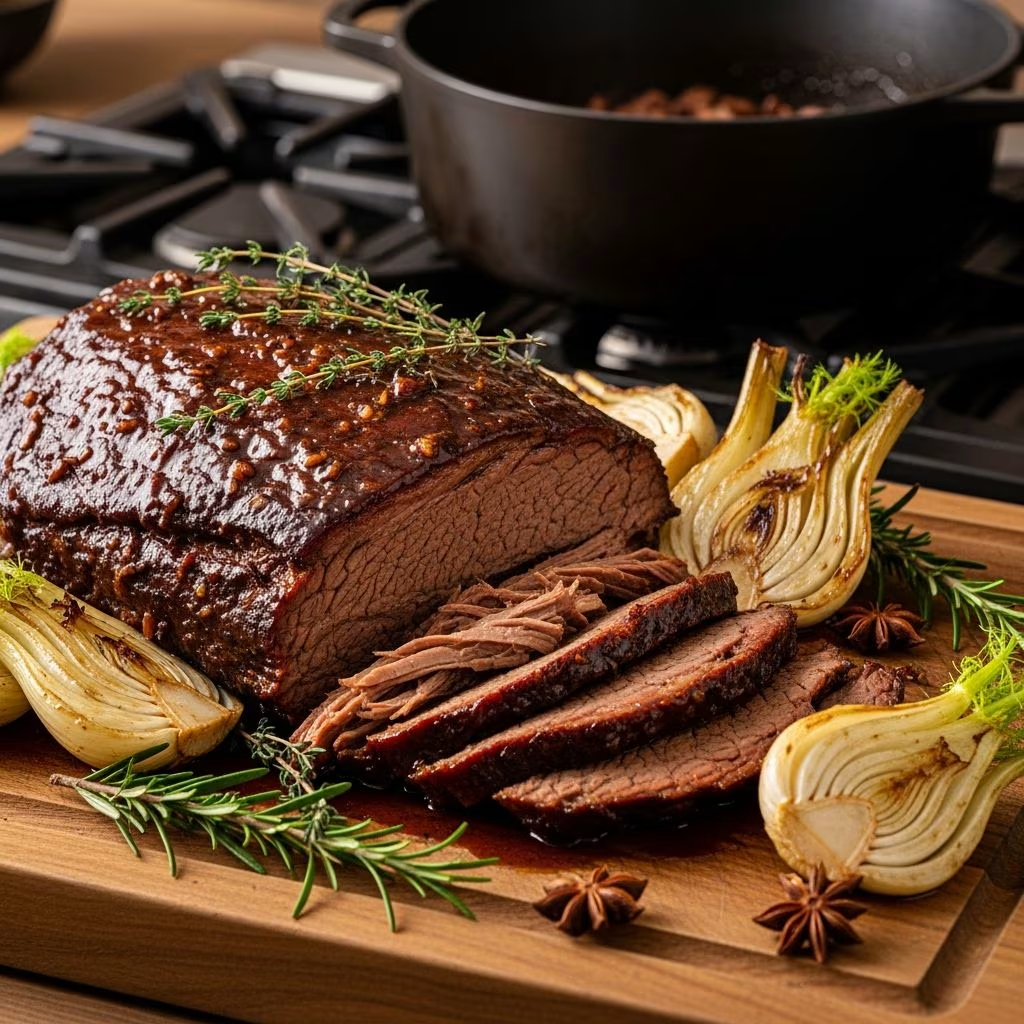
Final Roasting and Sauce Reduction: When the brisket reaches proper tenderness, remove the pot from the oven and allow it to cool slightly. Increase the oven temperature to 425 degrees Fahrenheit. Return the pot to the oven, uncovered, for approximately twenty to thirty minutes. This high-heat phase accomplishes two critical objectives: it crisps and browns the meat’s surface that was previously covered by braising liquid, and it reduces and concentrates the braising liquid through evaporation. The result should be a glossy, spoonable sauce that coats the back of a spoon.
The Fresh Herb Finishing Approach
The final plating method demonstrates the recipe’s sophisticated approach to balancing cooked and fresh elements. Just before the brisket is completely done, combine a mixture of tender herbs—such as parsley, mint, and cilantro—with the reserved celery leaves in a separate bowl. Squeeze fresh lemon juice over this herb mixture and toss gently to distribute. This brief marination allows the lemon juice to penetrate the delicate leaves while maintaining their freshness and vibrant color.
Arrange the braised brisket on a serving platter and surround it with the cooked vegetables from the pot and the concentrated braising liquid. Top the meat with the fresh herb mixture just before serving. This arrangement creates visual interest through the contrast between the deeply browned meat, the muted-colored cooked vegetables, and the bright green herb garnish. The taste profile similarly benefits from this contrast: each bite combines the deep, meaty tenderness of the brisket with the aromatic brightness of the fresh herbs and the subtle umami complexity of the sauce.
Make-Ahead and Storage Considerations
This dish’s construction timeline makes it particularly suitable for advance preparation. The braising phase can be completed up to one day ahead of serving. After the meat cools to room temperature, cover the pot and refrigerate overnight. This resting period allows flavors to meld and intensify. The following day, remove the pot from the refrigeration and carefully lift off the congealed fat that has risen to the surface, discarding it. Continue with the final roasting and sauce reduction process immediately before serving.
This make-ahead capability eliminates much of the stress associated with entertaining, as the most time-consuming phases are completed before guests arrive. Only the final twenty to thirty minutes of roasting and sauce reduction remains, which can be completed during other finishing preparations or even while guests enjoy appetizers and cocktails.
Flavor Variations and Adaptations
While the recipe as presented creates a specific flavor profile, several adaptations can personalize the result based on available ingredients or flavor preferences. Worcestershire sauce can substitute for soy sauce if preferred, adding a tangier, more vinegar-forward quality to the final sauce. Different herb combinations work effectively as the long-cooking component—oregano, marjoram, or even sage bring distinct character variations to the final result.
The vinegar selection similarly allows for creativity within reason. While distilled white vinegar provides a clean, neutral acidity, other vinegars such as red wine vinegar or apple cider vinegar would shift the flavor profile subtly. Red wine vinegar adds slightly more tannin complexity, while apple cider vinegar introduces subtle sweetness that complements the fennel beautifully.
Essential Equipment and Cookware
A large, heavy-bottomed pot or Dutch oven rated for both stovetop and oven use is essential for this preparation. The heavy base promotes even heat distribution and prevents hot spots that could burn aromatics or create uneven browning. Oven-safe construction eliminates the need to transfer the meat to a separate roasting vessel, keeping flavors concentrated and reducing dishwashing. Cast iron and enameled cast iron both serve excellently for this purpose, though any heavy cookware with a tight-fitting lid works adequately.
Sharp kitchen knives facilitate proper cutting of the aromatics into uniform pieces, ensuring even cooking. Tongs provide safe manipulation of the hot brisket without piercing the meat surface, which would allow flavorful juices to escape.
Frequently Asked Questions
- Can I use a smaller brisket? Yes, though cooking time will decrease proportionally. A three-pound brisket requires approximately two to two-and-a-half hours of braising. Adjust all other ingredients proportionally to maintain proper ratios.
- What if my brisket isn’t fully submerged? Ensure the fatty side faces upward, as this self-bastes during cooking. If necessary vegetable portions extend above the liquid, allow them to cook partially submerged rather than removing essential aromatics.
- Can I freeze the finished brisket? Yes, the braised brisket freezes excellently for up to three months when properly wrapped. Thaw overnight in refrigeration before reheating gently in a 300-degree oven.
- How do I prevent the sauce from becoming too acidic? Proper reduction during the final roasting phase mellows acidity through evaporation. If the sauce tastes overly sharp, a pinch of sugar can balance the flavors, though this shouldn’t be necessary with proper technique.
References
- McGee, Harold — On Food and Cooking: The Science and Lore of the Kitchen. Revised edition, Scribner, 2004. https://www.scribner.com/