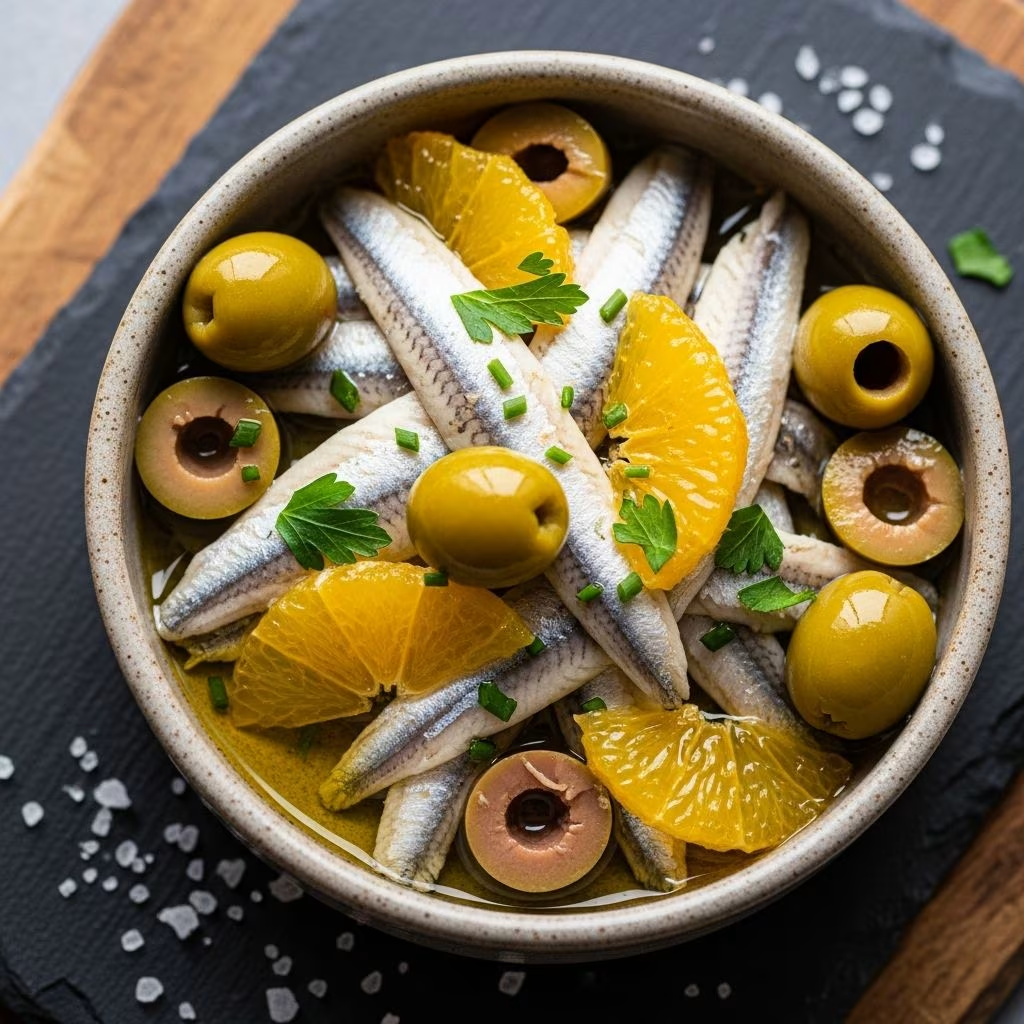
Boquerones represent one of Spain’s most treasured culinary traditions, offering a refined yet approachable introduction to Mediterranean cuisine. This dish combines the delicate brininess of marinated white anchovies with the brightness of fresh citrus and the robust character of quality olive oil. The interplay of flavors—herbaceous, acidic, savory, and bright—creates a sophisticated appetizer that feels both simple and elegant. Whether served at a casual gathering or a formal dinner, boquerones with green olives and orange delivers an authentic taste of Spanish coastal dining.
Understanding Boquerones and Their Culinary Significance
Boquerones are small fish from the anchovy family that undergo a curing process rather than the cooking method used for traditional preserved anchovies. The marination process transforms these delicate fish, creating a product that is far less intensely salty than canned anchovies many people know. This distinction is crucial for appreciating the dish’s refined flavor profile. The curing typically involves vinegar and salt, which gently transforms the raw fish while maintaining its tender texture and subtle flavor.
The cultural significance of boquerones extends deeply into Spanish gastronomy, particularly in coastal regions like Andalusia. They represent an efficient method of preserving the day’s catch while creating a preparation that enhances rather than masks the fish’s natural character. In modern cuisine, boquerones have transcended their humble preservation origins to become a symbol of quality Mediterranean cooking, appearing on the menus of celebrated restaurants and in the kitchens of home cooks seeking to expand their culinary repertoire.
The Core Components: Quality Matters
Selecting Premium Boquerones
The foundation of this dish rests entirely on sourcing high-quality boquerones. Look for varieties packaged by reputable Spanish producers, as these typically undergo more careful handling and use superior curing techniques. Quality boquerones should appear translucent, with a delicate texture that doesn’t deteriorate when handled. They typically arrive packed in vinegar within glass jars or vacuum-sealed containers. The packaging method often indicates production standards, with glass jars suggesting a producer confident in their product’s integrity.
When examining boquerones, observe their color and texture. They should display a pale ivory tone rather than opaque white, and the flesh should appear intact without excessive fragmentation. Avoid packages where the fish appears cloudy or discolored, as these characteristics suggest age or improper storage. Budget for quality here; premium boquerones cost more than mass-produced alternatives, but the difference in eating experience justifies the investment.
Orange Selection and Preparation
The orange component contributes both aromatic complexity through its zest and brightness through its juice. Select firm, unblemished oranges with fragrant skin—this indicates higher juice content and more potent essential oils. Blood oranges offer visual drama with their crimson flesh, while standard Valencia or navel oranges provide reliable, balanced flavor. The choice between varieties affects the final presentation and subtle flavor notes but doesn’t fundamentally alter the dish’s character.
Removing zest requires careful technique to capture the aromatic oils while avoiding the bitter white pith beneath. Use a vegetable peeler or microplane to create strips or fine gratings. The zest will infuse the warm olive oil, releasing its volatile compounds and creating an fragrant foundation for the entire preparation. The juice, squeezed fresh over the finished dish, provides acidity that brightens the assembled components and prevents the fish from tasting one-dimensional.
Olive Oil and Green Olives
Extra-virgin olive oil serves as more than a cooking medium here; it functions as a primary ingredient whose quality directly impacts the finished dish. Select oils with clear flavor characteristics—either grassy and peppery or fruity and buttery, depending on preference. The oil will warm gently, carrying the flavors of orange zest and garlic throughout the preparation. Premium oils from renowned producers offer superior flavor complexity compared to everyday cooking oils.
Castelvetrano olives from Sicily have become the preferred choice for this preparation, offering a mild, buttery character and vibrant green color. These olives require pitting and light bruising or tearing to release their subtle flavors into the surrounding oil. If Castelvetrano olives prove unavailable, select other mild green varieties that won’t compete aggressively with the boquerones’ delicate profile. Avoid overly briny or strongly flavored olives that could overwhelm the dish’s refined balance.
Method and Technique: Building Layers of Flavor
Preparing the Warm Oil Infusion
The preparation begins by combining orange zest, smashed garlic cloves, pitted olives, and extra-virgin olive oil in a small saucepan. This isn’t a traditional sauté; instead, the mixture heats gently over medium-low heat, allowing the components to gradually infuse the oil without browning or burning. The goal involves creating a warm, fragrant medium that coaxes out subtle flavors without aggressive cooking that would generate harsh, burnt notes.
Shake the pan occasionally throughout the 8-10 minute heating process. This promotes even contact between ingredients and oil, facilitating more complete flavor extraction. Watch for visual cues indicating readiness: the orange zest should curl slightly at the edges and turn crisp, garlic cloves should transition to pale golden tones, and the oil should gently sizzle without aggressive bubbling. These signs indicate the preparation has reached optimal flavor intensity without crossing into undesirable territory.
Assembly and Final Touches
Arrange the boquerones on a medium plate with care to maintain their delicate structure. These fish benefit from generous spacing rather than overlapping, which allows each piece to remain visible and facilitates consumption without unnecessary handling. Some preparations incorporate tomato confit or other complementary elements, but the classic version allows the boquerones themselves to remain the focal point.
Pour the warm oil mixture directly over the arranged boquerones, allowing the heat to gently warm the fish without cooking them further. The orange zest, garlic, and olives distribute themselves across the plate, creating visual interest and ensuring each bite contains multiple flavor components. Season the oil mixture with kosher salt before pouring, adjusting the seasoning to compensate for the boquerones’ inherent saltiness.
Squeeze fresh orange juice over the assembled dish, providing bright acidity that cuts through the oil’s richness and the fish’s savory character. Drizzle high-quality sherry vinegar or red wine vinegar in modest amounts—this addition shouldn’t overwhelm but rather accent and refresh the palate. Finally, scatter thinly sliced red onion across the top, contributing textural contrast and a subtle sharp note that complements all other components. Season with flaky sea salt and freshly ground black pepper, which add textural interest and flavor depth.
Serving and Accompaniments
Serve boquerones with orange and green olives alongside country-style bread that has been toasted to golden crispness. The bread’s texture and neutral flavor provide an ideal vehicle for consuming the boquerones and absorbing the fragrant oil. The toasting process also adds subtle nutty notes that harmonize with the overall flavor profile without introducing competing elements.
This preparation works brilliantly as a first course at dinner parties, a component of a Spanish-style tapas spread, or even a light lunch when accompanied by additional vegetables and cheeses. The cooking time of approximately 25 minutes total—requiring just 10 minutes of active heating—makes it accessible for weeknight entertaining or spontaneous gatherings. The dish can be prepared several hours in advance, with the flavors actually deepening as the boquerones marinate in the oil mixture.
Flavor Profile and Sensory Experience
This dish engages multiple sensory dimensions simultaneously. The visual component presents pale, translucent fish arranged artfully with emerald olives, golden oil infused with orange zest, and jewel-like red onion slices. The aroma combines citrus brightness with herbaceous garlic and the distinctive marine quality that identifies boquerones. On the palate, flavors layer progressively: initial briny notes from the fish transition to rich, fruity oil, followed by aromatic orange zest, buttery olive flesh, and sharp onion. The textural contrast between tender fish, crisp-edged oil-infused vegetables, and toasted bread creates dynamic eating experiences with each bite.
Wine Pairing Considerations
The bright acidity and delicate protein content of boquerones pair exceptionally well with white wines featuring similar characteristics. Dry albariños from Spain’s Galicia region offer perfect harmony, their mineral notes and citrus undertones complementing both the fish and orange components. Vermentino or other Mediterranean whites provide similar partnerships. For those preferring lighter options, dry sherry or fino sherry creates a particularly harmonious pairing that honors the Spanish origins of this preparation.
Variations and Creative Adaptations
While the classic preparation remains compelling in its simplicity, several thoughtful variations merit exploration. Substituting blood oranges for standard varieties introduces visual drama and slightly different flavor notes without fundamentally altering the dish’s character. The addition of tomato confit, particularly high-quality varieties, introduces umami depth and slight sweetness that complements the other components without overwhelming them. Some preparations incorporate minced shallots instead of sliced red onion, creating a finer texture that integrates more seamlessly with the other elements.
Experimenting with different olive varieties offers interesting explorations. While Castelvetrano olives remain the ideal choice, niçoise or other quality green varieties can substitute successfully. The key involves avoiding aggressive flavors that would assert dominance over the delicate boquerones. Similarly, adjusting the vinegar component—using aged balsamic instead of sherry vinegar, for example—creates subtle flavor shifts that merit exploration for those seeking creative interpretations.
Storage and Make-Ahead Preparation
Boquerones with orange and green olives actually benefits from advance preparation. The boquerones can marinate in the warm oil mixture for several hours, allowing the flavors to marry and deepen. Store the prepared dish in the refrigerator, bringing it to room temperature approximately 15 minutes before serving to fully express its flavor potential. The fish and oil maintain their quality for up to two days, though the freshness of the accompaniments suggests consuming within 24 hours of assembly. The toasted bread should be prepared no more than a few hours in advance to maintain optimal crispness.
Culinary Significance and Contemporary Appeal
This preparation exemplifies contemporary Mediterranean cuisine at its finest—highlighting quality ingredients prepared with respect rather than excessive manipulation. The dish appeals to modern sensibilities through its relative simplicity, minimal preparation time, health-conscious ingredients, and refined presentation. It represents how traditional cooking techniques and flavor combinations continue resonating with contemporary diners seeking authentic culinary experiences that don’t require elaborate equipment or extensive preparation.
Frequently Asked Questions
What distinguishes boquerones from standard canned anchovies?
Boquerones undergo vinegar curing rather than salt curing and cooking, resulting in a product with dramatically lower sodium content and more delicate flavor profile. They maintain the fish’s tender texture while creating a product suitable for consuming directly, whereas traditional canned anchovies typically require further preparation or integration into other dishes.
Can this dish be prepared vegetarian or vegan?
The essential character of this preparation revolves around boquerones specifically. Substituting other ingredients fundamentally transforms the dish into something different. Those seeking related preparations without boquerones might explore marinated white beans with orange, olives, and similar aromatics as an alternative.
How should boquerones be stored after opening?
Store opened boquerones in their original vinegar in glass containers at cool temperatures, ideally refrigerated. Proper storage extends shelf life significantly, though quality gradually diminishes over time. Use opened boquerones within approximately two weeks of opening the original package.
What bread varieties work best for serving?
Rustic country-style breads with substantial crumb structure work optimally. Avoid overly soft breads that disintegrate excessively when absorbing oil. Slightly aged bread offers better structural integrity than fresh bakery items. The toasting process is essential, creating a barrier against excessive oil absorption while adding complementary flavor notes.
References
- Boquerones with Orange and Olives Recipe — Bokisch Vineyards. https://bokischvineyards.com/cindys-boquerones-with-orange-and-olives/