The streets of Mumbai buzz with energy, and among the countless culinary treasures that define this vibrant city is one humble yet magnificent creation: the Bombay sandwich. This vegetable-based snack represents the intersection of simplicity and bold flavors, making it a beloved choice for quick meals, tea-time snacks, and lunchbox staples across India and beyond. What makes this sandwich remarkable is not its complexity, but rather how it transforms basic ingredients—buttered bread, fresh vegetables, aromatic spices, and tangy chutney—into something truly memorable.
The Cultural Significance of Mumbai’s Most Famous Sandwich
The Bombay sandwich has earned its status as a street food icon through decades of popularity among the city’s residents and visitors. This sandwich emerged as a creative vegetarian alternative, layering fresh produce with warm spices and rich butter to create a satisfying meal that could be prepared quickly and consumed on the go. The combination of textures—soft bread, crisp vegetables, and creamy butter—alongside contrasting flavors creates a dining experience that far exceeds what one might initially expect from such an unpretentious dish.
What distinguishes this sandwich from ordinary vegetable sandwiches is the thoughtful use of spice blends and the preparation method. The sandwich masala, a proprietary spice mixture, distinguishes this creation and provides the characteristic tang and warmth that defines authentic versions. Whether served as a quick breakfast, afternoon snack, or light lunch, the Bombay sandwich has become synonymous with Mumbai’s food culture and remains a testament to the city’s innovative approach to street food.
Building Blocks: Understanding the Essential Components
The Foundation: Quality Bread Selection
The bread serves as the canvas for this culinary creation. White bread, preferably soft and fresh, provides the ideal texture for constructing a proper Bombay sandwich. The bread should be sturdy enough to hold multiple layers of vegetables and chutney without becoming mushy, yet soft enough to bite through easily. Many traditionalists recommend removing the crusts to achieve a more refined presentation and uniform texture, though this step remains optional depending on personal preference. The bread’s role extends beyond mere structure—it absorbs the moisture from vegetables and chutney while distributing flavors throughout each bite.
The Richness Factor: Butter’s Critical Role
Butter is far more than a simple spread in this sandwich—it serves multiple functions that are essential to the final product. Applied generously to both bread slices before adding other ingredients, butter creates a moisture barrier that prevents the bread from becoming soggy too quickly. It also adds richness and a subtle flavor that complements the sharp, tangy elements of the chutney and spices. The butter should be at room temperature for optimal spreading, ensuring even coverage without tearing the bread. Some contemporary versions use vegan alternatives, accommodating dietary preferences while maintaining the essential textural and flavor contributions butter provides.
The Flavor Core: Sandwich Masala Explained
Sandwich masala is the spice blend that transforms ordinary vegetables into an extraordinary sandwich experience. This proprietary mixture typically combines cumin seeds, peppercorns, fennel seeds, dried mango powder (amchur), dried pomegranate seeds powder (anardana), and asafetida (hing). The blend creates a complex flavor profile that is simultaneously tangy, aromatic, and slightly warming. Many Indian grocery stores sell pre-made sandwich masala, though home preparation allows for customization and ensures freshness. When a suitable sandwich masala is unavailable, chaat masala serves as an acceptable substitute, providing similar but not identical flavor dimensions.
The Vegetable Selection: Fresh, Thin-Sliced Perfection
The beauty of the Bombay sandwich lies in its careful selection and preparation of vegetables. Each component contributes distinct flavors, textures, and nutritional value, and the arrangement order matters significantly.
Layering Strategy and Vegetable Choices
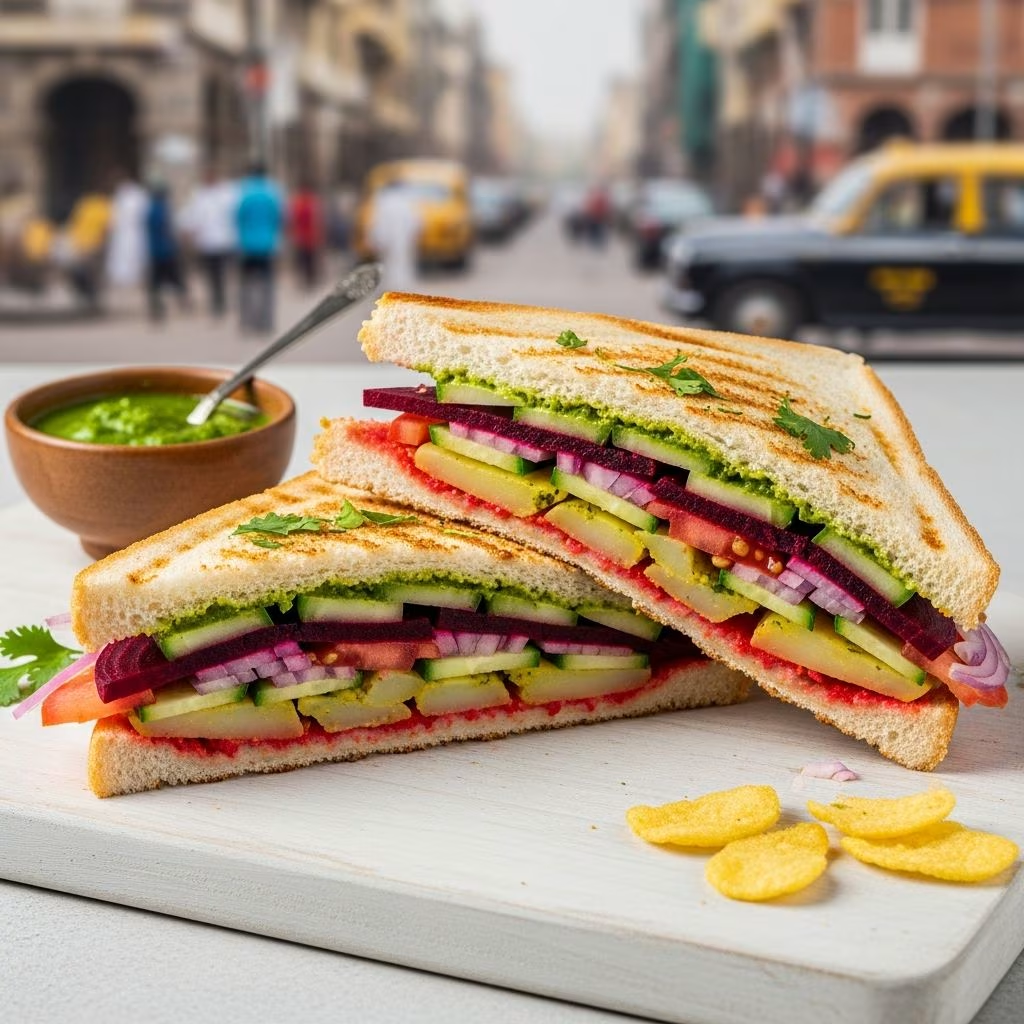
The classic vegetable lineup includes cucumbers, potatoes, tomatoes, beets, and onions. Cucumbers, sliced thin and perhaps lightly salted, provide crisp freshness and hydration. Boiled potatoes, cooled and sliced uniformly, add substance and absorb surrounding flavors beautifully. Tomatoes contribute juiciness and bright acidity, while boiled beets add earthiness and striking visual contrast. Red onions provide pungent sharpness that cuts through the richness of butter and chutney. The key to success lies in slicing all vegetables uniformly and thinly—this ensures they layer neatly without overwhelming the sandwich and cook evenly if the sandwich is grilled. Some variations incorporate grated cheese, adding creamy richness and additional protein.
The Green Chutney: Creating the Flavor Foundation
Fresh Herbs and Aromatics
Green sandwich chutney provides the tangy, herbaceous backbone that elevates the entire sandwich. Prepared from fresh cilantro and mint leaves, this chutney combines aromatic greens with spicy heat from green chillies and pungent garlic and ginger. The mixture traditionally includes cumin seeds for depth, salt for seasoning, a small amount of sugar for balance, and sometimes sev (a crispy fried chickpea snack) for textural complexity. A slice of bread is torn and incorporated into the mixture, which acts as a binder and adds substance to the chutney. The sandwich masala is also mixed into the chutney itself, infusing the spread with spice before it touches the bread.
Preparation and Consistency
Traditional preparation involves grinding these ingredients in a stone mortar and pestle, though modern blenders work efficiently for home cooks. The ideal consistency is thick and chunky rather than smooth, allowing distinct flavors to emerge rather than creating a homogeneous paste. The chutney should be made fresh or stored only briefly, as the vibrant green color and fresh herb flavors diminish with time. Many cooks prepare the chutney just before assembling the sandwich to ensure maximum potency.
Assembly: The Art of Construction
Proper assembly separates an exceptional Bombay sandwich from an ordinary one. Begin by removing the crusts from two bread slices using a sharp knife. Spread softened butter generously across both slices, covering the entire surface. Apply a thick layer of green chutney over the butter on both slices, adjusting the quantity to personal preference—some prefer restrained amounts while others enjoy the bold flavors that extra chutney provides.
On one bread slice, begin layering vegetables in a deliberate sequence: start with cucumber slices arranged in an even layer, then sprinkle sandwich masala over the cucumbers. Layer beetroot slices next, followed by another masala sprinkle. Add tomato slices with masala, then a layer of boiled potato slices with masala, and finally onion slices topped with a final generous masala sprinkle. This layering approach ensures that each bite contains multiple vegetables and flavors, preventing any single component from dominating. Once vegetables are arranged, place the second prepared bread slice on top, pressing gently to secure the layers.
Preparation Methods: Raw, Grilled, and Beyond
The Classic Untoasted Version
The traditional Bombay sandwich is served untoasted (known as “Kaccha Bombay Sandwich”), offering a delightful contrast between soft bread, crisp vegetables, and cool chutney. This version should be consumed immediately after assembly, as the vegetables gradually release moisture that softens the bread over time. The untoasted version preserves the fresh vegetable flavors and provides a lighter dining experience.
The Grilled Variation
For those seeking additional depth and textural contrast, grilling transforms the sandwich into something entirely different. After assembly, the sandwich is placed in a panini press or grill pan until golden brown, creating crispy exterior bread while the interior remains soft. The heat melds the chutney and butter, creating an oozing, molten interior that coats every layer. The vegetables soften slightly while retaining some structural integrity, and the bread develops a satisfying crunch. This version offers a more indulgent experience and has become increasingly popular among contemporary interpretations.
Timing and Storage Considerations
The Bombay sandwich is best consumed immediately after preparation, as the vegetables release moisture that gradually softens the bread. For packed lunches or transport, assembly just before eating preserves quality. If sandwiches must be prepared in advance, components can be readied separately and assembled shortly before serving. Some cooks use sandwich picks to hold the quarters together, preventing shifting during transport. These wooden or decorative picks add a nostalgic, professional touch to the presentation.
Serving Suggestions and Accompaniments
The Bombay sandwich is typically presented cut into halves or quarters, with each piece secured if necessary. Serving alongside additional green chutney and ketchup allows diners to customize the flavor intensity. The sandwich pairs wonderfully with hot chai, making it perfect for morning tea or afternoon breaks. Its portability and satisfying nature make it ideal for picnics, lunchboxes, or casual dining.
Variations and Modern Interpretations
While the traditional recipe remains popular, contemporary versions incorporate creative additions. Grated cheese melted between the bread layers adds richness, while some cooks experiment with different cheese varieties for varied flavor profiles. Vegan butter and dairy-free cheese alternatives accommodate plant-based diets without sacrificing the sandwich’s essential character. Some regional variations include roasted chickpeas or sprouted beans for additional protein and nutrition.
Nutritional Benefits and Dietary Adaptations
The Bombay sandwich delivers nutritional value alongside satisfaction. Fresh vegetables provide vitamins, minerals, and fiber, while boiled potatoes and beets contribute carbohydrates and essential nutrients. The sandwich masala delivers antioxidants and digestive benefits through its spice components. For those monitoring calorie intake, reducing butter quantities or using alternatives, incorporating extra vegetables, or omitting cheese provides healthier variations without diminishing appeal.
Frequently Asked Questions
- Can I prepare this sandwich in advance? Components can be prepped ahead, but assembly should occur shortly before eating to prevent sogginess. Keeping vegetables, chutney, and butter separate until serving maintains optimal texture.
- What if I cannot find sandwich masala? Chaat masala provides a suitable substitute with similar flavor dimensions, though the taste will differ slightly. Alternatively, create a custom blend using the individual spices listed.
- Is the Bombay sandwich suitable for vegan diets? Yes, by substituting vegan butter and cheese alternatives while maintaining all other components, the sandwich becomes entirely plant-based.
- How can I make the grilled version at home without a panini press? A regular grill pan or even a flat-bottomed skillet works effectively. Place the sandwich in the pan over medium heat, pressing gently with a spatula until golden, then flip and repeat.
- What vegetables must I include? While the classic recipe includes specific vegetables, personal preferences can guide substitutions. The key is maintaining textural and flavor variety through careful vegetable selection.
Conclusion: Bringing Mumbai’s Streets to Your Kitchen
The Bombay sandwich represents far more than a simple lunch option—it embodies Mumbai’s vibrant food culture and the creative spirit that transforms humble ingredients into something remarkable. Whether enjoyed untoasted on a quiet afternoon or grilled until golden for a more indulgent experience, this sandwich delivers satisfaction through thoughtful ingredient selection and careful preparation. By understanding each component’s role and mastering the assembly technique, home cooks can recreate this beloved street food, bringing authentic Mumbai flavors to their own kitchens.
References
- Authentic Bombay Sandwich Recipe — The Belly Rules The Mind. 2024. https://thebellyrulesthemind.net/bombay-sandwich-recipe/
- Bombay Veg Sandwich Recipe — Indian Healthy Recipes. 2024. https://www.indianhealthyrecipes.com/bombay-veg-sandwich-recipe/
- Bombay Style Veg Masala Toast Sandwich — Cookilicious. 2024. https://cookilicious.com/bombay-style-veg-masala-toast-sandwich/
- Bombay Grilled Sandwich (Vegetarian) — Honey, What’s Cooking. 2024. https://www.honeywhatscooking.com/bombay-grilled-sandwich/
- Mumbai Sandwich Recipe — Great British Chefs. 2024. https://www.greatbritishchefs.com/recipes/mumbai-sandwich-recipe
- Grilled Sandwich Recipe | Bombay Sandwich — Raks Kitchen. 2024. https://rakskitchen.net/aloo-veg-grilled-sandwich-recipe-bombay-sandwich/