Blackened salmon has become a staple on both home dinner tables and fine dining establishments, and for good reason. This cooking technique transforms a simple salmon fillet into something extraordinary, creating a flavorful crust while maintaining tender, moist flesh inside. When paired with a vibrant pineapple salsa, the dish becomes a complete culinary experience that balances heat, sweetness, and freshness in every bite.
The beauty of this dish lies in its simplicity and versatility. Whether you’re preparing a casual weeknight dinner for your family or impressing guests at a dinner party, blackened salmon with pineapple salsa delivers consistently impressive results. The entire meal can be prepared in approximately 30 minutes, making it an excellent choice for busy professionals and home cooks seeking quick but satisfying dinner solutions.
Understanding the Blackening Technique
Blackening is a cooking method that originated in New Orleans and has since become a beloved preparation style across American cuisine. The technique involves coating protein with a highly seasoned spice mixture and then cooking it at high heat until a dark, flavorful crust forms on the exterior. This crust, contrary to what the name might suggest, should be dark brown and caramelized rather than actually burnt.
The key to successful blackening lies in understanding the science behind the process. When spices meet high heat, they undergo the Maillard reaction, a chemical process that creates new flavor compounds and develops complex, savory notes. This reaction is what gives blackened dishes their distinctive depth of flavor and appealing appearance. The high-heat cooking also helps seal the exterior of the salmon, trapping moisture inside and ensuring the fish remains tender and succulent.
Essential Spice Blend Components
A proper blackening spice blend combines multiple complementary seasonings that work together to create a balanced flavor profile. The foundation typically includes:
- Smoked paprika – provides the characteristic smoky undertone and warm color to the spice crust
- Cayenne pepper – delivers the heat component, though the intensity can be adjusted to personal preference
- Garlic powder and onion powder – add savory depth and umami qualities
- Dried herbs – thyme, oregano, and basil contribute aromatic complexity and earthiness
- Black pepper and salt – enhance overall flavor and provide seasoning balance
- Optional additions – brown sugar can add subtle sweetness, while chili powder increases warmth and richness
The beauty of blackening spice is its flexibility. While traditional recipes follow established ratios, home cooks can adjust the blend to match their heat tolerance and flavor preferences. Those who prefer milder dishes can reduce the cayenne pepper, while spice enthusiasts can increase it for additional kick. This adaptability makes blackened salmon accessible to cooks of varying palates.
Selecting Quality Salmon for Optimal Results
The quality of your salmon directly impacts the final dish. Fresh, high-quality salmon fillets ensure better texture, flavor, and cooking results. When selecting salmon, look for fillets that display vibrant color, firm texture, and a fresh ocean aroma. Avoid fillets that appear dull, smell strongly fishy, or feel mushy to the touch, as these indicators suggest the salmon may be past its prime.
Consider whether you prefer skin-on or skinless fillets based on your cooking method and personal preference. Skin-on fillets provide natural protection during cooking and can be removed after cooking if desired. Skinless fillets cook more quickly and allow the spice rub to make full contact with the fish surface. Both options work excellently for blackening; the choice comes down to individual preference.
Portion size matters as well. Fillets ranging from 5 to 6 ounces per person provide substantial servings without requiring excessive cooking time. Thicker fillets ensure the interior cooks properly while the exterior develops the desired crust.
Preparing the Pineapple Salsa Foundation
While the salmon represents the star of the dish, the pineapple salsa plays an equally important supporting role. This fresh condiment provides brightness, sweetness, and textural contrast to the rich, smoky salmon. Preparing the salsa ahead of cooking allows the flavors to meld and intensify, resulting in a more cohesive final product.
Start with fresh pineapple rather than canned alternatives. Fresh pineapple offers superior texture, flavor intensity, and visual appeal. When selecting a pineapple, choose one that yields slightly to pressure and emits a sweet aroma at the base. Cut the pineapple into manageable pieces, removing the core and tough exterior, then dice into bite-sized chunks. This preparation takes approximately 10 minutes and can be completed well before cooking begins.
Complementary Salsa Ingredients and Flavor Balance
The classic pineapple salsa combines several essential ingredients that create layers of flavor:
Fresh jalapeño peppers introduce heat that complements the blackened salmon’s spice profile. The amount can be adjusted based on heat preference, and removing seeds reduces intensity while maintaining flavor. Red onion adds pungency and crunch, creating textural contrast. Fresh cilantro contributes brightness and herbal notes. Lime juice provides acidity that cuts through richness and enhances the tropical profile. A pinch of kosher salt helps draw out juices and bind flavors together.
Some variations include diced red bell pepper for sweetness and additional crunch, or ripe avocado for creaminess. Each addition modifies the salsa’s character while maintaining the fundamental sweet-spicy-fresh combination. The key is achieving balance—no single ingredient should dominate the palate.
Cooking Methods and Technique Variations
While stovetop searing followed by oven finishing represents the most common approach, several cooking methods produce excellent blackened salmon:
Pan-searing method involves heating oil in a heavy-bottomed skillet over medium-high heat until shimmering. Once hot, the seasoned salmon fillets are placed skin-side up and cooked approximately 5 minutes until the underside develops a dark crust. The fillets are then flipped and cooked another 5 minutes, or until the internal temperature reaches 145 degrees Fahrenheit. This method keeps the entire cooking process on one surface, simplifying cleanup.
Oven-baking approach offers more controlled heat and reduced splatter. The seasoned salmon is placed on a prepared baking sheet and baked at 375 to 400 degrees Fahrenheit for 12 to 15 minutes. While this method produces less dramatic crust development, it results in evenly cooked, moist salmon with minimal intervention required.
Hybrid stovetop-to-oven method provides the best of both worlds. The salmon is seared briefly in a hot oven-safe skillet over medium-high heat to develop the crust, then transferred to the oven to finish cooking through. This technique ensures proper crust development while guaranteeing fully cooked interiors, particularly important for thicker fillets.
Temperature Guidelines and Doneness Assessment
Achieving proper doneness ensures food safety while maintaining optimal texture and moisture content. The FDA recommends cooking fish to an internal temperature of 145 degrees Fahrenheit. Using an instant-read thermometer eliminates guesswork and ensures consistent results.
At 145 degrees Fahrenheit, salmon appears opaque and flakes easily with a fork, yet retains natural juices and tender texture. Overcooked salmon becomes dry and loses its appeal, so accurate temperature measurement prevents this common error. Undercooked salmon poses food safety concerns and should be avoided.
Assembly and Serving Presentation
Once the salmon is cooked, allow it to rest for a few minutes before serving. This brief resting period allows residual heat to distribute evenly throughout the fillet, ensuring consistent temperature and texture. Meanwhile, retrieve the prepared pineapple salsa from the refrigerator, where it has been developing and melding its flavors.
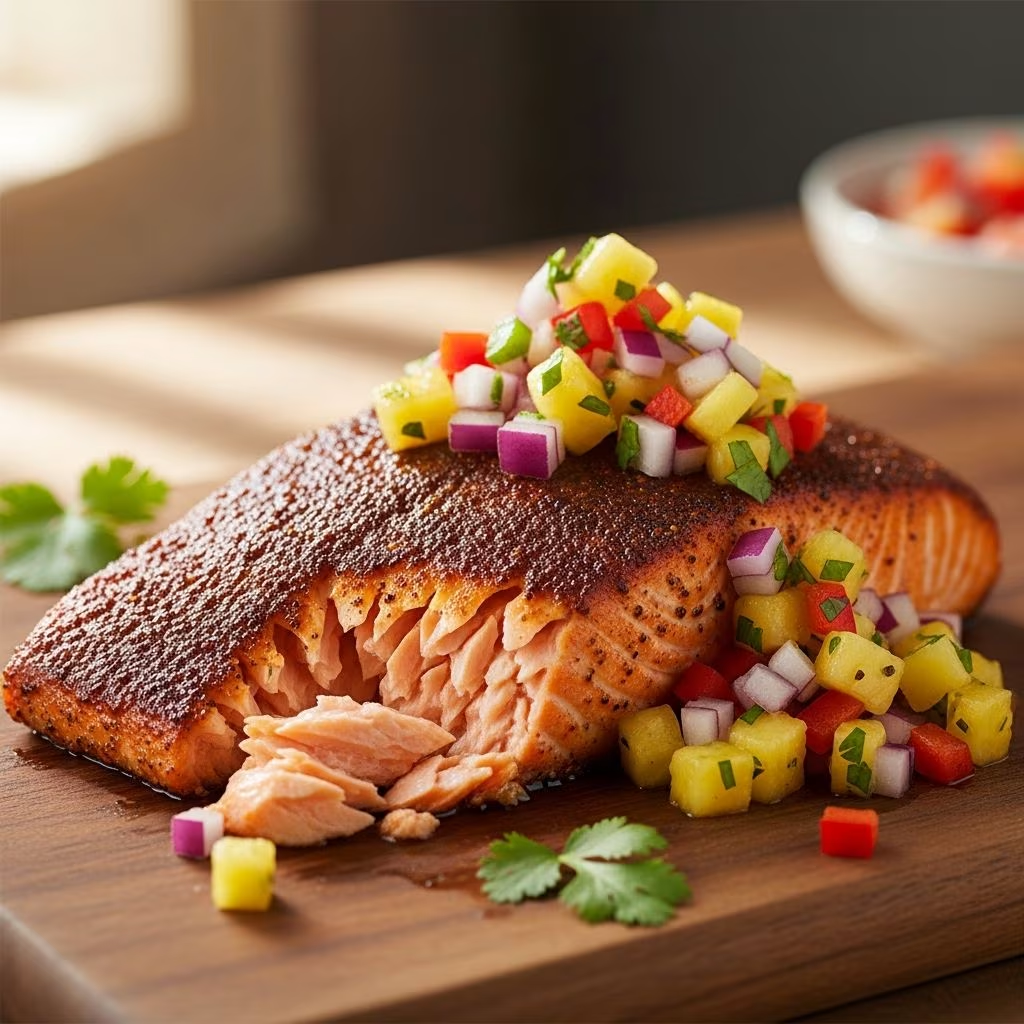
To serve, place the warm blackened salmon on individual plates and generously top with pineapple salsa. The warm salmon contrasts beautifully with the cool, refreshing salsa, creating a balanced eating experience. The visual presentation—golden-brown salmon topped with vibrant pineapple chunks and cilantro—appeals to diners before they even taste the dish.
Complementary Side Dishes and Pairings
While delicious on its own, blackened salmon pairs excellently with various side dishes that enhance the overall meal:
- White or brown rice provides a neutral base that absorbs the flavorful salsa and salmon juices
- Cauliflower rice offers a lighter alternative for those seeking lower-carbohydrate options
- Roasted vegetables such as asparagus, broccoli, or root vegetables add nutrition and earthiness
- Fresh salad greens with lime vinaigrette provide crisp, refreshing contrast
- Creamy sides like coleslaw or avocado-based dishes balance the heat from the blackening spice
Nutritional Considerations and Health Benefits
Blackened salmon represents a nutritious meal choice that aligns with various dietary approaches. Salmon provides exceptional amounts of omega-3 fatty acids, particularly EPA and DHA, which support heart health and cognitive function. The fish also delivers high-quality protein, essential B vitamins, and minerals including selenium and potassium.
The cooking method preserves these nutritional benefits effectively. While some oils are used during cooking, the amount remains modest, keeping the overall calorie count reasonable. The pineapple salsa contributes vitamins, minerals, and dietary fiber without adding significant calories. This combination creates a satisfying, nutrient-dense meal suitable for health-conscious diners.
Flavor Pairing Principles and Customization
Understanding why blackened salmon and pineapple salsa work so effectively together illuminates principles applicable to other dishes. The smoky, spicy salmon provides bold, intense flavors that demand equally compelling accompaniments. Sweet pineapple balances heat, while acidity from lime juice cuts through richness. Fresh cilantro and jalapeño add brightness and additional complexity.
Customization extends the versatility of this dish. Those preferring less heat can reduce cayenne pepper or omit jalapeños entirely. Mango or other tropical fruits can substitute for or supplement pineapple. Avocado adds creaminess for richer presentations. Experimenting with these variations creates personalized versions while maintaining the fundamental appeal of the original combination.
Storage and Make-Ahead Strategies
The pineapple salsa can be prepared up to one day in advance, allowing flavors to develop further. Store it in an airtight container in the refrigerator. The salmon should be cooked fresh but can be prepared shortly before serving with minimal stress. Preparing the spice blend ahead of time streamlines the cooking process.
Leftovers keep for two to three days when stored properly in airtight containers. Reheated salmon tends to dry out, so consider enjoying leftovers cold over salads or incorporating them into grain bowls for maximum quality.
References
- Blackened Salmon with Pineapple Salsa — Patient.info. 2024. https://patient.info/recipes/diabetes-friendly-recipes/blackened-salmon-with-pineapple-salsa
- Blackened Salmon with Pineapple Avocado Salsa — Sizzling Mess. 2018. https://www.sizzlingmess.com/2018/10/27/blackened-salmon-pineapple-avocado-salsa/
- Blackened Salmon with Pineapple-Jalapeño Salsa — A Sassy Spoon. https://asassyspoon.com/blackened-salmon/
- Seafood Cooking Guidelines — U.S. Food and Drug Administration. 2021. https://www.fda.gov/food/foodborneillnesscontaminants/ucm2018482.htm
- Omega-3 Fatty Acids and Fish Health Benefits — National Institutes of Health. 2023. https://www.ncbi.nlm.nih.gov/