Pork chops represent one of the most versatile and approachable proteins for home cooks seeking to prepare impressive meals without spending hours in the kitchen. When paired with fruit-based sauces, they transform from everyday protein into an elegant centerpiece worthy of special occasions. The combination of succulent pork with blackberry and port wine creates a sophisticated flavor profile that balances richness, acidity, and natural sweetness in ways that elevate the entire dining experience.
Understanding the Flavor Foundation
The foundation of this dish rests on complementary flavor principles that have long guided culinary traditions. Blackberries provide a deep, jammy sweetness with subtle earthy undertones, while port wine contributes complexity through its fortified character and concentrated fruit flavors. Pork, particularly when properly seared, develops a caramelized crust that provides savory depth and textural contrast to the smooth sauce. This triumvirate of flavors works synergistically because each element contains enough substance to stand alongside the others without overwhelming the palate.
The acidity found in port wine and the tannins present in blackberries help cut through the richness of pork fat, creating balance. This principle mirrors professional cooking techniques where acidic components are deliberately incorporated to brighten heavy dishes and prevent palate fatigue across multiple bites.
Selecting and Preparing Your Pork Chops
Success begins with choosing quality pork chops. Thickness matters considerably—chops measuring between three-quarters and one inch provide enough surface area to develop adequate browning while remaining thin enough to cook through without drying out. Bone-in varieties offer enhanced flavor through the marrow and gelatin in the bone structure, though boneless chops work equally well if you prefer easier serving.
Before cooking, allow pork chops to rest at room temperature for approximately ten to fifteen minutes. This simple step promotes more even cooking throughout the meat by allowing the interior to warm slightly before heat application. Pat the surface thoroughly with paper towels—moisture creates steam, which prevents proper browning and crust development. A thin, dry exterior is essential for achieving the golden, caramelized crust that provides textural contrast and flavor development through the Maillard reaction.
Season generously with kosher salt and freshly ground black pepper on both sides. Some cooks prefer adding paprika or other warm spices, which adds subtle depth without interfering with the sauce’s delicate berry and wine notes. Season just before cooking rather than in advance, as salt draws moisture to the surface over time.
The Searing Technique
Achieving a proper sear requires understanding heat management. Use a heavy-bottomed skillet—cast iron or stainless steel—which distributes heat evenly and retains temperature when cold protein makes contact. Heat the skillet over medium-high heat until a drop of water forms a ball that rolls across the surface rather than evaporating immediately. This indicates the pan has reached the ideal temperature for searing without being so hot that the exterior burns before the interior cooks.
Add a high-heat cooking fat like extra virgin olive oil or clarified butter to the hot pan. Allow it to shimmer and nearly smoke before introducing the pork chops. The sizzle that erupts upon contact indicates proper temperature. Resist the urge to move the chops—allow them to sit undisturbed for three to five minutes, developing a golden crust. Flip once and repeat on the second side. This direct, high-heat approach creates flavor compounds through browning that cannot be achieved through gentler cooking methods.
Avoid overcrowding the pan, which causes temperature to plummet and steam to accumulate. Work in batches if necessary. Once the chops achieve a golden crust and reach an internal temperature of 145°F (63°C)—measured with an instant-read thermometer at the thickest point—transfer them to a clean plate and tent loosely with foil to retain warmth while you construct the sauce.
Building the Blackberry Port Sauce
Rather than cleaning the skillet, use the browned bits—called fond—that cling to the bottom and sides. These concentrated flavor compounds form the foundation of depth in your sauce. Return the skillet to medium heat and add diced shallots if desired, cooking for one to two minutes until softened and fragrant. Pour in the port wine and allow it to simmer for two to three minutes, which partially reduces the alcohol while concentrating the wine’s flavors.
Add fresh or frozen blackberries to the wine reduction. Fresh berries provide cleaner, brighter flavor, while frozen berries work excellently and cost less. Cook for three to five minutes, allowing the berries to soften and break down naturally. Some berries will remain whole while others disintegrate into the liquid, creating a sauce with varied texture and rustic appeal. If you prefer a completely smooth sauce, strain through a fine-mesh sieve after cooking, pressing gently on the solids to extract maximum flavor and liquid.
Whisk in a tablespoon or two of butter for richness and silkiness, which emulsifies into the sauce and provides subtle luxury. Add a splash of balsamic vinegar or red wine vinegar to brighten the sauce’s flavor profile—typically one to two tablespoons depending on preference and the tartness of your specific port wine. Taste and adjust seasoning with additional salt and pepper as needed. The sauce should taste balanced: not overly sweet, with enough acidity to feel lively on the palate, and sufficient body to coat the back of a spoon.
Composition and Service
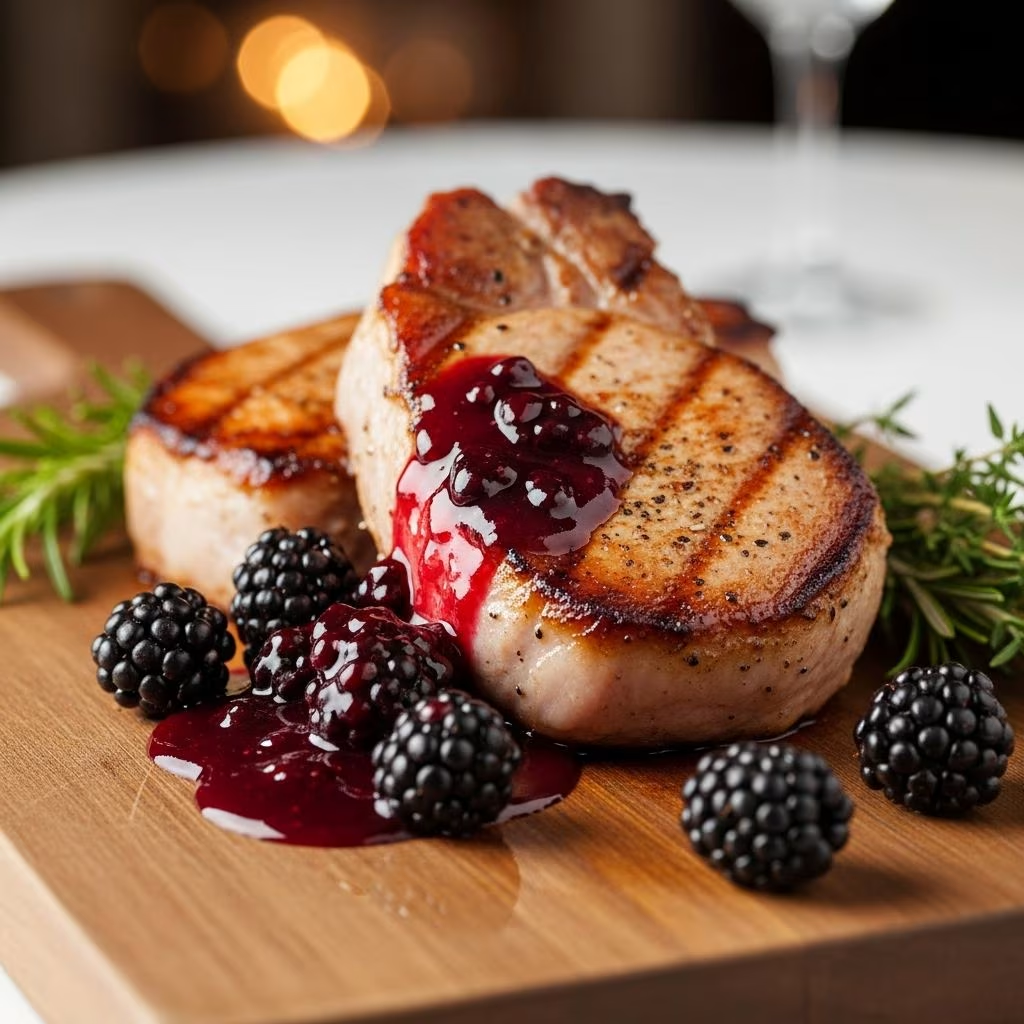
Plate the pork chops on warm dishes—cold plates cool food rapidly and diminish the enjoyment of warm sauces. Spoon the blackberry port sauce generously over each chop, allowing some to pool around the protein on the plate. Consider garnishing with fresh blackberries, a sprig of fresh thyme, or thinly sliced fresh ginger to add visual interest and aromatics.
This dish pairs beautifully with starches that absorb the sauce: creamy mashed potatoes, buttered egg noodles, or a silky polenta all complement the rich berry reduction. Grain-based sides like wild rice or farro add nutty complexity. Serve alongside a simple green salad dressed with light vinaigrette or lightly sautéed greens to provide fresh contrast to the sauce’s richness.
Wine Pairing Considerations
Since port wine features prominently in the sauce, the wine selection for drinking becomes secondary to sauce considerations. However, if serving wine alongside the meal, a dry red wine with moderate tannins and berry notes—such as a Pinot Noir or lighter-style Merlot—complements the dish without competing with the port sauce. Alternatively, a full-bodied white wine with oak aging can provide interesting contrast. The primary goal involves avoiding wines with excessive tannins, which would clash with the sauce’s acidity and sweetness.
Timing and Preparation Strategy
This dish requires approximately thirty to forty minutes from start to plating, making it ideal for weeknight entertaining or special weekday dinners. Prepare component parts in advance to streamline execution: measure ingredients, chop shallots or other aromatics, and thaw blackberries if using frozen varieties. Start the accompanying starch first—whether potatoes, grains, or other sides—allowing them to cook while you focus on the pork and sauce.
The sauce can be prepared while pork chops rest after searing. The ten-to-fifteen-minute resting period that allows proteins to reabsorb juices and continue cooking gently provides sufficient time to construct a finished sauce. Some cooks prepare the sauce completely in advance and gently reheat it, though freshly made sauce typically offers superior flavor and texture.
Customization and Ingredient Variations
This framework tolerates numerous ingredient substitutions and adaptations. During peak cherry season, fresh cherries can replace blackberries, creating equally elegant results with slightly different flavor characteristics. Blueberries offer a more subtle, delicate flavor profile. Red wine can substitute for port if port wine is unavailable, though the sauce will be less complex and require slightly longer reduction to achieve proper consistency.
Honey or a small amount of brown sugar can be incorporated if the blackberries are particularly tart or if you prefer additional sweetness, though taste carefully before adding as the berries and port provide natural sweetness. Fresh ginger adds warming spice and complements the berries, while fresh thyme contributes earthy herbaceousness. Some cooks add a small amount of Dijon mustard, which adds subtle sharpness and helps emulsify the sauce.
Troubleshooting Common Issues
If pork chops emerge dry, the most common cause involves overcooking. Use an instant-read thermometer rather than relying on visual cues, removing meat at 145°F for perfectly cooked, juicy results. If the sauce breaks or appears grainy after butter addition, the temperature likely became too high, causing the fat and water components to separate. Whisk in a tablespoon of cold water or cream to re-emulsify, or remove from heat and allow to cool slightly before serving.
If the sauce seems too thin, continue simmering over medium heat for several minutes to reduce and concentrate. If the sauce becomes too thick or sticky, whisk in additional port wine or broth gradually until the desired consistency returns. Remember that sauce thickens slightly as it cools, so consider this when judging final consistency.
Nutritional Considerations
Pork chops provide substantial protein, supporting muscle maintenance and satiety. Blackberries contribute fiber and antioxidants, while port wine contains resveratrol and other polyphenols associated with cardiovascular benefits when consumed in moderation. The butter and olive oil contribute fat-soluble vitamins and aid absorption of fat-soluble nutrients from other components. This constitutes a nutritionally balanced dish providing protein, fruits, and healthy fats in a single preparation.
Storing Leftovers and Make-Ahead Options
Leftover pork chops with sauce store well for two to three days in an airtight container in the refrigerator. Reheat gently over medium-low heat to avoid further toughening the pork. The sauce and pork can be separated before storage if desired, allowing flexibility in reheating. Leftover pork makes exceptional sandwiches when shredded and combined with fresh greens, or can be sliced and served over salads. The sauce alone keeps for up to one week and enhances roasted chicken, duck, or vegetables.
Most components can be prepared in advance: pork chops can be seasoned and brought to room temperature up to an hour before cooking, and sauce components can be measured and organized. This advance preparation streamlines the cooking process considerably, allowing you to focus on achieving proper searing and sauce construction in real time.
References
- The Science of Cooking: Understanding the Biology and Chemistry Behind Food and Cooking — McGee, Harold. Scribner, 2004. Academic reference on Maillard reaction and flavor development.
- On Food and Cooking: The Science and Lore of the Kitchen — McGee, Harold. Scribner, 2004. Academic reference on pork cooking temperatures and doneness.
- Culinary Fundamentals — Shugart, Grace Parisi. Pearson Education, 2008. Reference on sauce emulsification and balance.
- The Flavor Bible: The Essential Reference for More Than 500 Ingredients and 13,000 Flavor Combinations — Page, Karen; Dornenburg, Andrew. Little, Brown, 2008. Reference on complementary flavor principles.