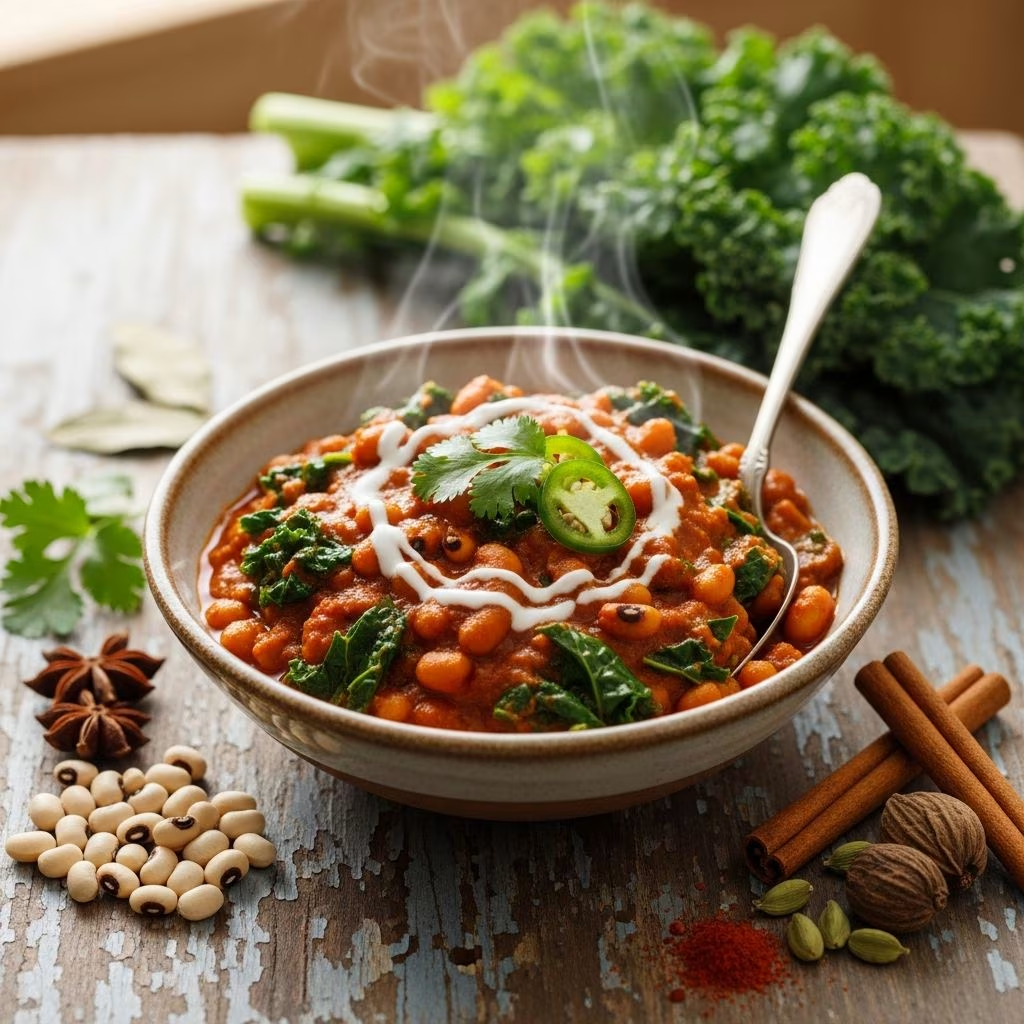
Black-eyed peas and leafy greens have long held a place of honor in diverse culinary traditions. This particular preparation brings together these humble ingredients with warming spices to create a dish that is both nourishing and deeply flavorful. The masala—a blend of ground spices—transforms simple components into something that tastes like it requires extensive preparation, yet comes together with remarkable ease in your kitchen.
Understanding the Components
This dish represents a fusion of culinary approaches, drawing inspiration from South Asian cooking while remaining accessible to home cooks everywhere. The foundation rests on three pillars: the legumes themselves, aromatic vegetables and spices, and nutrient-dense leafy greens that provide color, texture, and nutritional value.
Black-eyed peas serve as the primary protein source, offering approximately 13-14 grams of protein per cooked cup alongside complex carbohydrates and dietary fiber. Kale contributes vitamins, minerals, and compounds that support overall wellness. The spice blend—featuring coriander, turmeric, garam masala, and cayenne—provides both flavor complexity and anti-inflammatory properties valued in traditional cuisine.
Essential Ingredients and Their Roles
| Ingredient | Quantity | Purpose |
|---|---|---|
| Black-eyed peas | 4.5 cups (cooked) | Primary protein and fiber base |
| Kale | 1 bunch | Leafy green component with vitamins |
| White onion | 1 medium | Aromatic foundation |
| Garlic cloves | 4 | Flavor and depth |
| Fresh ginger | 1-inch piece | Warmth and digestive properties |
| Ground coriander | 2.5 tablespoons | Citrus-like spice note |
| Ground turmeric | 1 teaspoon | Golden color and earthiness |
| Garam masala | 1 teaspoon | Warm spice complexity |
| Cayenne powder | 0.5 teaspoon | Heat and pungency |
| Diced tomatoes | 1 can (14.5 oz) | Acidity and sauce base |
| Olive oil | 0.25 cup | Cooking medium |
Preparation Techniques and Best Practices
Vegetable Preparation: Begin by organizing your mise en place—the French culinary term for having all ingredients prepped and ready. Chop the onion into uniform pieces to ensure even cooking. Mince the garlic finely to distribute its flavor throughout the dish. Peel the ginger and slice it into thin matchsticks, which will be added near the end for a bright, fresh note.
For the kale, remove the woody stems and central ribs, which can be tough. Tear or cut the leaves into bite-sized pieces. This preparation step prevents large, chewy pieces in your finished dish.
Bean Preparation: If using dried black-eyed peas, soak them overnight or use the quick-soak method—bringing them to a boil, then letting them rest for an hour. Cook them until tender but not mushy, typically 45-60 minutes depending on their age and your altitude. Fresh or canned beans can be used for convenience; if using canned, drain and rinse to remove excess sodium.
Step-by-Step Cooking Process
- Establish the Aromatic Base: Heat the olive oil in a large pot over medium-high heat. Once shimmering, add the chopped onion and minced garlic. Stir frequently until the onion becomes translucent and begins to turn golden, approximately 2 minutes. This step allows the onion’s natural sugars to caramelize slightly, developing deeper flavor.
- Bloom the Spices: Add the ground coriander, turmeric, garam masala, and cayenne to the pot with the onion and garlic. Stir constantly for about 3 minutes, allowing the heat to awaken the spices’ volatile oils and release their aromatic compounds. Your kitchen will fill with a distinctive warm fragrance indicating the spices are properly activated.
- Build the Sauce: Pour in the can of diced tomatoes and bring the mixture to a simmer. Let it cook, stirring occasionally, for 6-10 minutes. During this time, the tomato liquid reduces, the sauce darkens, and the flavors meld into a cohesive base.
- Incorporate the Legumes: Add the cooked black-eyed peas and any seasoning you prefer (salt, pepper, or a salt-free seasoning blend). Stir thoroughly to coat the beans with the spiced tomato mixture.
- Add the Greens in Stages: First, add half the kale and stir until fully incorporated. Reduce the heat to medium-low and cook for 2-3 minutes, allowing the kale to begin wilting and the beans to heat through completely. Then add the remaining kale, stirring gently for 1-2 minutes until it’s just tender but retains some structure.
- Finish with Fresh Ginger: Remove the pot from heat and stir in the ginger matchsticks. This final addition provides a bright, fresh counterpoint to the warm spices and should not be cooked further to preserve its vibrant qualities.
Nutritional Considerations
A serving of this masala provides approximately 415 calories, with a balanced macronutrient profile: 40.6 grams of carbohydrates from the beans and vegetables, 13.9 grams of protein, and 24.7 grams of fat primarily from the olive oil and a small amount from the beans themselves. The saturated fat content remains moderate at 3.3 grams per serving.
Beyond basic macronutrients, this dish offers micronutrients including iron, folate, magnesium from the black-eyed peas and kale, plus antioxidants and anti-inflammatory compounds from the spices. The fiber content supports digestive health and satiety, making this an ideal choice for meal planning.
Serving Recommendations
This masala pairs well with several accompaniments. Serve it over steamed rice to absorb the flavorful sauce. Accompany it with roti, naan, or other flatbread for a traditional Indian presentation. For those seeking a lighter meal, serve it in bowls with crusty bread on the side for texture contrast.
Fresh lime wedges squeezed over individual servings brighten the flavors and add acidity that balances the richness. Cilantro, when available, provides an herbal garnish that complements the spice profile beautifully.
Storage and Make-Ahead Options
This dish actually improves with time as the flavors continue to develop and meld. Store leftovers in an airtight container in the refrigerator for up to 4 days. For longer storage, freeze in individual portions for up to 3 months. When reheating, add a splash of water or vegetable broth if the mixture seems too thick, as the sauce can become more concentrated during storage.
You can prepare components in advance to streamline cooking. Cook the beans and chop vegetables the day before. Prepare the spice blend in a small bowl ready to use. These steps reduce active cooking time significantly on the day you plan to serve the dish.
Customization and Variations
This recipe welcomes modification based on ingredient availability and personal preference. If you dislike cayenne’s heat, reduce the amount or omit it entirely. For additional warmth, add a pinch of black pepper or fresh chili.
Experiment with different greens—spinach, collards, or mustard greens work beautifully and may affect both flavor and cooking time. Consider adding other vegetables like diced bell peppers, carrots, or zucchini to increase vegetable content and adjust nutritional balance.
For a creamier version, stir in coconut milk during the final minutes of cooking. Those following a low-sodium diet can use low-sodium canned tomatoes and reduce or eliminate added salt seasoning.
Frequently Asked Questions
Q: Can I use canned black-eyed peas instead of cooking dried beans? A: Absolutely. Two cans of drained and rinsed black-eyed peas equal approximately 4.5 cups of cooked beans. This significantly reduces prep time while maintaining the same nutritional and flavor profile.
Q: What if I can’t find black-eyed peas? A: Substitute with chickpeas, kidney beans, or lentils. Each will provide slightly different flavors and textures while maintaining the dish’s nutritional integrity and general character.
Q: How can I make this dish spicier? A: Increase the cayenne powder to taste, add fresh chopped chili peppers, or include a teaspoon of red pepper flakes. Add these gradually and taste as you go to reach your desired heat level.
Q: Is this recipe naturally vegan? A: Yes. All ingredients are plant-based, making it suitable for vegan diets when served with appropriate bread or rice accompaniments.
Q: Can I prepare this in a slow cooker? A: Yes. Sauté the aromatics and bloom the spices on the stovetop first, then transfer everything to a slow cooker with the beans and tomatoes. Cook on low for 4-6 hours, adding the greens during the final 30 minutes.
References
- Nutritional Composition of Black-Eyed Peas — United States Department of Agriculture Food Data Central. 2024. https://fdc.nal.usda.gov
- Health Benefits of Kale and Cruciferous Vegetables — National Institutes of Health. 2023. https://www.nih.gov
- Spices as Anti-inflammatory Agents in Culinary Cooking — Journal of Medicinal Food. Published research via PubMed. 2022. https://pubmed.ncbi.nlm.nih.gov
- Traditional Indian Cooking Methods and Food Preparation — Indian Council of Medical Research. 2023. https://icmr.gov.in