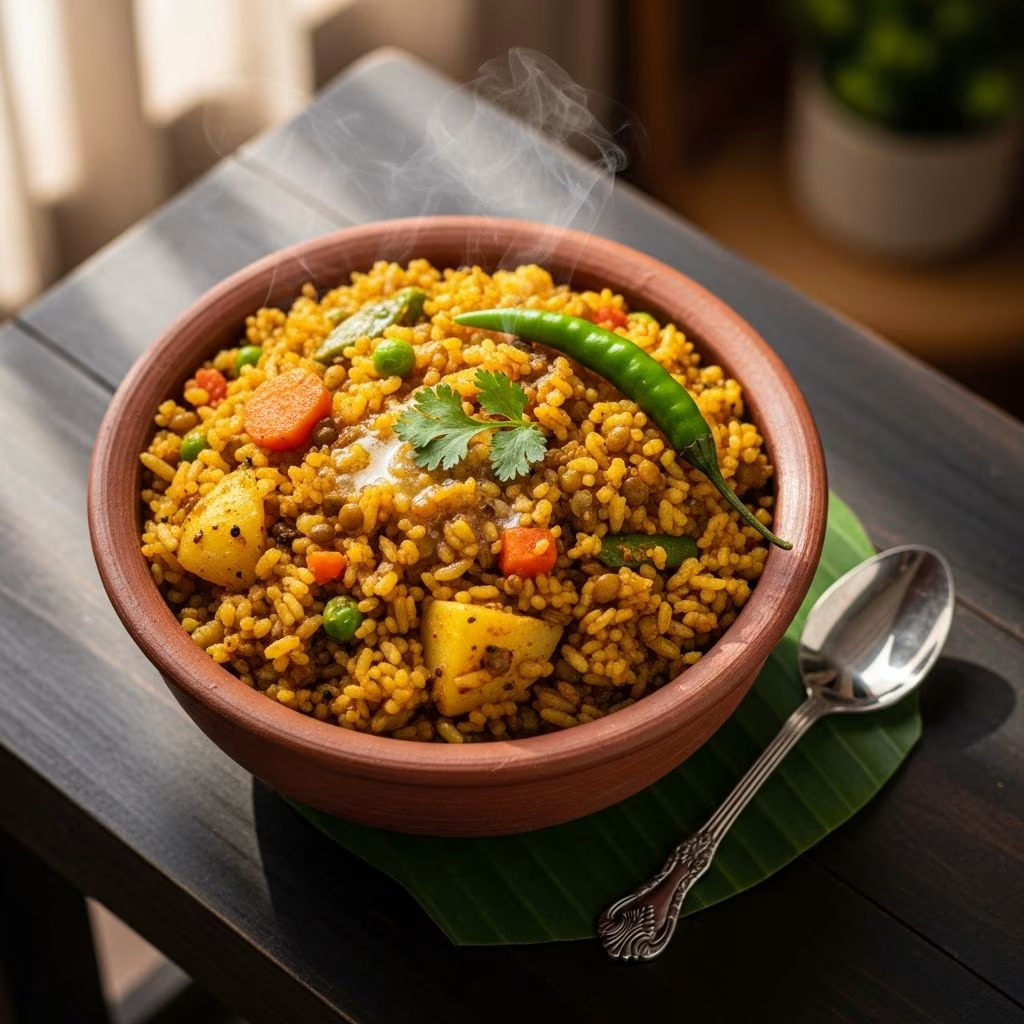
Bhuna khichuri stands out as a beloved dish in Bengali culinary tradition, transforming the simple khichdi into a fragrant, textured delight. Unlike the softer, porridge-like versions, this preparation involves roasting lentils and rice in spices for a drier, pilaf-style result bursting with flavor.
Origins and Cultural Significance
Bhuna khichuri, often called bhuni or bhuna khichuri, traces its roots to Bengal’s festive and everyday tables. The term ‘bhuna’ refers to the essential roasting step that infuses the dish with depth. It’s a staple during Durga Puja and Lokkhi Puja, where families prepare it as an offering or communal meal.
In Bengali households, this dish evokes nostalgia, served alongside fried vegetables or fish for a complete feast. Variations range from niramish (no onion-garlic) for religious purity to richer versions with ghee and nuts, highlighting its versatility across vegetarian and non-veg preferences.
Key Ingredients That Define the Flavor
The magic of bhuna khichuri lies in its balanced ingredients. Core elements include moong dal (split yellow mung beans), fragrant rice like basmati or gobindobhog, and a symphony of spices.
- Moong Dal: Dry-roasted for nuttiness; red lentils as substitute if unavailable.
- Rice: Long-grain or aromatic varieties for separate grains.
- Spices: Cumin, bay leaves, cardamom, cloves, star anise, turmeric, chili, and garam masala.
- Fats: Mustard oil for pungency, ghee for richness.
- Add-Ins: Onions, ginger-garlic paste, green chilies, cashews, raisins for festive touch.
Proportions typically follow 2:1 rice-to-dal ratio, with water double the combined volume for perfect absorption.
Step-by-Step Guide to Authentic Preparation
Mastering bhuna khichuri requires patience in the bhuna (roasting) phase. This recipe serves 4-6, ready in under an hour.
Ingredients Table
| Ingredient | Quantity | Purpose |
|---|---|---|
| Moong dal | 1 cup | Nutty base |
| Basmati rice | 2 cups | Fluffy grains |
| Mustard oil | ¼ cup | Aromatic fry |
| Cooking oil | ¼ cup | Base tempering |
| Onion (sliced) | 1 medium | Sweet caramelization |
| Ginger-garlic paste | 1 tbsp each | Flavor depth |
| Turmeric | 1 tsp | Color and earthiness |
| Chili powder | 1 tsp (adjustable) | Heat |
| Whole spices (cumin, bay, cardamom, cloves, star anise) | 1-2 each | Aroma |
| Hot water | 6 cups | Steaming |
| Ghee | 2 tbsp | Finish gloss |
| Green chilies | 3-4 | Fresh kick |
Cooking Steps
- Roast the Dal: Dry-roast moong dal until golden and aromatic (5-7 mins). Soak rice separately for 30 mins. Drain both.
- Temper Oils: Heat oils in a heavy pot. Add whole spices; fry 1-2 mins until fragrant.
- Bhuna Onions: Add sliced onions; caramelize to deep brown on medium-high (8-10 mins).
- Spice Masala: Stir in ginger-garlic, salt, ground spices. Cook 2 mins to release oils.
- Add Grains: Mix in drained rice and dal. Fry 2-3 mins on high for bhuna effect.
- Simmer: Pour hot water, add chilies. Boil, then cover and low-simmer 20 mins until water absorbs.
- Finish: Drizzle ghee, fluff gently. Rest 5 mins.
For niramish version, skip onions/garlic; amp up ginger-chili paste and use more ghee with nuts.
Variations for Every Occasion
Bhuna khichuri adapts seamlessly.
- Festive Niramish: Gobindobhog rice, extra ghee, cashews-raisins, no onion-garlic.
- Non-Veg Twist: Add prawns, eggs, or chicken post-masala.
- Quick Red Lentil: Use masoor dal, skip roasting.
- Veg-Loaded: Stir in potatoes, cauliflower before water.
Texture goal: Jhurjhure (fried, separate grains) like a pulao, not sticky.
Perfect Pairings and Serving Suggestions
Serve hot for best flavor. Traditional sides:
- Dim bhaja (potato fries)
- Begun bhaja (eggplant crisps)
- Maach bhaja (fish fry)
- Labra (mixed veg curry)
Enhance with pachori (pickle) or papad. For sweets, pair with sandesh post-Puja.
Pro Tips for Flawless Results
- Use hot water to prevent mushiness.
- Heavy-bottom pot for even cooking.
- Adjust chili for spice level; mustard oil adds authentic bite.
- Aged rice yields better separation.
- Resting post-cook merges flavors.
Nutritional Profile and Health Notes
This one-pot wonder is protein-rich from dal-rice combo, spiced for digestion. Per serving (approx.): 500-600 calories, balanced macros. Use less ghee for lighter version; moong dal aids gut health.
Common Mistakes to Avoid
| Mistake | Fix |
|---|---|
| Skipping roast | Roast dal/rice for flavor |
| Cold water | Hot water only |
| Over-stirring | Fluff once at end |
| Wrong rice | Long-grain preferred |
FAQs
What makes bhuna khichuri different from regular khichdi?
The roasting (bhuna) step creates a drier, spiced, pilaf-like texture versus soft porridge.
Can I make it vegan?
Yes, replace ghee with oil; it’s naturally plant-based otherwise.
Storage tips?
Refrigerate up to 2 days; reheat with splash of water, stir-fry style.
Best rice type?
Gobindobhog for authenticity, basmati for everyday.
Is it gluten-free?
Yes, inherently so.
Why Bhuna Khichuri Captures Hearts
From grandmother’s kitchens to modern tables, bhuna khichuri embodies Bengali warmth – simple ingredients yielding complex joy. Experiment, savor, and share this timeless recipe.
References
- How To Make The Perfect Bengali Bhuna khichuri — Cooking Canary. N/A. https://cookingcanary.com/how-to-make-the-perfect-bengali-bhuna-khichuri/
- Niramish Bhuna Khichuri — Bong Eats. N/A. https://www.bongeats.com/recipe/niramish-bhuna-khichuri
- Bhuni Khichuri — with a twist of spice — Bong Mom’s Cookbook. 2011-08-01. https://www.bongcookbook.com/2011/08/bhuni-khichri-with-twist-of-spice.html
- Bengali Niramish Bhuni Khichuri Recipe — Kitchen of Debjani. 2020-10-01. https://kitchenofdebjani.com/2020/10/niramish-bhuni-khichuri-bengali-bhuni-khichuri/
- Bhuna Khichuri – an Indian Risotto? — eCurry. N/A. http://www.ecurry.com/blog/rice/bhuna-khichuri-an-indian-risotto/