Beurre blanc stands as one of the most elegant and versatile sauces in French culinary tradition, renowned for its velvety emulsion of butter enriched by a tangy reduction. This sauce transforms simple ingredients into a luxurious accompaniment that pairs beautifully with seafood, vegetables, and poultry. Originating from the nouvelle cuisine movement of the 1970s, it emphasizes lightness and purity of flavors without heavy thickeners like flour.
Understanding the Essence of Beurre Blanc
At its core, beurre blanc—meaning \”white butter\” in French—is an emulsion sauce where cold butter is gradually whisked into a concentrated reduction of white wine, vinegar or lemon juice, and aromatics like shallots. The process demands precision to prevent separation, resulting in a glossy, pourable sauce that clings delicately to ingredients. Unlike hollandaise, which uses egg yolks, beurre blanc relies solely on butter’s natural emulsifying properties, making it lighter yet intensely flavorful.
The sauce’s history traces back to classical French kitchens, but it gained prominence during the nouvelle cuisine era. Chefs sought to move away from dense, roux-based mother sauces, favoring fresh, vibrant preparations. Today, it’s a staple in fine dining for its ability to highlight the natural taste of proteins and produce.
Essential Ingredients for Success
Gathering high-quality components is crucial for an authentic beurre blanc. Here’s a breakdown of what you’ll need for about 4 servings:
- White wine: 1/2 cup dry variety, such as Sauvignon Blanc, for acidity and depth.
- Acid component: 2 tablespoons lemon juice, white wine vinegar, or champagne vinegar to balance richness.
- Aromatics: 2 teaspoons finely minced shallots (or substitute with garlic or onion for variation).
- Heavy cream: 2 tablespoons (optional but recommended for stability).
- Unsalted butter: 4 ounces (1 stick), cold and cubed into 1-inch pieces.
Opt for European-style butter with higher fat content (82% or more) for superior emulsion and flavor. Prep everything in advance, as the sauce comes together quickly.
Step-by-Step Guide to Perfection
Creating beurre blanc involves two main phases: reduction and emulsification. Follow these steps meticulously for foolproof results.
- Prepare the mise en place: Finely mince shallots, measure liquids, and cube cold butter. Chill the butter to ensure it melts gradually.
- Build the reduction: In a wide sauté pan or saucepan, combine wine, acid, shallots, and cream (if using). Simmer over medium-high heat until reduced by 75%—about 2-3 tablespoons remain. This concentrates flavors and forms the sauce base. Lower heat to medium if bubbling too vigorously.
- Emulsify the butter: Reduce heat to the lowest setting. Add 2-3 butter cubes, whisking constantly or swirling the pan until melted and incorporated. The mixture should thicken slightly and become creamy. Continue adding butter piecewise, ensuring each addition fully emulsifies before the next. Keep the pan in constant motion to prevent breaking.
- Strain and season: Pass through a fine-mesh sieve to remove solids for a smooth texture. Taste and adjust with salt, pepper, or a squeeze of lemon if needed. Serve immediately.
The entire process takes 10-15 minutes. Use a wide pan for better evaporation and easier whisking, though a saucepan works fine.
Troubleshooting Common Pitfalls
Beurre blanc can separate if not handled correctly, but these tips ensure success:
| Issue | Cause | Solution |
|---|---|---|
| Sauce separates (broken) | High heat or rapid butter addition | Lower heat; add butter slowly while whisking vigorously. Rescue by blending or adding a splash of hot water. |
| Too thin | Insufficient reduction | Reduce further before butter; chill briefly to set. |
| Grainy texture | Overheated butter | Ensure butter is ice-cold; maintain low heat (under 140°F). |
| Lacks flavor | Low-quality ingredients | Use fresh, high-fat butter and quality wine. |
Cream stabilizes the emulsion by preventing curdling, a trick modern chefs embrace despite purist objections. It doesn’t compromise taste and yields a brighter hue.
Creative Variations to Elevate Your Sauce
While classic beurre blanc shines solo, adaptations open endless possibilities:
- Herbed: Stir in minced chives, tarragon, or chervil at the end for freshness.
- Citrus twist: Swap vinegar for orange or lime juice; add zest for poached fish.
- Red wine version (beurre rouge): Use red wine and Burgundy for steak or game.
- Spicy: Infuse with ginger or chili for Asian-inspired pairings.
- Mustard: Whisk in Dijon post-emulsion for a piquant edge.
Experiment with vinegars like herb-infused or champagne for nuanced profiles.
Perfect Pairings and Serving Suggestions
Beurre blanc’s buttery tang complements delicate flavors:
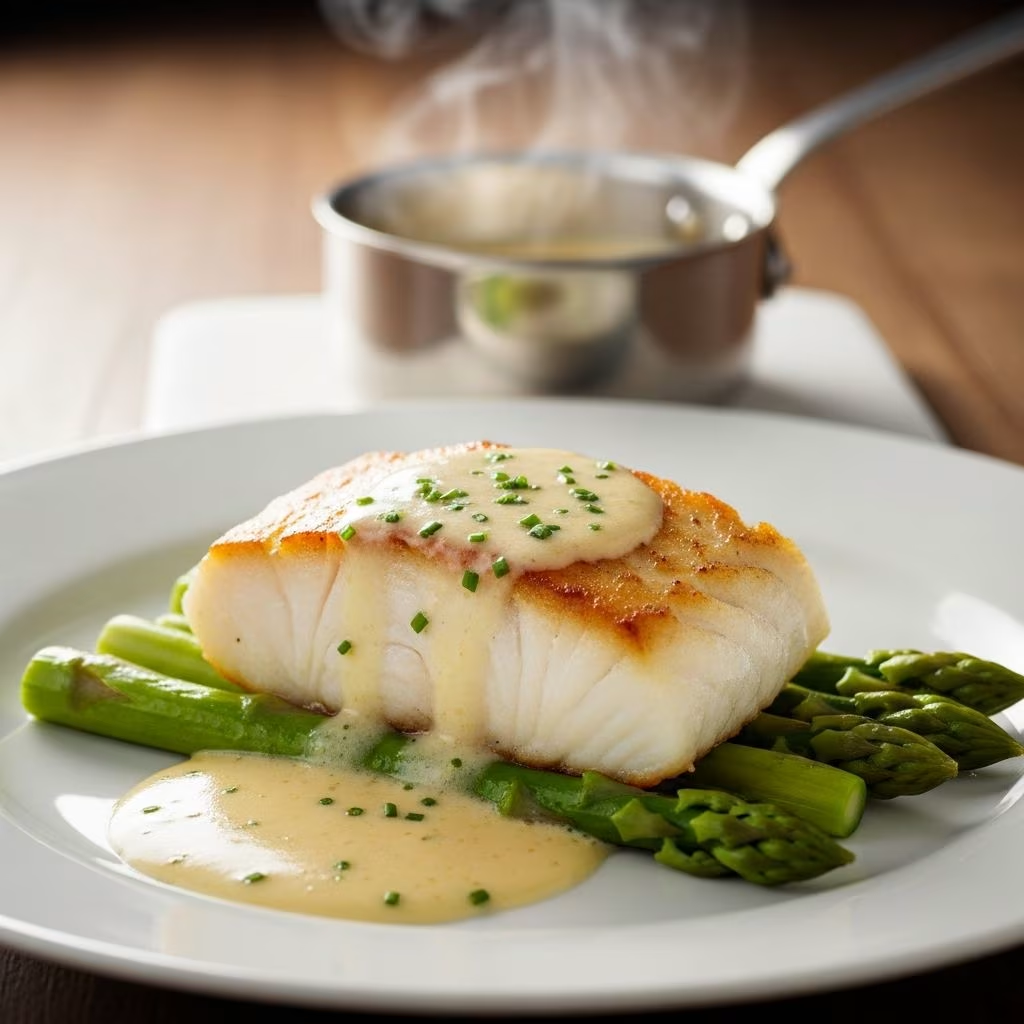
- Seafood: Poached salmon, seared scallops, or steamed mussels.
- Vegetables: Asparagus, green beans, or roasted cauliflower.
- Poultry: Grilled chicken breast or turkey cutlets.
- Eggs: Poached eggs on spinach for brunch.
Serve warm in a pitcher; it holds briefly over a bain-marie (double boiler) without direct heat. Avoid reheating vigorously to prevent breaking.
Nutritional Insights and Storage Tips
A 2-tablespoon serving offers about 150 calories, primarily from butter’s healthy fats. It’s rich in vitamins A and E. Store leftovers in an airtight container in the fridge for up to 2 days; gently reheat over low heat with a splash of water, whisking to re-emulsify.
Freezing is not ideal, as emulsions separate upon thawing, but you can freeze the reduction base and finish fresh.
Why Beurre Blanc Belongs in Every Home Kitchen
This sauce democratizes fine dining, requiring no special equipment beyond a whisk and pan. Its simplicity belies its transformative power, turning everyday meals into restaurant-worthy experiences. Master it once, and you’ll rely on it for effortless elegance.
Frequently Asked Questions
What if I don’t have shallots?
Substitute with finely minced onion, garlic, or even a pinch of shallot powder. The key is fine texture to infuse without chunks.
Can I make it dairy-free?
Traditional beurre blanc relies on butter, but plant-based versions use coconut oil or vegan butter with aquafaba for emulsion. Results vary.
How do I prevent curdling?
Low heat, cold butter, and constant motion are essential. Cream helps immensely by stabilizing fat molecules.
Is lemon juice a good vinegar substitute?
Yes, it provides similar acidity and brightness, ideal for seafood dishes.
How much sauce per person?
Plan 2-3 tablespoons per serving to generously coat without overwhelming.
References
- Beurre Blanc – This French Butter Sauce was Spot On — Food Wishes (Chef John). 2016-04-01. https://foodwishes.blogspot.com/2016/04/beurre-blanc-this-french-butter-sauce.html
- How to Make a Butter Sauce – Beurre Blanc — Food Wishes (YouTube). Accessed 2026. https://www.youtube.com/watch?v=84zkT4FIaOk
- Beurre Blanc 101 – How to Make Modern French Cuisine’s Most Important Sauce — Food Wishes (Chef John). 2008-05-01. https://foodwishes.blogspot.com/2008/05/beurre-blanc-101-how-to-make-modern.html