Beurre blanc, translating to “white butter” in French, stands as one of the most celebrated emulsions in culinary arts. This velvety sauce combines the richness of butter with the bright acidity of white wine and vinegar, creating a luxurious topping that enhances everything from delicate fish to hearty vegetables. Originating from classic French kitchens, it requires precision in temperature control and whisking to achieve its signature silky texture. Whether you’re a novice cook or a seasoned chef, understanding its preparation unlocks endless gastronomic possibilities.
Understanding the Essence of Beurre Blanc
At its core, beurre blanc is an emulsion where butter’s fat particles are suspended in a reduced wine-vinegar base. Unlike thicker sauces like hollandaise, it relies solely on mechanical agitation—vigorous whisking—to bind ingredients without eggs or flour in traditional recipes. The process demands patience: reducing liquids to a glace (a glossy syrup) concentrates flavors, while gradual butter incorporation builds body. Success hinges on low heat to prevent separation, as excessive warmth causes the emulsion to “break,” turning oily rather than creamy.
This sauce shines in its simplicity, typically needing just four ingredients: shallots for subtle oniony depth, dry white wine for fruit-forward acidity, white wine vinegar for sharpness, and high-quality unsalted butter for creaminess. Variations exist, such as adding cream for stability or herbs for aroma, but purists prize the minimalist approach. Its pale yellow hue and buttery sheen make it visually stunning, while tasting it reveals layers of tangy brightness balanced by mellow richness.
Key Ingredients for Authentic Flavor
Selecting premium components ensures a superior result. Start with dry white wine, like Sauvignon Blanc or Pinot Grigio, which provides crisp acidity without sweetness that could clash with butter’s indulgence. Avoid oaky or sweet varieties, as they muddy the clean profile.
- Shallots: Finely minced for even distribution; their mild flavor infuses without overpowering, unlike stronger onions.
- White wine vinegar: Adds a puckering tang to cut through butter’s fat; use in equal or slightly lesser proportion to wine.
- Unsalted butter: Cold and cubed into tablespoon-sized pieces. European-style butters with higher fat content (82%+) yield richer emulsions.
- Optional stabilizers: A splash of heavy cream prevents breaking, especially for beginners, by anchoring the emulsion.
Quantities vary by recipe scale, but a standard batch uses about ½ cup wine, 1-2 tablespoons vinegar, one small shallot, and 8-16 ounces butter, serving 4-6 people generously.
Step-by-Step Preparation Technique
Creating beurre blanc is a dance of heat management and constant motion. Begin by combining wine, vinegar, and minced shallots in a small, heavy-bottomed saucepan. Choose stainless steel or enamel-coated for better heat control over nonstick, which can hinder reduction visibility.
- Reduce the base: Simmer over medium heat until liquids evaporate to 2 tablespoons—a syrupy “au sec” stage. This takes 10-15 minutes; stir occasionally to prevent scorching.
- Incorporate butter off-heat: Remove from burner. Add cold butter cubes one or two at a time, whisking vigorously after each addition. The residual heat melts butter slowly, emulsifying it into the base.
- Finish and strain: Continue whisking until sauce thickens to coat a spoon’s back. Pass through a fine sieve to remove shallot solids for smoothness, then season lightly with salt.
Maintain sauce at 100-120°F (lukewarm) by setting the pan in shallow warm water if needed. Total time: 15-20 minutes. For larger batches, use a double boiler to sustain gentle heat.
Pro Tips to Prevent Common Pitfalls
Emulsions are finicky; breaking occurs from high heat or rapid temperature shifts. Keep butter ice-cold until addition—refrigerate cubes for 30 minutes pre-prep. Whisk incessantly in figure-eights for even integration.
| Problem | Cause | Solution |
|---|---|---|
| Sauce separates (oily) | Too hot | Lower heat; add ice cube or cold water while whisking |
| Grainy texture | Over-reduced base | Add splash of cream or water early |
| Too thin | Insufficient butter | Incorporate more cold butter gradually |
| Lacks flavor | Off wine/vinegar balance | Taste and adjust acidity with drops of vinegar |
If broken, salvage by blending on low with ice water or starting a new reduction and whisking in the broken sauce. Practice on small batches builds confidence.
Flavor Variations and Enhancements
While classic beurre blanc is sublime plain, infusions elevate it. Stir in lemon zest for citrus lift, fresh tarragon or chives for herbal notes, or a pinch of cayenne for subtle heat. For seafood focus, add Pernod for anise aroma complementing shellfish.
- Beurre rouge: Swap white wine for red, using butter and shallots for steak or game.
- Citrus beurre blanc: Incorporate orange juice reduction for poultry.
- Herbed version: Dill or parsley for fish; thyme for vegetables.
These twists maintain emulsion integrity by adding post-reduction.
Perfect Pairings: Dishes That Shine with Beurre Blanc
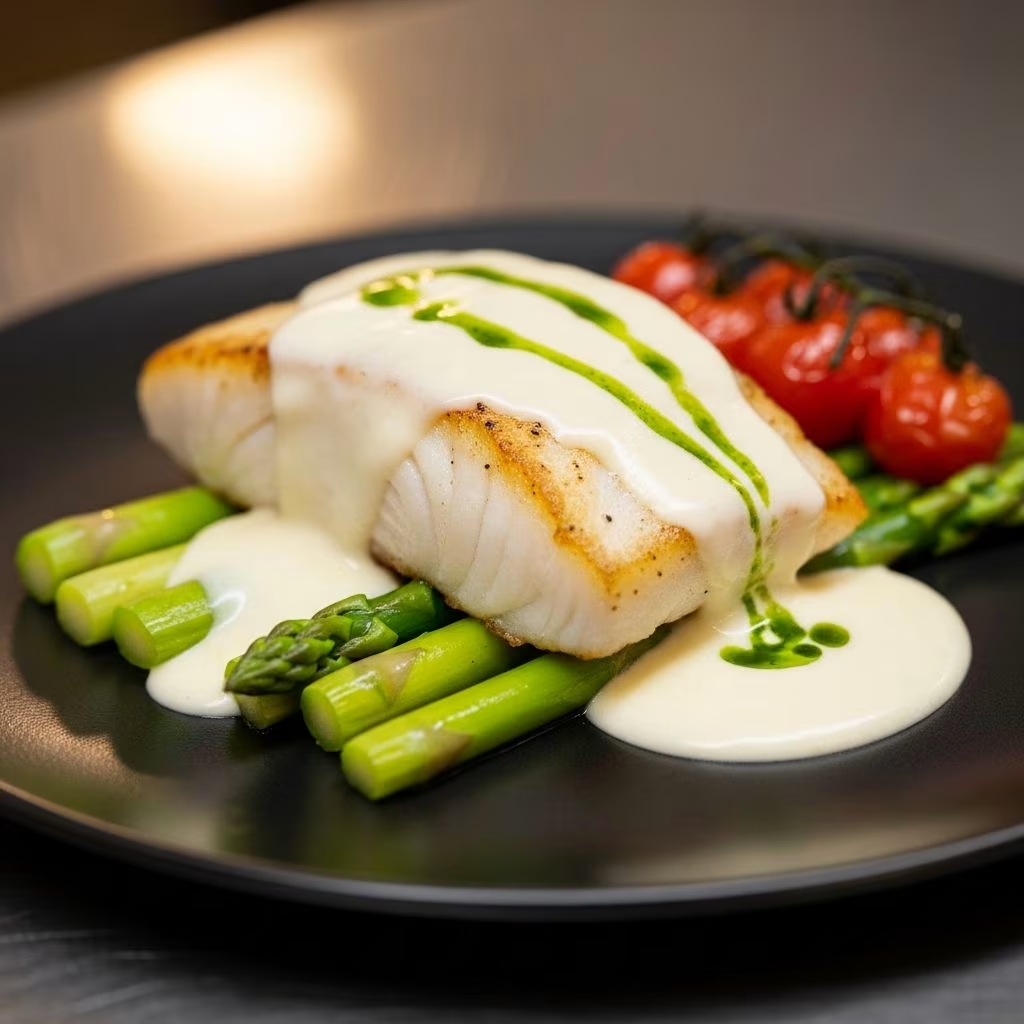
This sauce transforms simple proteins and produce into fine dining fare. Drizzle over poached salmon for flaky contrast, or broiled halibut where tang cuts fish’s mildness. Vegetables like steamed asparagus or roasted broccoli gain elegance, butter soaking into tender florets.
For meats, it brightens grilled chicken breast or pork tenderloin. Shellfish pairings include seared scallops, where sauce pools luxuriously. Avoid heavy, spiced dishes; opt for clean flavors that let beurre blanc star.
- Seafood: Sole meunière, shrimp sauté.
- Vegetables: Green beans, Brussels sprouts.
- Proteins: Poached eggs, turkey cutlets.
Storage, Reheating, and Make-Ahead Strategies
Fresh beurre blanc is best used immediately, as holding risks separation. Refrigerate leftovers in an airtight container up to 2 days; it solidifies. Reheat gently in a double boiler, whisking with a tablespoon of water or cream to re-emulsify.
Freeze portions in ice cube trays for up to a month; thaw and whisk before use. For events, prepare base ahead, reducing and chilling, then finish with butter tableside for freshness.
Nutrition and Dietary Considerations
Per 2-tablespoon serving: approximately 200 calories, mostly from butter’s fats (healthy in moderation for satiety). Low-carb, gluten-free naturally. Use cultured butter for probiotics or plant-based alternatives cautiously, as vegan emulsions require lecithin stabilizers.
Frequently Asked Questions (FAQs)
What is the difference between beurre blanc and beurre noisette?
Beurre blanc is an emulsion sauce; beurre noisette is browned butter with nutty flavor, no reduction base.
Can I make beurre blanc without alcohol?
Yes, substitute with white grape juice or broth, though acidity will differ—add extra vinegar/lemon.
Why does my sauce break every time?
Usually heat-related; ensure off-heat butter addition and constant whisking.
Is heavy cream traditional in beurre blanc?
No, but it stabilizes modern versions, preventing breakage for home cooks.
How much sauce per person?
2-3 tablespoons dresses a main; scale recipe accordingly.
Conclusion: Elevate Your Cooking with Beurre Blanc
Mastering beurre blanc rewards with a versatile skillset. Its preparation teaches emulsion fundamentals applicable to vinaigrettes or aiolis. Experiment confidently, tasting as you go, to create personalized versions. This sauce bridges everyday meals and special occasions, proving French finesse accessible to all.
References
- Beurre Blanc Sauce (My Foolproof Recipe!) — Chef Billy Parisi. 2023-01-15. https://www.billyparisi.com/beurre-blanc-sauce-recipe/
- Classic Beurre Blanc Recipe (French Butter Sauce) — Coley Cooks. 2022-10-20. https://coleycooks.com/how-to-make-beurre-blanc-video/
- Easy Beurre Blanc Sauce — Ask Chef Dennis. 2023-05-12. https://www.askchefdennis.com/easy-beurre-blanc-sauce/
- Beurre Blanc Sauce (Easy & No-Fail) — Downshiftology. 2024-02-28. https://downshiftology.com/recipes/beurre-blanc-sauce/
- Beurre Blanc — The Cookie Rookie. 2023-08-10. https://www.thecookierookie.com/beurre-blanc/