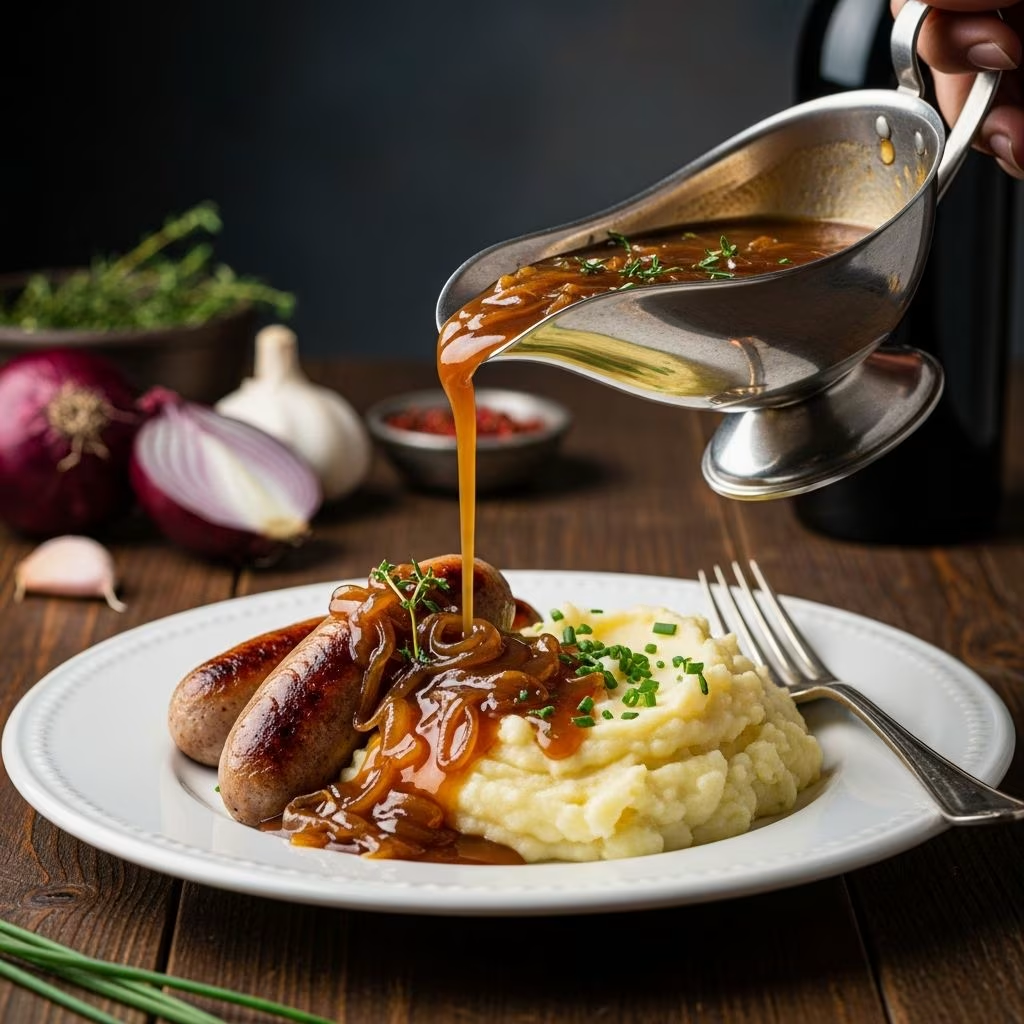
Bangers and mash represents one of the most beloved comfort food dishes originating from British culinary tradition. While many home cooks focus on perfecting their mashed potatoes or selecting quality sausages, the true star of this classic meal lies in the gravy that brings everything together. A well-executed onion gravy transforms simple ingredients into something truly memorable, elevating what could be an ordinary dinner into an exceptional dining experience. This comprehensive guide explores the techniques, ingredients, and methods necessary to create an authentic onion gravy that will make your bangers and mash dinner unforgettable.
Understanding the Foundation: The History and Importance of Onion Gravy
The combination of sausages, mashed potatoes, and onion gravy has been a staple in British households and pub menus for generations. The term “bangers” itself derives from the tendency of sausages to burst or “bang” when cooked, particularly when the casings contained excessive moisture. The onion gravy serves multiple purposes beyond mere flavor enhancement—it adds moisture to the dish, creates a rich base that complements both the protein and starches, and introduces caramelized sweetness that balances savory elements.
Understanding the historical context of this dish helps inform cooking decisions. Traditional preparations relied on slow-cooking techniques and building flavors through patient caramelization rather than quick-cooking methods. This foundational approach to gravy-making remains relevant today, even for modern home cooks seeking to recreate this beloved classic.
Essential Ingredients and Their Roles
Creating an exceptional onion gravy begins with selecting the right ingredients and understanding how each component contributes to the final product. While the ingredient list appears deceptively simple, the quality and proportions of each element significantly impact the outcome.
- Onions: The backbone of this gravy, onions should be fresh and firm. Yellow, white, or brown varieties all work well, though yellow onions provide good balance between sweetness and savory notes. The quantity matters greatly—using multiple large onions ensures sufficient volume and flavor development through caramelization.
- Fat (butter or oil): This medium facilitates even cooking and flavor development during the caramelization process. Butter adds richness and authentic British character, though oil works acceptably for those preferring lighter preparations.
- Flour: A simple thickening agent that transforms the gravy from thin liquid to luxurious coating consistency. All-purpose flour works perfectly for this application.
- Beef stock: The liquid foundation that carries flavor and creates proper gravy consistency. Quality stock makes a noticeable difference compared to low-quality alternatives. Some variations incorporate chicken stock or vegetable stock, though beef remains traditional.
- Seasonings: Salt, pepper, and optional ingredients like garlic, thyme, or worcestershire sauce add complexity and depth to the flavor profile.
Step-by-Step Technique for Building Layers of Flavor
The methodology for creating onion gravy differs substantially from rushed cooking approaches. This technique emphasizes patient development of deep, complex flavors through careful attention to each cooking stage.
The Caramelization Stage
Begin by slicing onions into thin, uniform pieces. This consistent sizing ensures even cooking and caramelization. Heat butter or oil in a large saucepan over medium heat. Add the sliced onions and cook slowly, stirring occasionally, for approximately ten to fifteen minutes. The objective during this stage is not speed but rather allowing the natural sugars in the onions to break down and develop rich, complex flavors. Patient caramelization transforms sharp onion notes into mellow sweetness that forms the flavor foundation for the entire gravy.
During caramelization, the onions should gradually transition from translucent to golden brown. Some recipes incorporate additional ingredients like garlic, thyme, or red pepper flakes during this phase to build layered aromatics. If the onions show signs of burning rather than browning, reduce the heat slightly and continue cooking.
The Flour Integration
Once the onions reach the desired caramelization level, sprinkle flour over them and stir continuously for one to two minutes. This brief cooking period removes the raw flour taste while allowing the flour particles to absorb the fat-infused onion flavor. The mixture will appear dry and crumbly initially—this is normal and indicates proper coating of the onion pieces with flour.
The Stock Integration
Gradually introduce beef stock into the flour-onion mixture. Pour approximately three-quarters of the total stock first, whisking thoroughly to break up any lumps that might form. The mixture will initially appear thin and watery. Continue whisking until smooth, then add the remaining stock. If lumps persist despite whisking, use a fine-mesh strainer to remove them, or carefully blend a portion of the hot gravy to smooth out the texture.
The Thickening and Finishing
Bring the gravy to a gentle simmer, stirring frequently. The heat activates the starch in the flour, causing it to swell and thicken the liquid gradually. After two to three minutes of simmering, the gravy should reach appropriate consistency—slightly thinner than desired for serving, as it will continue thickening as it cools. Taste and adjust seasoning with salt and pepper. Remove from heat and serve immediately over prepared bangers and mashed potatoes.
Variations and Flavor Enhancements
While the basic onion gravy recipe remains consistent across traditional British preparations, numerous variations exist that add distinctive character to the dish. Understanding these variations allows home cooks to customize gravy to personal preferences or available ingredients.
| Variation Type | Key Ingredients | Flavor Profile |
|---|---|---|
| Beer-Enhanced Gravy | Stout beer, beef stock, onions | Deep, malty, slightly bitter undertones |
| Apple Cider Variation | Apple cider, chicken stock, thyme | Slightly sweet, herbaceous, bright acidity |
| Wine-Infused Gravy | Dry red wine, beef stock, worcestershire | Complex, slightly acidic, sophisticated |
| Garlic and Herb Version | Garlic, thyme, rosemary, beef stock | Aromatic, savory, herbaceous notes |
The beer-enhanced variation has gained particular popularity in modern preparations. This approach incorporates stout beer such as Guinness, which adds malty complexity and deeper color to the finished gravy. The beer is typically added after deglazing the pan with sausage drippings, creating a richer flavor foundation before stock is introduced.
Apple cider variations appeal to those seeking brightness and slight sweetness. This approach works particularly well when fresh thyme is included, creating a more herbaceous profile that complements pork sausages beautifully.
Ingredient Selection and Quality Considerations
The quality of individual ingredients directly correlates with gravy excellence. While onion gravy doesn’t require exotic or expensive components, selecting good quality items within each category produces noticeably superior results.
Stock selection deserves particular attention. Homemade beef stock naturally provides superior flavor compared to commercial bouillon cubes or low-sodium purchased broths. If using purchased stock, select quality brands known for robust flavor and minimal sodium. Taste the stock independently before incorporating it into gravy—dull, salty, or off-tasting stock will compromise the entire gravy regardless of how well other steps are executed.
Onion varieties offer subtle flavor differences worth considering. Yellow onions provide reliable, balanced flavor suitable for traditional preparations. White onions offer slightly more pungency, while sweet onions introduce greater sweetness. For classic British bangers and mash, yellow onions remain the standard choice, though experimentation with different varieties allows personal preference to guide selections.
Common Mistakes and How to Avoid Them
Even with good ingredients and correct technique, several common pitfalls can compromise gravy quality. Understanding these issues and implementing preventive measures ensures consistent success.
- Rushing the Caramelization: Attempting to quickly brown onions by increasing heat results in burning rather than caramelization. The slow, patient approach with medium heat allows proper sugar breakdown without harsh burnt flavors.
- Lumpy Texture: Insufficient whisking during stock addition causes flour lumps to form. Smooth integration requires thorough whisking as liquid is gradually incorporated, not dumped all at once.
- Incorrect Thickness: Gravy thickened too much becomes paste-like and unpleasant. Remember that gravy continues thickening as it cools—slightly thinner than desired consistency at the stove is the appropriate target.
- Over-Seasoning: Salt concentration in commercial stocks can be substantial. Taste before adding additional salt, as the finished gravy may already contain sufficient seasoning from the stock alone.
- Separating or Breaking: Gravy left sitting too long without stirring or subjected to temperature extremes may separate. Maintain gentle heat and stir occasionally if gravy must sit before serving.
Serving Strategies and Timing Considerations
Proper timing ensures that all components of the bangers and mash dish reach the table at optimal temperature and consistency. Coordinating gravy preparation with sausage cooking and potato mashing requires planning and attention to timing.
Beginning gravy preparation while sausages cook in the same pan offers practical advantages. After removing cooked sausages, residual fat and flavorful browned bits from the sausage cooking remain in the pan—an ideal foundation for gravy. These browned bits, called fond, dissolve into the gravy during stock addition, enriching overall flavor.
For maximum flavor development and optimal texture, serve gravy immediately after reaching proper thickness. Gravy held at serving temperature for extended periods may develop a skin on the surface and lose some appealing texture. If gravy must be held, cover it loosely and maintain gentle heat, stirring occasionally.
Frequently Asked Questions
Can I make onion gravy ahead of time?
Yes, onion gravy reheats well. Prepare it completely and store in an airtight container in the refrigerator for up to three days. Reheat gently over medium-low heat, stirring frequently and adding a splash of stock or water if the gravy has thickened excessively during storage.
What if my gravy tastes too salty?
Add more unsalted stock or water to dilute the salt concentration. If unavailable, add a small peeled potato to the gravy while simmering for five to ten minutes—the potato absorbs excess salt, though this method works imperfectly. Prevention through careful stock selection and tasting before seasoning proves more reliable.
Is it necessary to use beef stock specifically?
While beef stock is traditional, chicken stock works acceptably and produces a slightly lighter gravy. Vegetable stock is usable but may lack the depth associated with traditional preparations. Experiment with different stocks to discover personal preferences.
How much gravy should be made per serving?
Plan approximately one-third to one-half cup of gravy per person. Bangers and mash enthusiasts often enjoy generous quantities of gravy, so erring toward larger quantities prevents running short during service.
Can I thicken gravy without flour?
Cornstarch works as an alternative thickener, though the gravy texture differs slightly from flour-thickened versions. Use approximately one tablespoon cornstarch mixed with two tablespoons cold water per one cup of gravy. Mix thoroughly before adding to the simmering gravy, stirring constantly until thickened.
Conclusion: Elevating Your Bangers and Mash Experience
Creating exceptional onion gravy for bangers and mash requires attention to ingredients, respect for proper technique, and patience during crucial cooking stages. The gravy represents far more than an afterthought or liquid component—it functions as the essential element that transforms individual ingredients into a cohesive, satisfying dish that has earned its place in British culinary tradition.
By understanding the caramelization process, properly integrating flour and stock, and carefully monitoring thickness, home cooks can produce gravy rivaling traditional pub preparations. Experimentation with variations and personal flavor preferences allows endless customization while maintaining the classic foundation that makes this dish beloved across generations.
References
- Bangers and Mash (Sausage with Onion Gravy) — RecipeTin Eats. Accessed April 2026. https://www.recipetineats.com/bangers-and-mash-sausage-with-onion-gravy/
- Bangers and Mash with Stout Onion Gravy — Self Proclaimed Foodie. Accessed April 2026. https://selfproclaimedfoodie.com/bangers-mash-with-stout-onion-gravy/
- Bangers and Mash Recipe with Onion Gravy — Our Happy Mess. Accessed April 2026. https://www.ourhappymess.com/bangers-and-mash-recipe/
- The Hirshon British Bangers And Mash With Onion Gravy — The Food Dictator. Accessed April 2026. https://www.thefooddictator.com/the-hirshon-british-bangers-and-mash-with-onion-gravy/
- Sausages and Onion Gravy: Bangers and Mash — Savory Nothings. Accessed April 2026. https://www.savorynothings.com/sausages-and-onion-gravy-bangers-and-mash/
- Bangers and Mash Recipe — The Daring Gourmet. Accessed April 2026. https://www.daringgourmet.com/bangers-and-mash-recipe/