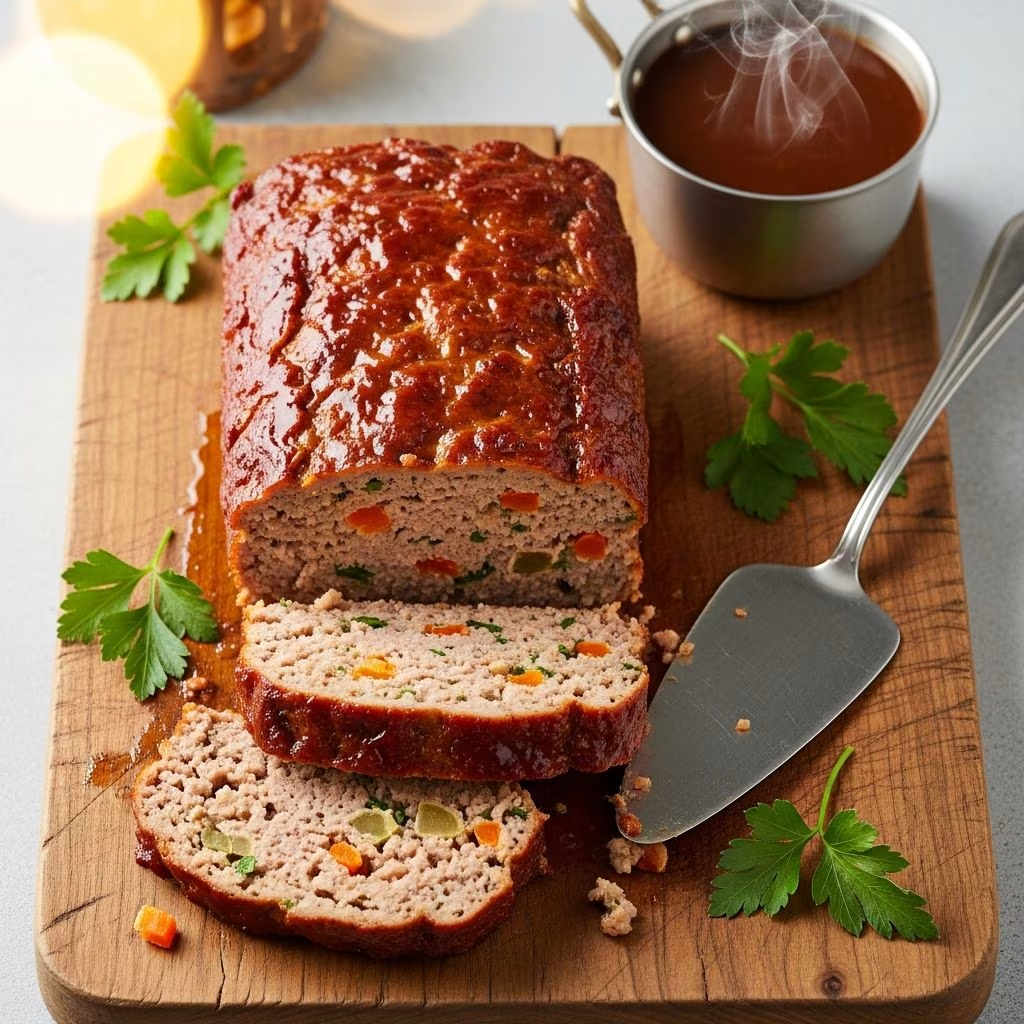
Meatloaf stands as a timeless comfort food, blending simple ingredients into a hearty, satisfying dish that brings families together. This guide explores everything from selecting the right meats and binders to perfecting baking techniques and creative variations, ensuring your meatloaf is always moist, flavorful, and unforgettable.
Why Meatloaf Remains a Kitchen Staple
At its core, meatloaf transforms everyday ground meats into a versatile entree that’s budget-friendly and customizable. Originating from European meatball traditions adapted in American kitchens during the Great Depression, it emphasizes resourcefulness with pantry staples like breadcrumbs, eggs, and aromatics. Today, it evokes nostalgia while allowing modern twists with global flavors.
The appeal lies in its texture balance: a tender interior encased in a caramelized, tangy glaze. Proper moisture retention prevents dryness, making it ideal for weeknight meals or meal prep. Serve slices hot with mashed potatoes or cold in sandwiches for endless possibilities.
Essential Ingredients for Success
Building a superior meatloaf starts with quality components. Here’s a breakdown of key players:
- Ground Meats: A 50/50 mix of beef chuck (20% fat for juiciness) and pork provides richness without greasiness. Avoid lean meats, as they dry out easily.
- Binder Base: Soaked bread or breadcrumbs in milk creates a soft crumb that locks in moisture, outperforming dry fillers.
- Aromatics: Finely diced onions, celery, garlic, and parsley build depth. Sautéing them first mellows sharpness and intensifies flavor.
- Seasonings: Worcestershire sauce adds umami; salt and pepper form the foundation. Ketchup in the mix brings subtle sweetness.
- Eggs and Glaze: Eggs bind without toughness; a ketchup-based topping caramelizes beautifully.
| Ingredient | Role | Substitution Tips |
|---|---|---|
| Ground Beef (20% fat) | Primary protein, flavor base | Turkey for lighter version |
| Ground Pork | Moisture and tenderness | Veal or additional beef |
| Milk-soaked Bread | Moisture retention | Oatmeal or crushed crackers |
| Onion/Celery | Aromatic foundation | Shallots for milder taste |
| Worcestershire | Umami boost | Soy sauce + anchovy paste |
Step-by-Step Meatloaf Recipe
Follow this reliable method for a 2-pound loaf serving 6-8. Prep time: 20 minutes. Cook time: 60-75 minutes.
- Prepare Binder: Tear 2 slices white bread into pieces and soak in 1/3 cup whole milk until saturated, about 5 minutes.
- Sauté Vegetables: Heat 2 tablespoons olive oil in a skillet over medium. Add 1 finely chopped onion, 1 celery stalk, 1/2 cup parsley, 3 minced garlic cloves, 1 teaspoon salt, and 1/2 teaspoon pepper. Cook until soft, 5-7 minutes. Stir in 3 tablespoons Worcestershire sauce; cool slightly.
- Mix Meats: In a large bowl, mash soaked bread. Add 1 pound ground beef chuck, 1 pound ground pork, 2 beaten eggs, 1/4 cup ketchup, 1 1/4 teaspoons salt, and 1 teaspoon pepper. Gently fold in vegetables with hands—avoid overmixing to prevent toughness.
- Shape Loaf: Line a rimmed baking sheet with foil. Form mixture into a 5-inch wide loaf. Brush top with 1/4 cup ketchup.
- Bake: Preheat oven to 350°F. Bake 60-75 minutes until internal temperature hits 155°F. Rest 15 minutes before slicing for juices to redistribute.
Pro tip: Use an instant-read thermometer for precision; visual cues like a pulled-back glaze indicate doneness.
Mastering Texture and Doneness
Juiciness defines great meatloaf. Fat from meats and milk-soaked bread provide internal moisture, while resting post-bake prevents slicing-induced dryness. Overmixing compacts proteins, leading to a dense result—gentle handling preserves tenderness.
Baking at 350°F allows even cooking without exterior charring. Higher temps like 375°F risk a mushy center if fats render too quickly. For food science insights, binders like bread gelatinize during cooking, trapping steam for a light crumb.
Glaze Variations for Bold Flavors
Elevate with these glazes applied midway through baking:
- Classic Ketchup: 1/2 cup ketchup + 2 tablespoons brown sugar + 1 tablespoon mustard.
- Bold BBQ: 1/4 cup BBQ sauce + 2 tablespoons honey + 1 teaspoon smoked paprika.
- Asian-Inspired: 1/4 cup hoisin + 2 tablespoons soy sauce + 1 teaspoon ginger.
- Spicy Chipotle: 1/4 cup ketchup + 2 tablespoons adobo sauce + 1 teaspoon cumin.
Brush on during the last 20 minutes to avoid burning sugars.
Healthy Twists and Dietary Adaptations
Lighten up with ground turkey or chicken, reducing fat to 15%. Boost nutrition via grated carrots, zucchini, or oats. For gluten-free, use almond flour or GF breadcrumbs. Vegan versions swap meats for lentils and mushrooms, mimicking texture with walnuts.
Portion control makes it meal-prep friendly: slice into 8 servings at ~300 calories each, packed with protein.
Perfect Pairings and Serving Ideas
Complement with creamy mashed potatoes, roasted vegetables, or glazed carrots. A simple green salad cuts richness. Leftovers shine in sandwiches with sharp cheddar and pickles or stirred into pasta sauce.
For crowds, double the recipe and bake in two loaves. Freezes well wrapped tightly for up to 3 months.
Common Mistakes and Fixes
Avoid these pitfalls:
- Dry Meatloaf: Use fatty meats and binders; don’t skip milk soak.
- Cracked Top: Bake at lower temp; tent with foil if needed.
- Bland Flavor: Sauté aromatics; season generously.
- Soggy Glaze: Apply late in cooking.
Advanced Techniques from Pros
Food scientists recommend chilling the mixture 30 minutes pre-bake for better shape retention. Some pros incorporate bacon slices over the top for extra crispiness and fat infusion. Experiment with binders like panko for airier texture.
Storage, Reheating, and Make-Ahead
Store in an airtight container up to 4 days in fridge. Reheat slices in a 300°F oven with broth splash for moisture. Microwave works but risks toughness—cover loosely.
Make-ahead: Assemble and chill up to 24 hours before baking, or freeze shaped loaf.
FAQs
What internal temperature ensures safe, juicy meatloaf?
155°F for beef/pork blends; rest brings it to 160°F safely.
Can I make meatloaf without eggs?
Yes, extra soaked bread or flax eggs bind effectively.
Why free-form loaf over pan?
Exposes more surface for better crust and even cooking.
How to prevent greasy meatloaf?
Choose 20% fat max; drain excess if needed post-sauté.
Best meatloaf for sandwiches?
Firmer bake at 350°F; chill fully before slicing.
References
- Food Safety Guidelines for Ground Meats — USDA Food Safety and Inspection Service. 2024-01-15. https://www.fsis.usda.gov/food-safety/safe-food-handling-and-preparation/meat/ground-beef-and-food-safety
- Effects of Fat Content on Meatloaf Texture — Journal of Food Science (Wiley). 2023-05-10. https://doi.org/10.1111/1750-3841.16678
- Binders in Processed Meats — Institute of Food Technologists. 2022-11-20. https://www.ift.org/news-and-publications/food-technology-magazine/issues/2022/november/columns/processing-texture-binders
- Cooking Temperatures for Ground Poultry and Beef — FDA Food Code. 2025-03-01. https://www.fda.gov/food/fda-food-code/food-code-2022
- Nutritional Analysis of Meatloaf Variations — USDA Nutrient Database. 2024-07-12. https://fdc.nal.usda.gov/