Selecting the right flour is the foundation of exceptional bread. Flour’s protein content determines gluten formation, which builds the structure needed for a lofty rise and chewy crumb. This guide breaks down key flour types, their properties, and practical applications for home bakers aiming to create professional-quality loaves.
Understanding Flour Fundamentals
Flour from wheat forms the backbone of most breads due to its gluten-forming proteins: glutenin for elasticity and gliadin for extensibility. When hydrated, these proteins create a network that traps gases from yeast, enabling dough expansion. Protein levels, typically 8-15% in wheat flours, dictate strength—higher for sturdy breads, lower for tender ones.
Hard wheats yield strong flours ideal for bread; soft wheats suit pastries. Milling processes affect texture: refined removes bran and germ for finer flour; whole grain retains them for nutrition and flavor but denser results.
Core Wheat Flour Categories
Wheat flours vary by milling and wheat type. Here’s a breakdown of essentials for bread:
- All-Purpose Flour: Versatile with 9-12% protein, blending hard and soft wheats. Suitable for quick breads or when bread flour is unavailable; yields softer loaves.
- Bread Flour: 12-15% protein from hard wheats, perfect for yeasted doughs needing high rise and chew. Absorbs more water, creating elastic doughs for bagels, pizza, and artisan loaves.
- Whole Wheat Flour: 13-14% protein, milled from entire kernel. Nutty taste and fiber boost nutrition but bran cuts gluten strands, requiring hydration adjustments for lighter loaves.
- White Whole Wheat Flour: Milder whole grain from hard white wheat, similar protein to whole wheat but less bitter for everyday baking.
Specialty Wheat Varieties for Artisan Bread
Beyond basics, heirloom and ancient wheats add unique flavors and textures. Hard red spring wheat offers peak gluten for airy crumb; hard red winter provides balanced strength.
| Wheat Type | Protein/Gluten Strength | Flavor Profile | Best Uses |
|---|---|---|---|
| Hard Red Spring | High | Slightly robust | Sourdough, high-rise loaves |
| Hard Red Winter (e.g., Turkey Red) | Moderate-High | Rich, historic | Whole grain rolls, sandwich bread |
| Hard White Spring | High | Mild, creamy | Artisan loaves, pastries with lift |
| Red Fife | Moderate | Spicy, nutty | Country sourdough blends |
| Spelt | Moderate, extensible | Nutty | Low-hydration whole spelt bread |
These varieties shine in blends: use 60% strong wheat with softer ones for balanced crumb. Ancient grains like einkorn or khorasan (Kamut) pack nutrition but weak gluten demands loaf pans or vital wheat gluten additions.
Protein Content: The Key to Dough Success
Protein percentage is crucial—check labels as brands vary. Bread flours at 12-14% excel in fermentation, trapping CO2 for open crumb. All-purpose (10-12%) works but may flatten; opt for 11-13% versions.
Whole grains absorb more water due to bran; increase liquids by 1-2 tbsp per cup. Low-protein flours like pastry (8-10%) make dense, flat loaves unsuitable for free-form baking.
Substitution Strategies and Adjustments
No bread flour? High-protein all-purpose (12-13%) approximates it; add 1 tbsp extra flour per cup or reduce water slightly. For whole wheat, start at 25% replacement to avoid heaviness, gradually increasing.
- Replace 1/3 bread flour with einkorn (2:1 ratio) for nutrition without total collapse.
- Bread flour for all-purpose: cut liquid by 10-15% due to higher absorption.
- Self-rising flour (8.5% protein + leaveners): Quick biscuits only, not yeasted breads.
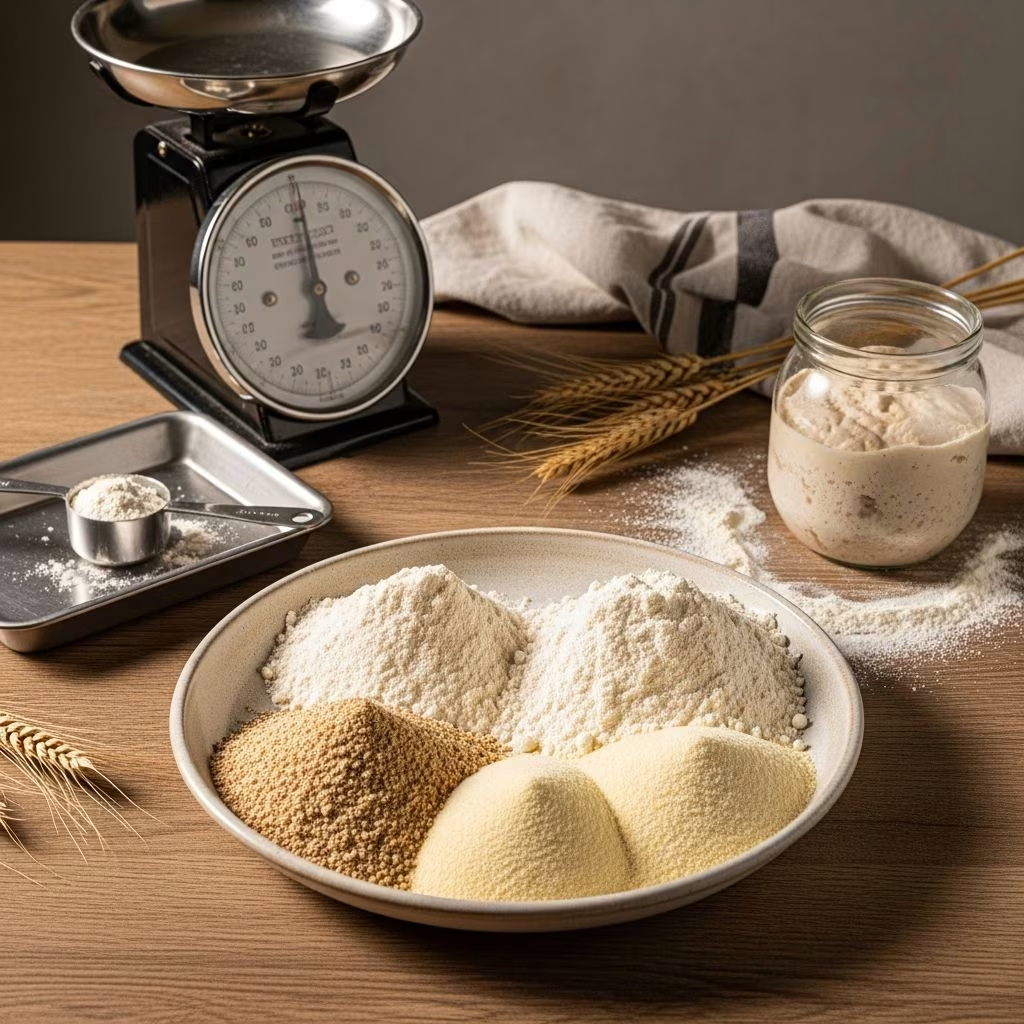
Measure by weight (120-140g/cup) for precision; spoon and level avoids packing.
Blending Flours for Superior Results
Artisan bakers mix for complexity. Pair 70% bread flour with 30% whole wheat for hearty sandwich loaves. Sifted high-extraction flours (mostly endosperm + some bran) mimic white flour nutrition.
Low-hydration spelt (60%) yields stretchy dough; khorasan adds golden hue but needs support. Experiment: hard white with red fife for soft, spiced sourdough.
Common Pitfalls and Pro Tips
Bleached vs. unbleached: Unbleached retains natural flavor, matures faster. Store airtight to prevent rancidity in whole grains.
Troubleshoot density: Boost protein with vital wheat gluten (1-2 tsp/cup). Over-knead low-protein doughs to develop gluten. Hydrate slowly for bran-heavy mixes.
FAQ
What flour is best for beginner bread?
Bread flour (12-14% protein) for reliable rise and structure.
Can I use all-purpose for sourdough?
Yes, if 11-13% protein; expect denser crumb than bread flour.
How does whole wheat affect bread?
Adds nutrition and nuttiness but tightens crumb; use 25-50% blends.
What’s the difference between hard and soft wheat?
Hard: high protein for bread; soft: low for pastries.
Should I buy organic or specialty flours?
For flavor, yes—Turkey Red or spelt elevate taste in whole grain bakes.
References
References
- Bread Baking 101 – Types of flour and how to accurately measure flour — A Treats Affair. 2015-approx. http://atreatsaffair.com/bread-baking-101-flour/
- Newbie’s Guide to Flour for Bread Baking — Breadtopia. Recent (post-2020). https://breadtopia.com/newbies-guide-to-flour-for-bread-baking/
- Choosing the Best Flour for Bread Baking: Comprehensive Guide — Institute of Culinary Education. Recent. https://www.ice.edu/blog/choosing-best-flour-bread-baking-comprehensive-guide
- Artisan Bread Basics: Flour, Types + How to Measure It — Harvest and Nourish. Recent. https://harvestandnourish.com/artisan-bread-basics-flour-types-and-how-to-measure-it/
- How do you choose the right flour? — King Arthur Baking. 2019-07-12. https://www.kingarthurbaking.com/blog/2019/07/12/types-of-flour
- Understanding Different Types of Flour: A Baker’s Guide — PastryClass. Recent. https://www.pastryclass.com/articles/types-of-flour-for-baking