Elk meat offers a lean, robust flavor that appeals to hunters and wild game enthusiasts alike. However, its low fat content can make steaks tough if not prepared properly. A well-crafted marinade is key to breaking down muscle fibers, infusing bold tastes, and ensuring succulent results on the grill. This guide explores everything from basic recipes to advanced techniques, helping you master elk steak preparation.
Why Marinate Elk Steaks?
Unlike beef, elk is exceptionally lean with minimal marbling, which means it benefits greatly from acidic and enzymatic marinades. Acids like lemon juice or vinegar tenderize by denaturing proteins, while oils prevent drying during cooking. Marinades also add layers of flavor—think savory umami from soy sauce or smoky depth from Worcestershire—that complement elk’s earthy profile.
- Tenderizing effect: Breaks down tough connective tissues in wild-harvested meat.
- Flavor enhancement: Balances the gamey notes with sweet, tangy, or spicy elements.
- Moisture retention: Oils coat the meat, locking in juices during high-heat grilling.
Research from the University of Nebraska-Lincoln’s meat science department emphasizes that marinating game meats for 4-24 hours significantly improves texture without over-tenderizing . Always pat steaks dry before grilling to achieve a proper sear.
Essential Ingredients for Elk Marinades
Building a great marinade starts with a balance of acid, oil, seasonings, and sweeteners. Here’s a breakdown of must-haves:
| Category | Examples | Role |
|---|---|---|
| Acid | Lemon juice, vinegar, yogurt | Tenderizes proteins |
| Oil | Canola, olive, avocado | Carries flavors, prevents sticking |
| Umami/Salt | Soy sauce, Worcestershire, garlic | Boosts savoriness |
| Sweetener | Honey, brown sugar | Promotes caramelization |
| Herbs/Spices | Black pepper, rosemary, ginger | Adds aroma and heat |
Proportions matter: Aim for 3:1:1 oil-to-acid-to-seasonings ratio for optimal penetration.
Classic Elk Steak Marinade Recipe
This straightforward recipe yields enough for 1.5 pounds of elk steak, scalable for larger cuts. Prep time: 10 minutes. Marinate: 4-8 hours.
Ingredients
- 3 tablespoons canola oil
- 1-2 teaspoons minced garlic
- 1 tablespoon fresh lemon juice
- 1 tablespoon soy sauce
- 1 tablespoon Worcestershire sauce
- ½ teaspoon freshly ground black pepper
- 1½ pounds elk steaks (1-inch thick)
Step-by-Step Instructions
- Whisk oil, garlic, lemon juice, soy sauce, Worcestershire, and pepper in a bowl until emulsified.
- Place steaks in a resealable plastic bag, pour in marinade, and seal, removing air.
- Massage to coat evenly; refrigerate in a flat dish for 4-8 hours, flipping hourly.
- Remove steaks, discard marinade, and pat dry. Grill over high heat.
This blend delivers tangy brightness and savory depth, perfect for beginners.
Advanced Marinade Variations
Experiment to match your palate or available ingredients. Each serves 1½ pounds elk steak.
Asian-Inspired Ginger-Soy Marinade
- ¼ cup soy sauce
- 2 tablespoons sesame oil
- 1 tablespoon grated ginger
- 2 tablespoons rice vinegar
- 1 tablespoon honey
- 2 minced garlic cloves
Marinate 6-12 hours. Grills with a caramelized crust.
Smoky Chipotle Marinade
- ¼ cup olive oil
- 2 tablespoons lime juice
- 1-2 chipotle peppers in adobo, minced
- 1 tablespoon honey
- 1 teaspoon cumin
- Salt to taste
Ideal for smoky barbecues; marinate 4-6 hours to avoid overpowering heat.
Herb-Forward Mediterranean Marinade
- ⅓ cup olive oil
- ¼ cup red wine vinegar
- 2 tablespoons fresh oregano and thyme
- 4 minced garlic cloves
- Zest of 1 lemon
Best for 8-24 hours; pairs with grilled veggies.
Perfect Grilling Techniques for Marinated Elk
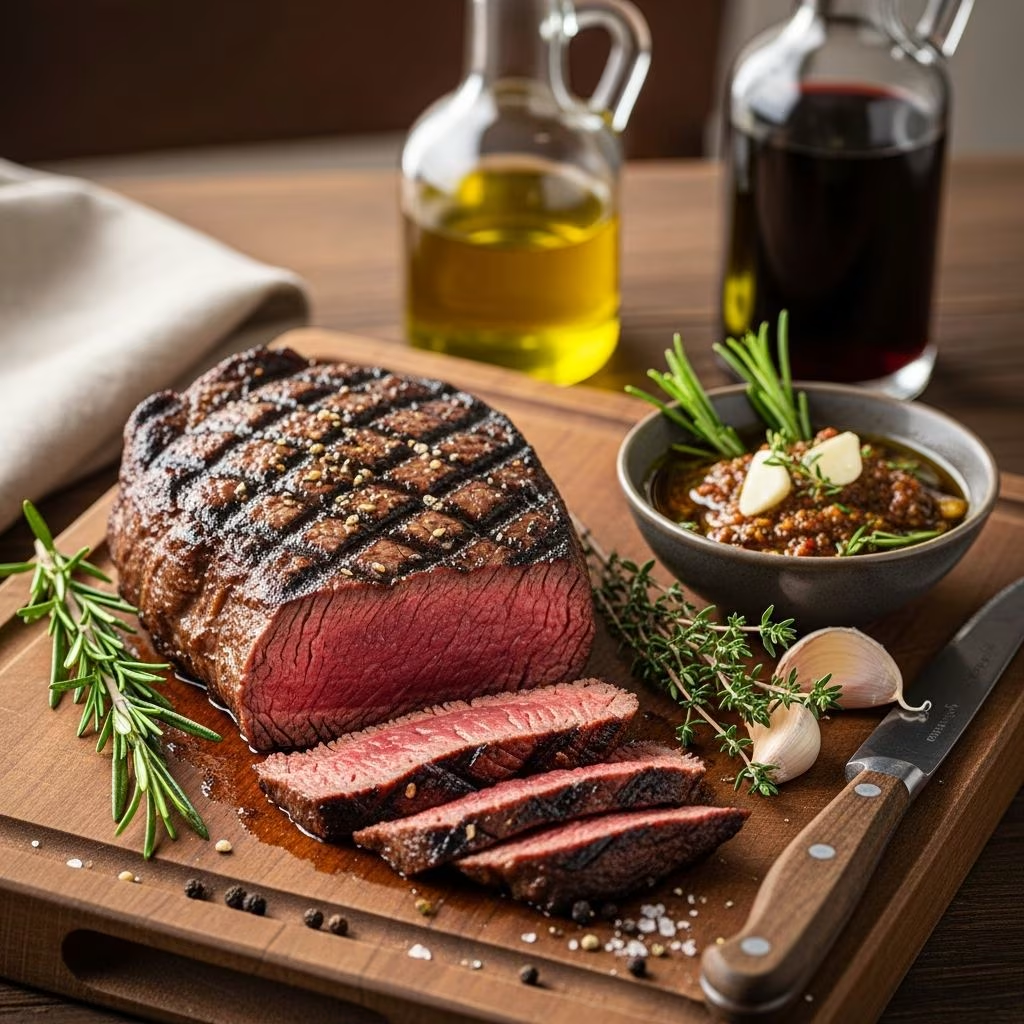
Elk cooks quickly due to leanness—overcooking leads to dryness. Target internal temps: Rare 125°F, Medium-Rare 135°F.
- Prep: Bring steaks to room temp (30 min). Oil grates.
- High heat sear: 450-500°F, 3-4 min per side.
- Rest: 5 minutes tented in foil for juice redistribution.
Use a meat thermometer; according to USDA guidelines, game meats should reach 160°F for safety if ground, but steaks can be rarer if seared properly .
Common Marinating Mistakes to Avoid
Even seasoned cooks falter here:
- Over-marinating: Beyond 24 hours, acids turn meat mushy.
- High-acid marinades on thin cuts: Stick to 2-4 hours.
- Not discarding used marinade: Never reuse without boiling first.
- Forgetting to dry: Wet meat steams instead of sears.
The National Cattlemen’s Beef Association notes similar principles apply to lean game meats, stressing precise timing .
Pairing Elk Steaks with Sides and Wines
Complement the bold flavors:
- Sides: Grilled asparagus, wild mushroom risotto, or berry chutney to cut richness.
- Wines: Cabernet Sauvignon or Zinfandel for tannins that match gaminess; avoid light whites.
For non-alcoholic, try elderflower spritzers.
Health Benefits of Elk Meat
Elk is a nutritional powerhouse: High in protein (25g per 4oz), low in fat (2g), and rich in iron and B vitamins. A study by Colorado State University found wild game like elk has up to 50% less total fat than beef . Marinating preserves these benefits while enhancing palatability.
Storage and Freezing Tips
Marinated steaks freeze well: Portion, vacuum-seal, and freeze up to 6 months. Thaw in fridge overnight. Post-grill leftovers keep 3-4 days refrigerated.
Frequently Asked Questions
How long to marinate elk steaks?
4-8 hours is ideal; up to 24 for tougher cuts. Don’t exceed to prevent mushiness.
Can I use this marinade on other game meats?
Yes—deer, antelope, or bison respond similarly. Adjust time for fat content.
Is elk safe to eat rare?
If field-dressed properly, yes. Sear exterior to kill surface bacteria per CDC guidelines .
What if I don’t have elk? Substitutes?
Lean beef sirloin or venison works; increase oil for fattier cuts.
Vegetarian marinade alternative?
Use on portobello mushrooms or cauliflower steaks with same recipes.
Scaling Recipes for Larger Groups
For 4-6 pounds:
- Triple liquids and seasonings.
- Use a large bowl or multiple bags.
- Marinate in fridge space allowing single layer.
Grill in batches to maintain heat.
Mastering elk steak marinades opens a world of wild game cuisine. With practice, you’ll turn humble harvests into restaurant-worthy meals. Experiment confidently, prioritizing food safety and precise cooking.
References
- Meat Science Extension Publications — University of Nebraska-Lincoln. 2023-05-15. https://extensionpubs.unl.edu/publication/g2290/na/html/view
- Safe Minimum Internal Temperature Chart — USDA Food Safety and Inspection Service. 2024-02-12. https://www.fsis.usda.gov/food-safety/safe-food-handling-and-preparation/food-safety-basics/safe-temperature-chart
- Marinating Beef Guide — National Cattlemen’s Beef Association. 2023-11-01. https://www.beefitswhatsfordinner.com/cooking/cooking-techniques/marinating
- Nutritional Comparison of Game Meats — Colorado State University Extension. 2022-09-20. https://extension.colostate.edu/topic-areas/nutrition-food-safety-health/game-meats-nutritional-powerhouses/
- Wild Game Food Safety — Centers for Disease Control and Prevention. 2024-01-10. https://www.cdc.gov/foodsafety/foods/wild-game.html