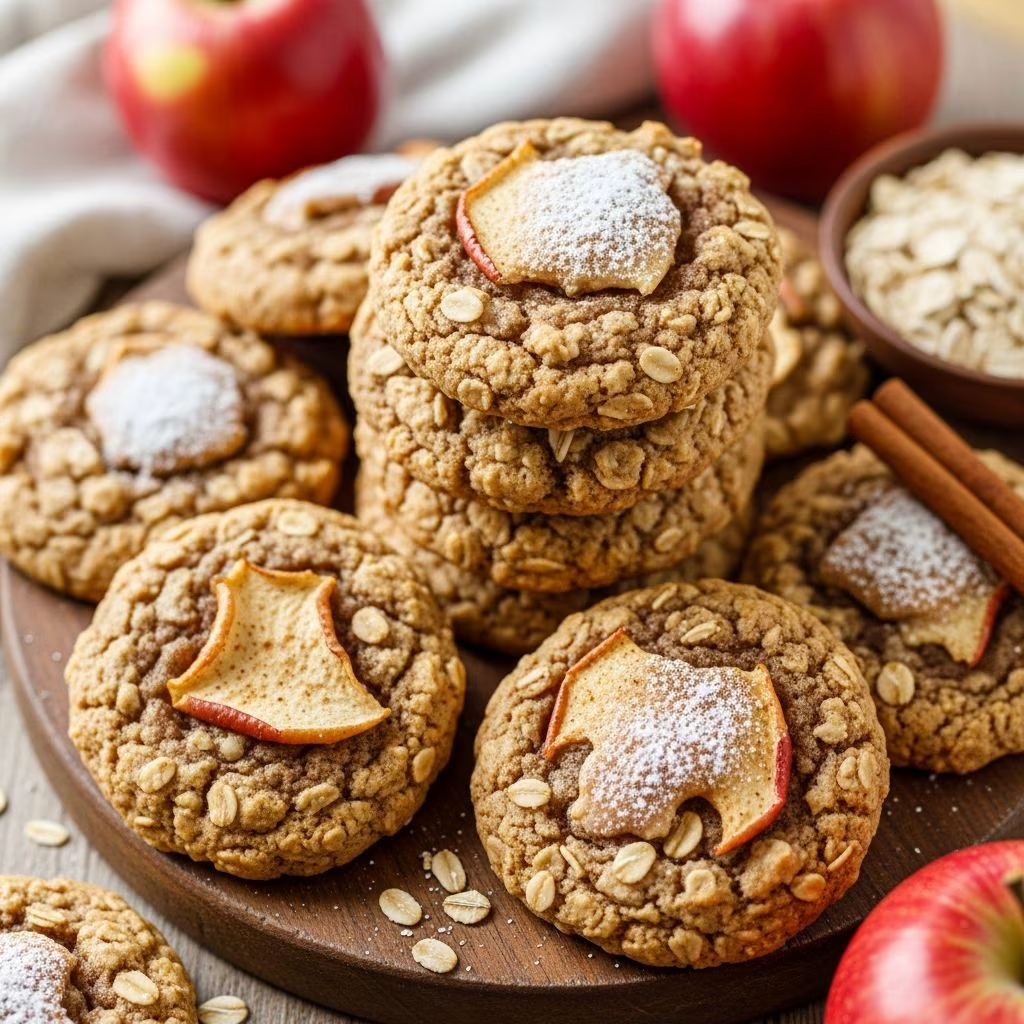
Creating homemade cookies that deliver both texture and flavor requires understanding the essential components of cookie-making. When you combine the heartiness of rolled oats with the natural sweetness and moisture of fresh apples, you establish a foundation for cookies that are both satisfying and memorable. This guide explores everything you need to know about crafting apple oatmeal cookies that turn out tender, flavorful, and perfectly balanced every single time you bake.
Understanding Your Ingredients
The quality of your finished cookies begins with selecting the right ingredients. Each component plays a specific role in determining how your cookies will look, taste, and feel when you bite into them.
The Foundation: Flour and Oats
All-purpose flour serves as the structural backbone of your cookies, typically ranging from 1 to 1.5 cups depending on your recipe variation. This flour provides gluten development, which gives cookies their characteristic texture. Old-fashioned rolled oats contribute both texture and nutritional value, typically making up 2 to 3 cups of your dry ingredients. These whole grain oats add chewiness and a subtle nutty flavor that complements the apple beautifully. The combination of flour and oats creates a more interesting texture profile than either ingredient could achieve alone, resulting in cookies with both structure and substance.
Sweeteners and Fat
Butter forms the fat base of your dough, typically using between 1 cup of softened or melted butter depending on your preferred method. Pairing butter with both brown sugar and granulated sugar creates complexity in flavor and texture. Brown sugar contributes moisture and a caramel-like depth, while granulated sugar promotes spread and crispness at the edges. The ratio of these sugars directly influences whether your final cookies will be chewy or crispy, making this balance crucial to your desired outcome.
Binding Agents
Eggs or egg yolks bind your ingredients together and provide structure. Most recipes call for 1 to 2 eggs, with some variations using only yolks for added richness. Vanilla extract enhances the overall flavor profile, bringing warmth and complexity that ties all your ingredients together harmoniously.
Spices That Define Character
The spice profile transforms these cookies from ordinary to extraordinary. Ground cinnamon typically ranges from 1 to 1.5 teaspoons, creating warmth and recognizable flavor. Nutmeg adds earthiness at about 0.25 to 0.5 teaspoon, while ground cloves (when included) provide subtle spice complexity. These warm spices are traditionally associated with autumn and complement the natural tartness of apples perfectly.
Fresh Apples: The Star Ingredient
Fresh apples provide moisture, natural sweetness, and textural interest. Different apple varieties offer different characteristics—tart varieties like Granny Smith apples provide tanginess that balances sweetness, while sweeter varieties add natural sugar. Typically, recipes call for 1 to 3 cups of diced or finely chopped apples. Some recipes prefer pre-cooking apples through sautéing to drive off excess moisture, while others incorporate raw apples directly into the dough.
Preparing Your Workspace and Ingredients
Successful baking begins with organization and proper preparation of all components before you start mixing.
Essential Equipment Checklist
- Two large mixing bowls (one for dry ingredients, one for wet ingredients)
- Whisk for combining dry ingredients
- Electric mixer (hand-held or stand) for creaming butter and sugar
- Rubber spatula for folding ingredients together
- Cookie scoop for uniform sizing
- Large baking sheets lined with parchment paper
- Wire cooling racks
- Measuring cups and spoons (or kitchen scale for precision)
Preparation Steps
Begin by preheating your oven to 350°F (177°C) approximately 15 minutes before you plan to bake. This ensures your oven reaches the proper temperature for consistent baking. Line your baking sheets with parchment paper or silicone baking mats, which prevents sticking and ensures even browning on the bottom of your cookies. Gather all ingredients at room temperature, as this promotes even mixing and better incorporation of ingredients.
If using fresh apples, peel, core, and dice them into small, uniform pieces. Smaller pieces distribute more evenly throughout your dough and cook through more completely during baking. Some bakers prefer tossing apple pieces in lemon juice to prevent browning and add subtle tartness, while others sauté apples gently in butter to reduce moisture content before adding to the dough.
The Mixing Process: Building Flavor and Texture
The order and method of mixing ingredients significantly impacts your final cookies’ texture and flavor development.
Combining Dry Ingredients
In a medium to large bowl, whisk together flour, baking soda, salt, and all spices. Whisk in your rolled oats last, ensuring everything is evenly distributed. This combination prevents lumps and ensures even distribution of leavening agents and spices throughout every cookie. Set this mixture aside while you prepare your wet ingredients.
Creaming Butter and Sugars
In a separate large bowl, combine softened butter with brown sugar and granulated sugar. Using an electric mixer, beat this mixture for 1 to 3 minutes until the texture becomes light, fluffy, and pale. This creaming process incorporates air into the dough, which contributes to a lighter texture in your finished cookies. You’ll notice a visible change in color and texture—the mixture should look almost mousse-like rather than dense and heavy.
Incorporating Wet Ingredients
Add eggs (or egg yolks) one at a time to your creamed butter mixture, beating well after each addition and scraping down the bowl as needed. This prevents the mixture from becoming greasy and ensures even incorporation. Add vanilla extract and any other liquid flavorings (such as molasses or apple butter for enhanced flavor), mixing until completely combined.
Bringing It Together
This is the critical stage where many bakers encounter challenges. Add your dry ingredient mixture to the wet ingredients gradually, folding gently with a spatula or mixing on low speed until just barely combined. You should still see slight streaks of flour—this is intentional. Overmixing at this stage develops too much gluten, resulting in tough, dense cookies rather than tender ones.
Finally, fold in your prepared apples gently, mixing only until they’re evenly distributed. The dough should come together without being overworked.
Portioning and Chilling Your Dough
Proper dough preparation before baking significantly influences your results.
Using a cookie scoop ensures uniform sizes, which promotes even baking. A standard 1.5 tablespoon scoop creates medium-sized cookies. Scoop dough onto prepared baking sheets, leaving approximately 2 inches of space between cookies for spreading during baking. Some recipes recommend chilling the dough for 30 minutes to 2 hours, which helps prevent excessive spreading and creates slightly thicker cookies. Chilled dough also bakes more evenly, as the ingredients are held in suspension longer before heat begins changing their structure.
Baking for Perfect Results
Proper baking temperature and timing are essential for achieving the desired texture in your finished cookies.
Bake at 350°F (177°C) for approximately 12 to 16 minutes, depending on your oven and cookie size. Cookies are finished when the edges appear set and lightly golden brown, but the centers still look slightly underbaked. This seemingly contradictory instruction is actually the secret to chewy cookies—removing them slightly before they appear fully done prevents overbaking as residual heat continues cooking the centers during cooling. The cookies will continue to firm up on the baking sheet for 2 to 3 minutes after removal from the oven, a process called carryover cooking.
Allow cookies to cool on the baking sheet for a few minutes before transferring to a wire cooling rack, where they can cool completely while air circulates around them. This prevents them from becoming soggy on the bottom while they finish setting.
Flavor Variations and Enhancements
While the classic apple oatmeal cookie is wonderful on its own, numerous variations expand the possibilities.
Adding Complementary Ingredients
- Nuts: Toasted pecans, walnuts, or chopped almonds add crunch and richness
- Apple Products: Apple butter or unsweetened applesauce intensify apple flavor and add moisture
- Caramel: Caramel pieces mixed into dough or drizzled on top add indulgent sweetness
- Citrus Zest: Lemon or orange zest brightens the flavor profile
- Glazes: Maple icing, apple cider glaze, or cinnamon glaze add a finishing touch
Spice Intensity Adjustments
Bakers can adjust spice quantities based on personal preference. Those preferring subtle spicing might reduce cinnamon to 1 teaspoon and omit ground cloves entirely. Others seeking bolder flavor might increase cinnamon to 2 teaspoons and add 0.125 teaspoon of cloves for complexity. All-spice can be substituted for or used alongside nutmeg for different flavor notes.
Troubleshooting Common Cookie Issues
Understanding what causes common problems helps you adjust your technique for perfect results every time.
| Problem | Likely Cause | Solution |
|---|---|---|
| Cookies spread too much | Butter too warm, dough not chilled, oven too cool | Chill dough longer, verify oven temperature, use parchment paper |
| Cookies are too dry | Overbaking, too much flour, insufficient fat | Reduce baking time, measure flour by weight if possible, check recipe proportions |
| Cookies are too dense | Overmixing, insufficient leavening, old baking soda | Mix gently until just combined, verify baking soda freshness, check expiration dates |
| Apples become mushy | Apples too large or cooked too long in oven | Dice apples smaller, reduce baking time, consider pre-cooking apples |
| Uneven browning | Oven hot spots, cookies too close together | Rotate baking sheets halfway through, space cookies properly, use oven thermometer |
Storage and Preservation
Proper storage extends the life and maintains the quality of your homemade cookies.
Store cooled cookies in an airtight container at room temperature for up to 5 days. Place parchment paper between layers to prevent sticking. For longer storage, freeze cookies in an airtight container for up to 3 months—they thaw to near-fresh quality when allowed to reach room temperature. You can also freeze unbaked cookie dough balls for up to 2 months, baking them directly from frozen and adding 2 to 3 minutes to the baking time.
Frequently Asked Questions
Can I substitute quick oats for old-fashioned rolled oats?
Quick oats are more finely cut, resulting in cookies with a different texture—they’ll be slightly more tender but may lack the pleasant chewiness old-fashioned oats provide. For best results, stick with old-fashioned rolled oats, though quick oats will work in a pinch.
What apple varieties work best?
Granny Smith apples are popular for their tartness and firm texture. Honeycrisp apples offer a sweet-tart balance. Avoid very soft varieties like Red Delicious, which break down during baking and can make cookies mushy.
How do I prevent apples from browning before baking?
Toss diced apples in lemon juice immediately after cutting, or pre-cook them briefly in butter to reduce browning and excess moisture.
Can I make these cookies vegan?
Replace butter with vegan butter, substitute eggs with flax eggs or applesauce, and use vegan sugar if needed. The texture may differ slightly, but cookies will still turn out well.
How do I know when cookies are done?
Cookies are perfectly done when edges are set and lightly golden, but the very center still appears slightly underbaked. They’ll continue cooking on the pan due to residual heat.
References
- Baking Science and Technology — Flour and Fiber Association. 2023. https://www.usflour.org
- Egg Grading and Quality Standards — United States Department of Agriculture. 2024. https://www.usda.gov/inspection-and-grading
- Food Storage and Safety Guidelines — Food and Drug Administration. 2024. https://www.fda.gov/food