Benjamin Franklin’s milk punch stands as a testament to 18th-century mixology ingenuity, combining bold spirits with dairy in a way that yields an astonishingly clear, silky beverage. Originating from a 1763 letter, this recipe showcases Franklin’s passion for experimentation, producing a punch that’s both potent and refined.
The Origins of a Founding Father’s Favorite
In October 1763, Benjamin Franklin penned a letter to his friend James Bowdoin, enclosing a recipe for milk punch that highlighted his affinity for sophisticated drinks. This wasn’t mere whimsy; Franklin viewed beverages as extensions of intellectual pursuit, much like his inventions and diplomatic endeavors. The punch merges elements of traditional possets—hot milk curds mixed with alcohol—and syllabubs, frothy wine-milk blends, creating a unique clarified punch.
Historical records from the Massachusetts Historical Society preserve the original, which calls for massive quantities: six quarts of brandy, peels from 44 lemons, and three quarts of milk, enough for a large colonial gathering. Scaled-down versions make it accessible today, revealing a lemon-forward profile with subtle nutmeg warmth and brandy depth.
Understanding Clarified Milk Punch Science
The magic lies in clarification, where milk curdles upon meeting acidic lemon juice and hot alcohol, forming solids that trap impurities. Straining yields a crystal-clear liquid, a technique predating modern mixology by centuries. This ‘milk washing’ process softens harsh flavors, resulting in a velvety texture reminiscent of limoncello but with brandy sophistication.
Chemically, caseins in milk bind tannins and acids, precipitating out as curds. Alcohol denatures proteins, aiding coagulation, while heat accelerates it without scorching. Patience during straining—often through jelly bags or cheesecloth—ensures purity, as rushing clouds the final product.
Essential Ingredients for Authentic Recreation
To honor Franklin’s vision, select quality components. Here’s a modern quarter-scale adaptation serving about 10-12:
- Brandy: 3 cups (750ml) – Cognac or VSOP for richness
- Lemons: 11 medium, for zest and 2 cups juice – Freshness is key for bright acidity
- Sugar: 1 1/8 cups (about 225g) double-refined or fine white – Adjust slightly for taste
- Water: 4 cups spring or filtered – Neutral base
- Whole Milk: 3 cups – Full-fat for optimal curdling; avoid ultra-pasteurized
- Nutmeg: 1 whole, freshly grated – Provides aromatic spice
These proportions maintain Franklin’s balance, yielding roughly 2 quarts of punch.
Step-by-Step Guide to Crafting the Punch
Preparation spans 24-48 hours, rewarding foresight with exceptional results.
Zest and Steep: Pare lemon rinds thinly, avoiding pith. Submerge in brandy for 24 hours at room temperature. This infuses citrus oils, building complexity.
Strain and Mix Base: Remove zest. Stir in water, grated nutmeg, lemon juice, and sugar until dissolved. Taste; add sugar if needed, but Franklin’s era favored sweetness.
Prepare Milk: Heat milk gently to a boil in a heavy pot, stirring to prevent skinning or burning. Precision here prevents off-flavors.
Curdle: Pour hot milk into brandy mixture off-heat, stirring gently. Curds form instantly from acid-alcohol-milk reaction. Let stand 2 hours undisturbed.
Strain Twice: Pass through a jelly bag, nut milk bag, or cheesecloth-lined sieve into a clean vessel. Repeat if needed for clarity. This slow process—up to hours—filters perfectly.
Bottle and Chill: Transfer to bottles; refrigerate. Improves over days, lasting weeks.
| Step | Time | Tips |
|---|---|---|
| Zest Steep | 24 hours | Room temp; shake occasionally |
| Curdling | 2 hours | Minimal stirring to preserve curds |
| Straining | 1-3 hours | Gravity only; no squeezing |
Flavor Profile and Serving Suggestions
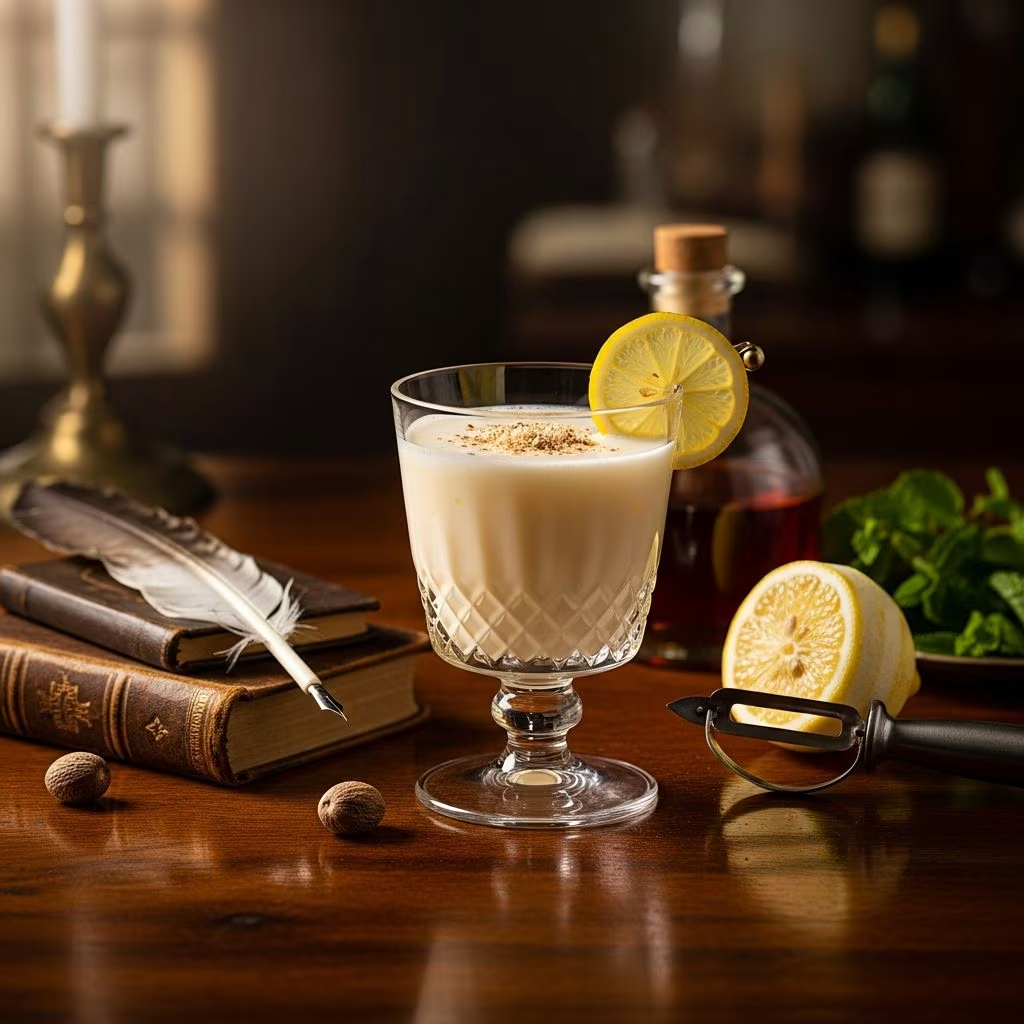
The finished punch gleams pale gold, offering brandy warmth, zesty lemon, nutmeg whisper, and milky smoothness. At 20-25% ABV, it’s sessionable yet spirited, ideal sipped cold from coupes or over ice.
- Garnish with lemon twist or grated nutmeg.
- Pair with charcuterie, cheeses, or holiday desserts.
- Scale for punches: multiply by 4 for parties.
Common Pitfalls and Pro Tips
Cloudy Results: Rushing strain or poor curdling; use cold tools and fresh milk.
Bitter Notes: Pith in zest; pare meticulously.
Scales Down Further: For solo tasting, divide by 8: ¾ cup brandy, 3 lemons, etc..
Experiment: Substitute rum for brandy or add vanilla, though purists stick to original.
Modern Twists on a Classic
Contemporary bartenders adapt Franklin’s base: ruby port-rum versions or tea-infused variants clarify similarly. Yet the original’s simplicity endures, influencing clarified punches worldwide.
Why Milk Punch Endures
Franklin’s recipe bridges history and innovation, proving timeless appeal in its clarity and balance. Perfect for history buffs or cocktail enthusiasts, it invites replication and storytelling at any gathering.
Frequently Asked Questions
What makes milk punch clear?
Milk proteins curdle with acid and alcohol, trapping solids for straining.
Can I use low-fat milk?
Whole milk curdles best; skim may fail to clarify properly.
How long does it last?
Refrigerated, up to a month; flavors peak after 3-5 days.
Non-alcoholic version?
Replace brandy with tea or juice, but clarity reduces.
Straining alternatives?
Coffee filters or pillowcases work; nut milk bags excel.
References
- MHS Collections Online: Benjamin Franklin’s milk punch recipe — Massachusetts Historical Society. N/A. https://www.masshist.org/database/263
- Benjamin Franklin: Milk Punch Aficionado. Here’s His Recipe — Food Republic. 2015-05-18. https://www.foodrepublic.com/2015/05/18/benjamin-franklin-milk-punch-aficionado-heres-his-recipe/
- Benjamin Franklin’s Milk Punch — The Hip Flask. N/A. https://thehipflask.wordpress.com/benjamin-franklins-milk-punch/
- Episode 14: Benjamin Franklin’s Milk Punch — Beyond Reproach. 2019-10-23. https://www.beyondreproachpod.com/the-cocktails/2019/10/23/benjamin-franklins-milk-punch
- Trying Ben Franklin’s Milk Punch! — YouTube (The Educated Barfly). N/A. https://www.youtube.com/watch?v=fdTGevHD1QU